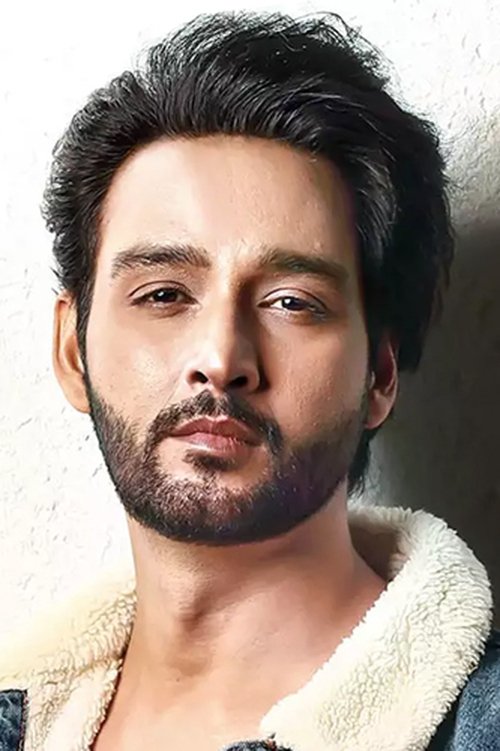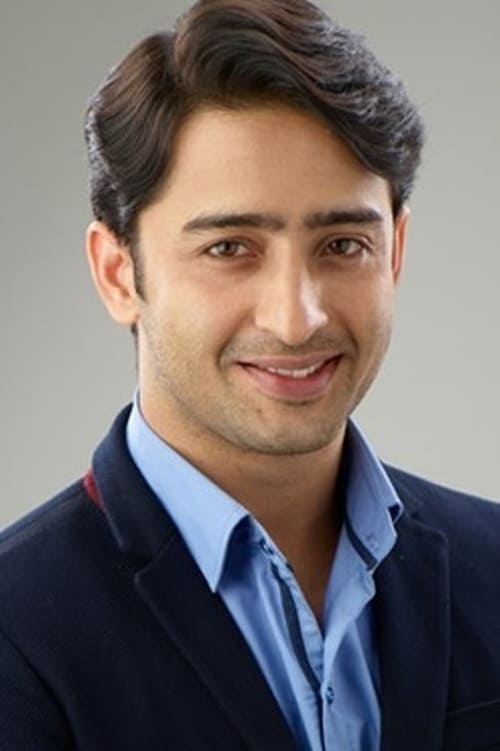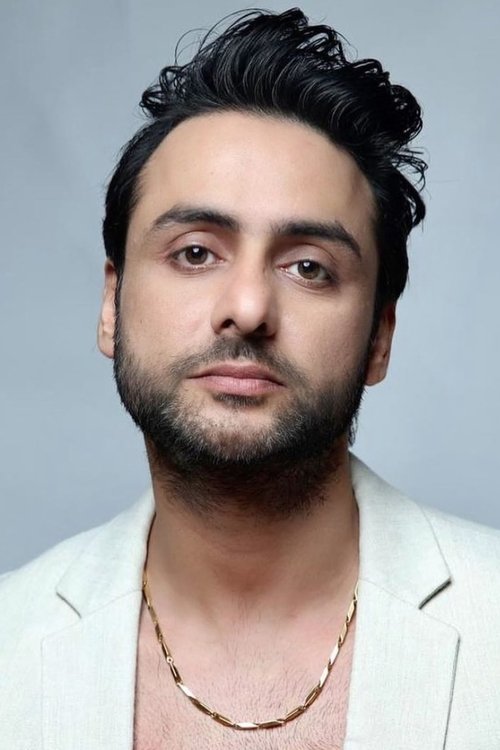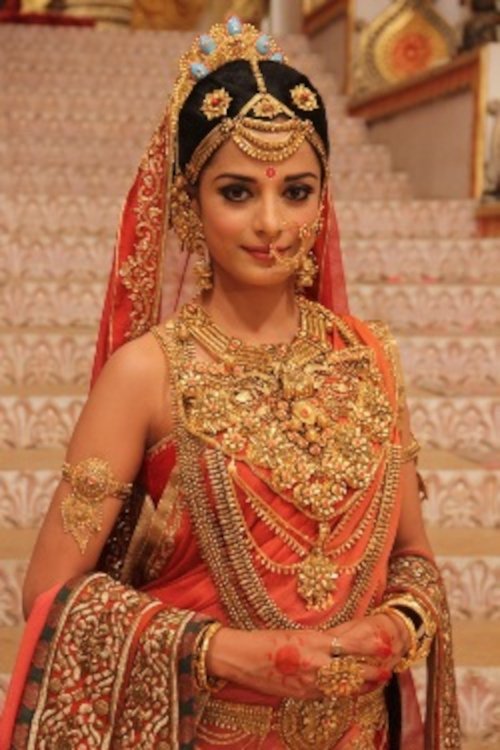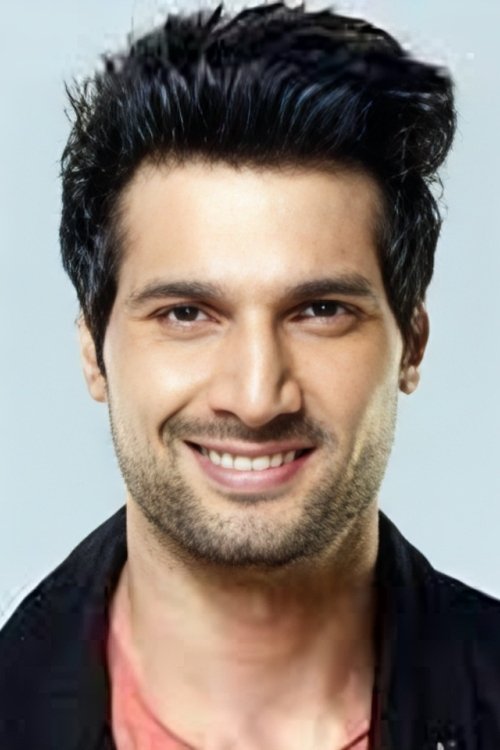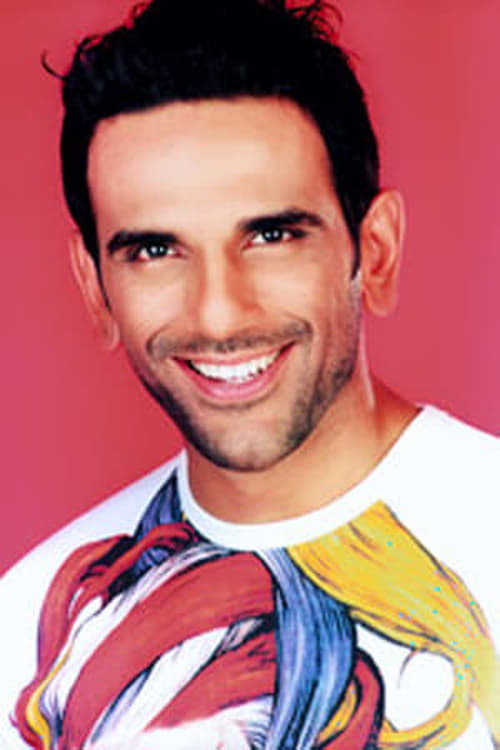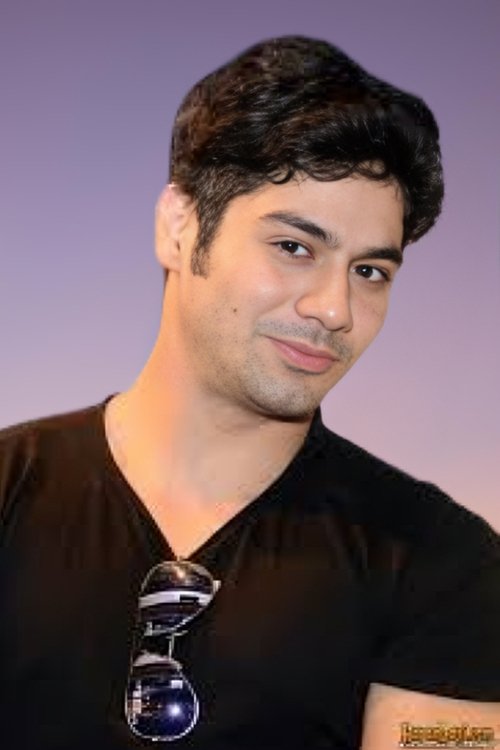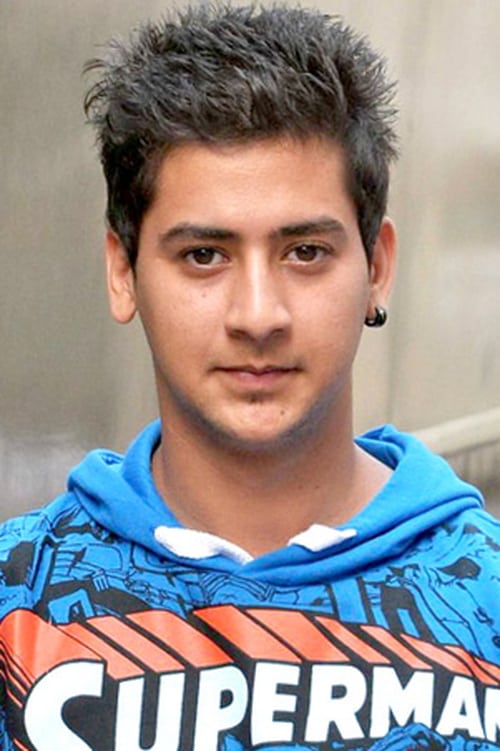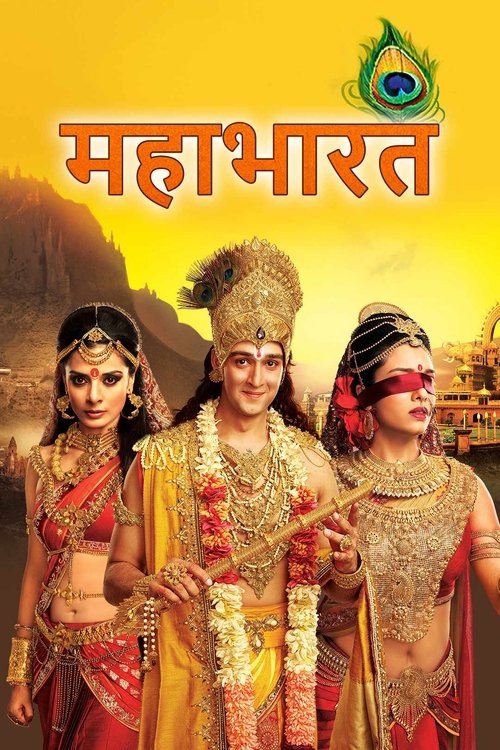
Mahabharat is a 2013 Indian epic mythological television series based on the Sanskrit epic Mahabharata. It aired from 16 September 2013 to 16 August 2014 on Star Plus. The series is available digitally on Disney+ Hotstar. Produced by Swastik Productions Pvt. Ltd, it starred Saurabh Raj Jain, Pooja Sharma, Shaheer Sheikh, Arpit Ranka and Aham Sharma.
Contents
Premise
The story begins with Bhishma, the son of King Shantanu and Ganga, who is crowned as the heir to the throne of Hastinapura. When Shantanu falls in love with Satyavati, a fisherwoman, she agrees to marry him only on the condition that her children will inherit the throne. To fulfill his father's wish, Bhishma takes a vow of lifelong celibacy and renounces his claim to the throne. Moved by his sacrifice, Shantanu grants Bhishma the boon of Ichchha Mrityu (death at will). Shantanu and Satyavati marry and have two sons, Chitrangada and Vichitravirya.
25 years later, Chitrangada dies, leaving Vichitravirya as the sole heir. On Satyavati’s command, Bhishma abducts the three princesses of Kashi Kingdom—Amba, Ambika, and Ambalika—for Vichitravirya. However, Amba, who was already in love with another, refuses to marry Vichitravirya. When her lover rejects her, she seeks vengeance against Bhishma. She pleads for help from Bhishma’s guru, Parashurama, but their battle is halted by Shiva. Determined to be the cause of Bhishma’s downfall, Amba immolates herself, vowing to be reborn for her revenge.
Vichitravirya dies without an heir. To continue the lineage, Satyavati calls upon her firstborn son, Veda Vyasa—born to her before her marriage—to impregnate the widowed queens using the niyoga practice. Ambika gives birth to Dhritarashtra, who is blind, Ambalika gives birth to Pandu, who is pale, and a maid, Parishrami, bears Vidura.
25 years later, Amba is reborn as Shikhandini, the daughter of Drupada, destined to bring about Bhishma’s death. Meanwhile, Bhishma secures a marriage alliance for Dhritarashtra by proposing to Gandhari, the daughter of Subala, King of Gandhara, due to her divine boon of bearing a hundred sons. When Gandhari learns that her husband-to-be is blind, she blinds herself with a cloth to share his fate. Her brother, Shakuni, enraged by this turn of events, swears revenge on Bhishma and injures his own leg as a mark of his vengeance. Initially, Dhritarashtra resents Gandhari for her decision but later accepts her as his wife.
Despite being the eldest, Dhritarashtra is denied the throne due to his blindness, and Pandu is crowned king instead. Pandu marries Kunti, the princess of the Kunti Kingdom, and Madri, the princess of the Madra Kingdom. However, after accidentally killing a sage, Kindama, Pandu is cursed to die if he ever attempts to be intimate with his wives. Heartbroken, he renounces the throne and retreats to the forest with Kunti and Madri, leaving Dhritarashtra to rule Hastinapura in his absence.
Cast
Main
Sourabh Raaj Jain as Krishna: a leader of the Yadava clan and an incarnation of the god Vishnu, born to restore dharma on the Earth. He serves as both a mentor and a philosopher, shaping the course of the war and the events leading up to it through his counsel and divine interventions. Even before his direct participation in the central narrative, Krishna is depicted in a divine form in the concluding segments of each episode, where he interprets the events, relates them to daily life, and imparts moral teachings and philosophical insights. Other than few initial concern regarding his tall height and complexion, Jain stated that playing Krishna was not a challenge for him, as he remained focused on himself and welcomed the comparisons with past portrayals. Jain also expressed that he saw himself merely as a conduit for the audience, stating "I was just a medium, an actor who humbly folded his hands before every scene, seeking the purity it deserved. The experience was truly inspiring for me". Kunwar Vikram Soni portrays adolescent Krishna.
Shaheer Sheikh as Arjuna: the third of the five Pandava brothers, who is a master archer and a warrior of great skill and integrity. His internal conflicts are often guided by Krishna to help him fulfil his duty and uphold dharma, particularly in the Kurukshetra War, where Krishna imparts the Bhagavad Gita. Sheikh underwent significant physical and mental preparation and emphasised the depth of his engagement with the character's internal struggles, which made the role "emotionally draining" and the pressure of playing the character was initially overwhelming and pushed him beyond his limits. He also described the experience as more than just acting, saying, "It wasn’t just about acting—it was about embodying the essence of a hero who represents strength, honor, and devotion". Soumya Singh portrays young Arjuna.
Pooja B Sharma as Draupadi: The princess of Panchala, who becomes the common wife of the five Pandava brothers and later the empress of Indraprastha, and subsequently, the Kuru kingdom. Born from fire, she is prophesied to bring upheaval to the lands of Aryavarta, and her life is marked by hardships, including the cheer haran (disrobing episode) where she is humiliated in the court of Kuru Kingdom. The event becomes one of the catalysts for the great war. Sharma described the character as a "strong, just, dignified woman with a strong sense of self". She found the role physically and emotionally demanding, especially the cheer harana episode. She also highlighted how this version deeply explored Draupadi’s bond with Krishna, a dynamic which was just merely established in previous adaptations. Despite the challenges, she found the experience enriching and transformative, stating, "Draupadi's character was powerful for me and it made me strong".
Recurring
Sayantani Ghosh as Satyavati: a fisherwoman who marries King Shantanu after securing a promise that her future son will inherit the throne. Satyavati rises to become the matriarch of the Kuru dynasty and is the great-grandmother of the Pandavas and Kauravas. Discussing the prominence of Satyavati’s character in the series, Ghosh stated that while many associate the Mahabharata solely with the Pandavas and Kauravas, it also encompasses deeper narratives, such as Satyavati’s, which are crucial to the epic yet often overlooked.
Sameer Dharmadhikari as Shantanu: King of Hastinapur, Ganga and Satyavati's husband and Bhishma, Chitrangada and Vichtravirya's father.
Vivana Singh as Devi Ganga: A river goddess who marries Shantanu, and the mother of Bhishma.
Atul Mishra as Ved Vyas: Satyavati and Maharishi Parashara's son and Dhritarashtra, Pandu and Vidura's surrogate father.
Aryamann Seth as Vichitravirya: King Shantanu and Queen Satyavati's son, Chitrangad's younger brother, and Ambika and Ambalika's husband.
Ratan Rajput as Amba: The eldest of the three princesses of Kashi, who were abducted by Bhishma for Vichitravirya. Rejected by her lover, Shalva, and Vichitravirya, she vows revenge against Bhishma for her misfortune, and is reborn as Shikhandini to ensure his downfall.
Aparna Dixit as Ambika: Vichitravirya's first wife and Dhritarashtra's mother.
Mansi Sharma as Ambalika: Vichitravirya's second wife and Pandu's mother.
Puneet Issar as Parshurama: The sixth avatar of Lord Vishnu and the teacher of Bhishma, Drona, and Karna
Arun Singh Rana as Pandu: The younger brother of Dhritarashtra, who became the king of Hastinapura due to former's blindness, until his renouncement of the throne. Pandu's inability to have children led him to seek the intervention of the gods, who granted him sons through his wives Kunti and Madri, making him the acknowledged father of the Pandavas.
Production
Background
In November 2005, a report from Variety stated Bobby Bedi's plan to make three feature films and 100 hours of television programming on Indian epic Mahabharat under Kaleidoscope Entertainment with the television version planned to be delivered by the end of 2007. In 2006 it was revealed making for Star Plus which was to be directed by Chandraprakash Dwivedi. It was a part of Bedi's 360 degree approach to the epic through TV, film, gaming and theme parks. Planned for 100 episodes with new actors, it was planned to premiere in March 2008 but got postpone due to production to August 2008 and later January 2009.
During this, Ekta Kapoor was simultaneously producing a series on Mahabharat since January 2008 titled Kahaani Hamaarey Mahaabhaarat Ki for a rival channel to premiere in mid 2008 which she earlier planned for Star but could not as the channel roped Bedi. This led to a pressure in the production as they wanted to rush their premiere before Kapoor, due to which Dwivedi quit midway after association with them for two years, after which three directors were working on it. But, they were not able to rush up the series before Kapoor's. 50 episodes were shot at the sets created in Morna between Noida and Delhi for a year after paying ₹6 Crores. However, as the channel was not satisfied with those episodes, they were asked to rework the entire series again pushing its premiere to 2009. But, Bedi reportedly started selling it in DVDs which created problems between them and the channel, and the production was stalled. However, in December 2008, Star took Bedi to Bombay High Court filing an arbitration petition alleging that the production house took ₹6 Crore for the production of the series in advance but has not produced even a single episode while a senior executive from the production house stated, " This legal notice is Star's way of pulling out of the show. Maybe it doesn't want to go ahead with the Mahabharat project after all." After these, the shooting was expected to restart from February 2009 but in mid 2009 the production was cancelled and the project was given over to Siddharth Kumar Tewary's Swastik Productions to start fresh.
Development
It took us four years of research and brainstorming sessions to conceive and execute the show.
More than 400 people were involved in production with 200 people working on graphics. Renowned author Devdutt Pattanaik was roped as the chief consultant and guiding person for the series. Also writer Salim Khan, music directors Ajay-Atul and Ismail Darbar and action director Ram Shetty were involved.
Speaking about bringing Mahabharat to television again, Star Plus senior vice-president Nikhil Madhok said, "With over 20 years having passed since the telecast of Mahabharat serial on Doordarshan, we felt that the younger generation should be re-introduced to this epic. Also, the plot of this epic is open to interpretation and has many intricacies in it, unlike that of let's say Ramayan, which is fairly linear and is passed on from generation to generation."
According to producer Siddharth Kumar Tewary, the Draupadi cheer haran (disrobing) sequence, which Tewary himself directed, took 20 days to shoot.
Even in the last fight between Bheema and Duryodhana, the actors shared that the scene took 3 days to shoot.
Originally planned for 128 episodes, its growing popularity gave an extension for about 100 more episodes as Tewary wanted to explore the story further in January 2014. However, it ended with 267 episodes.
Design
The set covering 10 acres of land in Umargam, Valsad, Gujarat was designed by the art director Omung Kumar.
The costume designer of the series Nidhi Yasha along with her consultant Bhanu Athaiya, had referred 450 books related to period textiles, costume and jewellery.
Different ancient techniques have been used to achieve the various looks. A lot of bright coloured silks, handlooms, gold and jewellery structured embroidery patterns have been used.
It took a study of over 450 books related to period textiles, costume and jewelry and four years of hard-work to arrive at the current look and feel of the show. An extensive study on jewelry structures according to ethnicity, fabrics, drapes and costume was undertaken.
Marketing and budget
Star spent ₹5.1 billion (US$53 million) on the project and spent another ₹410 million (US$4.3 million) on marketing the show, making it India's most expensive TV series. As a part of marketing, Star constructed Mahabharat museum across malls in cities consisting selective weapons, jewellery and finery of Mahabharat along with 3D virtual tour of the sets of Hastinapur. In towns the same concept was adapted with wheels-canter vans along with LED.
The sets of the series at Umargam in Gujarat cost ₹100 crores and production costs of ₹13-15 Lakhs per day.
Filming
The series was mainly shot in the sets at Umargam, Valsad in Gujarat. Shooting also took place in various exotic locations such as Jaisalmer, Amber Palace in Jaipur, Kashmir, Ahmedabad, Jabalpur in Madhya Pradesh, Nepal and Sri Lanka.
Training
The actors shared that they had to go through acting workshops and various trainings for about a year where they were explained in detail what to do and how. Rajit Kapur trained the actors by conducting acting workshops.
Reception
Critics' response
Writing for Rediff, Nishi Tiwari wrote that "If it maintains the quality of writing and able actors who portray key characters, we may have another winner among us". DNA India praised the costumes, scenery, Krishna's flute theme which was given by Raj Mohan Sinha, and most of the CGI special effects, but said the serial's pace was too fast.
Hindustan Times criticised, "Everything is so exaggerated that you feel you are watching a series of unreal events rather than following a deeply emotional story. Even relatively less important moments are treated with such overblown drama that when you really need the drama at crucial junctures — such as Bheeshma’s brahmacharya pledge — the impact is lost." The background music was also criticised for being loud all the time.
Viewership in India
Its premiere had a viewership of approximately 8.4 million impressions (8.445 TVTs - Television Viewership in Thousands) and 4.09 TVR. That week it averaged 6.356 TVTs. The show has become the highest rated weekday epic show in the last three years on Indian television. The viewership ratings of the week of 1 December 2013 reached 9.801 TVTs. The game of dice leading to Draupadi's 'cheer haran' took Mahabharat at its peak viewership (10 TVMs) and helped the broadcasting channel Star Plus clock one of the highest GTVMs. Overall, it became the tenth most watched Hindi GEC of 2013 with an average viewership of 5.6 million and a peak viewership of 7.2 million.
In week 29 of 2014, it was at fifth position with 7.1 TVTs while the following week it jumped to second position with 9.2 TVTs.
The show was listed in the list of top 20 TV series of all time in 2016.
During the COVID-19 outbreak and lockdown in India, it started re-airing on Star Plus from 30 March 2020 to 25 July 2020. It soon became one of the most-watched Hindi GEC series featuring in the top five programs even during the re-run.
Impact
This series is regarded as the costliest show ever launched by StarPlus and one of the costliest Indian television series, being the first Indian television show to be made on a budget more than ₹100 crores.
In 2014, the cast of Mahabharat were invited to hold a fan meeting tour at Jakarta and Bali. The Times of India reported that the show has a huge fan following abroad and as result, the prominent characters from the show had been called to Indonesia for a special event. The main casts of Mahabharat, performed on "Mahabharat Show: Fan Meeting Tour" in the year 2014 .
In June 2020, Karnataka Chief Minister Yediyurappa then, on watching the Kannada dubbed version appreciated the series and stated that the character Krishna played by Saurabh Raj Jain impressed him and also stated that just like every Mahabharata.
Awards and nominations
It won the trophy for the Best Drama in Star Guild Awards 2013 as well as number of accolades in other award shows. Show won Best Historical/Mythological serial award in Indian Television Academy Awards. It won the Indian Telly Awards for Actor in a Supporting Role (Drama), given to Aham Sharma for his portrayal as Karna, and Actor in a Negative Role to Praneet Bhat in 2014. The crew members also won the awards for Best Costumes for a TV Programme, Best Make – Up Artist, and Best Stylist.