Hearst and Cosmopolitan Pictures
In 1918, Hearst formed Cosmopolitan Pictures and asked Davies to sign a $500-per-week exclusive contract with his studio. After she signed, 21-year-old Davies and 58-year-old Hearst began a sexual relationship. Using his vast newspaper empire and Hearst Metrotone Newsreels, Hearst decided to promote Davies on an enormous scale. His newsreels touted her social activities, and a reporter from the Los Angeles Examiner was assigned the full-time job of recounting Davies's daily exploits in print. Hearst expended an estimated $7 million on promoting Davies's career (equivalent to $156,770,833 in 2025).
Soon after, Hearst—who was still married to Millicent Hearst—moved Davies with her mother and sisters into an elegant Manhattan townhouse at 331 Riverside Drive, at the corner of Riverside Drive and W. 105th Street. Hearst ensured that, "Marion's new abode was nothing less than a palace fit for a movie-queen—especially since the queen would frequently be receiving the press on the premises." Cecilia of the Pink Roses in 1918 was her first film, backed by Hearst. He next secured Cosmopolitan's distribution deals, first with Paramount Pictures, then with Samuel Goldwyn Productions, and with Metro-Goldwyn-Mayer.
During the next ten years, Davies appeared in 29 films, an average of almost three films a year. One of her best known roles was as Mary Tudor in When Knighthood Was in Flower (1922), directed by Robert G. Vignola, with whom she collaborated on several films. The 1922–23 period may have been her most successful as an actress, with both When Knighthood Was in Flower and Little Old New York ranking among the top three box-office hits of those years. She was named the number one female box-office star by theater owners and crowned "Queen of the Screen" at their 1924 Hollywood convention. Other hit silent films included: Beverly of Graustark, The Cardboard Lover, Enchantment, The Bride's Play, Lights of Old Broadway, Zander the Great, The Red Mill, Yolanda, Beauty's Worth, and The Restless Sex.
In 1926, Hearst's wife Millicent Hearst moved to New York, and Hearst and Davies moved to the palatial Hearst Castle in San Simeon, California, overlooking the Pacific Ocean. Upon visiting the sprawling Hearst Castle with its Greek statues and celestial suites, playwright George Bernard Shaw reportedly quipped: "This is what God would have built if he had the money." When not holding court at San Simeon, Hearst and Davies resided at Marion's equally luxurious beach house in Santa Monica, at Hearst's rustic Wyntoon estate in Northern California, and St Donat's Castle in Wales. During the heyday of the Jazz Age, the couple spent much of their time entertaining and holding extravagant soirees with famous guests, including many Hollywood actors and political figures. Frequent habitues and occasional visitors included Charlie Chaplin, Douglas Fairbanks, Harpo Marx, Clark Gable, Calvin Coolidge, Winston Churchill, Charles Lindbergh, and Amelia Earhart, among others.
As the years passed, Hearst's relentless efforts to promote Davies's career purportedly had a detrimental effect. According to Davies, Hearst grandiosely advertised her latest films with "signs all over New York City and pictures in the papers ... I thought it got to be a little too much." Such unceasing publicity irritated the public. "In New York city there were big signs, blocks and blocks of signs," Davies recalled, "and people got so tired of the name Marion Davies that they would actually insult me." In her published memoirs The Times We Had, Davies concluded that such over-the-top promotion of her film career likely did more harm than good.
Hearst's jealousy also interfered with Davies's career, especially in her earlier films and her stage roles. According to Davies, he often vetoed the casting of attractive leading men and typically would not permit her to be embraced on the screen or in stage plays. In her memoirs, Davies claimed to have repeatedly assailed Hearst's jealous stewardship in vain: "Everyone has to do a little embrace in pictures, just for the audience's sake," she told him. However, Hearst would not relent. Consequently, many of her earlier pictures were regarded as sexless and featured "no kissing at all" even when a kiss was needed for a happy ending. Hearst insisted on personally rewriting Davies's film scripts, and his constant meddling often exasperated film directors such as Lloyd Bacon.
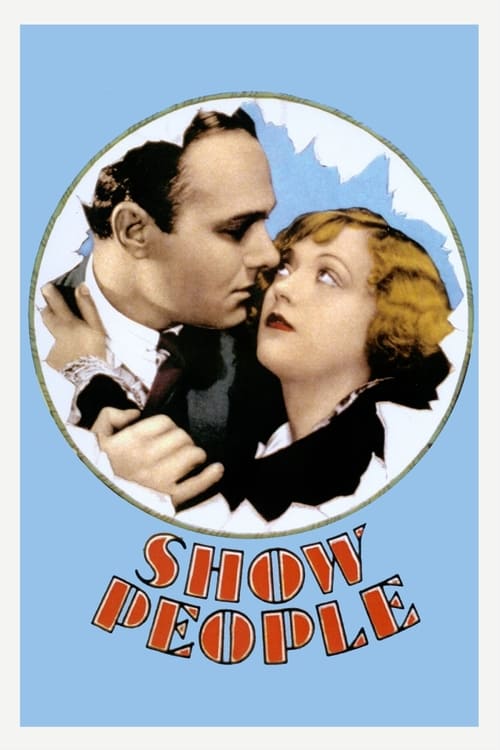
Hearst further hindered Davies's career by insisting she star only in costume dramas in which she often played "a doll-sweetheart out of the 1890s, in the manner of D. W. Griffith heroines". Davies herself was more inclined to develop her comic talents alongside her friends Charlie Chaplin and Mary Pickford at United Artists, but Hearst pointedly discouraged this. He preferred seeing her in expensive historical pictures, but she also appeared in contemporary comedies like Tillie the Toiler, The Fair Co-Ed (both 1927), and especially three directed by King Vidor, Not So Dumb (1930), The Patsy and the backstage-in-Hollywood saga Show People (both 1928). The Patsy contains her imitations, which she usually did for friends, of silent stars Lillian Gish, Mae Murray and Pola Negri. Vidor saw Davies as a comedic actress instead of the dramatic actress that Hearst wanted her to be. He noticed she was the life of parties and incorporated that into his films.