Anime
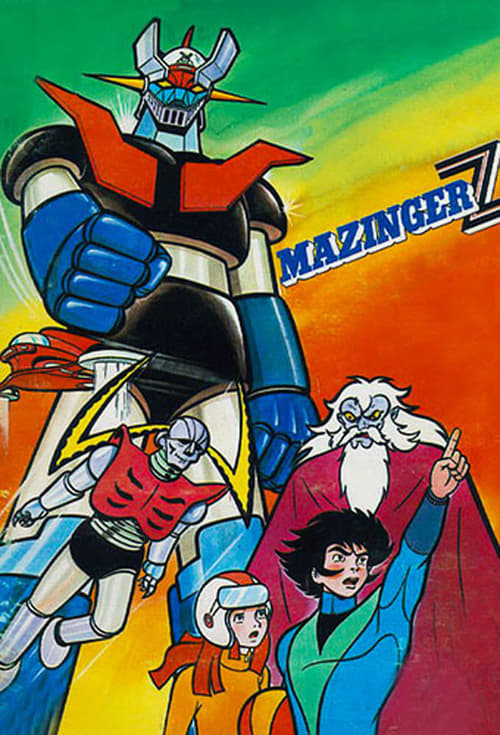
An anime adaption of Mazinger Z was produced by Dynamic Planning and Toei Animation, with Toei handling the animation. The series ran for a total of 92 episodes from December 3, 1972, to September 1, 1974.
In the 1980s, on behalf of Dynamic Planning, Masami Ōbari and other independent animators (Toshiki Hirano) not part of Toei Animation began work on a miniseries of Mazinger Z. The OVA (Original Video Animation) would have been called Dai-Mazinger (大魔神我, Daimajinga) and would have presented the same characters known to the general public, starting with the main protagonist Koji. The robot would be more realistic: for example, it would have exhaust pipes, and its rocket fists would not be able to return to its arms automatically.
The news, initially protected by tight secrecy, managed to leak and was spread by the specialized press. Toei protested, saying to Dynamic that the rights of the animation of Mazinger was only theirs and that they did not tolerate a Mazinger animated by others. As a consequence, the Daimajinga project was blocked. This wasn't helped by the fact that Nagai was in the middle of a court battle with Toei, suing them for not properly crediting him and not paying him royalties over the creation of Gaiking in 1976. However, since then, the relationship between Nagai and Toei has steadily improved.
In 1976, Honolulu-based entertainment concern, Consolidated Amusement Co., licensed the first 52 episodes of the series from Toei, as reported by the Honolulu Star-Bulletin, and commissioned M&M Communications, a local sound studio, to produce an English language dub. Consolidated, which ran four of the biggest theater chains in Hawaii, packaged the episodes of Mazinger Z for weekend kiddie matinee screenings in their venues, starting with a big promotional push over Thanksgiving weekend (November 27 & 28) that same year with a "personal appearance" (a 10' electronic model) at the Pearlridge Shopping Center, as promoted in the Honolulu Advertiser. The first package of episodes debuted at the Pearlridge 4-Plex Theaters on Saturday, December 4, 1976 (according to the Honolulu Star-Bulletin). Unlike other English adaptations of various anime series at the time, Mazinger Z was left with its plot and character names unaltered. This English dub also aired in the Philippines; it proved so popular there that additional episodes were locally dubbed.
There have been some claims that Frontier Enterprises produced an English dub Mazinger Z at some point in the 1970s, stating it was one of the serial works that his company Frontier Enterprises had been in charge of translating but failed to sell to a network and thus never aired or was released.
The series partially aired in Spain on TVE 1 at the same time. Rumors emerged that the series was pulled from broadcast because it reportedly induced violence to an underage viewer, but according to Claudio Biern Boyd in a 2021 interview, nothing happened at all.
Discotek Media acquired the American home video rights to the show. The result was a release of all 92 episodes of the original series in 2 volumes: Mazinger Z TV Series Vol 1, Ep. 1–46 and Mazinger Z TV Series Vol 2, Ep. 47–92. Discotek Media later released a double feature DVD on April 29, 2014.
In the United States, Three B. Productions Ltd., a production company headed by Bunker Jenkins, developed Mazinger Z for American television by producing an English-dubbed version, which Jenkins retitled Tranzor Z. This adaptation aired in 1985 and was, like many English-dubbed anime shows that were on American TV at the time, re-edited for American audiences. Many of the Japanese names used in Mazinger Z were changed for its adaptation into Tranzor Z; for example, Koji Kabuto became Tommy Davis, Sayaka Yumi became Jessica Wells, Shiro became Toad, Professor Yumi became Dr. Wells, Dr. Hell became Dr. Demon, Baron Ashura became Devleen, Count Brocken became Count DeCapito, and Archduke Gorgon became Genghis the Ghastly. Only 65 out of the 92 episodes were dubbed into English, as 65 was the minimum number of episodes required for syndication. The final episode was not dubbed in English, instead the series ended with the defeat of Dr. Demon. The fate of Genghis was left up in the air.