Sir Michael Murray Hordern (3 October 1911 – 2 May 1995) was an English actor. He is best known for his Shakespearean roles, especially King Lear. He often appeared in film, rising from a bit part actor to leading roles; by the time of his death he had appeared in nearly 140 films. His later work was predominantly in television and radio.
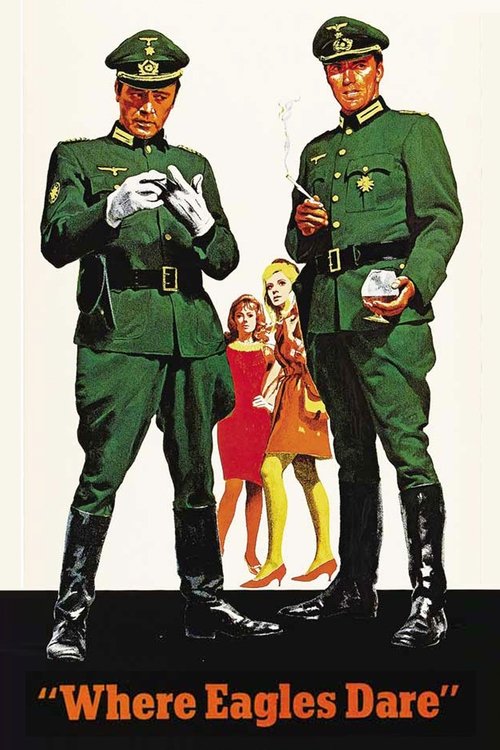
Born in Berkhamsted, Hertfordshire, into a family with no theatrical connections, Hordern was educated at Windlesham House School, then located in Portslade, East Sussex. He went on to Brighton College, where his interest in the theatre developed. After leaving the college he joined an amateur dramatics company, and came to the notice of several influential Shakespearean directors who cast him in minor roles in Othello and Macbeth. During the Second World War he served on HMS Illustrious, reaching the rank of lieutenant-commander. Upon demobilisation he resumed his acting career and made his television debut, becoming a bit-part actor in many films, particularly in the war film genre.
Hordern came to prominence in the early 1950s when he took part in a theatrical competition at the Arts Theatre in London. This led to a season-long contract at the Shakespeare Memorial Theatre, where he played major parts including Caliban in The Tempest, Jaques in As You Like It, and Sir Politick Would-Be in Ben Jonson's comedy Volpone. The following season Hordern joined Michael Benthall's company at the Old Vic where, among other parts, he played Polonius in Hamlet, and the title role in King John. In 1957 he won the British Academy Television Award for Best Actor for his role as the barrister in John Mortimer's courtroom drama The Dock Brief. Along with his theatrical responsibilities Hordern had regular supporting roles in various films including Cleopatra (1963), and A Funny Thing Happened on the Way to the Forum (1966).
In the late 1960s Hordern met the British theatre director Jonathan Miller, who cast him in Whistle and I'll Come to You, which was recorded for television and received wide praise. Hordern's next major play was Jumpers at the Royal National Theatre in 1972. His performance was praised by critics and he reprised the role four years later. Hordern's television credits towards the end of his life included Paradise Postponed, the BAFTA award-winning Memento Mori, and the BBC adaptation of Middlemarch. He was appointed a CBE in 1972 and was knighted eleven years later. Hordern suffered from kidney disease during the 1990s and died from it in 1995, aged 83.
Contents
Life and career
Early life and education
Hordern was born on 3 October 1911 at Berkhamsted, Hertfordshire, third son of Edward Joseph Calveley Hordern, of a family of Hampshire landed gentry with a strong clerical tradition, and Margaret Emily, daughter of mechanical engineer Edward Francis Murray.
Edward Hordern's father, Rev. Joseph Calveley Hordern, was the rector at the Holy Trinity Church in Bury. As a young man Edward joined the Royal Indian Marines and gained the rank of lieutenant. During a short break on home-leave he fell in love with Margaret, after they were introduced by one of his brothers. The courtship was brief and the young couple married in Burma on 28 November 1903. They had their first child, a son, Geoffrey, in 1905, followed by another, Peter, in 1907.
Margaret was descended from James Murray, an Irish physician whose research into digestion led to his discovery of the stomach aid milk of magnesia in 1829. The invention earned him a knighthood and brought the family great wealth. Margaret grew up in England, and attended St Audries School for Girls in Somerset.
Four years after the birth of Peter, a pregnant Margaret returned to England, where Michael Hordern, her third son, was born. Still stationed abroad, Edward was promoted to the rank of captain, for which he received a good salary. The family lived in comfort, and Margaret employed a scullery maid, nanny, groundsman, and full-time cook.
Margaret left for India to visit her husband in 1916. The trip, although planned only as a short term stay, lasted two years because of the First World War. In her absence, Hordern was sent to Windlesham House School in Sussex at the age of five. His young age exempted him from full-time studies but he was allowed to partake in extracurricular activities, including swimming, football, rugby and fishing. After a few years, and along with a fellow enthusiast, he set up the "A Acting Association" (AAA) a small theatrical committee, which organised productions on behalf of the school. As well as the organisation of plays, Hordern arranged a regular group of players, with him, to perform plays which they wrote, directed, and choreographed. He stayed at Windlesham House for nine years, later describing his time there as "enormous fun".
Hordern was 14 when he left Windlesham House to continue his schooling as a member of Chichester House at Brighton College. By the time of his enrolment, his interest in acting had matured. In his 1993 autobiography, A World Elsewhere, he admitted: "I didn't excel in any area apart from singing; I couldn't read music but I sang quite well". There he helped organise amateur performances of Gilbert and Sullivan operas. The first of these was The Gondoliers, in which he played the role of the Duchess. The tutors called his performance a great success, and he was given a position within the men's chorus in the next piece, Iolanthe. In the next few years, he took part in The Mikado as a member of the chorus, and then appeared as the Major-General in The Pirates of Penzance. It was a period which he later acknowledged as being the start of his career. When the war ended in 1918, Edward, who was by now a port officer in Calcutta, arranged for Margaret to return to England. With her, she brought home an orphaned baby girl named Jocelyn, whom she adopted. The following year, Edward retired from active service and returned to England, where he relocated his family to Haywards Heath in Sussex. There, Michael developed a love for fishing, a hobby that he followed for the rest of his life.
Early acting career (1930–39)
Hordern left Brighton College in the early 1930s and secured a job as a teaching assistant in a prep school in Beaconsfield. He joined an amateur dramatics company and in his spare time, rehearsed for the company's only play, Ritzio's Boots, which was entered into a British Drama League competition, with Hordern in the title role. The play did well but conceded the prize, a professional production at a leading London theatre, to Not This Man, a drama written by Sydney Box. So envious was he of the rival show's success that Hordern supplied a scathing review to The Welwyn Times calling Box's show a "blasphemous bunk and cheap theatrical claptrap". The comment infuriated Box, who issued the actor with a writ to attend court on a count of slander. Hordern won the case and left Box liable for the proceeding's expenses. Years later the two men met on a film set where Box, much to Hordern's surprise, thanked him for helping to kick-start his career in film making, as he had received a lot of publicity as a result of the court case.
With the death of his mother in January 1933, Hordern decided to pursue a professional acting career. He briefly took a job at a prep school but fell ill with poliomyelitis and had to leave. Upon his recuperation, he was offered a job as a travelling salesman for the British Educational Suppliers Association, a family-run business belonging to a former school friend at Windlesham House. As part of his job he spent some time in Stevenage where he joined an amateur dramatics company and appeared in two plays; Journey's End, in which he played Raleigh, and Diplomacy, a piece which the actor disliked as he considered it to be "too old-fashioned". Both productions provided him with the chance to work with a cue-script, something which he found to be helpful for the rest of his career. That summer he joined a Shakespearean theatre company which toured stately homes throughout the United Kingdom. His first performance was Orlando in As You Like It, followed by Love's Labour's Lost, in which he co-starred with Osmond Daltry. Hordern admired Daltry's acting ability and later admitted to him being a constant influence on his Shakespearean career.
In addition to his Shakespearean commitments, Hordern joined the St Pancras People's Theatre, a London-based company partly funded by the theatrical manager Lilian Baylis. Hordern enjoyed his time there, despite the tiresome commute between Sussex and London, and stayed with the company for five years. By the end of 1936 he had left his sales job in Beaconsfield to pursue a full-time acting career. He moved into a small flat at Marble Arch and became one of the many jobbing actors eager to make a name for themselves on the London stage.
Second World War and film debut
Hordern and Eve left Bristol in 1939 for Harrogate, where Eve joined a small repertory company called the White Rose Players. After a brief spell of unemployment, and with the outbreak of war, Hordern volunteered for a post within the Air Raid Precautions (ARP). He was accepted but soon grew frustrated at not being able to conduct any rescues because of the lack of enemy action. He decided that it was "not a very good way to fight the war" and volunteered for the Royal Navy. While he was waiting to be accepted he and Eve responded to an advertisement in The Stage for actors in a repertory company in Bath. They were appointed as the company's leading man and lady. Their first and only engagement was in a play entitled Bats in the Belfry which opened at the city's Assembly Rooms on 16 October. Hordern's elation at finally becoming a leading man was short-lived when he received his call-up that December. In the interest of helping to boost public morale, Hordern sought permission from the navy to allow him to complete his theatrical commitment in Bath and to appear in his first film, a thriller called Girl in the News, directed by Carol Reed; his request was accepted, and he was told to report for duty at Plymouth Barracks in the early months of 1940 when the show had finished and he was free from filming responsibilities.
In 1940, after a minor role in Without the Prince at the Whitehall Theatre, Hordern played the small, uncredited part of a BBC official alongside James Hayter in Arthur Askey's comedy film Band Waggon. Soon after, he began his naval gunnery training on board City of Florence, a defensively equipped merchant ship (DEMS) which delivered ammunition to the city of Alexandria for the Mediterranean Fleet. He found that although his middle class upbringing hindered his ability to make friends on board the ship, it helped with his commanding officers.
By 1942 Hordern had been commissioned as an officer and given instruction in radar and the relaying of its data for the direction of fighter planes. He later said "It was suggested that this would be excellent work for me with my strong actor's voice". After his training at Yeovilton he was appointed Fighter Direction Officer on board the aircraft carrier Illustrious. Shortly after the departure of his superior, he was promoted to lieutenant-commander, a rank which he held for two years. Alongside his naval responsibilities, he was also appointed as the ship's entertainment officer and was responsible for organising shows featuring members of the crew. He was later appointed to the Admiralty to serve in the office of Naval Assistant to the Second Sea Lord, responsible for appointing Fighter Direction Officers. Also in the office was fellow actor Kenneth More.
Marriage and post-war years
During a short visit to Liverpool in 1943, Hordern proposed to Eve; they married on 27 April of that year with the actor Cyril Luckham as best man. After the honeymoon, Hordern resumed his duties on Illustrious while Eve returned to repertory theatre in Southport. During his time in the Admiralty Hordern and his wife rented a flat in Elvaston Place in Kensington, London, and he began to seek work as an actor. After a short while, he was approached by André Obey who cast him in his first television role, Noah, in a play adapted from the book of the same name. Hordern was apprehensive about performing in the new medium and found the rehearsal and live performance to be exhausting; but he was generously paid, earning £45 (equivalent to £1,774 in 2025) for the entire engagement.
Hordern's first role in 1946 came as Torvald Helmar in A Doll's House at the Intimate Theatre in Palmers Green. This was followed by the part of Richard Fenton, a murder victim, in Dear Murderer which premiered at the Aldwych Theatre on 31 July. The play was a success and ran for 85 performances until its closure on 12 October. Dear Murderer thrilled the critics and Hordern was singled out by one reporter for the Hull Daily Mail who thought that the actor brought "sincerity to a difficult role". The following month Eve gave birth to the couple's only child, a daughter, Joanna, who was born at Queen Charlotte's Hospital in Chelsea. That Christmas he took the role of Nick Bottom in a festive reworking of Henry Purcell's The Fairy-Queen. The play was the first performance by the Covent Garden Opera Company, which later became known as The Royal Opera.
Towards the end of April 1947, Hordern accepted the small part of Captain Hoyle in Richard Llewellyn's comic drama film Noose. Two other roles occurred that year: as Maxim de Winter in a television adaption of Daphne du Maurier's novel Rebecca, followed by the part of a detective in Good-Time Girl, alongside Dennis Price and Jean Kent. The following year he took part in three plays: Peter Ustinov's The Indifferent Shepherd, which appeared at the newly opened Q Theatre in Brentford, West London; Ibsen's Ghosts; and an adaptation of The Wind in the Willows at the Shakespeare Memorial Theatre in Stratford-upon-Avon in which he portrayed the part of the blustery, eccentric Mr Toad.
In early 1949 Hordern appeared as Pascal in the Michael Redgrave-directed comedy A Woman in Love, but disliked the experience because of the hostile relationship between Redgrave and the show's star, Margaret Rawlings. Next, he was engaged in the minor role of Bashford in the critically acclaimed Ealing comedy Passport to Pimlico, a performance which he described as "tense and hyperactive".
1950–1960s
By the 1950s Hordern had come to the notice of many influential directors. In his autobiography, the actor recognised the decade as being an important era of his career. It started with a major role in Anton Chekhov's Ivanov in 1950. The production took place at the Arts Theatre in Cambridge and excited audiences because of its 25-year absence from the English stage. The writer T. C. Worsley was impressed by Hordern's performance and wrote: "Perhaps an actor with star quality might have imposed on us more successfully than Mr Michael Hordern, and won our sympathy for Ivanov by his own personality. But such a performance would have raised the level of expectation all round. As it is, Mr Hordern is rich in intelligence, sensitivity and grasp, and with very few exceptions, the company give his impressive playing the right kind of support." The title character in Macbeth, directed by Alec Clunes, was Hordern's next engagement. Critics wrote of their dislike of Clunes's version, but the theatre reviewer Audrey Williamson singled out Hordern's performance as being "deeply moving".
The dramatist John Whiting, trying to make a name for himself in the theatre after the war, was called by Clunes to take part in a theatrical competition at the Arts Theatre in London in 1951, for which he entered his play Saint's Day. Several other amateur directors also competed for the prize, which was to have their play funded and professionally displayed at the Arts. Having seen him perform the previous year, Whiting hired Hordern for the lead role of Paul Southman, a cantankerous old poet who fights off three rebellious army deserters who threaten the tranquillity of his sleepy country village. The play proved popular with audiences, but not so with theatrical commentators. Hordern liked the piece, calling it "bitter and interesting", but the press, who extensively reported on the competition throughout each stage, thought differently and condemned it for winning. This infuriated the actors Laurence Olivier and John Gielgud, who wrote letters of complaint to the press.
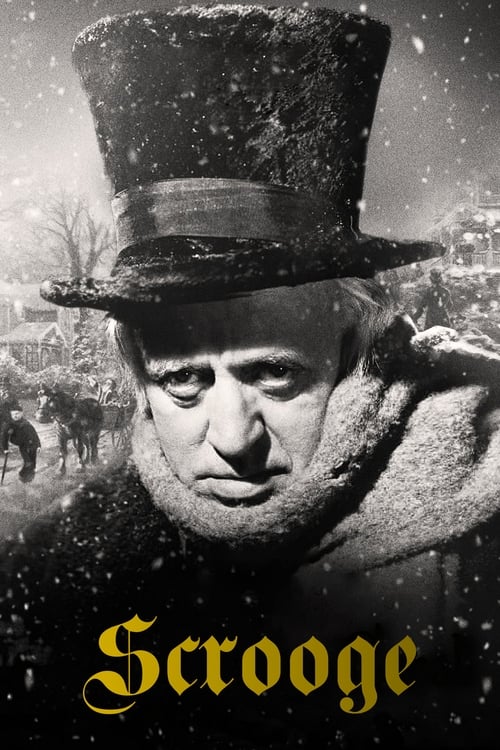
Hordern cited Saint's Day's negative publicity as having done his career "the power of good" as it brought him to the attention of the director Glen Byam Shaw, who cast him in a series of plays at the Shakespeare Memorial Theatre in 1951. Among the roles were Caliban in The Tempest, Jaques in As You Like It, and Sir Politick Would-Be in Ben Jonson's comedy Volpone. Hordern claimed to know very little about the bard's works and sought advice from friends about how best to prepare for the roles. The same year, he travelled down to Nettlefold Studios, Walton-on-Thames, to film Scrooge, an adaptation of Charles Dickens's A Christmas Carol, in which he played Marley's ghost. Reviews were mixed with The New York Times giving it a favourable write-up, while Time magazine remained ambivalent. The Aberdeen Evening Express echoed the comments made by an American reviewer by calling Scrooge a "trenchant and inspiring Christmas show". The author Fred Guida, writing in his book Christmas Carol and Its Adaptations: A Critical Examination in 2000, thought that Marley's ghost, though a "small but pivotal role", was "brilliantly played" by Hordern.
Later career: 1969–1990
Miller and Hordern's collaboration continued into 1969 with King Lear at the Nottingham Playhouse. Hordern immediately accepted the title role but later said that it was a character he never much cared to play. Writing about Miller in his autobiography, Hordern stated: "It was one of the most exhilarating and funny experiences I have had in the theatre." Miller recruited Frank Middlemass to play the fool, but contrary to tradition, Miller made the character an intimate of Lear's as opposed to a servant, something which Shakespearean purists found difficult to accept. Miller decided to further defy convention by concentrating on the relationships between the characters rather than adding detail to scenery and costume; he was eager not to use lavish sets and lighting for the fear of detracting from the characterisations and the sentimentality of the storyline. As such, the sets were bleak and the costumes more so; it was a style that was also used when the play was televised by the BBC later that decade.
When King Lear played at the Old Vic in 1970, reviews were mixed; J.W. Lambert thought that the "grey sets" and Hordern's "grizzled" costume were how Shakespeare would have intended them to be, while Eric Shorter thought otherwise, stating "I still do not understand those costumes." Of the performance, the dramatist and critic Martin Esslin called Hordern's portrayal "a magnificent creation" before going on to say: "Hordern's timing of the silences from which snatches of demented wisdom emerge is masterly and illuminates the subterranean processes of his derangement." Writing for The Times later that year, the theatre critic Irving Wardle described Hordern's Lear as a "sharp, peremptory pedant; more a law-giver than a soldier, and (as justice is an old man's profession) still in the prime of his life". Hordern played Lear once more that decade, in 1975, which was televised by the BBC for their series Play of the Month.
The playwright Tom Stoppard approached Hordern in 1971 with a view to him playing a leading part in the playwright's new play Jumpers, a comic satire based around the field of academic philosophy. Hordern was to play George Moore, a bumbling old philosophy professor, who is employed at a modern university and who, throughout the play, is in constant debate with himself over his moral values. Hordern, though thinking the play was brilliant, disliked the script on the initial read-through as he did not understand its complex situations and strange dialogue. His co-star would be Diana Rigg, who played Moore's wife Dotty, and the entire piece was to be directed by Peter Wood.
Final years and death
By the early 1990s Hordern was concentrating more on television. His roles were mostly those of ageing teachers, bank managers, politicians and clergymen. In 1989 he appeared alongside John Mills in an adaptation of Kingsley Amis's Ending Up, a tale about a group of pensioners growing old together in a residential home. After that he took the part of Godfrey Colston in Memento Mori, a television film about a group of elderly friends succumbing to old age, which was adapted for television from the Muriel Spark novel of the same name. The film received excellent notices and Hordern's performance was described as outstanding by the critic Neil Sinyard. All that was required of Hordern in his next role, the wealthy but terminally ill landowner Peter Featherstone in the BBC adaptation Middlemarch, was for him simply to lie in bed and pretend to die. It was the kind of role which he found to be most fitting for someone of his advanced years and confirmed to him that the older he got, the more typecast he became. It was a situation that did not altogether bother him as he felt grateful for being employable at the age of 81.
In January 1995 Hordern was invited back to his old college in Brighton, where a room was named in his honour. Inside, the college had commissioned the sculptor Peter Webster to create a bronze bust of the actor which is displayed with a plaque. Hordern's last physical acting role came shortly afterwards as Lord Langland in the comedy film A Very Open Prison. This was followed by two narration performances, firstly in Spode A History of Excellence, and then in the five-part film Dinosaurs and Their Living Relatives.
Hordern died of kidney disease at the Churchill Hospital, Oxford, on 2 May 1995, aged 83. Medical staff confirmed that he had been suffering from "a long illness and had been receiving dialysis treatment".
Approach to acting
Hordern was a self-confessed "lazy bugger" when it came to role preparation. He did not regret his lack of formal acting training, and attributed his abilities to watching and learning from other actors and directors. He said: "I am bored of the intellectual view of the theatre. Actually, it scares the shit out of me, my view being that an actor should learn the lines without too much cerebral interference." In 1951, he asked Byam Shaw how best to rehearse unfamiliar roles. The director advised him to "never read up on them" before going on to say "read the plays as much as [you like] but never read the commentators or critics". It was advice which Hordern adopted for the role of King Lear, and for the rest of his career. The critic Brian McFarlane, writing for the British Film Institute, said that Hordern, despite his relaxed attitude, "had one of the most productive careers of any 20th century British actor".
After all the great parts I have played in my career, Prospero, Lear, Sir Anthony Absolute, George in Jumpers, after all the accolades, the CBE, knighthood, honorary degrees, mixing with the great and the good, I was brought down to earth recently by a small boy whom I had noticed having an intense argument with two other small boys outside my phone box. I seemed to be the centre of discussion. When I stepped out of the box, one of the boys came up to me, looked up earnestly, and very politely asked, 'Excuse me, aren't you Paddington?' I felt gratified.
Throughout his 1993 autobiography A World Elsewhere, Hordern exhibited his pride on being able to play a wide range of parts, something which made him a frequent subject among theatrical critics. The author Martin Banham thought that many of Hordern's characters shared a general identity of "an absent-minded, good-hearted English eccentric". The American journalist Mel Gussow, writing Hordern's obituary in The New York Times in 1995, described him as "a classical actor with the soul of a clown". The actors John Hurt and Michael Bryant considered Hordern "the Austin Princess among British actors", which implied to the author Sheridan Morley that Hordern possessed an element of "reliability but [with] a faint lack of charisma". Morley, who wrote Hordern's biography for the Oxford Dictionary of National Biography, went on to describe the actor as being "one of the great eccentrics of his profession, perched perilously somewhere half way between Alastair Sim and Alec Guinness".
Notes and references
Notes
References