

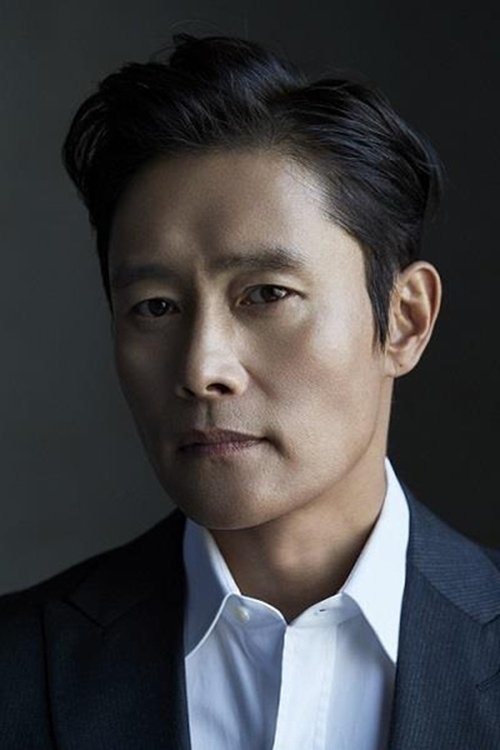

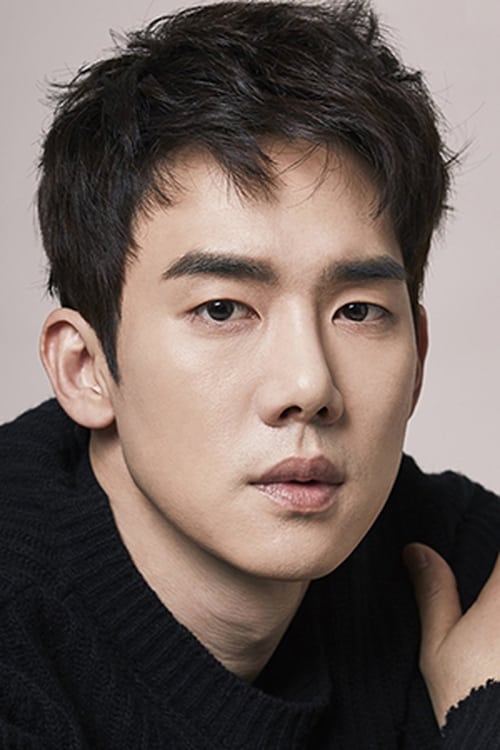


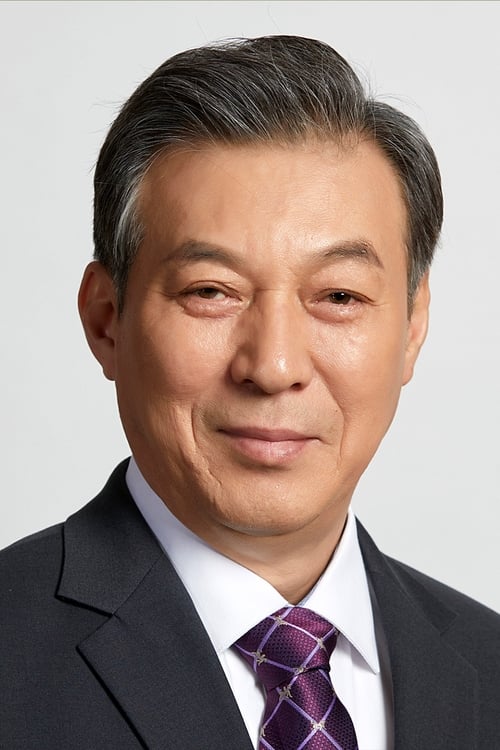
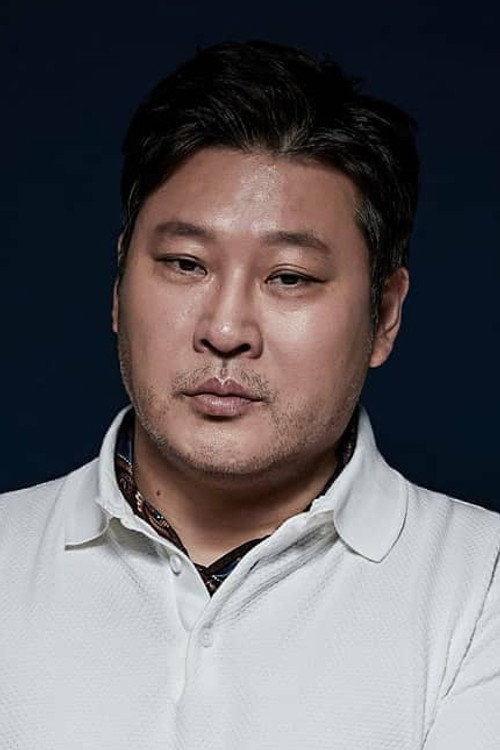
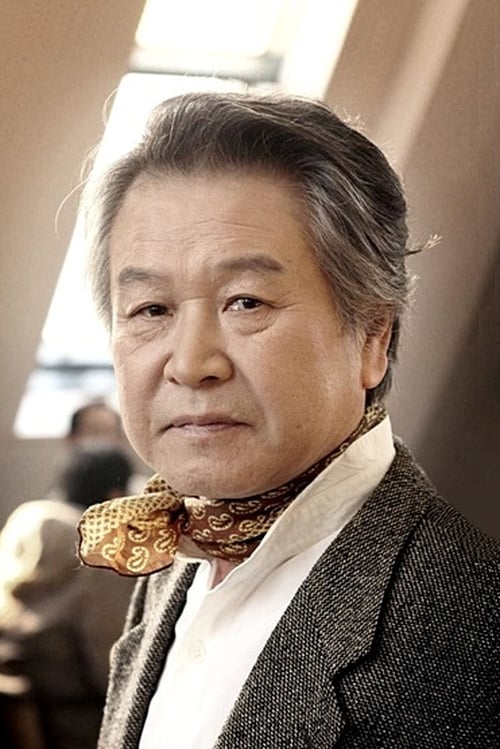



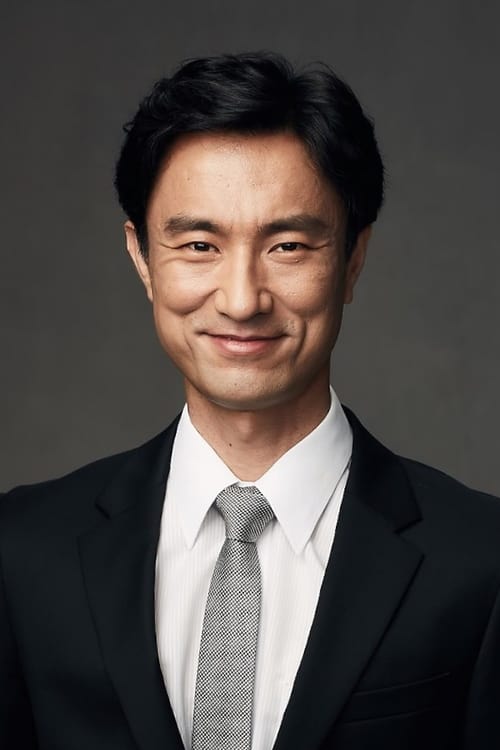
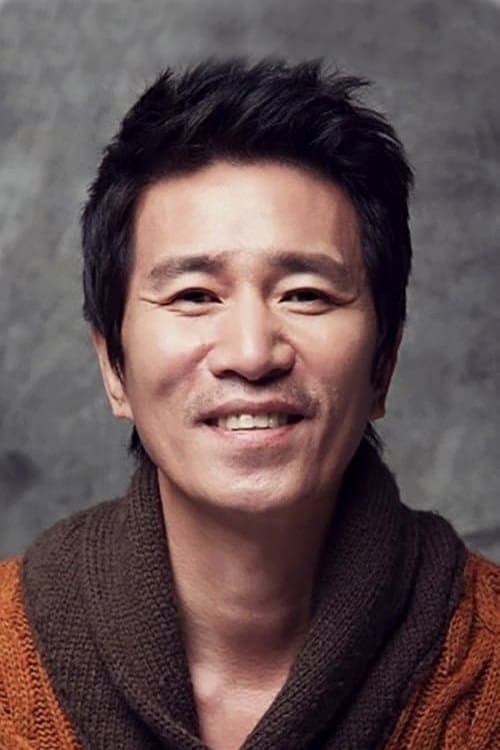
Mr. Sunshine (Korean: 미스터 션샤인; RR: Miseuteo Syeonsyain) is a South Korean television series written by Kim Eun-sook and directed by Lee Eung-bok, starring Lee Byung-hun, Kim Tae-ri, Yoo Yeon-seok, Kim Min-jung, and Byun Yo-han. The series is set in Hanseong (present-day Seoul) in the early 1900s, and focuses on activists fighting for Korea's independence. It aired on tvN from July 7 to September 30, 2018, every Saturday and Sunday at 21:00 (KST), and premiered internationally on Netflix.
Upon its final broadcast, Mr. Sunshine was the third highest-rated series in Korean cable television history, with the last episode reaching 18.129%. Critically, it was acclaimed for its cinematography and storytelling, as well as its strong female characters and portrayal of the common people. At the 55th Baeksang Arts Awards, it received eight nominations and a Best Actor win for Lee Byung-hun.
Contents
Synopsis
Mr. Sunshine centers on Eugene Choi, who was born into slavery in Joseon. After his father is beaten to death and his mother dies protecting him, young Eugene escapes to the United States at the time of the 1871 Shinmiyangyo incident with the help of a Christian missionary. He grows up in New York City and becomes a Marine Corps officer.
When he returns to Korea as a captain serving in the US legation in Hanseong, Eugene meets and falls in love with Go Ae-shin, a nobleman's granddaughter who is secretly a freedom fighter and a sniper for the Righteous Army. However, their love is challenged by their different classes and the presence of Kim Hui-seong, a nobleman from a prominent family who has been Ae-shin's betrothed since childhood.
Eugene also encounters Gu Dong-mae, a ruthless samurai, and Kudo Hina, the Joseon-born widow of a wealthy Japanese man and owner of the popular Glory Hotel.
As he discovers a plot by the Empire of Japan to colonize Korea, Eugene becomes embroiled in the fight for his birth country's sovereignty.
Cast
Main
Lee Byung-hun as Eugene Choi / Choi Yu-jin
Kim Kang-hoon as child Eugene Choi / Choi Yu-jin
Jeon Jin-seo as young Eugene Choi / Choi Yu-jin
A captain of the United States Marine Corps and former Joseon slave. After witnessing his parents' death at the hands of their owner, Eugene manages to escape to the United States where he becomes an officer in the Marine Corps and fights in the Spanish–American War. He later returns to Korea on a diplomatic mission and falls in love with Go Ae-shin. Eugene has to choose between helping Ae-shin in her fight for independence or maintaining his neutral position as a US officer.
Kim Tae-ri as Go Ae-shin
Heo Jung-eun as child Go Ae-shin
An orphaned noblewoman and member of the Righteous Army. Her parents were independence fighters who died in Japan due to their colleague's betrayal. She is raised by her paternal grandfather who helps her train as a sniper.
Yoo Yeon-seok as Gu Dong-mae / Ishida Shō
Choi Min-young as young Gu Dong-mae
The son of a butcher who flees to Japan upon his parents' death and becomes a member of the Musin Society, which is part of the Yakuza. He believes that it is the unjust Joseon social hierarchy that killed his parents and returns to Korea with a mission of helping the Japanese overtake the country.
Kim Min-jung as Kudo Hina / Yi Yang-hwa
An influential widow who runs a hotel in Korea. Her father forced her to marry an old, rich Japanese man. Upon her husband's mysterious death, she inherited the Glory Hotel and successfully operates it on her own. In order to atone for her father's shameful misdeeds and to also find her mother, Hina helps the emperor in the fight against the Japanese government and the pro-Japanese officials.
Recurring
Lee Seung-joon as Emperor Gojong
Kang Yi-seok as young Emperor Gojong
The Korean monarch who desperately fights for the country's sovereignty.
Kang Shin-il as Yi Jung-mun
An anti-Japanese official loyal to the emperor. He secretly commands the Righteous Army.
Kim Eui-sung as Yi Wan-ik / Rinoie Hiroaki
Kudo Hina's father. A selfish and cruel pro-Japanese official who is responsible for the deaths of Go Ae-shin's parents.
Kim Joong-hee as Yi Deok-mun
A pro-Japanese nobleman. Yi Wan-ik's assistant and Go Ae-sun's abusive husband.
Choi Jin-ho as Yi Se-hun
The arrogant and corrupt Minister of Foreign Affairs whose actions indirectly led to the deaths of Eugene Choi's parents.
Jung Hee-tae as Police Commissioner Jung
Shin Mun-sung as Postmaster Yoon
Kim Kang-il as Doctor Matsuyama
A Japanese doctor secretly working for Yi Wan-ik.
Jung Seung-gil as Yi Wan-yong
An infamous pro-Japanese official and one of the Five Eulsa Traitors.
Kim Kap-soo as Hwang Eun-san
Special appearances
Lee Si-a as Eugene Choi's mother
Jo Wan-ki as Eugene Choi's father
Choi Jong-won as Grand Internal Prince Heungseon
The emperor's father.
Yoon Kyung-ho as Jang Seung-gu's father
A gunner killed during the Shinmiyangyo incident.
Im Se-mi as Gu Dong-mae's mother
Shim Wan-joon as Gu Dong-mae's father
Jin Goo as Go Sang-wan
Go Ae-sin's father who is killed while plotting to assassinate Yi Wan-ik.
Kim Ji-won as Kim Hui-jin
Go Ae-shin's mother who is killed by Yi Wan-ik.
Kim Joo-ryoung as Imperial Noble Consort Sunheon
The emperor's high-ranking concubine and Kudo Hina's close friend.
Park Jeong-min as Ahn Chang-ho
A Korean independence activist living in the United States.
Background
Historical background
Unlike most sageuk dramas dealing with the Japanese occupation of Korea, Mr. Sunshine takes place before the Japanese annexation, in the late 19th and early 20th centuries. It has a heavy focus on the Righteous Army and depicts the lives of people who fought for Korea's freedom. Real-life historical events such as the Shinmiyangyo incident, the Spanish-American War, the assassination of Empress Myeongseong, the Russo-Japanese War, Gojong's forced abdication and the Battle of Namdaemun are portrayed or mentioned.
Historical figures such as Emperor Gojong, Itō Hirobumi, Hayashi Gonsuke, Hasegawa Yoshimichi, Horace Newton Allen and the Five Eulsa Traitors appear as recurring characters, with others, such as Theodore Roosevelt, Ahn Chang-ho, Imperial Noble Consort Sunheon, Park Seung-hwan, and Frederick Arthur MacKenzie, also making cameo appearances.
Main historical events described in Mr. Sunshine
The Battle of Ganghwa: A major battle that occurred on June 10, 1871 between the United States and Joseon. On June 1, American ships came under fire when they entered the Ganghwa Straits to establish trade and ensure the safety of the shipwrecked sailors of the SS General Sherman, which was destroyed by the Joseon army. As a result of Joseon's refusal to apologize, on June 10, USS Palos and USS Monocacy fired their weapons against the Choji Garrison on Ganghwa Island. The incident is thoroughly portrayed in Mr. Sunshine as one of its characters, Jang Seung-gu, fought in the battle as a teen and lost his father.
The Japan–Korea Treaty of 1905: Signed on November 17, 1905, this treaty effectively gave diplomatic control over Korea to the Empire of Japan. While Mr. Sunshine does not depict the treaty and its effects in detail, it contains a scene in which Kim Hui-seong takes pictures of the Five Eulsa Traitors.
The Battle of Namdaemun: Fought between the Korean and Japanese armies on August 1, 1907, the battle took place at the Namdae Gate in Hanseong. It was caused by a revolt of the Korean army after an order of disbandment was issued through the Japan–Korea Treaty of 1907. The battle scenes are extensively illustrated in Mr. Sunshine.
Production
On May 29, 2017, it was announced that Kim Eun-sook had begun writing a new series with the working title Mr. Sunshine. A representative from Hwa&Dam Pictures stated at the time that it would be aired in the spring or summer of the following year. The drama is the third collaboration between Kim and director Lee Eung-bok, after Descendants of the Sun (2016) and Guardian: The Lonely and Great God (2016–2017). In June, Lee Byung-hun was officially cast as the male lead, in his first television role since Iris (2009), and Kim Tae-ri was announced as the female lead the following month. The drama marked film actress Kim Tae-ri's small-screen debut. Kim Sa-rang was originally cast in the series, but backed out in February 2018 due to scheduling conflicts. She was replaced by Kim Min-jung.
The drama was first pitched by Studio Dragon to SBS, but SBS passed on the project due to financial and advertising constraints. Filming began in September 2017 and took place in various parts of South Korea including Busan, Daegu, Gokseong County, Gyeongju and Hapcheon County. Several sets solely devoted to the early 1900s setting of Korea were built on a 20,000 m2 site in Nonsan, South Chungcheong Province, and another indoor set was built on a 6,600 m2 site in Daejeon. 1,000 extras were hired for a battle scene. To obtain the series' distribution rights in over 190 countries, Netflix invested ₩30 billion (US$26.2 million) in Mr. Sunshine.
Original soundtrack
The music was composed by Nam Hye-seung, who is known for her work on many Korean dramas. Mr. Sunshine's score was recorded at the newly opened Vienna Synchron Stage in Austria. Nam Hye-seung travelled to Vienna to attend the recording in person.
Reception
Critics praised the drama for its "deep storytelling" and its ability to raise viewers' awareness of history. The Korea Times applauded the drama for shedding light on those deemed peripheral in society, such as women and the lower classes, and for successfully laying out contradictions and hope in the fast-evolving late Joseon period; it also praised the show's strong female characters. Time's Kat Moon chose the show as one of "The 10 Best Korean Dramas to Watch on Netflix" and argued, "Besides serving up stunning cinematography, the show introduces two of the most dynamic female leads from the K-drama world". Collider's Devon Forward listed it as one of "The Best Korean Dramas on Netflix Right Now".
Major General Patrick Donaho, the commander of United States Forces Korea, strongly recommended the drama on his Twitter account in 2020.
Criticism
Mr. Sunshine has been criticized by some for what was perceived as an inaccurate portrayal of historical facts and Joseon's culture. It was also accused of being "pro-Japanese". In particular the character Gu Dong-mae, who had been portrayed as a member of the Black Dragon Society, a pro-Japanese organization, was condemned, with many feeling that the series tried to justify his actions against Joseon. However, the series has also been criticized for the exact opposite: enforcing stereotypes of the Japanese as villains and the Americans as heroes.
The production house responded to the criticisms by stating that the organizations and characters portrayed in the series are fictional and that they will modify the character description of Gu Dong-mae accordingly. The Black Dragon Society was changed to a fictional organization, the Musin Society.
Viewership
At the time of airing, Mr. Sunshine recorded the third highest ratings in Korean cable television history with its final episode reaching 18.129% and netting an average rating of 12.955%, which was the highest average rating ever recorded for cable television until the release of The World of the Married in 2020.
An 8.9% viewership rating was recorded nationwide for the series' first episode. It became the highest premiere rating in the network's history and remained in this position for the next three years, when it was surpassed by Hospital Playlist 2.
The drama aired on a cable channel/pay TV which normally has a relatively smaller audience compared to free-to-air TV/public broadcasters (KBS, SBS, MBC and EBS).

