








_(cropped).jpg?width=400)
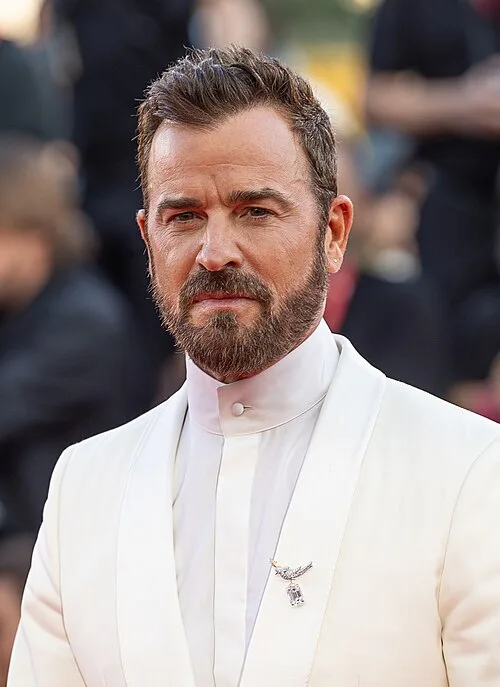
Mulholland Drive is a 2001 mystery thriller film written and directed by David Lynch. Its narrative is characterized by surrealist and neo-noir elements, and follows an aspiring actress (Naomi Watts) newly arrived in Los Angeles, where she befriends a car crash victim (Laura Harring) who is suffering from amnesia. Meanwhile, a Hollywood director (Justin Theroux) must deal with interference from the criminal underworld while casting his latest film.
The film was originally conceived as a television pilot for ABC, with footage shot and edited in 1999 as an open-ended mystery. After viewing Lynch's cut, however, ABC executives cancelled the proposed series. Lynch then secured funding from French production company StudioCanal to repurpose the footage into a film, for which he wrote an ending and filmed new material. The resulting film, edited and produced by Lynch's frequent collaborator (and briefly wife) Mary Sweeney, has left the story's events open to interpretation. Lynch's refusal to offer an explanation left audiences, critics, and even the film's own cast to speculate on its meaning. The film considerably boosted Watts's Hollywood profile and marked the last feature film role of veteran Hollywood star Ann Miller.
Mulholland Drive received widespread critical acclaim, earning Lynch the Cannes Film Festival Award for Best Director and a nomination for the Academy Award for Best Director. It was also a moderate commercial success, grossing $20.1 million on a budget of $15 million. It is frequently cited as one of the greatest films of the 2000s, the 21st century and among the best films of all time.
The 2022 Sight and Sound Greatest Films of All Time critics' poll ranked it at No. 8, while the director's poll ranked it at No. 22. The BBC and IndieWire named it the best film of the 21st century, and the LA Film Critics Association listed it as the best film of the 2000s. In 2025, The New York Times ranked it at No. 2 on their list of the 100 Best Movies of the 21st Century, while The Ringer named Watts's performance as the greatest of the 21st century.
Contents
Plot
The film opens with brightly lit images of couples dancing the jitterbug, over which a young blonde woman appears smiling and being applauded, followed by a point-of-view shot descending toward a pillow as someone lies down.
At night on Mulholland Drive, a brunette woman in an elegant evening gown narrowly escapes being shot by her chauffeur when another car crashes into them. Left with amnesia, she wanders into Los Angeles and hides in a vacant apartment. The next morning, she is discovered by Betty Elms, an aspiring actress newly arrived from Deep River, Ontario, who is staying at her aunt's place. The brunette adopts the name "Rita" after seeing a poster of Rita Hayworth and recalls only that she is in danger. The two become friends and discover a blue key and a large sum of cash in Rita's purse.
A man named Dan eats at a diner and recounts a nightmare to his friend in which he encounters a monstrous figure in the alley behind the diner. When they go outside to investigate, a filthy homeless person appears from around a corner exactly as predicted, Dan collapses in shock.
Film director Adam Kesher is pressured by mob-connected businessmen to cast an unknown blonde, Camilla Rhodes, in his new film The Sylvia North Story. When he refuses, the mob shuts down production. He returns home to find his wife cheating on him, is beaten and thrown out, and discovers his bank account has been frozen. A mysterious cowboy warns him to cast Camilla. Meanwhile, incompetent hitman Joe Messing botches a job, killing bystanders.
Rita remembers the name "Diane Selwyn", and Betty locates her address in a phone book. A seemingly psychic neighbor warns that "someone is in trouble," and building manager Coco cautions Betty about letting Rita stay. Betty leaves for an audition, where she performs brilliantly; a casting agent brings her to Adam's audition for The Sylvia North Story. While Camilla auditions with a performance of "I've Told Ev'ry Little Star", Betty and Adam share a brief but intense glance before she slips away to meet Rita. Adam agrees to cast Camilla to appease the mob.
Betty and Rita visit Diane's apartment complex, where a neighbor who recently exchanged units with Diane says she has not been seen in some time and directs them to her apartment. Inside, they discover a woman's decomposing corpse on the bed. Rita panics and tries to cut her own hair, but Betty instead disguises her with a blonde wig. That night, they have sex and Betty twice confesses she is in love. Rita later wakes them both by chanting silencio, no hay banda ('silence, there is no band') in her sleep, and insists on visiting Club Silencio, where the host explains all performances are pre-recorded. Betty and Rita weep as Rebekah Del Rio performs a Spanish rendition of "Crying", and Betty discovers a blue box in her purse that matches Rita's key. Back at the apartment, Rita unlocks the box and realizes Betty has vanished, before disappearing herself.
Themes and interpretations
Giving the film only the tagline, "A love story in the city of dreams," David Lynch refused to comment on Mulholland Drive's meaning or symbolism, leading to much discussion and multiple interpretations. The Christian Science Monitor film critic David Sterritt spoke with Lynch after the film screened at Cannes and wrote that the director "insisted that Mulholland Drive does tell a coherent, comprehensible story," unlike some of Lynch's earlier films like Lost Highway. On the other hand, Justin Theroux said of Lynch's feelings on the multiple meanings people perceive in the film, "I think he's genuinely happy for it to mean anything you want. He loves it when people come up with really bizarre interpretations. David works from his subconscious." The film was described as a neo-noir.
Dreams and alternative realities
An early interpretation of the film uses dream analysis to argue that the first part is a dream of the real Diane Selwyn, who has cast her dream-self as the innocent and hopeful, "Betty Elms," reconstructing her history and persona into something like an old Hollywood film. In the dream, Betty is successful, charming, and lives the fantasy life of a soon-to-be-famous actress. The remainder of the film presents Diane's real life, in which she has failed both personally and professionally. She arranges for Camilla, an ex-lover, to be killed; unable to cope with the guilt, she re-imagines her as the dependent, pliable amnesiac Rita. Clues to her inevitable demise, however, appear throughout her dream.
This interpretation is similar to what Naomi Watts construed; in a 2001 interview, she stated that "I thought Diane was the real character and that Betty was the person she wanted to be and had dreamed up. Rita is the damsel in distress and she's in absolute need of Betty, and Betty controls her as if she were a doll. Rita is Betty's fantasy of who she wants Camilla to be." Watts' own early experiences in Hollywood paralleled those of Diane's. She endured some professional frustration before she became successful, auditioned for parts in which she did not believe, and encountered people who did not follow through with opportunities. She recalled, "There were a lot of promises, but nothing actually came off. I ran out of money and became quite lonely." Michael Wilmington of the Chicago Tribune found that "everything in Mulholland Drive is a nightmare. It's a portrayal of the Hollywood golden dream turning rancid, curdling into a poisonous stew of hatred, envy, sleazy compromise and soul-killing failure. This is the underbelly of our glamorous fantasies, and the area Lynch shows here is realistically portrayed."
The Guardian asked six well-known film critics for their own perceptions of the overall meaning in Mulholland Drive. Neil Roberts of The Sun and Tom Charity of Time Out subscribe to the theory that Betty is Diane's projection of a happier life. Roger Ebert and Jonathan Ross seem to accept this interpretation, but both hesitate to overanalyze the film. Ebert states, "There is no explanation. There may not even be a mystery." Ross observes that there are storylines that go nowhere: "Perhaps these were leftovers from the pilot it was originally intended to be, or perhaps these things are the non-sequiturs and subconscious of dreams." Philip French from The Observer sees it as an allusion to Hollywood tragedy, while Jane Douglas from the BBC rejects the theory of Betty's life as Diane's dream, but also warns against too much analysis.
A "poisonous valentine to Hollywood"
Despite the proliferation of theories, critics note that no explanation satisfies all of the loose ends and questions that arise from the film. Stephen Holden of the New York Times writes, "Mulholland Drive has little to do with any single character's love life or professional ambition. The movie is an ever-deepening reflection on the allure of Hollywood and on the multiple role-playing and self-invention that the movie-going experience promises. ... What greater power is there than the power to enter and to program the dream life of the culture?" J. Hoberman from the Village Voice echoes this sentiment by calling it a "poisonous valentine to Hollywood."
Mulholland Drive has been compared with Billy Wilder's film noir Sunset Boulevard (1950), another tale about broken dreams in Hollywood, and early in the film Rita is shown crossing Sunset Boulevard at night. Apart from both titles being named after iconic Los Angeles streets, Mulholland Drive is "Lynch's unique account of what held Wilder's attention too: human putrefaction (a term Lynch used several times during his press conference at the New York Film Festival 2001) in a city of lethal illusions." Lynch lived near Mulholland Drive, and stated in an interview, "At night, you ride on the top of the world. In the daytime you ride on top of the world, too, but it's mysterious, and there's a hair of fear because it goes into remote areas. You feel the history of Hollywood in that road." Watts also had experience with the road before her career was established: "I remember driving along the street many times sobbing my heart out in my car, going, 'What am I doing here?'"
Critic Gregory Weight cautions viewers against the cynicism of believing that Lynch presents only "the façade and that he believes only evil and deceit lie beneath it." As much as Lynch makes a statement about the deceit, manipulation and false pretenses in Hollywood culture, he also infuses nostalgia throughout the film and recognizes that real art comes from classic filmmaking, as Lynch cast and thereby paid tribute to veteran actors Ann Miller, Lee Grant and Chad Everett. He also portrays Betty as extraordinarily talented and shows that her abilities are noticed by powerful people in the entertainment industry. Commenting on the contrasting positions between film nostalgia and the putrefaction of Hollywood, Steven Dillon writes that Mulholland Drive is critical of the culture of Hollywood as much as it is a condemnation of cinephilia.
Harring described her interpretation after seeing the film: "When I saw it the first time, I thought it was the story of Hollywood dreams, illusion and obsession. It touches on the idea that nothing is quite as it seems, especially the idea of being a Hollywood movie star. The second and third times I saw it, I thought it dealt with identity. Do we know who we are? And then I kept seeing different things in it. ... There's no right or wrong to what someone takes away from it or what they think the film is really about. It's a movie that makes you continuously ponder, makes you ask questions. I've heard over and over, 'This is a movie that I'll see again' or 'This is a movie you've got to see again.' It intrigues you. You want to get it, but I don't think it's a movie to be gotten. It's achieved its goal if it makes you ask questions."
Romantic content
The relationships between Betty and Rita, and Diane and Camilla have been variously described as "touching," "moving," as well as "titillating." The French critic Thierry Jousse, in his review for Cahiers du Cinéma, said that the love between the women depicted is "of lyricism practically without equal in contemporary cinema." In Film Comment, Phillip Lopate states that the pivotal romantic interlude between Betty and Rita was made poignant and tender by Betty's "understanding for the first time, with self-surprise, that all her helpfulness and curiosity about the other woman had a point: desire ... It is a beautiful moment, made all the more miraculous by its earned tenderness, and its distances from anything lurid." Stephanie Zacharek of Salon magazine stated that the scene's "eroticism [was] so potent it blankets the whole movie, coloring every scene that came before and every one that follows." Betty and Rita were chosen by the Independent Film Channel as the emblematic romantic couple of the 2000s. Writer Charles Taylor said, "Betty and Rita are often framed against darkness so soft and velvety it's like a hovering nimbus, ready to swallow them if they awake from the film's dream. And when they are swallowed, when smoke fills the frame as if the sulfur of hell itself were obscuring our vision, we feel as if not just a romance has been broken, but the beauty of the world has been cursed."
Some film theorists have argued that Lynch inserts queerness in the aesthetic and thematic content of the film. The non-linear film is "incapable of sustaining narrative coherence," as Lee Wallace argues, and "lesbianism dissolves the ideological conventions of narrative realism, operating as the switch point for the contesting storyworlds within Lynch's elaborately plotted film." The presence of mirrors and doppelgangers throughout the film "are common representations of lesbian desire." The co-dependency in the relationship between Betty and Rita—which borders on outright obsession—has been compared to the female relationships in two similar films, Ingmar Bergman's Persona (1966) and Robert Altman's 3 Women (1977), which also depict identities of vulnerable women that become tangled, interchanging and ultimately merged: "The female couples also mirror each other, with their mutual interactions conflating hero(ine) worship with same-sex desire." Lynch pays direct homage to Persona in the scene where Rita dons the blonde wig, styled exactly like Betty's own hair. Rita and Betty then gaze at each other in the mirror "drawing attention to their physical similarity, linking the sequence to theme of embrace, physical coupling and the idea of merging or doubling." Mirroring and doubles, which are prominent themes throughout the film, serve to further queer the form and content of the film.
Characters
Betty Elms (Naomi Watts) is the bright and talented newcomer to Los Angeles, described as "wholesome, optimistic, determined to take the town by storm," and "absurdly naïve." Her perkiness and intrepid approach to helping Rita because it is the right thing to do is reminiscent of Nancy Drew for reviewers. Her entire persona at first is an apparent cliché of small-town naïveté. But it is Betty's identity, or loss of it, that appears to be the focus of the film. For one critic, Betty performed the role of the film's consciousness and unconscious. Watts, who modeled Betty on Doris Day, Tippi Hedren and Kim Novak, observed that Betty is a thrill-seeker, someone "who finds herself in a world she doesn't belong in and is ready to take on a new identity, even if it's somebody else's." This has also led one theorist to conclude that since Betty had naïvely, yet eagerly entered the Hollywood system, she had become a "complicit actor" who had "embraced the very structure that" destroyed her. In an explanation of her development of the Betty character, Watts stated:
I had to therefore come up with my own decisions about what this meant and what this character was going through, what was dream and what was reality. My interpretation could end up being completely different, from both David and the audience. But I did have to reconcile all of that, and people seem to think it works.
Betty, however difficult to believe as her character is established, shows an astonishing depth in her audition. Previously rehearsed with Rita in the apartment, where Rita feeds her lines woodenly, the scene is "dreck" and "hollow; every line unworthy of a genuine actress's commitment," and Betty plays it in rehearsal as poorly as it is written. However, though nervous but plucky as ever at the audition, Betty enters the cramped room, and when pitted inches from her audition partner (Chad Everett), she turns it into a scene of powerful sexual tension that she fully controls and draws in every person in the room. The sexuality erodes immediately as the scene ends and she stands before them shyly waiting for their approval. One film analyst asserts that Betty's previously unknown ability steals the show, specifically, taking the dark mystery away from Rita and assigning it to herself, and by Lynch's use of this scene, he illustrates his use of deception in his characters. Betty's acting ability prompts Ruth Perlmutter to speculate that if Betty is acting the role of Diane in either a dream or a parody of a film, ultimately her acting turns against her.
Style
The filmmaking style of David Lynch has been written about extensively using descriptions like "ultraweird", "dark" and "oddball". Todd McGowan writes, "One cannot watch a Lynch film the way one watches a standard Hollywood film noir nor in the way that one watches most radical films." Through Lynch's juxtaposition of cliché and surreal, nightmares and fantasies, nonlinear story lines, camera work, sound and lighting, he presents a film that challenges viewers to suspend belief of what they are experiencing. Many of the characters in Mulholland Drive are archetypes that can only be perceived as cliché: the new Hollywood hopeful, the femme fatale, the maverick director and shady powerbrokers that Lynch never seems to explore fully. Lynch places these often hackneyed characters in dire situations, creating dream-like qualities. By using these characters in scenarios that have components and references to dreams, fantasies and nightmares, viewers are left to decide, between the extremes, what is reality. One film analyst, Jennifer Hudson, writes of him, "Like most surrealists, Lynch's language of the unexplained is the fluid language of dreams."
David Lynch uses various methods of deception in Mulholland Drive. A shadowy figure named Mr. Roque, who seems to control film studios, is portrayed by dwarf actor Michael J. Anderson. Anderson, who has only two lines and is seated in an enormous wooden wheelchair, was fitted with oversized foam prosthetic arms and legs in order to portray his head as abnormally small. During Adam and Camilla's party, Diane watches Camilla (played by Harring) with Adam on one arm, lean over and deeply kiss the same woman who appeared as Camilla (Melissa George) before the blue box was opened. Both then turn and smile pointedly at Diane. Film critic Franklin Ridgway writes that the depiction of such a deliberate "cruel and manipulative" act makes it unclear if Camilla is as capricious as she seems, or if Diane's paranoia is allowing the audience only to see what she senses. In a scene immediately after Betty's audition, the film cuts to a woman singing without apparent accompaniment, but as the camera pulls backwards, the audience sees that it is a recording studio. In actuality, it is a sound stage where Betty has just arrived to meet Adam Kesher, that the audience realizes as the camera pulls back further. Ridgway insists that such deception through artful camera work sets the viewer full of doubt about what is being presented: "It is as if the camera, in its graceful fluidity of motion, reassures us that it (thinks it) sees everything, has everything under control, even if we (and Betty) do not."
According to Stephen Dillon, Lynch's use of different camera positions throughout the film, such as hand-held points of view, makes the viewer "identify with the suspense of the character in his or her particular space", but that Lynch at moments also "disconnects the camera from any particular point of view, thereby ungrounding a single or even a human perspective" so that the multiple perspectives keep contexts from merging, significantly troubling "our sense of the individual and the human". Andrew Hageman similarly notes that the camera work in the film "renders a very disturbing sense of place and presence", such as the scene in Winkie's where the "camera floats irregularly during the shot-reverse shot dialogue" by which the "spectator becomes aware that a set of normally objective shots have become disturbingly subjective". Scholar Curt Hersey recognizes several avant-garde techniques used in the film including lack of transitions, abrupt transitions, motion speed, nontraditional camera movement, computer-generated imagery, nondiegetic images, nonlinear narration and intertextuality.
Production
Development
Originally conceived as a television series, Mulholland Drive began as a 90-minute pilot produced for Touchstone Television and intended for the ABC television network. Tony Krantz, the agent who was responsible for the development of Twin Peaks, was "fired up" about doing another television series. Lynch sold the idea to ABC executives based only on the story of Rita emerging from the car accident with her purse containing $125,000 in cash and the blue key, and Betty trying to help her figure out who she is. An ABC executive recalled, "I remember the creepiness of this woman in this horrible, horrible crash, and David teasing us with the notion that people are chasing her. She's not just 'in' trouble—she is trouble. Obviously, we asked, 'What happens next?' And David said, 'You have to buy the pitch for me to tell you.'"
Lynch had hesitations about returning to television, after his experience making Twin Peaks and the rapid cancellation of another series he and Mark Frost made for ABC, On the Air. "With all the commercials and its terrible sound and picture...TV is a hair of a joke really". Nevertheless, Lynch described the attractiveness of the longer format: "I'm a sucker for a continuing story ... Theoretically, you can get a very deep story and you can go so deep and open the world so beautifully, but it takes time to do that." The story included surreal elements, much like Lynch's earlier series Twin Peaks. Groundwork was laid for story arcs, such as the mystery of Rita's identity, Betty's career and Adam Kesher's film project. The planned series would also have featured a romance between Betty and Adam.
The pilot's budget was $7 million, on the proviso that Lynch shot a closed ending in case the network didn't order a series. While initially enthusiastic, ABC's expectations soon clashed with Lynch's vision. They found his pacing too slow and objected to his casting of Naomi Watts and Laura Harring. According to Krantz the two were "a little old...and ABC thinks Betty is too aw-shucks and Okie-from-Muskogee, and that at the beginning, after the accident, Rita looks kind of goofy." Even Lynch's penchant for cigarettes clashed with ABC's standards-and-practices department, which didn't want the network to appear as if it condoned smoking. Lynch made script changes to accommodate ABC, but in a later scene whispered to Justin Theroux, "Take a really fucking big drag—fucking love that cigarette".
When Lynch showed ABC a rough cut of the pilot, the person who saw it, according to Lynch, was watching it at six in the morning and was having coffee and standing up. He hated the pilot, and ABC immediately cancelled it. Pierre Edelman, Lynch's friend from Paris, came to visit and started talking to him about the film being a feature. Edelman went back to Paris. Canal+ wanted to give Lynch money to make it into a feature and it took a year to negotiate.
Casting
Lynch cast Naomi Watts and Laura Harring by their photographs. He called them in separately for half-hour interviews and told them that he had not seen any of their previous works in film or television. Harring considered it fateful that she was involved in a minor car accident on the way to the first interview, only to learn her character would also be involved in a car accident in the film. Watts arrived wearing jeans for the first interview, direct from the airplane from New York City. Lynch asked her to return the next day "more glammed up". She was offered the part two weeks later. Lynch explained his selection of Watts, "I saw someone that I felt had a tremendous talent, and I saw someone who had a beautiful soul, an intelligence—possibilities for a lot of different roles, so it was a beautiful full package." Justin Theroux also met Lynch directly after his airplane flight. After a long flight with little sleep, Theroux arrived dressed all in black, with untidy hair. Lynch liked the look and decided to cast Adam wearing similar clothes and the same hairstyle.
Filming
Filming for the television pilot began on location in Los Angeles in February 1999 and took six weeks. Ultimately, the network was unhappy with the pilot and decided not to place it on its schedule. Objections included the nonlinear storyline, the ages of Harring and Watts (whom they considered too old), cigarette smoking by Ann Miller's character and a close-frame shot of dog feces in one scene. Lynch remembered, "All I know is, I loved making it, ABC hated it, and I don't like the cut I turned in. I agreed with ABC that the longer cut was too slow, but I was forced to butcher it because we had a deadline, and there wasn't time to finesse anything. It lost texture, big scenes and storylines, and there are 300 tape copies of the bad version circulating around. Lots of people have seen it, which is embarrassing, because they're bad-quality tapes, too. I don't want to think about it."
The script was later rewritten and expanded when Lynch decided to transform it into a feature film. Lynch explained the process of developing an ending for the unfinished story: "The day came when I got the greenlight to turn it into a feature, and I had zero ideas. I just hadn’t been thinking about it. Then came the day I needed to get those ideas, and that night, I sat down during my meditation and in there, I say like a string of pearls, all the ideas came, all at once, and there it was." He added that, "Now, looking back, I see that [the film] always wanted to be this way. It just took this strange beginning to cause it to be what it is." The result was an extra eighteen pages of material that included the romantic relationship between Rita and Betty and the events that occurred after the blue box was opened. Watts was relieved that the pilot was dropped by ABC. She found Betty too one-dimensional without the darker portion of the film that was put together afterward. Most of the new scenes were filmed in October 2000, funded with $7 million from French production company StudioCanal.
Theroux described approaching filming without entirely understanding the plot: "You get the whole script, but he might as well withhold the scenes you're not in, because the whole turns out to be more mystifying than the parts. David welcomes questions, but he won't answer any of them ... You work kind of half-blindfolded. If he were a first-time director and hadn't demonstrated any command of this method, I'd probably have reservations. But it obviously works for him." Theroux noted that the only answer Lynch did provide was that he was certain that Theroux's character, a Hollywood director, was not meant to be Lynch. Watts stated that she tried to bluff Lynch by pretending she had the plot figured out, and that he delighted in the cast's frustration. Ben Stiller visited the set one day; Lynch thought he was an extra and offered him a background role, but he declined.
Soundtrack
The soundtrack of Mulholland Drive was supervised by Angelo Badalamenti, who collaborated on previous Lynch projects Blue Velvet and Twin Peaks. Badalamenti, who was nominated for awards from the American Film Institute (AFI) and the British Academy of Film and Television Arts (BAFTA) for his work on the film, also has a cameo as an espresso aficionado and mobster.
Reviewers noted that Badalamenti's ominous score, described as his "darkest yet", contributes to the sense of mystery as the film opens on the dark-haired woman's limousine, that contrasts with the bright, hopeful tones of Betty's first arrival in Los Angeles, with the score "acting as an emotional guide for the viewer". Film music journalist Daniel Schweiger remarks that Badalamenti's contribution to the score alternates from the "nearly motionless string dread to noir jazz and audio feedback", with "the rhythms building to an explosion of infinite darkness." Badalamenti described a particular technique of sound design applied to the film, by which he would provide Lynch with multiple ten- to twelve-minute tracks at slow tempo, that they called "firewood", from which Lynch "would take fragments and experiment with them resulting in a lot of film's eerie soundscapes."
Lynch uses two pop songs from the 1960s directly after one another, playing as two actresses are auditioning by lip synching them. According to an analyst of music used in Lynch films, Lynch's female characters are often unable to communicate through normal channels and are reduced to lip-synching or being otherwise stifled. Connie Stevens's "Sixteen Reasons" is the song being sung while the camera pans backwards to reveal several illusions, and Linda Scott's version of "I've Told Ev'ry Little Star" is the audition for the first Camilla Rhodes, that film scholar Eric Gans considers a song of empowerment for Betty. Originally written by Jerome Kern as a duet, sung by Linda Scott in this rendition by herself, Gans suggests it takes on a homosexual overtone in Mulholland Drive. Unlike "Sixteen Reasons", however, portions of "I've Told Ev'ry Little Star" are distorted to suggest "a sonic split-identity" for Camilla. When the song plays, Betty has just entered the sound stage where Adam is auditioning actresses for his film, and she sees Adam, locks eyes with him and abruptly flees after Adam has declared "This is the girl" about Camilla, thereby avoiding his inevitable rejection.
At the hinge of the film is a scene in an unusual late night theater called Club Silencio where a performer announces "No hay banda (there is no band) ... but yet we hear a band", variated between English, Spanish and French. Described as "the most original and stunning sequence in an original and stunning film", Rebekah Del Rio's Spanish a cappella rendition of "Crying", named "Llorando", is praised as "show-stopping ... except that there's no show to stop" in the sparsely attended Club Silencio. Lynch had wanted to use Roy Orbison's version of "Crying" in Blue Velvet, but changed his mind when he heard Orbison's "In Dreams". Del Rio, who popularized the Spanish version and who received her first recording contract on the basis of the song, stated that Lynch flew to Nashville where she was living, and she sang the song for him once without knowing that he was recording her. Lynch wrote a part for her in the film and used the version she sang for him in Nashville. The song tragically serenades the lovers Betty and Rita, who sit spellbound and weeping, moments before their relationship disappears and is replaced by Diane and Camilla's dysfunction. According to one film scholar, the song and the entire theater scene marks the disintegration of Betty's and Rita's personalities, as well as their relationship. With the use of multiple languages and a song to portray such primal emotions, one film analyst states that Lynch exhibits his distrust of intellectual discourse and chooses to make sense through images and sounds. The disorienting effect of the music playing although del Rio is no longer there is described as "the musical version of Magritte's painting Ceci n'est pas une pipe [sic]".
Release and reception
Mulholland Drive premiered at the 2001 Cannes Film Festival in May to major critical acclaim. Lynch was awarded the Best Director prize at the festival, shared with Joel Coen for The Man Who Wasn't There. It drew positive reviews from many critics and some of the strongest audience reactions of Lynch's career.
The film was publicized with cryptic posters bearing the abbreviation "Mulholland Dr."
Box office
Universal Pictures released Mulholland Drive theatrically in 66 theaters in the United States on October 12, 2001, grossing $587,591 over its opening weekend. It eventually expanded to its widest release of 247 theaters, ultimately grossing $7,220,243 at the U.S. box office. TVA Films released the film theatrically in Canada on October 26, 2001. In other territories outside the United States, the film grossed $12,897,096, for a worldwide total of $20,117,339 on the film's original release, plus much smaller sums on later re-releases.
Reception and legacy
Since its release, Mulholland Drive has received "both some of the harshest epithets and some of the most lavish praise in recent cinematic history". On review aggregator website Rotten Tomatoes, the film has an approval rating of 84% based on 264 reviews. The website's critical consensus reads, "David Lynch's dreamlike and mysterious Mulholland Drive is a twisty neo-noir with an unconventional structure that features a mesmerizing performance from Naomi Watts as a woman on the dark fringes of Hollywood." On Metacritic, which assigns a normalized rating to reviews, the film has a weighted average score of 87 out of 100 based on 37 critics, indicating "universal acclaim".
Roger Ebert of the Chicago Sun-Times, who had often been dismissive of Lynch's work, awarded the film four stars out of four, writing, "David Lynch has been working toward Mulholland Drive all of his career, and now that he's arrived there I forgive him for Wild at Heart and even Lost Highway. At last his experiment doesn't shatter the test tubes. The movie is a surrealist dreamscape in the form of a Hollywood film noir, and the less sense it makes, the more we can't stop watching it". In The New York Times, Stephen Holden wrote that the film "ranks alongside Fellini's 8½ and other auteurist fantasias as a monumental self-reflection" and added: "Looked at lightly, it is the grandest and silliest cinematic carnival to come along in quite some time ... on a more serious level, its investigation into the power of movies pierces a void from which you can hear the screams of a ravenous demon whose appetites can never be slaked." Edward Guthmann of the San Francisco Chronicle called it "exhilarating ... for its dreamlike images and fierce, frequently reckless imagination" and added, "there's a mesmerizing quality to its languid pace, its sense of foreboding and its lost-in-time atmosphere ... it holds us, spellbound and amused, for all of its loony and luscious, exasperating 146 minutes [and] proves that Lynch is in solid form—and still an expert at pricking our nerves".
In Rolling Stone, Peter Travers observed, "Mulholland Drive makes movies feel alive again. This sinful pleasure is a fresh triumph for Lynch, and one of the best films of a sorry-ass year. For visionary daring, swooning eroticism and colors that pop like a whore's lip gloss, there's nothing like this baby anywhere." J. Hoberman of The Village Voice stated, "This voluptuous phantasmagoria ... is certainly Lynch's strongest movie since Blue Velvet and maybe Eraserhead. The very things that failed him in the bad-boy rockabilly debacle of Lost Highway—the atmosphere of free-floating menace, pointless transmigration of souls, provocatively dropped plot stitches, gimcrack alternate universes—are here brilliantly rehabilitated." A. O. Scott of The New York Times wrote that, while some might consider the plot an "offense against narrative order", the film is "an intoxicating liberation from sense, with moments of feeling all the more powerful for seeming to emerge from the murky night world of the unconscious".
Home media
The film was released on VHS and DVD by Universal Studios Home Video on April 9, 2002, in the United States and Canada, with few special features. It was released without chapter stops, a feature that Lynch objects to on the grounds that it "demystifies" the film.
Nick Coccellato of Eccentric Cinema gave the film a rating of nine out of ten and the DVD release an eight out of ten, saying that the lack of special features "only adds to the mystery the film itself possesses, in abundance". Special features in later versions and overseas versions of the DVD include a Lynch interview at the Cannes Film Festival and highlights of the debut of the film at Cannes.
Optimum Home Entertainment released Mulholland Drive to the European market on Blu-ray as part of its StudioCanal Collection on September 13, 2010. New special features exclusive to this release include: an introduction by Thierry Jousse; In the Blue Box, a retrospective documentary featuring directors and critics; two making-of documentaries: On the Road to Mulholland Drive and Back to Mulholland Drive, and several interviews with people involved in making the film. It is the second David Lynch film in this line of Blu-rays after The Elephant Man.
The Criterion Collection has released several versions of Mulholland Drive. In October 2015, it released a 2K digital transfer of a restoration of the film on Blu-Ray and DVD, along with interviews, portions of the 2005 edition of Chris Rodley's book Lynch on Lynch, and other special features. It was Lynch's second film to receive a Criterion Collection release on DVD and Blu-ray, following Eraserhead in 2014. Mulholland Drive was part of Criterion's first batch of 4K Ultra HD Blu-ray releases in 2021. Although the 2K Blu-ray release was under license from Focus Features and Universal Studios Home Entertainment, Criterion's parent company Janus Films subsequently acquired the distribution rights.


