

The City of New York Police Department, also known as the New York City Police Department (NYPD), is the primary law enforcement agency within New York City as per the NYC Charter. Established on May 23, 1845, the NYPD is the largest, and one of the oldest, municipal police departments in the United States.
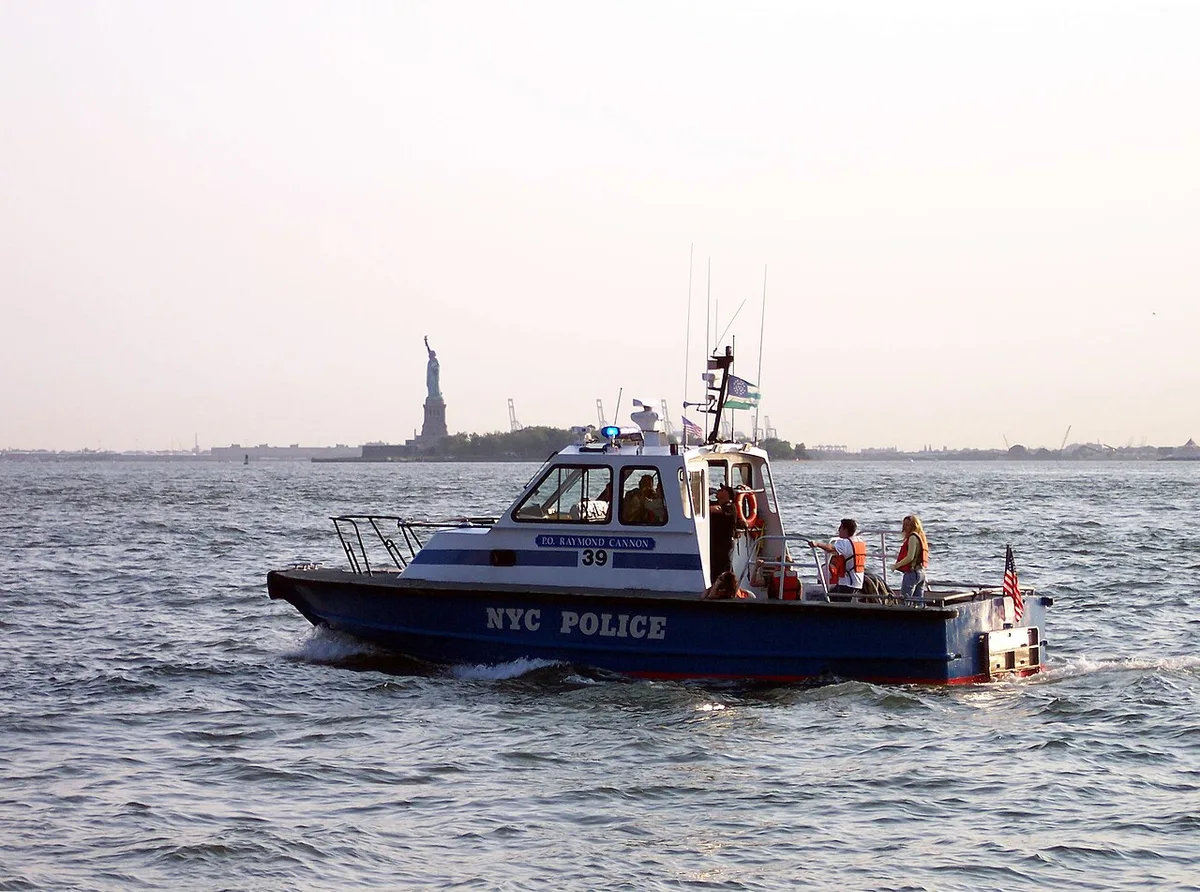
The NYPD is headquartered at 1 Police Plaza, located on Park Row in Lower Manhattan near City Hall. The NYPD's regulations are compiled in title 38 of the New York City Rules. Dedicated units of the NYPD include the Emergency Service Unit, K-9, harbor patrol, highway patrol, air support, bomb squad, counterterrorism, criminal intelligence, anti-organized crime, narcotics, mounted patrol, public transportation, and public housing units. Unlike in other towns and cities, it is not the fire department but the NYPD that has responsibility for emergency water rescue.
The NYPD employs more than 40,000 people, including more than 30,000 police officers as of September 2023. According to the official CompStat database, the NYPD responded to nearly 500,000 reports of crime and made more than 200,000 arrests during 2019. In 2020, it had a budget of US$6 billion. However, the NYPD's actual spending often exceeds its budget.
The NYPD's history has been colored by police brutality, corruption, and misconduct, which critics argue persists till the present day. Due to its high-profile location in New York City, the largest city and media center in the U.S., fictionalized versions of the NYPD and its officers have frequently been portrayed in novels, radio, television, motion pictures, and video games.
Contents
History
The Municipal Police were established in 1845, replacing an old night watch system. Mayor William Havemeyer shepherded the NYPD together. The NYPD appointed its first Black officer in 1911 and the first female officer in 1918.
During Richard Enright's tenure as commissioner, the country's first Shomrim Society, a fraternal organization of Jewish police officers, was founded in the NYPD in 1924. At the time, the NYPD had 700 Jewish officers on the force.
In 1961, highly decorated NYPD officer Mario Biaggi, later a US Congressman, became the first police officer in New York State to be made a member of the National Police Officers Hall of Fame. In the mid-1980s, the NYPD began to police street-level drug markets much more intensively, leading to a sharp increase in incarceration.
In 1992, Mayor David Dinkins created an independent Civilian Complaint Review Board for the NYPD. In response to this, some NYPD officers violently protested and rioted. They blocked traffic on the Brooklyn Bridge, demonstrated at City Hall and shouted racial epithets. The protests were sponsored by the NYPD union.
In 1994, the NYPD developed the CompStat computer system for tracking crime geographically, which is now in use by other police departments in the United States and Canada. Research is mixed on whether CompStat had an impact on crime rates. Throughout the mid to late 1990s, several mergers took place which changed the landscape of policing in New York City. The New York City Transit Police and the New York City Housing Authority Police Department merged into the NYPD in 1995, becoming the Transit Bureau and Housing Bureau respectively. In 1996, the New York City Department of Transportation's Traffic Operations Bureau was merged into the NYPD, becoming the Transportation Bureau. In 1998, the New York City Department of Education's School Safety Division became part of the NYPD's Community Affairs Bureau.
In 2021, the NYPD ceased enforcement of marijuana crimes other than driving under the influence.
In 2024, the NYPD changed its motto from "Courtesy, Professionalism, Respect" to "Fighting Crime, Protecting the Public".
Organization and structure
The department is administered and governed by the police commissioner, who is appointed by the mayor. Technically, the commissioner serves a five-year term; as a practical matter, they serve at the mayor's pleasure. The commissioner in turn appoints the first deputy commissioner, several deputy commissioners, and the chief of department (the most senior uniformed officer). By default, the commissioner and their subordinate deputies are civilians under an oath of office and are not sworn officers. However, a commissioner who comes up from the sworn ranks retains the status and statutory powers of a police officer while serving as commissioner. This affects their police pensions, and their ability to carry a firearm without a pistol permit. Some police commissioners carry a personal firearm but also have a full-time security detail. Commissioners and deputy commissioners are administrators who specialize in areas of great importance to the Department, such as counterterrorism, support services, public information, legal matters, intelligence, and information technology. However, as civilian administrators, deputy commissioners are prohibited from taking operational control of a police situation (the commissioner and the first deputy commissioner may take control of these situations, however). Within the rank structure, there are also designations, known as "grades", that connote differences in duties, experience, and pay. However, supervisory functions are generally reserved for the rank of sergeant and above.
Office of the Chief of Department
The chief of department serves as the senior sworn member of the NYPD. Before 1987, the rank was known as the chief of operations, and, before that, chief inspector. Michael LiPetri currently serves as chief of department.
Previous chiefs of department
John Timoney, 1994–1995
Louis R. Anemone, 1995–1999 (Originally instituted weekly CompStat meetings, which started in the Chief of Patrol's office; Anemone was Chief of Patrol from 1994 to 1995; CompStat moved to the Chief of Department's office when William Bratton promoted Anemone to Chief of Department where it remains today in the Crime Control Strategies Unit office under the Chief's command.)
Joseph Dunne, 1999–2000
Joseph Esposito, 2000–2013 (Longest-serving chief of department in history)
Philip Banks, 2013–2014
James O'Neill, 2014–2016
Carlos M. Gomez, 2016–2017
Terence Monahan, 2018–2021
Rodney Harrison, 2021
Kenneth Corey, 2022
Jeffrey Maddrey, 2022–2024
John Chell, 2025
Michael LiPetri, 2025–present
Crime Control Strategies chiefs
Jack Maple, first person appointed as Deputy Commissioner of Operations and Crime Control Strategies (1994–1996), creator of CompStat
Edward Norris, Deputy Commissioner (1996–2000)
Garry McCarthy, Deputy Commissioner (2000–2006)
Phil Pulaski, Deputy Commissioner (2006–2009)
Patrick Timlin, Deputy Commissioner (2010–2012)
John Bilich, Deputy Commissioner (2012–2014)
Dermot Shea, Deputy Commissioner and Chief of Crime Control Strategies (2014–2018)
Lori Pollack, Chief of Crime Control Strategies (2018–2019)
Michael LiPetri, Chief of Crime Control Strategies (2019-2025)
Francis Giordano, Chief of Crime Control Strategies (2025–present)
Bureaus
The department is divided into several bureaus and bureau-equivalent offices which are typically commanded by a uniformed bureau chief (such as the chief of patrol and the chief of transit) or a civilian deputy commissioner (such as the Deputy Commissioner of Support Services). The bureaus fit under four umbrellas: Patrol, Transit & Housing, Investigative, and Administrative. Bureaus are often subdivided into smaller divisions and units. All deputy commissioners report directly to the commissioner and bureau chiefs report to the commissioner through the chief of department.
Rank structure
Officers graduate from the Police Academy after 26 weeks (or sometimes more) of training in various academic, physical, and tactical fields. For the first 18 months of their careers, they are designated as "Probationary Police Officers" or, more informally, "rookies". There are three career "tracks" in the NYPD: supervisory, investigative, and specialist. The supervisory track consists of nine ranks; promotion to the ranks of sergeant, lieutenant, and captain are made via competitive civil service examinations. After reaching the rank of captain, promotion to the ranks of deputy inspector, inspector, deputy chief, assistant chief, (bureau) chief, and chief of department is always at the discretion of the NYPD commissioner. Promotion from the rank of police officer to detective is discretionary by the police commissioner or required by law when the officer has performed outstanding investigative duty for eighteen months or more.
Badges
Badges in the New York City Police Department are referred to as "shields" (the traditional term), though not all badge designs are strictly shield-shaped.
Every rank has a different badge design (except "police officer" and "probationary police officer") and, upon change in rank, officers receive a new badge. Lower-ranked police officers are identified by their shield numbers. Lieutenants and above do not have shield numbers and are identified by tax registry numbers.
Some officers carry replica badges, called "dupes", when on patrol as officers are punished for losing their shield by losing up to ten days' pay.
^ †: Rank that has no police powers
Department headcount and demographics
As of July 27, 2026, quarterly headcount and demographic data released by the NYPD via New York City Office of Technology and Innovation breaks down the Department's headcount as 33,975 Uniformed Members of Service and 16,012 civilians, and tabulates their ethnic demographics as follows:
Place of residence
As a rule, NYPD officers can reside in New York City as well as Westchester, Rockland, Orange, Putnam, Suffolk and Nassau counties; approximately half of the sworn force lives outside the city (51% in 2020, up from 42% in 2016). Notably, NYPD officers cannot have their permanent place of residence in neighbouring Northern New Jersey, despite many of the region's residents commuting to NYC for jobs.
Women in the NYPD
On January 1, 2022, Keechant Sewell became the first woman to serve as the NYPD Commissioner. Juanita N. Holmes, appointed Chief of the Patrol Bureau in 2020, was the first black woman to hold this command and at the time of her appointment, was the highest-ranked uniformed woman in the NYPD. On June 12, 2023, Sewell announced that she was stepping down as commissioner. No reason was given for her departure.
On November 25, 2024, Mayor Eric Adams appointed Jessica Tisch as the NYPD commissioner. She is the second woman to serve in the job.
As of July 27, 2026 women make up 21.6% of uniformed members of service and 64.2% of civilian members. Personnel demographic self-report data allows respondents to self-identify gender, including a "non-binary" option; as of this quarterly report 15 uniformed individuals identified as such including 10 police officers, 2 detectives, 2 lieutenants, and 1 captain.
Line of duty deaths
The NYPD has lost 932 officers in the line of duty since 1849. This figure includes officers from agencies that were later absorbed by or became a part of the modern NYPD, in addition to the NYPD itself. This number also includes 28 officers killed on and off duty by gunfire of other officers on duty. Gunfire from adversaries has resulted in the deaths of 286 officers. The NYPD lost 23 officers in the September 11, 2001, attacks, not including another 247 who later died of 9/11-related illnesses. The NYPD has had more line-of-duty deaths than any other American law enforcement agency.
Services
The NYPD has a broad array of specialized services, including the Emergency Service Unit, K9, harbor patrol, air support, bomb squad, counter-terrorism, criminal intelligence, anti-gang, anti-organized crime, narcotics, public transportation, and public housing units. The NYPD Intelligence Division & Counter-Terrorism Bureau has officers stationed in eleven cities internationally.
In 2025, the NYPD responded to 567,668 reports of crime and made 278,953 arrests.
To evaluate its long-term performance, the NYPD has tracked criminal complaints for seven major felony offense categories encompassing homicide, rape, robbery, assault, burglary, grand larceny and auto theft. Attempted felonies in these categories are counted under these categories (e.g., an attempted burglary is recorded as a burglary), with the exception of attempted murders (counted as felony assault). There were 121,652 major felonies reported in 2025, compared to a high of 527,257 in 1990 and a low of 95,593 in 2020. Below, find the last ten years of data.
The NYPD's data do not correspond to the Uniform Crime Report (UCR) format of the Federal Bureau of Investigation and are thus not directly comparable to other jurisdictions.
Public opinion
The Quinnipiac University Polling Institute has been regularly measuring public opinion of the NYPD since 1997 when just under 50% of the public approved of the job the NYPD was doing. Approval peaked at 78% in 2002 following the World Trade Center terrorist attacks in September 2001, and has ranged between 52 and 72% since. Approval varies by race/ethnicity, with black and Hispanic respondents consistently less likely to say they approve of the job the NYPD is doing than whites.
In 2017, the Quinnipiac poll found that New York City voters approve of the way NYPD, in general, does its job by a margin of 67–25%. Approval was 79–15 percent among white voters, 52–37 percent among black voters, and 73–24 percent among Hispanic voters. 86% of voters said crime is a serious problem, 71% said police brutality is a serious problem and 61% said police corruption is a serious problem.
A 2020 poll commissioned by Manhattan Institute for Policy Research reported that the public approved of the NYPD 53% to 40% against, again with strong racial differences: 59% of whites and Asians approved, as did 51% of Hispanics, whereas 51% of black residents disapproved.
Brutality, corruption, and misconduct cases
The NYPD's history has included police brutality, corruption, misconduct, and discrimination, which critics argue persist into the present. Critics, including from within the NYPD, have accused the NYPD of manipulating crime statistics. In 2009, NYPD officer Adrian Schoolcraft was arrested, abducted by his fellow officers and involuntarily admitted to a psychiatric hospital after he provided evidence of manipulation of crime statistics (intentional under reporting of crimes) and intentional wrongful arrests (to meet arrest quotas). He filed a federal suit against the department, which the city settled before trial in 2015, also giving him back pay for the period when he was suspended.
The Knapp Commission found in 1970 that the NYPD had systematic corruption problems. The Civilian Complaint Review Board is a civilian-led 13-member panel tasked with investigating misconduct or lesser abuse accusations against NYPD officers, including abuse of authority, discourtesy, excessive use-of-force, and offensive language. Complaints against officers may be filed online, by mail, by phone, or in person at any NYPD station. On June 8, 2020, both houses of the New York state assembly passed the Eric Garner Anti-Chokehold Act, which provides that any police officer in the state of New York who injures or kills somebody through the use of "a chokehold or similar restraint" can be charged with a class C felony, punishable by up to 15 years in prison. New York governor Andrew Cuomo signed the police reforms into law on June 12, 2020, which he described as "long overdue".
In 2020, during the early part of the COVID-19 pandemic, many NYPD officers refused to wear face masks while policing protests related to racial injustice, contrary to the recommendations of health experts and authorities. During the George Floyd protests, The New York Times reported that more than 60 videos showed NYPD police attacking protesters, many of whom were attacked without cause. Included in these attacks were the 'kettling' of protesters, an officer removing the mask of a protester and pepper spraying him, and an incident where police vehicles were driven into a crowd. An investigation by New York City's Department of Investigation concluded that the NYPD had exercised excessive force during the George Floyd protests.
In 2024, the NYPD tossed out more than 400 civilian complaints about police misconduct without reviewing the evidence. All of the cases had been investigated by the Civilian Complaint Review Board. In March, NYPD commissioner Edward Caban said that the force had exceeded its overtime budget by $100 million, spending $2.5 million a week on overtime alone amid political demonstrations throughout the city and increased deployments in the subway system. Police overtime spending went from $4 million in 2022 to $155 million in 2023. In September, the NYPD was also accused of extorting a Brooklyn bar owner. The owner said that associate director Ray Martin of the mayor's Office of Entertainment and Nightlife told him that he could pay Commissioner Caban's brother for better treatment from police. Caban resigned his commission shortly after, following a federal investigation into the NYPD's nightclub enforcement. Three days before resigning, Caban watered down the NYPD's misconduct rules, reducing penalties for officers "guilty of abusing authority, using offensive language, failing to take a civilian complaint, and conducting an unlawful search." The NYPD has been persistently criticized by safe streets community advocates for endangering cyclists by parking their vehicles in bike lanes, and for misapplying the law when ticketing cyclists riding outside blocked bike lanes. According to a 2021 FiveThirtyEight analysis, New York City spent at least an average of US$170 million annually in settlements related to police misconduct over ten years.
Technology
In the 1990s, the NYPD developed a CompStat system of management which has also since been established in other cities. The NYPD has extensive crime scene investigation and laboratory resources, as well as units that assist with computer crime investigations. In 2005, the NYPD established a "Real Time Crime Center" to assist in investigations; This is essentially a searchable database that pulls information from departmental records, including traffic tickets, court summonses, and previous complaints to reports, as well as arrest reports. The database contains files to identify individuals based on tattoos, body marks, teeth, and skin conditions, based on police records.
The NYPD also maintains the Domain Awareness System, a network that provides information and analytics to police, drawn from a variety of sources, including a network of 9,000 publicly and privately owned license plate readers, surveillance cameras, shotspotter data, NYPD databases, radiation, and chemical sensors. The Domain Awareness System of surveillance was developed as part of Lower Manhattan Security Initiative in a partnership between the NYPD and Microsoft. It allows the NYPD to track surveillance targets and gain detailed information about them. It also has access to data from at least 2 billion license plate readings, 100 million summonses, 54 million 911 calls, 15 million complaints, 12 million detective reports, 11 million arrests, and 2 million warrants. The 9,000 CCTV cameras consist of data text records that will be kept for 30 days. The system is connected to 9,000 video cameras across New York City.
In 2020, the NYPD deployed a robotic dog, known as Digidog, manufactured by Boston Dynamics. The robotic dog has cameras which send back real-time footage along with lights and two-way communication, and it is able to navigate on its own using artificial intelligence. Reaction by locals to Digidog was mixed. Deployment of Digidog led to condemnation from the Surveillance Technology Oversight Project and the American Civil Liberties Union due to privacy concerns. In response to its deployment, a city council member has proposed a law banning armed robots; this would not apply to Digidog as Digidog is not armed and Boston Dynamics prohibits arming its robots. On April 24, 2021, U.S. Representative Ritchie Torres proposed new federal legislation requiring police departments receiving federal funds to report use of surveillance technology to the Department of Homeland Security and Congress. The NYPD states that the robot is meant for hostage, terrorism, bomb threat, and hazardous material situations, and that it was properly disclosed to the public under current law. Following continued pushback against Digidog, including opposition to the system's $94,000 price tag, the NYPD announced on April 28, 2021, that its lease would be terminated. In April 2023, Mayor Eric Adams announced the revival of the Digidog program in a reversal of his predecessor Bill de Blasio, saying "Digidog is out of the pound." Two robots were purchased at that time for a total of $750,000 using funds from asset forfeiture.
Surveillance practices
The NYPD has deployed a wide range of surveillance technologies and strategies, many of which have drawn criticism from civil liberties organizations, residents and public health experts. Scholars have traced the roots of radicalized surveillance in New York City back to the 18th century, when colonial "lantern laws" required Black, mixed-race, and Indigenous enslaved people to carry candle lanterns if they walked through the city after sunset without a white companion Any white person was authorized to stop those who did not comply. Simon Brown, a professor of African and African Diaspora Studies at the University of Texas at Austin, has argued that these latter laws established a legal framework for surveillance practices that continued into the modern era, including the NYPD's policing of public housing.
Omnipresence program
In 2014, the NYPD launched a strategy called "Omnipresence," which deployed officers as stationary sentries and installed high-intensity floodlights powered by diesel generators across public housing developments in neighborhoods such as Brownsville, Brooklyn. Residents describe the lights shining into their apartments and the constant noise from the generators. One resident told "VICE" that "the lights shine into people's rooms making it hard for them to sleep." The program received almost no public documentation at its launch, and the NYPD initially declined to explain what Omnipresence was when asked by journalists". Brett Stoudt, a psychologist at the John Jay College of Criminal Justice, noted the psychological toll of aggressive policing on low-income communities of color and described the lack of clarity around the program as "confounding".
The program was later formalized under Mayor Bill De Blasio's Mayor Action Plan for Neighborhood Safety (MAP), a $140 million initiative targeting 15 NYCHA (New York City Housing Authority) developments that counted for 20 percent of all violent crime in public housing in 2014. MAP included the installation of over 13,000 CCTV cameras, layered access control doors, and permanent LED lighting at NYCHA sires across the city. The city reported an 11.2 percent drop in violent crime at MAP developments between fiscal years 2014 and 2015, with shootings down 14. 7 percent.
Each temporary floodlight tower deployed under the program approximately 600,000 lumens, roughly four times brighter than the brightest lights at Yankee Stadium. A study by the National Bureau of Economic Research found that the floodlights led to a 36 percent reduction in nighttime outdoor index crimes, including assault, robbery, and motor vehicle theft, over a six-month period. An updated study drawing on three years of data from 80 sites estimated a 45 percent reduction in nighttime index crime. However, the program has faced significant criticism. The American Medical Association issued guidelines warning against the health affect of high-intensity LED lighting in residential areas, noting associations with reduced sleep, impaired functioning, and obesity. The executive director of the International Dark-Sky Association described the program as "weaponizing light," and the president of the National Institute of Crime Prevention stated that such lighting "would not happen in an affluent neighborhood." One resident compared the floodlit courtyard to a "concentration camp." The New Yorker noted that the city never tested gentler lighting alternatives in a single public housing development, despite using warmer, lower-intensity street lighting in wealthier neighborhoods. Filmmaker Nadia Hallgren, who documented the program in her short film "Omnipresence", observed that in wealthy communities, complaints about lighting "get taken of the next day," while in NYCHA developments, "the lights beam into children's bedrooms, and the noise from the generator is really loud, and people cant sleep–and no one cares." Researchers have connected the Omnipresence program to the city's longer history of racialized surveillance. Josh Scannell, a graduate student at the City University of New York, drew a direct link between the 18th century lantern laws and the NYPD's use of high-intensity artificial lights in public housing, describing both as forms of "violent illumination" imposed on Black communities in the same city space.
Facial recognition and surveillance infrastructure
A 2019 report by the Brennan Center for Justice catalogued 15 categories of surveillance technology acquired by the NYPD, many without public disclosure or the New York City Council's oversight. These include facial recognition systems, video analytics developed in partnership with IBM that could search surveillance footage by perceived skin tone, cell site simulators which have been used in over 1,000 investigations, automatic license plate readers with access to a database of over 2.2 billion reads, a DNA database containing over 82,000 genetic profiles, predictive policing algorithms, social media monitoring tools, x-ray vans, drone, and SkyWatch surveillance towers. The report found that many of these technologies lacked standalone public policies governing their use and that they disproportionately impacted communities of color.
A 2021 investigation by Amnesty International revealed that the NYPD could track individuals across the city by running images from over 15,000 surveillance cameras through facial recognition software, and that the department had used facial recognition in approximately 22,000 cases since 2017. The Brennan Center report noted that the NYPD's Facial Identification Section runs static photos against databases that include arrest photos of children as young as 11, and when that footage is blurry, investigators have used photo editing tools and even celebrity photos to generate potential matches.
The NYPD has also expanded its surveillance capabilities through partnerships with private technology companies. In November 2022, "The Verge" reported on the NYPD's partnership with the Neighbors platform, an Amazon-operated surveillance network that allows police to view posts and use footage from residents home security cameras for criminal investigations.
Fusus camera integration program
In June 2023, the NYPD partnered with Fusus, a camera integration platform owned by Axon, to launch a proof-of-concept program in the 109th Precinct in Flushing, Queens. The platform allows private businesses to voluntarily share their security camera feeds with local NYPD precincts in real time. During the first 60 days, the NYPD used intelligence gathered through the program to close a citywide burglary pattern involving 15 incidents.
Following the proof-of-concept, the NYPD established a one-year, $1.5 million contract with Fusus to expand the program to nine additional precincts across all five boroughs. The city also indicated that it was exploring the possibility of expanding the platform to include residential cameras. Axon has described Fusus as a "one-stop shop" for real-time crime centers, highlighting its ability to integrate camera feeds, automated license plate readers, and community-contributed footage into a single platform accessible from both command centers and mobile devices.
Civil liberties organizations have raised concerns about the growth of public-private surveillance partnerships. The Brennan Center report noted that the extent to which the NYPD shares surveillance data with federal agencies, including Immigration and Customs Enforcement (ICE), remains unknown. Activists and privacy advocates have described the expansion of surveillance technology in New York City as part of a broader pattern in over-surveillance and under-protection in low-income communities of color.
Firearms
New NYPD officers are allowed to choose from one of two 9mm service pistols: the Glock 17 Gen4 and Glock 19 Gen4. All duty handguns were previously modified to a 12-pound (53 N) NY-2 trigger pull, though recruits were being issued handguns with a factory standard trigger pull as of 2021. Approved off-duty firearms are Springfield XD-S, Glock 26, and Sig Sauer P365. Smith & wesson M&P shield.
The Smith & Wesson 5946 and Sig Sauer P226 semi-automatic 9mm pistol with double action only (DAO) trigger, were issued to recruits in the past; however, those models are no longer issued, with the Smith & Wesson model being discontinued. While it is no longer an option for new hires, officers who were issued the weapons may continue to use them. Shotgun-certified officers were authorized to carry Ithaca 37 shotguns, which are being phased out in favor of the newer Mossberg 590. Officers and detectives belonging to the NYPD's Emergency Service Unit, Counter-terrorism Bureau and Strategic Response Group are armed with a range of select-fire weapons and long guns, such as the Colt M4A1 carbine and similar-pattern Colt AR-15 rifles, Heckler & Koch MP5 submachine gun, and the Remington Model 700 bolt-action rifle. NYPD ESU Officers also use the Ruger Mini-14 chambered in 5.56×45mm NATO.
Discontinued handguns
From 1926 until 1986, the standard sidearms of the department were the Smith & Wesson Model 10 and the Colt Official Police .38 Special revolvers with four-inch barrels. Female officers had the option to choose to carry a three-inch barrel revolver instead of the normal four-inch model due to its lighter weight. Before 1994, the standard sidearm of the NYPD was the Smith & Wesson Model 64 DAO, a .38 Special revolver with a three- or four-inch barrel, and the Ruger Police Service-Six with a four-inch barrel. This type of revolver was called the Model NY-1 by the department. After the switch in 1994 to semi-automatic pistols, officers who privately purchased revolvers before January 1, 1994, were allowed to use them for duty use until August 31, 2018. They were grandfathered in as approved off-duty guns. Before the issuing of the 9mm semi-automatic pistol, NYPD detectives and plainclothes officers often carried the Colt Detective Special and/or the Smith & Wesson Model 36 "Chief's Special" .38 Special caliber snub-nosed (two-inch) barrel revolvers for their ease of concealment while dressed in civilian clothes. The Kahr K9 9mm pistol was an approved off-duty/backup weapon from 1998 to 2011. It was pulled from service because it could not be modified to a 12-pound trigger pull.
Affiliations
The NYPD is affiliated with the New York City Police Foundation and the New York City Police Museum. It also runs a Youth Police academy to provide a positive interaction with police officers and to educate young people about the challenges and responsibilities of police work. The NYPD additionally sponsors a Law Enforcement Explorer Program through Scouting America (formerly the Boy Scouts of America). The department also operates the Citizens Police Academy, which educates the public on basic law and policing procedures.