Nitesh Tiwari (born 22 May 1973) is an Indian film director, screenwriter, and lyricist known for his works in Hindi films. He debuted as a co-writer and co-director in Chillar Party (2011) which won him two National Film Awards, including Best Children's Film and Best Screenplay. He made his solo directorial debut with the supernatural political drama Bhoothnath Returns (2014).
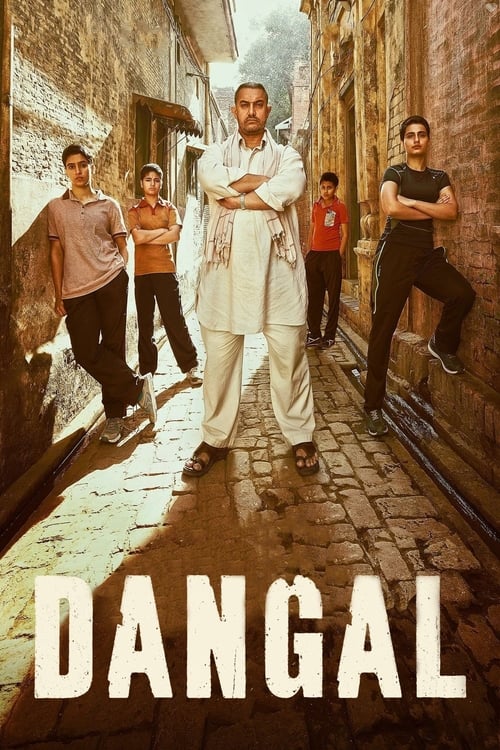
Tiwari scripted and directed the highest grossing Indian film Dangal (2016), which was screened at the Beijing International Film Festival and the second BRICS festival. The film won him the Award for Best Director at the 62nd Filmfare Awards and the Telstra People's Choice Award at the 2017 Indian Film Festival of Melbourne. He followed up with the critically acclaimed coming-of-age film Chhichhore (2019), winning him a third National Film Award for Best Feature Film in Hindi.
He co-founded Earthsky Pictures, producing ad films and the docu-series Break Point based on Indian tennis legends Mahesh Bhupathi and Leander Paes.
Contents
Early life and education
Tiwari was born in Madhya Pradesh to B. D. Tiwari, who worked in the education department, resulting in the family moving every three years, and Twari did his schooling from different towns in Madhya Pradesh, including Ganj Basoda and Itarsi. He attended Bharat Mata Convent School at Ganj Basoda until class 8th, subsequently he attended a school in Vidisha, approximately 42 km away, as there were no English-medium schools in Gang Basoda at the time. For this he would cycle to Ganj Basoda railway station, along with other students, to travel to Vidisha.
He has a brother and a sister. He graduated from the Indian Institute of Technology Bombay in 1996 with a bachelor's degree in Metallurgy and Material Science engineering. He worked as a creative director at Leo Burnett before entering Bollywood. He performed in a school play titled "Tapori-Mughal-e-Azam".
Career
2010s:
Tiwari began his filmmaking career with the 2011 feature Chillar Party. While serving as a creative director at Leo Burnett, Tiwari and co-writer Vikas Bahl developed the screenplay as a collaborative project. Following a series of rejections from established directors who were reluctant to helm a film centered on a children’s ensemble, the pair chose to co-direct the project themselves. For his debut work, Tiwari received two National Film Awards, including Best Children's Film and Best Screenplay, solidifying his successful transition from advertising to feature filmmaking.
Following his debut, Tiwari transitioned to sole directorial duties for the 2014 supernatural political satire Bhoothnath Returns. In addition to directing, he co-wrote the story, screenplay, and dialogue. The film received generally positive reviews, with critics praising its social commentary on the Indian electoral process, though some noted a shift in tone from the children-centric original to a more mature political narrative. In the same year, Tiwari contributed as a writer for the action-thriller Kill Dil (2014), directed by Shaad Ali. Tiwari served as a dialogue, screenplay, and story writer for the project. Unlike his directorial work, Kill Dil received a poor response from critics; reviews often pointed to a disconnect between the film's stylish aesthetic and its narrative, with many reviewers critiquing the script’s lack of depth and uneven execution.
In 2016, he expanded his writing portfolio with the universally acclaimed film Nil Battey Sannata. Directed by his wife, Ashwiny Iyer Tiwari, the film’s narrative is about a domestic worker’s struggle to secure a better future for her daughter through education. Several critics noted that the screenplay successfully balanced social commentary with heartfelt storytelling.
Also in 2016, Tiwari scripted and directed his career-defining film Dangal. The biographical sports drama was based on the life of wrestler Mahavir Singh Phogat and his daughters, Geeta and Babita. The making of the film was notable for its rigorous research, including extensive interviews with the Phogat family, and wrestling training for the actors. Dangal received universal critical acclaim for its grounded narrative, emotional depth, and focus on female empowerment. Critics highlighted his ability to balance a "hero-centric" star vehicle with a screenplay that allowed the performances of the lead actresses to anchor the film alongside Aamir Khan. It became (and remains) the highest-grossing Indian film of all time, achieving major international success, particularly in China. Among its numerous accolades, Tiwari won the Filmfare Award for Best Director.
2020s:
In the following years, Tiwari expanded into digital streaming, maintaining a prolific output across various roles. He co-wrote the Netflix anthology Ankahi Kahaniya (2021) and the Disney+ Hotstar comedy-drama Tumse Na Ho Payega (2023). The latter focuses on a corporate employee who decides to quit seeking a job to pursue entrepreneurship. It was generally viewed as a relatable, lighthearted watch that captures the struggles and aspirations of the modern generation, though some critics noted it occasionally relied on convenient storytelling tropes. That same year, he produced the ZEE5 biopic Tarla, with no creative involvement.
His directorial efforts during this period included the acclaimed ZEE5 documentary series Break Point (2021), which tracked the professional relationship between tennis icons Leander Paes and Mahesh Bhupathi and marked his debut as a producer, as well as the Amazon Prime Video romantic drama Bawaal (2023), for which he also provided the screenplay. Bawaal follows a history teacher and his wife who embark on a transformative journey through Europe, visiting significant World War II sites. The film’s reception was polarized.
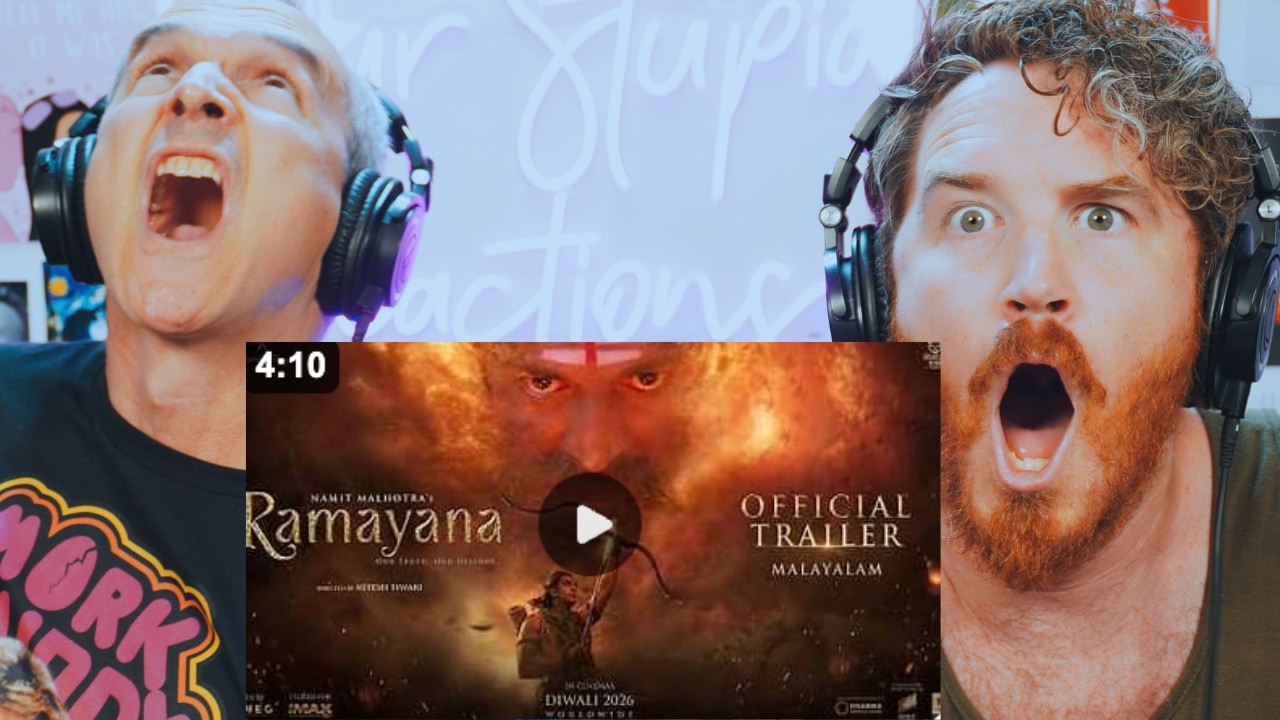
He is currently directing Ramayana: Part 1, a two-part adaptation of the epic of the same name, which is envisioned as his magnum opus. Produced by Namit Malhotra, the large-scale project features an ensemble cast and is scheduled to be released in installments starting in 2026.
Personal life
Tiwari is married to Ashwiny Iyer Tiwari, a former colleague and creative director at Leo Burnett who is also a film director, producer, and writer. He is a father to twins, a boy and a girl.