Inter-war successes
In 1920, at the age of 20, Coward starred in his own play, the light comedy I'll Leave It to You. After a three-week run in Manchester it opened in London at the New Theatre (renamed the Noël Coward Theatre in 2006), his first full-length play in the West End. Neville Cardus's praise in The Manchester Guardian was grudging. Notices for the London production were mixed, but encouraging. The Observer commented, "Mr Coward... has a sense of comedy, and if he can overcome a tendency to smartness, he will probably produce a good play one of these days." The Times, on the other hand, was enthusiastic: "It is a remarkable piece of work from so young a head – spontaneous, light, and always 'brainy'."
The play ran for a month (and was Coward's first play seen in America), after which Coward returned to acting in works by other writers, starring as Ralph in The Knight of the Burning Pestle in Birmingham and then London. He did not enjoy the role, finding Francis Beaumont and his sometime collaborator John Fletcher "two of the dullest Elizabethan writers ever known ... I had a very, very long part, but I was very, very bad at it". Nevertheless, The Manchester Guardian thought that Coward got the best out of the role, and The Times called the play "the jolliest thing in London".
Coward completed a one-act satire, The Better Half, about a man's relationship with two women. It had a short run at The Little Theatre, London, in 1922. The critic St John Ervine wrote of the piece, "When Mr Coward has learned that tea-table chitter-chatter had better remain the prerogative of women he will write more interesting plays than he now seems likely to write." The play was thought to be lost until a typescript was found in 2007 in the archive of the Lord Chamberlain's Office, the official censor of stage plays in the UK until 1968.
In 1921, Coward made his first trip to America, hoping to interest producers there in his plays. Although he had little luck in New York on this trip, he found the Broadway theatre stimulating. He absorbed its smartness and pace into his own work, which brought him his first real success as a playwright with The Young Idea. The play opened in London in 1923, after a provincial tour, with Coward in one of the leading roles. The reviews were good: "Mr Noël Coward calls his brilliant little farce a 'comedy of youth', and so it is. And youth pervaded the Savoy last night, applauding everything so boisterously that you felt, not without exhilaration, that you were in the midst of a 'rag'." One critic, who noted the influence of Bernard Shaw on Coward's writing, thought more highly of the play than of Coward's newly found fans: "I was unfortunately wedged in the centre of a group of his more exuberant friends who greeted each of his sallies with 'That's a Noëlism!'" The play ran in London from 1 February to 24 March 1923, after which Coward turned to revue, co-writing and performing in Charlot's London Calling!
In 1924, Coward achieved his first great critical and financial success as a playwright with The Vortex. The story is about a nymphomaniac socialite and her cocaine-addicted son (played by Coward). Some saw the drugs as a mask for homosexuality; Kenneth Tynan later described it as "a jeremiad against narcotics with dialogue that sounds today not so much stilted as high-heeled". The Vortex was considered shocking in its day for its depiction of sexual vanity and drug abuse among the upper classes. Its notoriety and fiery performances attracted large audiences, justifying a move from a small suburban theatre to a larger one in the West End. Coward, still having trouble finding producers, raised the money to produce the play himself. During the run of The Vortex, Coward met Jack Wilson, an American stockbroker (later a director and producer), who became his business manager and lover. At first Wilson managed Coward's business affairs well, but later abused his position to embezzle from his employer.
The success of The Vortex in both London and America caused a great demand for new Coward plays. In 1925 he premiered Fallen Angels, a three-act comedy that amused and shocked audiences with the spectacle of two middle-aged women slowly getting drunk while awaiting the arrival of their mutual lover. Hay Fever, the first of Coward's plays to gain an enduring place in the mainstream theatrical repertoire, also appeared in 1925. It is a comedy about four egocentric members of an artistic family who casually invite acquaintances to their country house for the weekend and bemuse and enrage each other's guests. Some writers have seen elements of Coward's old mentor, Mrs Astley Cooper, and her set in the characters of the family. By the 1970s the play was recognised as a classic, described in The Times as a "dazzling achievement; like The Importance of Being Earnest, it is pure comedy with no mission but to delight, and it depends purely on the interplay of characters, not on elaborate comic machinery." By June 1925 Coward had four shows running in the West End: The Vortex, Fallen Angels, Hay Fever and On with the Dance. Coward was turning out numerous plays and acting in his own works and others'. Soon his frantic pace caught up with him while starring in The Constant Nymph. He collapsed and was ordered to rest for a month; he ignored the doctors and sailed for the US to start rehearsals for his play This Was a Man. In New York he collapsed again, and had to take an extended rest, recuperating in Hawaii.
Other Coward works produced in the mid-to-late 1920s included the plays Easy Virtue (1926), a drama about a divorcée's clash with her snobbish in-laws; The Queen Was in the Parlour, a Ruritanian romance; This Was a Man (1926), a comedy about adulterous aristocrats; The Marquise (1927), an eighteenth-century costume drama; Home Chat (1927), a comedy about a married woman's fidelity; and the revues On with the Dance (1925) and This Year of Grace (1928). None of these shows has entered the regular repertoire, but the last introduced one of Coward's best-known songs, "A Room with a View". His biggest failure in this period was the play Sirocco (1927), which concerns free love among the wealthy. It starred Ivor Novello, of whom Coward said, "the two most beautiful things in the world are Ivor's profile and my mind". Theatregoers hated the play, showing violent disapproval at the curtain calls and spitting at Coward as he left the theatre. Coward later said of this flop, "My first instinct was to leave England immediately, but this seemed too craven a move, and also too gratifying to my enemies, whose numbers had by then swollen in our minds to practically the entire population of the British Isles."
By 1929 Coward was one of the world's highest-earning writers, with an annual income of £50,000, more than £3 million in terms of 2020 values. Coward thrived during the Great Depression, writing a succession of popular hits. They ranged from large-scale spectaculars to intimate comedies. Examples of the former were the operetta Bitter Sweet (1929), about a woman who elopes with her music teacher, and the historical extravaganza Cavalcade (1931) at Drury Lane, about thirty years in the lives of two families, which required a huge cast, gargantuan sets and a complex hydraulic stage. Its 1933 film adaptation won the Academy Award for best picture. Coward's intimate-scale hits of the period included Private Lives (1930) and Design for Living (1932). In Private Lives, Coward starred alongside his most famous stage partner, Gertrude Lawrence, together with the young Laurence Olivier. It was a highlight of both Coward's and Lawrence's career, selling out in both London and New York. Coward disliked long runs, and after this he made a rule of starring in a play for no more than three months at any venue. Design for Living, written for Alfred Lunt and Lynn Fontanne, was so risqué, with its theme of bisexuality and a ménage à trois, that Coward premiered it in New York, knowing that it would not survive the censor in London.
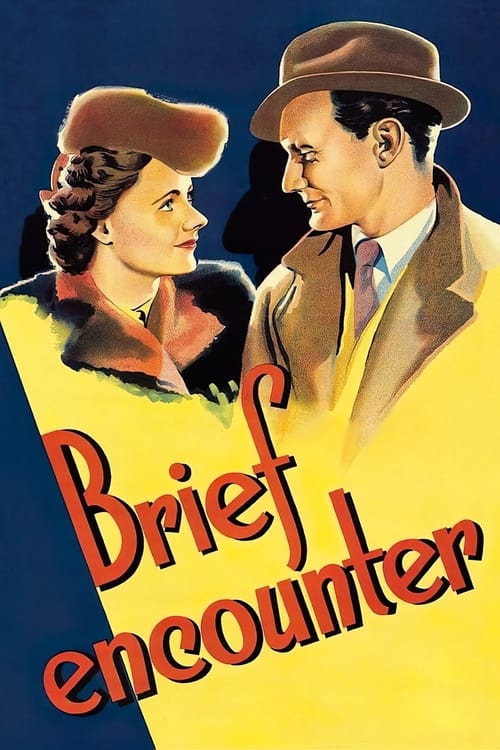
In 1933 Coward wrote, directed and co-starred with the French singer Yvonne Printemps in both London and New York productions of an operetta, Conversation Piece (1933). He next wrote, directed and co-starred with Lawrence in Tonight at 8.30 (1936), a cycle of ten short plays, presented in various permutations across three evenings. One of these plays, Still Life, was expanded into the 1945 David Lean film Brief Encounter. Tonight at 8.30 was followed by a musical, Operette (1938), from which the most famous number is "The Stately Homes of England", and a revue entitled Set to Music (1938, a Broadway version of his 1932 London revue, Words and Music). Coward's last pre-war plays were This Happy Breed, a drama about a working-class family, and Present Laughter, a comic self-caricature with an egomaniac actor as the central character. These were first performed in 1942, although they were both written in 1939.
Between 1929 and 1936 Coward recorded many of his best-known songs for His Master's Voice, now reissued on CD, including the romantic "I'll See You Again" from Bitter Sweet, the comic "Mad Dogs and Englishmen" from Words and Music, and "Mrs Worthington".