1938–1940: Movie stardom
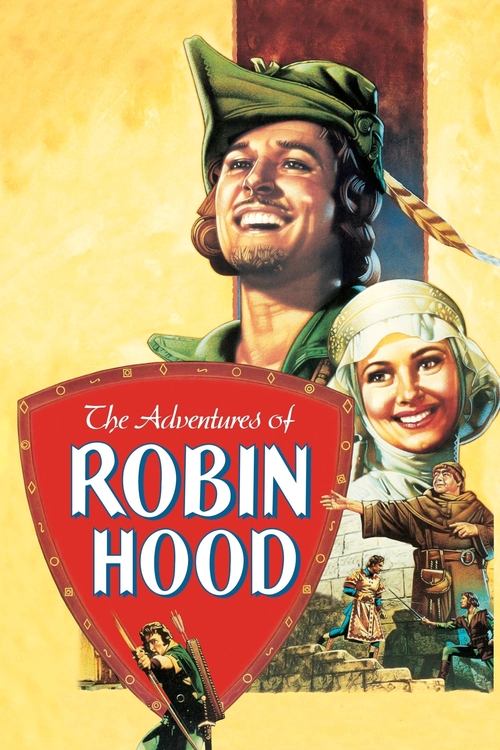
In September 1937, de Havilland was selected by Warner Bros. studio head Jack L. Warner to play Maid Marian in The Adventures of Robin Hood (1938) opposite Errol Flynn. The principal photography for this Technicolor production took place between September 26, 1937, and January 14, 1938, including location work at Bidwell Park, Busch Gardens in Pasadena, and Lake Sherwood in California. Directed by William Keighley and Michael Curtiz, the film is about the legendary Saxon knight who opposes the corrupt and brutal Prince John and his Norman lords, while good King Richard is away fighting in the Third Crusade. The king's ward Maid Marian initially opposes Robin Hood, but she later supports him after learning his true intentions of helping his oppressed people. Far from being a mere bystander, Marian risks her life to save Robin by providing his men with a plan for his escape. As defined by de Havilland, Marian is both a beautiful fairy-tale heroine and a spirited, intelligent woman "whose actions are governed by her mind as well as her heart", according to author Judith Kass. Released on May 14, 1938, The Adventures of Robin Hood was an immediate critical and commercial success, earning an Academy Award nomination for Best Picture. It went on to become one of the most popular adventure films of the Classical Hollywood era.
The film's success raised de Havilland's status, but this was not reflected in her subsequent film assignments at Warner Bros.; her next several roles were more routine and less challenging. In the romantic comedy Four's a Crowd (1938), she played Lorri Dillingwell, a flighty rich girl being romanced by a conniving public relations man looking to land an account with her eccentric grandfather. In Ray Enright's romantic comedy Hard to Get (1938), she played another frivolous rich girl, Margaret Richards, whose desire to exact revenge on a gas station attendant leads to her own comeuppance. In the summer of 1938, she portrayed the love interest between two U.S. Navy pilot brothers in Wings of the Navy, released in early 1939. While de Havilland was certainly capable of playing this type of character, her personality was better suited to stronger and more dramatic roles, according to Judith Kass. By this time, she was having serious doubts about her career at Warner Bros.
Some film scholars consider 1939 to be the high point of the golden age of Classic Cinema, producing award-winning box-office hits in many genres, including the Western. Warner Bros. produced Michael Curtiz's Technicolor adventure Dodge City (1939), which was Flynn and de Havilland's first Western film. Set during the American Civil War, the film is about a Texas trailblazer who witnesses the brutal lawlessness of Dodge City, Kansas, and becomes sheriff to clean up the town. De Havilland played Abbie Irving, whose initial hostility towards Flynn's character Wade Hatton is transformed by events, and the two fall in love—by now a proven formula for their on-screen relationships. Curtiz's action sequences, Sol Polito's cinematography, Max Steiner's expansive film score, and perhaps the "definitive saloon brawl in movie history" all contributed to the film's success. Variety described the film as "a lusty western, packed with action". For de Havilland, playing yet another supporting love interest in a limited role, Dodge City represented the emotional low point of her career to that point. She later said, "I was in such a depressed state that I could hardly remember my lines."
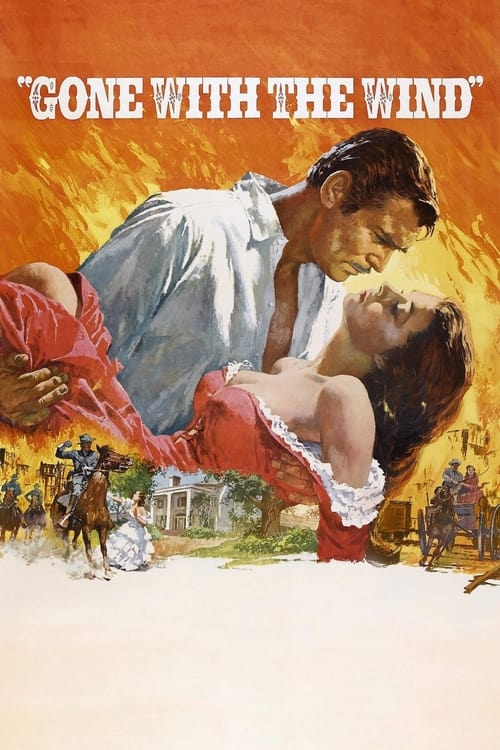
In a letter to a colleague dated November 18, 1938, film producer David O. Selznick wrote, "I would give anything if we had Olivia de Havilland under contract to us so that we could cast her as Melanie." The film he was preparing to shoot was the Technicolor epic Gone with the Wind, but Jack L. Warner was unwilling to lend her out for the project. While most other actresses wanted the Scarlett O'Hara role, de Havilland had read the novel and wanted to play Melanie Hamilton—a character whose quiet dignity and inner strength she understood and felt she could bring to life on the screen.
De Havilland turned to Warner's wife Anne for help. Warner later recalled: "Olivia, who had a brain like a computer concealed behind those fawn-like eyes, simply went to my wife and they joined forces to change my mind." He relented, and de Havilland was signed to the project a few weeks before the start of principal photography on January 26, 1939. Set in the American South during the Civil War and Reconstruction eras, the film is about Scarlett O'Hara—the strong-willed daughter of a Georgia plantation owner—who is in love with the husband of her sister-in-law Melanie, whose kindness stands in sharp contrast to those around her. According to film historian Tony Thomas, de Havilland's skillful and subtle performance effectively presents this character of selfless love and quiet strength in a way that keeps her vital and interesting throughout the film. Gone with the Wind had its world premiere in Atlanta, Georgia, on December 15, 1939, and was well-received. Frank S. Nugent of The New York Times wrote that de Havilland's Melanie "is a gracious, dignified, tender gem of characterization", and John C. Flinn Sr. in Variety called her "a standout". The film won 10 Academy Awards, including Best Picture, and de Havilland received her first nomination for Best Supporting Actress.
Within days of completing her work in Gone with the Wind in June 1939, de Havilland returned to Warner Bros. to begin filming Michael Curtiz's historical drama The Private Lives of Elizabeth and Essex (1939) with Bette Davis and Errol Flynn. She had hoped her work on Selznick's prestige picture would lead to first-rate roles at Warner Bros., but instead, she received third billing below the title as the queen's lady-in-waiting. In early September, she was lent out to Samuel Goldwyn Productions for Sam Wood's romantic caper film Raffles (1939) with David Niven, about a high-society cricketer and jewel thief. She later complained, "I had nothing to do with that style of film."
During the late 1930s, de Havilland made appearances on radio programs such as Hollywood Hotel. Decades later, one of the regular actresses on that show, Lurene Tuttle, stated in an interview that de Havilland even did the voice of a dog when she guest-starred.
The soundman was supposed to do a little yipping, yappy dog, like a terrier. He sounded like a Newfoundland dog or something, and the director kept saying "That won't do." So, Olivia de Havilland was sitting next to me, and she says, "I can do a very good dog." And I said, "Well, I don't think they'll let you do a dog. This is an audience show; you're a star, you can't do a dog." And Olivia says, "I'm going to do it." So she went over to the director, went into the booth and said, "I'd like to try doing this dog for you." So, they put her behind the screen, and she went on the show, and she did that yipping dog."
In early 1940, de Havilland refused to appear in several films assigned to her, initiating the first of her suspensions from the studio. She did agree to play in Curtis Bernhardt's musical comedy drama My Love Came Back (1940) with Jeffrey Lynn and Eddie Albert, who played a classical music student turned swing jazz bandleader. De Havilland played violinist Amelia Cornell, whose life becomes complicated by the support of a wealthy sponsor. Bosley Crowther of The New York Times described the film as "a featherlight frolic, a rollicking roundelay of deliciously pointed nonsense", finding that de Havilland "plays the part with pace and wit".
That same year, de Havilland was reunited with Flynn in their sixth film together, Michael Curtiz's Western adventure Santa Fe Trail, set against the backdrop of abolitionist John Brown's radical antislavery attacks in the days leading up to the American Civil War. The mostly fictional story follows West Point cadets J. E. B. Stuart and George Armstrong Custer, played by Flynn and Ronald Reagan, respectively, as they make their way west, both vying for the affections of Kit Carson Halliday. Playing Kit in a provocative, tongue-in-cheek manner, de Havilland creates a character of real substance and dimension, according to Tony Thomas. Following its world premiere on December 13, 1940, at the Lensic Theater in Santa Fe, New Mexico, which was attended by cast members, reporters, the governor, and over 60,000 fans, Santa Fe Trail became one of the top-grossing films of 1940. After accompanying Flynn on the well-publicized train ride to Santa Fe, de Havilland was unable to attend the premiere because she had been diagnosed with appendicitis that morning and rushed into surgery.