
Paul Heyman (born September 11, 1965) is an American
professional wrestling manager, former executive, promoter, and commentator. He is signed to WWE, where he is a creative advisor and an on-screen talent.
Heyman first gained prominence in the late 1980s as an on-screen manager under the name Paul E. Dangerously, working for promotions such as World Championship Wrestling (WCW) and the Continental Wrestling Federation. In 1993, he became the creative force behind the Philadelphia-based Eastern Championship Wrestling (ECW), eventually purchasing the company in 1995 and renaming it Extreme Championship Wrestling. Under his leadership, ECW gained a cult following and introduced a more aggressive, reality-based style that influenced major wrestling promotions in the years that followed.
After ECW closed in 2001, Heyman joined WWE, where he worked as a commentator, writer, and on-screen manager. He played a pivotal role in the early career of Brock Lesnar, serving as his manager for much of Lesnar's tenure in WWE. Heyman also contributed behind the scenes as a writer, including a run as lead writer for SmackDown in the early 2000s and later as executive director of Raw from 2019 to 2020.
Heyman is best known for his work as a manager, widely praised for his promo ability, character work, and influence on talent development. He has managed some of wrestling's biggest names, including Brock Lesnar, CM Punk, Kurt Angle, Big Show, Roman Reigns and Seth Rollins, and is credited with helping elevate numerous stars through his work both on and off screen. In 2024, Heyman was inducted into the WWE Hall of Fame.
Contents
Early life
Paul Heyman was born on September 11, 1965, in the Bronx, New York City, to Sulamita (née Szarf; 1928–2009) and Richard S. Heyman (1926–2013), both of Jewish descent. His mother was a Holocaust survivor who endured the Łódź Ghetto and was later imprisoned at Auschwitz and Bergen-Belsen concentration camps. His father was a personal injury attorney and served in the United States Navy during World War II.
From a young age, Heyman exhibited entrepreneurial instincts. By age 11, he operated a mail-order business from his home, selling celebrity and sports memorabilia. During his teenage years, he began attending events at Madison Square Garden, where he gained backstage access as a self-proclaimed photojournalist for wrestling publications. Some of his photographs were published by the World Wide Wrestling Federation (WWWF). He later graduated from Edgemont High School and attended SUNY Purchase, where he worked as an on-air personality at the college's radio station. He also hosted programs on WARY-FM, a station affiliated with Westchester Community College. In 1985, at age 19, Heyman began working as a photographer and subsequently as a producer and promoter at the New York City nightclub Studio 54.
Professional wrestling career
Early interests and formative years (1970s–1986)
Heyman's interest in professional wrestling began in childhood and was solidified after watching a televised interview between Vince McMahon and "Superstar" Billy Graham. At the age of 13, he began photographing wrestling events in New York City and later invested in his own photo lab to develop and sell his work. He published The Wrestling Times Magazine, a self-produced newsletter, and contributed to wrestling periodicals such as Pro Wrestling Illustrated.
In 1980, at the age of 14, Heyman contacted Capitol Wrestling Corporation—the parent company of the WWWF—and secured a press pass for an event at Madison Square Garden. His presence at such events resulted in posed photographs with leading heel managers of the era, including Lou Albano, Fred Blassie, and The Grand Wizard. These images were later published by Pro Wrestling Illustrated, which characterized Heyman as having learned from the so-called "Three Wise Men" of heel management.
Heyman's proactive approach continued throughout his adolescence. He attended tapings for Jim Crockett Promotions, where he met Dusty Rhodes after entering a production meeting. In 1985, Heyman began working at Studio 54, initially as a photographer before being promoted to producer. That same year, he organized "Wrestle Party '85", a professional wrestling-themed event at the venue. The show featured the debut of Bam Bam Bigelow and included appearances by Ric Flair, Dusty Rhodes, and Magnum T.A., who were sent by Jim Crockett in response to Heyman's outreach.
Early managerial career (1987–1988)
Heyman made his managerial debut on January 2, 1987, with encouragement from Bigelow. He began working on the independent circuit in the Northeastern United States before joining Championship Wrestling from Florida (CWF) in February of that year. There, he aligned with Kevin Sullivan and Oliver Humperdink, adopting the ring name "Paul E. Dangerously"—a character inspired by Michael Keaton's role in Johnny Dangerously.
Following CWF's acquisition by Jim Crockett Promotions, Heyman transitioned to the Memphis-based Continental Wrestling Association (CWA), where he managed Tommy Rich and Austin Idol in a high-profile feud with Jerry Lawler. This storyline would later extend into the American Wrestling Association (AWA), where the Midnight Express (Dennis Condrey and Randy Rose) took over as Heyman's clients.
The Paul E. Dangerously persona—a brash, fast-talking New Yorker often seen with a mobile phone—was a theatrical extension of Heyman's own personality. The mobile phone, at the time an expensive status symbol, became a trademark prop and was occasionally used as a weapon during matches, a creative decision inspired by the character Gordon Gekko from Wall Street.
After leaving the AWA, Heyman returned to the CWA and formed an alliance with Eddie Gilbert and Missy Hyatt, engaging in a renewed feud with Lawler. Heyman subsequently joined the Alabama-based Continental Wrestling Federation, where Gilbert served as head booker and Heyman worked as his assistant. Concurrently, Heyman held the position of head booker for Windy City Wrestling in Chicago, further establishing his reputation as an innovative writer and producer of wrestling television.
National Wrestling Alliance / World Championship Wrestling (1988–1993)
In 1988, Heyman joined Jim Crockett Promotions, which soon became part of World Championship Wrestling (WCW). Reprising his Paul E. Dangerously persona, he managed the Original Midnight Express (Dennis Condrey and Randy Rose) in a storyline rivalry against the new incarnation of the team—Bobby Eaton and Stan Lane—who were aligned with manager Jim Cornette. During this period, Heyman also briefly managed "Mean" Mark Callous, the future Undertaker in WWE.
Although originally brought in as an on-screen manager, Heyman gradually transitioned into broadcasting. He became a color commentator alongside Jim Ross, calling matches for World Championship Wrestling on WTBS and other WCW programming. Heyman would later credit Ross with significantly shaping his understanding of wrestling presentation and production. Between stints with WCW, Heyman was briefly hired as a writer for International Championship Wrestling (ICW), but was dismissed during his first taping session.
In 1991, WCW sought to reestablish its heel roster and reintroduced Heyman as an on-screen manager. He was positioned as the leader of a new faction, the Dangerous Alliance, with Rick Rude as its focal point. The stable also included Arn Anderson, Bobby Eaton, Larry Zbyszko, and a young Steve Austin, among others. According to Heyman, he and Austin both considered Rude a mentor during this time. Under Heyman's management, Rude captured the United States Heavyweight Championship, while Anderson and Eaton won the World Tag Team Championship. The Dangerous Alliance was prominently featured throughout 1992 and was widely regarded as one of WCW's top villainous factions.
Heyman's tenure with WCW came to an end following backstage conflicts with then-booker Bill Watts. In early 1993, Heyman filed a lawsuit against WCW, alleging wrongful termination and ethnic discrimination. The matter was resolved privately out of court.
Leadership of Extreme Championship Wrestling (1993–2001)
After departing WCW in early 1993, Paul Heyman explored starting a new wrestling promotion in Texas with Jim Crockett Jr. However, the partnership was short-lived due to creative differences.
Later that year, Heyman joined Eastern Championship Wrestling (ECW), a Philadelphia-based promotion affiliated with the National Wrestling Alliance (NWA). The company was owned by local entrepreneur Tod Gordon and at the time was being booked by Eddie Gilbert. Heyman was initially brought in to assist with character development and promo coaching, particularly for younger talent. Following Gilbert's departure in September 1993, Heyman took over as ECW's head booker and assumed full creative control. He also returned to an on-screen role under his "Paul E. Dangerously" persona, managing wrestlers such as Sabu and 911.
In August 1994, ECW hosted a tournament to crown a new NWA World Heavyweight Champion. The NWA had intended to use the event to restore prestige to its title, with ECW's Shane Douglas selected as the planned winner. However, Heyman, Gordon, and Douglas orchestrated a controversial angle in which Douglas, after winning the final match, publicly rejected the NWA title and declared the ECW World Heavyweight Championship as the only belt he recognized. The moment effectively severed ECW's ties with the NWA.
Following the incident, the company rebranded as Extreme Championship Wrestling, dropping its NWA affiliation and "Eastern" label. Under Heyman's leadership, ECW developed a reputation for a gritty, hard-hitting style that blended elements of Japanese strong style, lucha libre, and hardcore wrestling. The promotion became known for its willingness to feature controversial subject matter and blur the lines between scripted storylines and real-life tensions. In May 1995, Heyman acquired Gordon's remaining interest in the promotion, becoming ECW's sole owner.Despite its anti-establishment image, ECW maintained informal ties with World Wrestling Federation (WWF) during the late 1990s. WWF chairman Vince McMahon allowed some of his underused or developmental talent to appear on ECW programming, including wrestlers such as 2 Cold Scorpio and Terry Gordy. Heyman has stated that McMahon paid him $1,000 per week to feature Scorpio. The relationship also extended to behind-the-scenes lobbying, with Heyman later claiming that McMahon encouraged cable executives to offer ECW a television deal. A potential agreement with USA Network fell through, reportedly after network president Stephen Chao was alerted to an internal WWF memo that undermined ECW's position.Although ECW became a launching pad for numerous future stars—including Taz, Rob Van Dam, the Dudley Boyz, and Tommy Dreamer—it struggled financially throughout its existence. The promotion's business model relied heavily on live event revenue, tape sales, and pay-per-view buys, with little corporate backing. By 2000, ECW had lost its national television slot on TNN and was facing mounting debts. Heyman gradually reduced his on-screen appearances and delegated day-to-day operations to Dreamer, while attempting to secure new financial backing and distribution deals.
World Wrestling Federation/Entertainment (2001–2006)
Following the closure of ECW in early 2001, Paul Heyman joined the World Wrestling Federation (WWF, later WWE). In March of that year, he replaced Jerry Lawler as a commentator on Raw Is War. Lawler had resigned after the company released his then-wife, Stacy "The Kat" Carter. Heyman resumed his long-standing on-air dynamic with Jim Ross, serving as a color commentator during a period of transition as WWF prepared to absorb both ECW and WCW talent.
In mid-2001, Heyman returned to an on-screen managerial role during the Invasion storyline, a company-wide angle that portrayed former WCW and ECW talent as outsiders challenging the WWF. As part of the angle, ECW was revived as a fictional faction, with Heyman cast as its spokesman. The ECW contingent later merged with Shane McMahon's WCW-aligned wrestlers to form "The Alliance." The storyline culminated at Survivor Series in November, where the WWF defeated The Alliance in a winner-takes-all elimination match. Following the conclusion of the angle, Heyman was written off television, and Lawler returned to the commentary team alongside Ross.
Behind the scenes, Heyman was appointed head writer of SmackDown! in July 2002. During his tenure, which lasted until February 2003, he oversaw a creative direction that focused on athletic competition and elevated several rising talents. According to Heyman and various WWE personnel, SmackDown! outperformed Raw in several key metrics during this period, including television ratings and live event attendance, despite internal creative competition between the brands.
Heyman also played a critical role in launching the career of Brock Lesnar. After being introduced to Lesnar by fellow wrestler Tazz, Heyman became an early mentor and advocate. When Lesnar debuted on the main roster in 2002, Heyman was assigned as his on-screen manager. Under Heyman's guidance, Lesnar quickly ascended to the main event scene, defeating The Rock at SummerSlam to become the youngest WWE Undisputed Champion at the time. The pairing established Heyman as Lesnar's primary spokesperson, a role he would reprise for much of the next two decades. However, in storyline, the alliance ended later that year when Heyman turned on Lesnar at Survivor Series and began managing Big Show.
In October 2003, Heyman returned to television as General Manager of SmackDown! following the departure of Stephanie McMahon's character, who had lost a match to Vince McMahon at No Mercy. His tenure as on-screen general manager continued until March 2004, when he was drafted to the Raw brand during that year's WWE Draft Lottery. Rather than work under Raw General Manager Eric Bischoff—whom Heyman blamed, both on-screen and in real-life interviews, for contributing to ECW's demise—he declined the assignment and was removed from television. His role as SmackDown! general manager was subsequently filled by Kurt Angle.
Return to WWE (2012–present)
After several years away from WWE, Paul Heyman returned to television in May 2012 as the on-screen legal representative of Brock Lesnar, who had re-signed with the company following a successful stint in the UFC. Lesnar specifically requested Heyman's return to serve as his spokesperson, citing Heyman's ability to elevate his presentation through promos and narrative storytelling. Heyman quickly re-established himself as a major presence on WWE programming, guiding Lesnar through his feud with Triple H.
Later in 2012, Heyman began an on-screen partnership with WWE Champion CM Punk. Although the alliance was fictional, it was built on real-life mutual respect, as Heyman had previously supported Punk's rise within the company. Heyman accompanied Punk during his extended title reign, often contributing to his promos and adding dramatic weight to his matches. This period helped solidify Heyman's reputation as one of the industry's most compelling orators.Heading into WrestleMania 29 in 2013, Heyman simultaneously managed both Punk and Lesnar, each featured in top-tier matches. Later that year, he introduced Curtis Axel as a new client, briefly managing him to an Intercontinental Championship victory. Around the same time, Heyman's on-screen relationship with Punk unraveled in a long-running storyline that culminated in Lesnar defeating Punk at SummerSlam in a match widely praised by critics and fans.
During the conclusion of the Punk rivalry, Heyman aligned with Ryback for a short-lived program and then resumed his role exclusively managing Lesnar. In early 2014, the two began a feud with The Undertaker, leading to WrestleMania XXX, where Lesnar famously ended The Undertaker's 21–0 undefeated streak. The result was considered one of the most shocking outcomes in WWE history and significantly elevated Lesnar's character as a dominant force, with Heyman playing a central role in amplifying the impact through post-match promos and television appearances.
Shortly after WrestleMania, Heyman was paired with Cesaro following his victory in the inaugural André the Giant Memorial Battle Royal. Despite initial momentum, the alliance was underutilized creatively and ended within a few months without a major storyline payoff.
Paul Heyman resumed his role as the on-screen advocate for Brock Lesnar, who defeated John Cena in dominant fashion at SummerSlam to win the WWE World Heavyweight Championship. Heyman's promo work during this period was widely praised for amplifying Lesnar's presentation as an unstoppable force and helping reestablish him as one of WWE's top attractions.
Reception and legacy
Heyman's work as a promoter and booker has been praised by many wrestling fellows and critics. Former ECW World Heavyweight Champion Raven called him "the most creative genius the business has ever seen". Raven's description of Heyman as a "genius" was echoed by Tazz and Jim Cornette. Heyman has been described as the best orator in professional wrestling. Heyman's skills were praised by his former broadcast partner Jim Ross, who stated: "He was a really good antagonist because sometimes the best antagonists are the villains that say things that you know are true but you just don't want to hear them. Heyman had the ability to tell his version of the truth, [he was] plausible. He just wasn't a heel getting himself over, he got talent over and did a great job."
Other media and endeavors
Heyman is the co-founder of the award-winning New York City firm The Looking4Larry Agency. The firm broke new ground with its initial campaign with Electronic Arts, THQ video games, 2K Sports, the Hard Rock Hotel, and Casino Las Vegas. Heyman also worked with Brock Lesnar, collaborating with him on Lesnar's autobiography, Death Clutch: My Story of Determination, Domination, and Survival. He has appeared in the video games WWE Day of Reckoning, WWE SmackDown! vs. Raw, WWE 2K14, WWE 2K15, WWE 2K16, WWE 2K17, WWE 2K18, WWE 2K19, WWE 2K20, WWE 2K22, WWE 2K23, WWE 2K24, WWE 2K25 as a cover star and WWE 2K26.
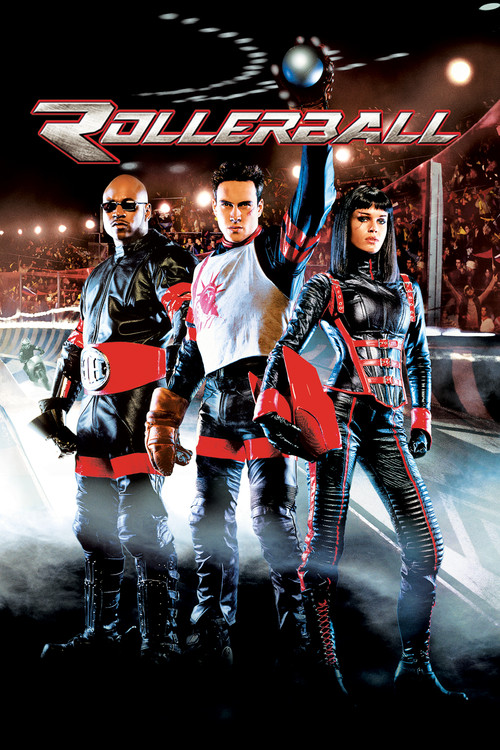
Heyman portrayed a sports announcer in 2002's Rollerball, and an uncredited role in the WWE film Countdown. After a family emergency forced the original actor to pull out, he was chosen by I Am Legend executive producer Michael Tadross to play "Gino" in the film adaptation of the long-running Off-Broadway show Tony n' Tina's Wedding.
Personal life
In 2001, Heyman married Marla, a businesswoman and entrepreneur. They had two children. Paul and Marla divorced in 2004 after nearly 3 years of marriage.
Heyman rarely sleeps more than three to four hours per night. He is a film enthusiast who cites Angels with Dirty Faces (1938) and Léon: The Professional (1994) as his favorite films, and a great admirer of punk musician Henry Rollins, whom he described as "one of the most underrated social commentators out there".
Awards and accomplishments
ESPN
Best Promo Artist (2025)
Inside The Ropes Magazine
Manager of the Year (2020)
Pro Wrestling Illustrated
Faction of the Year (2022) – with The Bloodline
Manager of the Year (1992)
WWE
WWE Hall of Fame (Class of 2024)
WWE Year-End Award (1 time)
Best on the Mic (2018)
Slammy Award (1 time)
Mic Drop of the Year (2024) – Telling Cody Rhodes that his father, Dusty Rhodes, told him that "Roman Reigns was the son he always wanted" on Raw (February 6, 2023)
Wrestling Observer Newsletter
Feud of the Year (2023) as part of The Bloodline vs. Kevin Owens and Sami Zayn
Best Color Commentator (1991)
Best Booker (1994–1997, 2002)
Best on Interviews (2013–2014)
Best Non-Wrestler (2001, 2002, 2004, 2012–2014, 2018, 2019, 2021, 2022, 2024)
Best Non-Wrestler of the Decade (2010s)
Best on Interviews of the Decade (2010s)