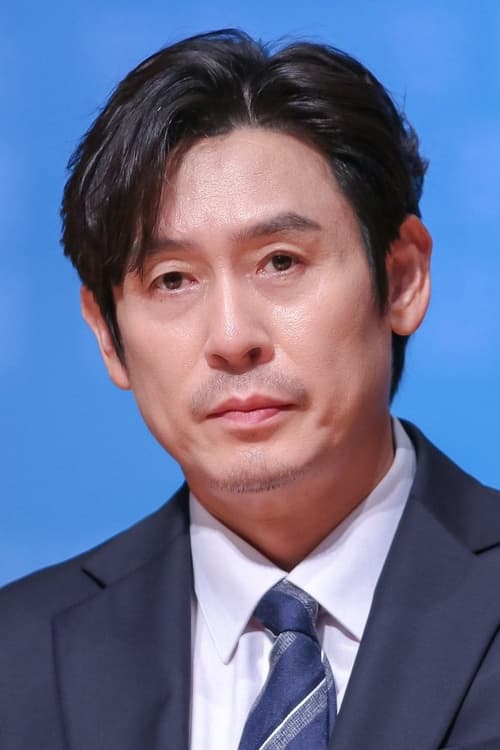
Possible Love (Korean: 가능한 사랑) is a 2026 drama film directed by Lee Chang-dong, and co-written with Oh Jung-mi. A co-production of South Korea and the United States, starring Jeon Do-yeon, Sul Kyung-gu, Zo In-sung, and Cho Yeo-jeong, it follows the intertwined lives of two married couples leading completely opposite lives.
The film premiered in the main competition of the 83rd Venice International Film Festival on September 6, 2026, where it won the Grand Jury Prize and the FIPRESCI Prize. It was theatrically released in South Korea on September 23, followed by the United States on October 23, and a worldwide release by Netflix on November 6.
It was also selected as the South Korean entry for the Best International Feature Film category for the 99th Academy Awards.
Contents
Premise
A story of two married couples — a laid-off worker and his spouse, and a documentary filmmaker and her spouse — crossing paths to film a documentary and facing their different lives and hidden desires.
Plot
The automaker firm SP Heavy Industries, which runs a plant where respected welder Ho-seok works, announces massive layoffs. The metalworkers' union, rejects the cuts and barricades themselves on the factory roofs; the strike is broken when police commandos execute a brutal helicopter raid on the roofs, leading to the deaths of several of Ho-seok's friends. In the aftermath, Ho-seok and his fellow survivors are fired, and begin bitterly referring to themselves as "the dead" and to those who kept their jobs as "the living".
Two years later, a drunken Ho-seok reluctantly attends a funeral for another of his co-workers who committed suicide. Ho-seok's wife, Mi-ok, a mask factory worker, and ten-year-old son Cheol also attend, alongside ambitious documentarian Lee Ye-ji and her wealthy husband Sang-woo. When Mi-ok confronts Ho-seok over his drinking, he notices Ye-ji training a camera on their argument. Infuriated by her intrusion, Ho-seok shouts at her. Embarrassed, Mi-ok steps outside and accidentally drops her loose wedding ring; Sang-woo helps her recover it. Observing the tensions between the couple, Ye-ji decides to make Ho-seok and Mi-ok the primary subjects of her next documentary.
Ye-ji meets Mi-ok at an upscale café, hoping to entice Ho-seok to agree to the film. During their conversation, Mi-ok shares a childhood memory of playing with a hose at her mother's manual car wash job to catch a glimpse of a rainbow, only for her mother to angrily snatch the hose away out of fear Mi-ok would end up in such a lowly position. Seeing the power of the story, Ye-ji asks Mi-ok to retell the story on camera. Seeking to overcome Ho-seok's reluctance, Ye-ji invites him, Mi-ok and Cheol for a weekend getaway at Sang-woo’s lavish estate on the west coast of Korea, where they are treated luxuriously.
Ho-seok finally agrees to sit for an interview, but demands that Mi-ok leave the room. On camera, he suffers a panic attack as he vents his bottled-up rage, revealing feelings of betrayal by his former union. He angrily denounces the slogans his union chanted, including "solidarity, struggle, and workers' rights", as "all bullshit". As the interview continues, Mi-ok and Sang-woo walk along the beach and partake in flirtatious conversation.
Meanwhile, Cheol wanders into the groundskeeper's shed and watches the four adults through the house's closed-circuit television cameras, observing in silence.
Cast
Jeon Do-yeon as Mi-ok
Jo Yu-ri as young Mi-ok
Sul Kyung-gu as Ho-seok
Zo In-sung as Sang-woo
Cho Yeo-jeong as Lee Ye-ji
Production
A co-production by South Korea and United States, it's produced by Pinehouse Film, Anonymous Content and NOWFILM.
The film was originally part of Maciej Musiał's project to remake all ten episodes of Krzysztof Kieślowski's Dekalog as feature films, alongside Asghar Farhadi's Parallel Tales. According to Lee, once Netflix joined the project, the "project fell into an ambiguous state. Although this film originated from there, it does not adapt an episode of Dekalog and is a completely different story. However, it is related to one of the commandments." Lee's first draft of what became Possible Love had been written over a decade prior. Upon reading the finished script, Netflix immediately signed on and "guaranteed [Lee] artistic autonomy."
Jung Jae-il was hired to compose the score.
Release
The film had its world premiere in the main competition of the 83rd Venice International Film Festival on September 6, 2026, where it won the FIPRESCI Prize. It will also screen at the 2026 Toronto International Film Festival, and in the Main Slate of the 2026 New York Film Festival.
Possible Love was released first in South Korean cinemas on September 23, it will be followed by select U.S. theaters on October 23, and will be released worldwide by Netflix on November 6.
It was also selected as the South Korean entry for the Best International Feature Film category for the 99th Academy Awards, marking director Lee's fourth film selected, following Oasis (2002), Secret Sunshine (2007), and Burning (2018).
Reception
Critical response
On the review aggregator website Rotten Tomatoes, 100% of 42 critics' reviews are positive, with an average rating of 8.8/10. The website's critical consensus states: "A perfectly poised drama that's seething with the chaos of modernity beneath its polished surface, Possible Love is a masterful exploration of fidelity and inequality from director Lee Chang-dong". Metacritic, which uses a weighted average, assigned the film a score of 93 out of 100, based on 20 critics, indicating "universal acclaim".
Peter Bradshaw of The Guardian rated the film 4 out of 5 stars, describing it as "a finely judged, beautifully acted and rather novelistic work".