Indictment by the ICTY
On 24 July 1995, Mladić was indicted by the International Criminal Tribunal for the Former Yugoslavia (ICTY) for genocide, crimes against humanity, and numerous war crimes (including crimes relating to the alleged sniping campaign against civilians in Sarajevo). On 16 November 1995, the charges were expanded to include charges of war crimes for the attack on the UN-declared safe area of Srebrenica in July 1995.
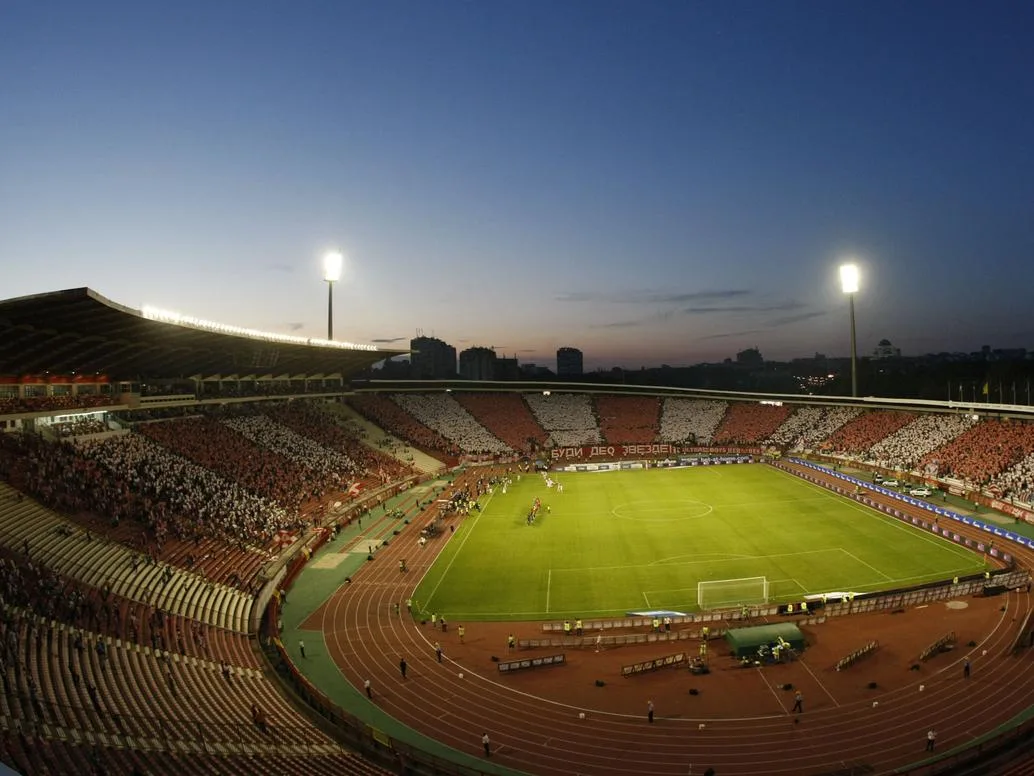
A fugitive from the ICTY, he was suspected to be hiding either in Serbia or in Republika Srpska. Mladić was reportedly seen attending a football match between the People's Republic of China and Yugoslavia in Belgrade in March 2000. He entered through a VIP entrance and sat in a private box surrounded by eight armed bodyguards. There were claims that he had been seen in a suburb of Moscow, and that he "regularly" visited Thessaloniki and Athens, which raised suspicions that numerous fake reports were sent to cover his trail. Some reports said that he took refuge in his wartime bunker in Han Pijesak, not far from Sarajevo, or in Montenegro.
In early February 2006, portions of a Serbian military intelligence report were leaked to Serbian newspaper Politika which stated that Mladić had been hidden in Army of Republika Srpska and Yugoslav army facilities up until 1 June 2002, when the National Assembly of Serbia passed a law mandating cooperation with the ICTY in The Hague.
Initially, Mladić lived freely in Belgrade. After the arrest of Slobodan Milošević in 2001, Mladić went into hiding, but he was still protected by Serb security services and the army. Serbia's failure to bring Mladić to justice seriously harmed its relationship with the European Union.
In 2004, Paddy Ashdown, then-United Nations high representative in Bosnia and Herzegovina, removed 58 officials from their posts due to suspicions that they helped war crimes suspects including Mladić and Karadžić to evade capture. Some officials were subjected to travel bans and had their bank accounts frozen. The ban was later lifted after the capture of Mladić.
In November 2004, British defense officials conceded that military action was unlikely to be successful in bringing Mladić and other suspects to trial. One winter's day British UN troops carrying sidearms were confronted by the general skiing down the piste at Sarajevo's former Olympic skiing resort but made no move for their guns; skiing behind Mladić were four bodyguards. Despite his Hague warrant, the British soldiers decided to carry on skiing. NATO later sent commandos to arrest various war crimes suspects, but Mladić simply went underground. No amount of NATO action or UN demands, or even a $5 million bounty announced by Washington, could bring him in.
It was revealed in December 2004 that the Army of Republika Srpska had been harboring and protecting Mladić until the summer of 2004, despite repeated and public pleas to collaborate with the ICTY and apprehend war criminals. On 6 December, NATO said that Mladić visited his wartime bunker during the summer in order to celebrate Army of Republika Srpska Day.
In June 2005, The Times newspaper alleged that Mladić had demanded a $5 million (£2.75 million) "compensation" to be given to his family and bodyguards if he gave himself up to the ICTY in the Hague. In January 2006, a Belgrade court indicted 10 people for aiding Mladić in hiding from 2002 to January 2006. An investigation showed Mladić spent his time in New Belgrade, a suburb of the capital.
It was erroneously reported on 21 February 2006 that Mladić had been arrested in Belgrade and was being transferred via Tuzla to the ICTY war tribunal. The arrest was denied by the Serbian government. The government did not deny rumors of a planned negotiated surrender between Mladić and Serbian special forces. Romanian government and Serbian sources claimed on 22 February 2006 that Mladić was arrested in Romania, near Drobeta-Turnu Severin, close to the Serbian border by a joint Romanian-British special operation carried out by troops of those respective nations. However, ICTY prosecutor Carla Del Ponte denied the rumors that Mladić had been arrested, saying that they had "absolutely no basis whatsoever". Del Ponte urged the Serbian government to locate him without further delay, saying Mladić was within the reach of the Serbian authorities and had been in Serbia since 1998. She said a failure to capture him would harm Serbia's bid to join the European Union (EU). 1 May 2006 deadline established by Del Ponte for Serbia to hand over Mladić passed, resulting in talks between Serbia and the EU being suspended. The EU considered Mladić's arrest, along with full cooperation with the ICTY, pre-conditions that had to be met before Serbia could join the organization.
In July 2008, Serbian officials voiced concern that Mladić would order or had ordered his bodyguards to kill him to prevent him from being captured to face trial.
Based on a March 2009 poll of the NGO Strategic Marketing for the television station B92, which involved 1,050 respondents, 14% of Serbia's citizens would reveal information that would lead to his arrest in exchange for €1 million, 21% did not have a determined attitude, and 65% would not divulge information for €1 million (the poll was conducted when the United States embassy issued a reward of €1.3 million for any information on Mladić). However, it was noted that the formulation of the question might have been a problem, as the polling samples which opted "No" included also those who would immediately report Mladić without payment, believing that payment in this case is immoral. Although preceding reports indicated that 47% supported the extradition, it was apparent that most of the population was against it. According to a poll conducted by the National Committee for Cooperation with the ICTY, 78% of those polled would not report Mladić to the authorities, with 40% believing that he was a hero. Only 34% said they would approve of Mladić's arrest.
On 11 June 2009, a Bosnian television station broadcast videos of Mladić, filmed over the previous decade. The last video that was featured in the show 60 Minuta showed Mladić with two women, allegedly filmed in the winter of 2008. However, no evidence for this was given by television presenters. Serbia stated that it was "impossible" for the videos to have been filmed in 2008. Rasim Ljajić, Serbia's minister in charge of co-operation with the UN tribunal, confirmed that the footage was old and had already been handed over to the ICTY in March 2009. Ljajić claimed "the last known footage was taken eight years ago. The last time Mladić was in military premises was at the Krcmari army barracks near [the western Serbian town of] Valjevo on 1 June 2002." The previously unseen images show Mladić in various restaurants and apartments and at what appears to be military barracks in Serbia, almost always accompanied by his wife Bosa and son Darko.
On 16 June 2010, Mladić's family filed a request to declare him dead, claiming he had been in poor health and absent for seven years. If the declaration had been approved Mladić's wife would have been able to collect a state pension and sell his property. At this time, Mladić was hiding in a house owned by his family.
In October 2010, Serbia increased the reward for Mladić's capture from €5 million to €10 million.