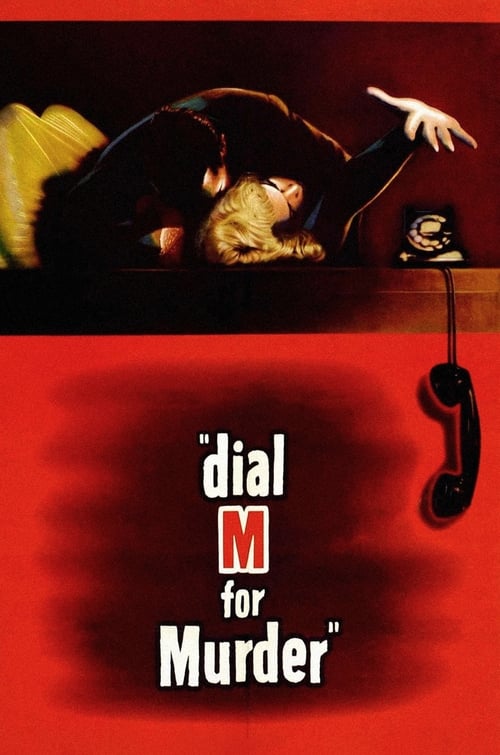
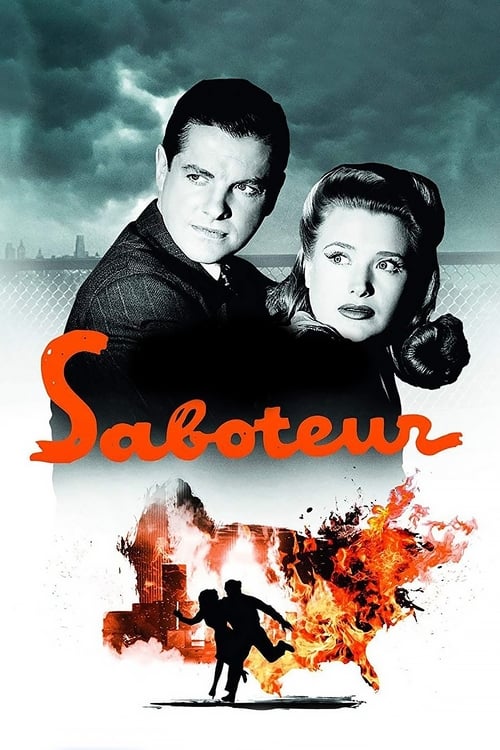
Charles Clarence Robert Orville Cummings (June 9, 1910 – December 2, 1990) was an American film and television actor who appeared in roles in comedy films such as The Devil and Miss Jones (1941) and Princess O'Rourke (1943), and in dramatic films, especially two of Alfred Hitchcock's thrillers, Saboteur (1942) and Dial M for Murder (1954). He received five Primetime Emmy Award nominations, and won the Primetime Emmy Award for Best Actor in a Single Performance in 1955. On February 8, 1960, he received two stars on the Hollywood Walk of Fame for his contributions to the motion picture and television industries, at 6816 Hollywood Boulevard and 1718 Vine Street. He used the stage name Robert Cummings from mid-1935 until the end of 1954 and was credited as Bob Cummings from 1955 until his death.
Contents
Early life
Cummings was born in Joplin, Missouri, a son of Dr. Charles Clarence Cummings and the former Ruth Annabelle Kraft. His father was a surgeon, part of the original medical staff of St. John's Hospital in Joplin, and the founder of the Jasper County Tuberculosis Hospital in Webb City, Missouri. Cummings's mother was an ordained minister of the Science of Mind.
While attending Joplin High School, Cummings learned to fly. His first solo flight was on March 3, 1927. Some reports of his learning to fly refer to Orville Wright, the aviation pioneer, as being his godfather and flight instructor. However, these reports appear to be based on either media interviews of Cummings or other anecdotal references. There is no historical record of Orville Wright having traveled to Joplin, Missouri, either around the time of the gestation or the birth of Cummings, or during 1927, the year Cummings learned to fly. Cummings, born in 1910, would have been only 8 years old when Orville Wright had essentially stopped flying on May 13, 1918, as a result of injuries he sustained in an accident at Fort Myer, Virginia, on September 17, 1908. The report that Orville Wright taught Cummings to fly is also contradicted by Cummings's interview reported in the March 1960 Flying magazine. In the interview, Cummings described how he learned to fly "by trial and error, mostly error" during 3 hours of instruction from a Joplin, Missouri, plumber named Cooper before he soloed on March 3, 1927. During high school, Cummings gave Joplin residents rides in his aircraft for $5 per person.
When the government began licensing flight instructors, Cummings was issued flight instructor certificate No. 1, making him the first official flight instructor in the United States.
Education
Cummings studied briefly at Drury College in Springfield, Missouri, but his love of flying caused him to transfer to the Carnegie Institute of Technology in Pittsburgh. He studied aeronautical engineering for a year before he dropped out for financial reasons, his family having lost heavily in the 1929 stock market crash.
Cummings became interested in acting while performing in plays at Carnegie Tech, and decided to pursue it as a career. Since the American Academy of Dramatic Arts in New York City paid its male actors $14 a week, Cummings decided to study there. He stayed only one season, but later said he learned "three basic principles of acting. The first – never anticipate; second – take pride in my profession. And third – trust in God. And that last is said in reverence."
Career
Blade Stanhope Conway
Cummings started looking for work in 1930, but couldn't find any roles, forcing him to get a job at a theatrical agency. Realizing that, at the time, "three quarters of Broadway plays were from England" and that English accents and actors were in demand, Cummings decided to cash in an insurance policy and buy a round-trip ticket there.
He was driving a motorbike through the countryside, picking up the accent and learning about the country, when his bike broke down at Harrogate. While waiting for repairs, he devised a plan. He invented the name "Blade Stanhope Conway" and bribed the janitor of a local theatre to put on the marquee: "Blade Stanhope Conway in Candida". He then had a photo taken of himself in front of the marquee and had 80 prints made. In London, he outfitted himself with a new wardrobe, composed a letter introducing the actor-author-manager-director "Blade" of Harrogate Repertory Theatre, and sent it off to 80 New York theatrical agents and producers.
As a result, when Cummings returned to New York, he was able to obtain several meetings.
One of the producers to whom he sent letters, Charles Hopkings, cast him in a production of The Roof by John Galsworthy, playing the role of the Hon. Reggie Fanning. Also in the cast was Henry Hull. The play ran from October to November 1931 and Brooks Atkinson of The New York Times listed "Conway" among the cast who provided "some excellent bits of acting".
In November 1932, "Conway" replaced Edwin Styles in the Broadway revue Earl Carroll's Vanities after studying song and dance by correspondence course.
Cummings later encouraged an old drama-school classmate, Margaret Kies, to use a similar deception – she became the "British" Margaret Lindsay. He later said pretending to be Conway broke up his marriage to Emma Myers, a girl from Joplin. "She couldn't stand me."
He was an extra in the Laurel and Hardy comedy Sons of the Desert (1933) and in the Vitaphone musical short Seasoned Greetings (1933).
Bryce Hutchens
Cummings decided to change his approach, when in the words of one report, "suddenly the bottom dropped out of the John Bull market; almost overnight, demand switched from Londoners to lassoers."
In 1934, Cummings changed his name to "Bryce Hutchens". He appeared under this name in the Ziegfeld Follies of 1934, which ran from January to June in 1934. He had a duet with Vivi Janiss, a native of Nebraska, with whom he sang "I Like the Likes of You". Cummings and Janiss went with the show when it went on tour after the Broadway run, and they married toward the end of the tour.
Paramount
The tour of Ziegfeld ended in Los Angeles in January 1935. Cummings enjoyed the city and wanted to move there. He returned to New York, then heard King Vidor was looking for Texan actors for So Red the Rose (1935). Cummings auditioned, pretending to be a Texan, having acquired his own version of a Texan accent by listening to cowboy bands on the radio. His ruse was exposed, but Vidor nevertheless cast Cummings under his actual name. In their review, The New York Times said that Cummings "does a fine bit" and "has the only convincing accent in the whole film."
He followed this with a part in Paramount's The Virginia Judge (1935). In July, the studio signed Cummings to a long-term contract. Before his first two Paramount films were released, he was also cast in a supporting role in Millions in the Air (1935).
Paramount was then remaking old Zane Grey silent westerns for the talking screen, with new scripts and performers. Robert Cummings appeared as one of the leads in the westerns Desert Gold (1936) and Arizona Mahoney (1936). He then had a supporting role in Forgotten Faces (1936) and a starring role in Three Cheers for Love (1936). He also appeared in:
Border Flight (1936)
Hollywood Boulevard (1936)
The Accusing Finger (1936)
Hideaway Girl (1936)
The Last Train from Madrid (1937).
Most of these were B pictures. He had a small role in an A picture, Souls at Sea (1937), then appeared in Sophie Lang Goes West (1937), Wells Fargo (1937) and College Swing (1938).
He had a small role in You and Me (1938) (directed by Fritz Lang), and was in The Texans (1938) and Touchdown, Army (1938).
Eventually, Paramount dropped their option on him. "I was poison", he said. "No agent would look at me." In June, Paramount announced he would return for King of Chinatown with Anna May Wong, but he does not appear in the final film. In September he was cast at Republic, playing the lead in the crime movie I Stand Accused (1938). Cummings said it was "...a fluke hit—so at least I could get inside the casting agents again."
Universal
In November 1938, Cummings auditioned for the romantic lead in Three Smart Girls Grow Up (1939), starring Deanna Durbin, for producer Joe Pasternak. Pasternak was reluctant to cast him, preferring to find a musician, but Cummings told him, "I could fake it". He later said, "I'd had a lot of experience faking things harder than that. He let me try it and he signed me up."
On 21 November Universal gave Cummings an option on a seven-year contract starting at $600 a week, going up to $750 a week the following year, then ultimately up to $3,000 a week. His first film for them, Three Smart Girls Grow Up (1939) was a big success, and in March 1939 Universal took up their options on the actor. The film was directed by Henry Koster, who called Cummings "brilliant, wonderful... I made five pictures with him. I thought he was the best leading man I ever worked with. He had that marvelous comedy talent and also a romantic quality." Reviewing the film, Frank S. Nugent of The New York Times said Cummings "displays a really astonishing talent for light comedy—we never should have suspected it from his other pictures." Filmink wrote "Cummings found himself as an actor" with this movie.
Pasternak used him again, as the juvenile lead in The Under-Pup (1939). Although it was the first film to give Robert Cummings billing above the film title, The Under-Pup was actually a showcase for the studio's newest singing star, Gloria Jean. Although Cummings did well in the light-comedy role, the trade columnists and reporters concentrated on Gloria Jean, overshadowing Cummings. Universal announced that the Under-Pup cast, including Cummings, would be reunited in a sequel, Straight from the Heart, but the project was canceled when producer Pasternak left the studio. The follow-up, with Robert Stack standing in for Cummings, was A Little Bit of Heaven (1940).
In August 1939 Columbia wanted Cummings for the lead in Golden Boy, but could not come to terms with Universal; the role went instead to screen newcomer William Holden. Cummings supported Basil Rathbone and Victor McLaglen in Rio (1939), then was borrowed by 20th Century-Fox to romance Sonia Henie in Everything Happens at Night (1939). At Universal he had a key role in Charlie McCarthy, Detective (1939), then was borrowed by MGM to play the lead in a B movie with Laraine Day, And One Was Beautiful (1940). Back at Universal, Cummings was the romantic male lead in a comedy, Private Affairs (1940); then he romanced Durbin again in Spring Parade (1940). Cummings made his mark in the CBS Radio network's dramatic serial titled Those We Love, which ran from 1938 to 1945. He also played the role of David Adair in the serial drama Those We Love, opposite Richard Cromwell, Francis X. Bushman and Nan Grey.
Freelance star
Cummings was considered free of Universal effective August 1944. In January he signed a four-year exclusive contract with Hal Wallis, who had left Warner Brothers to become an independent producer. Shortly after, he took leave from the Air Force to star in You Came Along (1945) for Hal Wallis, directed by John Farrow with a screenplay by Ayn Rand. The Army Air Forces pilot Cummings played, Bob Collins, died off camera, but was resurrected 10 years later for Cummings's television show. Cummings was under contract to Wallis for four years. Also for Wallis—who had now moved to Paramount—he did The Bride Wore Boots (1946), a comedy with Barbara Stanwyck. He was announced for Dishonorable Discharge for Wallis from a story by John Farrow, but it appears to have not been made. Neither was Its Love Love Love, which was announced by RKO, or Dream Puss, which Wallis announced for Cummings at Paramount.
In 1946, Cummings said, "Often I play the boyfriend of a girl young enough to be my daughter. I'm 36, and whenever I start drooping, I run one of my pictures and feel like a kid again." Around this time, he also said he was more interested in producing and directing, and hoped to act in only one film per year.
Cummings had the leads in two films for Nero Films, a production company run by Seymour Nebenzal and Eugene Frenke, who released through United Artists: a film noir, The Chase (1946); and a Western, Heaven Only Knows (1947).
Cummings decided to form his own production company with Frenke and Philip Yordan, which they called United California. (They originally called it United World, but it was too similar to another company's name.) In December 1946, it was announced that Cummings had signed an exclusive contract with United California Productions, and that his deal with Wallis was for one film a year for seven years. They announced Bad Guy from a script by Yordan. They were also going to do Joe MacBeth (which was ultimately made by others).
In 1947, Cummings had reportedly earned $110,000 in the preceding 12 months. The Lost Moment (1947) with Susan Hayward was a film noir for Walter Wanger at Universal based on The Aspern Papers by Henry James. It was a resounding flop at the box office. Cummings was initially meant to follow it with The Big Curtain for Edward Alperson at Fox but that picture was never produced.
Television star
Cummings starred in his first regular television series in the comedy My Hero (1952–53), playing a bumbling real estate salesman. He also wrote and directed some episodes. The series ran for 33 episodes before (it was reported) Cummings decided to end it and accept other offers. In reality, the show had been axed. "After it was dropped, I was as dead as you could possibly get in show business" said Cummings. "I sat in my agent's office one day and heard a top producer tell him on the phone that nobody would buy me." Out of work, he accepted the State Department's invitation to go on a goodwill mission to Argentina. The show earned him an Emmy nomination.
Cummings was in Marry Me Again (1953) at RKO for Tashlin, then went to England to star in another Hitchcock film, Dial M for Murder (1954), playing the lover of Grace Kelly, whose husband Ray Milland tries to kill her. The film was a hit.
Cummings then supported Doris Day in a musical at Warner Bros, Lucky Me (1954).
He was chosen by producer John Wayne as his co-star to play airline pilot Captain Sullivan in The High and the Mighty, partly due to Cummings's flying experience; however, director William A. Wellman overruled Wayne and hired Robert Stack for the part.
In 1954, Cummings appeared in Twelve Angry Men, an original TV play for Westinghouse Studio One written by Reginald Rose and directed by Franklin Schaffner, alongside actors including Franchot Tone and Edward Arnold. Cummings played Juror Number Eight, the role taken by Henry Fonda in the feature-film adaptation. Cummings's performance earned him the 1955 Emmy Award for Best Actor in a Single Performance.
Other television appearances included Campbell Summer Soundstage ("The Test Case"), Justice ("The Crisis"), The Elgin Hour ("Floodtide"), and a TV version of Best Foot Forward (1954).
In July 1954, Cummings formed his own independent film production company, Laurel Productions, Incorporated. The company's name had several affiliations to Cummings: his youngest daughter was named Laurel Ann Cummings; the street he and his family lived on was named Laurel Way; his wife's grandmother's name was Laurel; and finally, the fact that Laurel & Hardy had given Cummings his film debut back in 1933. His wife Mary Elliott was appointed president of Laurel Productions. In July 1954, Cummings filmed the pilot for his television show, The Bob Cummings Show, and would go on to produce 173 episodes.
Later career
In the late 1960s, Cummings had supporting roles in The Carpetbaggers (1964), Promise Her Anything (1966) and the remake of Stagecoach (1966) (playing the bank embezzler).
Cummings had the lead in Five Golden Dragons (1967) for producer Harry Alan Towers and supported in Gidget Grows Up (1969).
He was in another Broadway play, The Wayward Stork, which had a short run in early 1966. A review in The New York Times said Cummings "is not in top form. He sounded a bit hoarse and somewhat strained. Usually he is a quite acceptable, breezy farceur."
He guest-starred again on Theatre of Stars ("Blind Man's Bluff"), as well as The Flying Nun ("Speak the Speech, I Pray You"), Green Acres ("Rest and Relaxation"), Here Come the Brides ("The She-Bear"), Arnie ("Hello, Holly"), Bewitched ("Samantha and the Troll"), Here's Lucy ("Lucy's Punctured Romance", "Lucy and Her Genuine Twimby"), and several episodes of Love, American Style.
Cummings's last lead roles on film were in a pair of TV movies, The Great American Beauty Contest (1973) and Partners in Crime (1973).
During the 1970s for over 10 years, Cummings traveled the US performing in dinner theaters and short stints in plays while living in an Airstream travel trailer.
He relayed those experiences in the written introduction he provided for the book Airstream written by Robert Landau and James Phillippi in 1984.
Cummings had a cameo in Three on a Date (1978) and appeared in 1979 as Elliott Smith, the father of Fred Grandy's Gopher on ABC's The Love Boat.
In 1986, Cummings hosted the 15th-anniversary celebration of Walt Disney World on The Wonderful World of Disney.
In 1987, he said, "I wouldn't mind living until I'm 110. I still swim, do calisthenics, and keep fit. I've never been in hospital, except for a hernia operation at one time. People laugh about my using so many vitamins. When I tell them I take 50 liver pills a day, they look surprised, but whether they laugh or not, the thing works." He added, "I'm retired, I live on a pension" and "if I have a problem I get expert counsel, then ask the opinion of a good psychic."
Personal life
Marriages
Cummings was married five times and fathered seven children. His first marriage was to Emma Myers, a girl from his hometown. His second marriage was to Vivi Janiss, an actress he met while performing in Ziegfeld Follies. His third wife, Mary Elliott, was a former actress, and she ran Cummings's business affairs. They separated in 1968 and had a bitter divorce, during the course of which she accused him of cheating on her with his former secretary Regina Fong and using methamphetamines which she said caused wild mood swings. She also claimed he relied on astrologers and numerologists to make financial decisions with "disastrous" consequences.
In 1970, when the divorce was finalized, their communal property was estimated as being worth from $700,000 to $800,000 (equivalent to between $5.8 million and $6.6 million in 2025).
He was married to Regina Fong from 1971 to 1987 and married Martha Burzynski (1932-2017) two years later. He died the following year.
Hobbies
He was an avid pilot and owned a number of airplanes, all named "Spinach". He was a staunch advocate of natural foods and published a book on healthy living, Stay Young and Vital, in 1960.
Legal troubles
In May 1948 Hedda Hopper reported that there were four lawsuits against Cummings.
In 1952, Cummings was sued by a writer of My Hero who had been fired. In 1952, Cummings was served with papers concerning the suit by LA County Deputy Sheriff William Conroy; Cummings assaulted Conroy and was then sued by the sheriff for damages. Conroy stated that when he tried to serve Cummings with a subpoena the actor gunned the motor of his car and dragged him along the pavement. Cummings explained that he did not know Conroy was a deputy. Both cases were settled in 1954.
In 1972 he was charged with fraud for operating a pyramid scheme involving his company, Bob Cummings Inc, which sold vitamins and food supplements.
In 1975 he was arrested for being in possession of a blue box used to defraud the telephone company. He avoided trial under the double jeopardy rule.
Reported drug addiction
Despite his interest in health, Cummings was alleged to have been a methamphetamine addict from the mid-1950s until the end of his life. In 1954, while in New York to star in the Westinghouse Studio One production of Twelve Angry Men, Cummings began receiving injections from Max Jacobson, the notorious "Dr. Feelgood". His friends Rosemary Clooney and José Ferrer recommended the doctor to Cummings, who was complaining of a lack of energy. While Jacobson insisted that his injections contained only "vitamins, sheep sperm, and monkey gonads", they actually contained a substantial dose of methamphetamine.
Cummings allegedly continued to use a mixture provided by Jacobson, eventually becoming a patient of Jacobson's son Thomas, who was based in Los Angeles, and later injecting himself. The changes in Cummings's personality caused by the euphoria of the drug and subsequent depression damaged his career and led to an intervention by his friend, television host Art Linkletter. The intervention was not successful, and Cummings's drug abuse and subsequent career collapse were factors in his divorces from his third wife, Mary, and fourth wife, Gina Fong.
After Jacobson was forced out of business in the 1970s, Cummings developed his own drug connections based in The Bahamas. Suffering from Parkinson's disease, he was forced to move into homes for indigent older actors in Hollywood.
Children
Cummings had seven children. His son, Tony Cummings, played Rick Halloway in the NBC daytime serial Another World in the early 1980s.
Political affiliation
Cummings was a supporter of the Republican Party.
Death
On December 2, 1990, Cummings died of kidney failure and complications from pneumonia at the Motion Picture & Television Country House and Hospital in Woodland Hills, California.
He is interred in the Great Mausoleum at Forest Lawn Cemetery in Glendale, California.
Filmink called Cummings's career "a triumphant success – he did it all: Broadway, Hollywood, Harry Alan Towers, Golden Years of Television, Hitchcock, Deanna Durbin… He just made one mistake – he got on drugs."
Stage work
The Roof (1931)
Ziegfeld Follies of 1934 (1934)
Faithfully Yours (1951)
The Wayward Stork (1966)
Remember It's Never Too Late (1972)
Radio credits
Lux Radio Theatre "You Can't Take it With You" (1939)
Suspense "Dead of the Night" (1944 and 1947)
Lux Radio Theatre - "Without Reservations" (1946)
Hollywood Star Time - "The Most Dangerous Game" (1946)
Lux Radio Theatre - "Great Expectations" (1947)
Screen Directors Playhouse - "Lets Live a Little" (1949)
Lux Radio Theatre - "What a Woman" (1949)
Four Star Playhouse - "Third Girl from the Right" (1949)
Four Star Playhouse - "Surprise for the Professor" (1949)
Lux Radio Theatre - "I'll Be Yours" with Ann Blyth (1950)
Cavalcade of America - "Decision in the Valley" (1950)
Screen Guild Theatre - "Tell It to the Judge" (1950)
Cavalcade of America ("Spindletop") - with Teresa Wright (1951)
Screen Directors Playhouse ("Bachelor Mother") (1951)
Cavalcade of America - "Uncle Eurys Dollar" (1951)
Cavalcade of America ("Going Up") (1952)
Cavalcade of America - "The Melody Man" (1952)