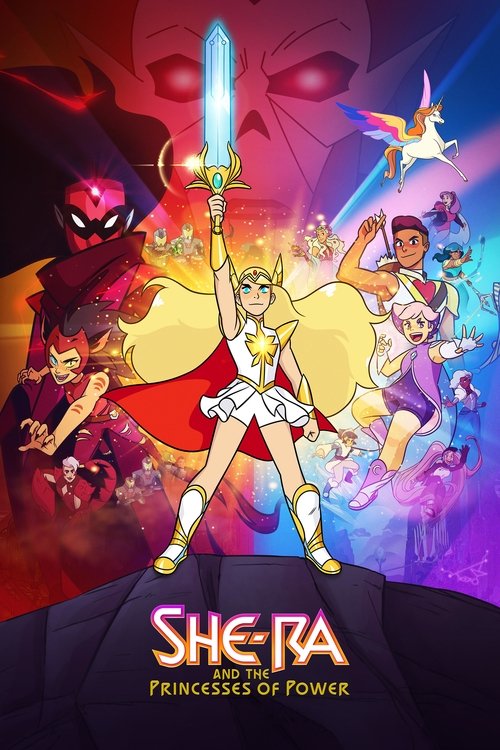





She-Ra and the Princesses of Power is an American animated superhero television series developed by ND Stevenson and produced by DreamWorks Animation Television for Netflix. It is a reboot of the 1985 Filmation series She-Ra: Princess of Power, and like the original series, it tells the tale of Adora, an adolescent who can transform into the heroine She-Ra and leads a group of other magical princesses in a rebellion against the evil Lord Hordak and his Horde.
She-Ra and the Princesses of Power received critical acclaim, with particular praise for its diverse cast and the complex relationship between She-Ra and her best friend-turned-archenemy Catra. In 2019, the show was nominated for a GLAAD Media Award for Outstanding Kids & Family Programming, as well as a Daytime Emmy Award at the 46th Daytime Emmy Awards. In 2021, the series was tied with First Day when it won the GLAAD Media Award for Outstanding Kids and Family Programming.
The series ran on Netflix from November 13, 2018 (2018-11-13), to May 15, 2020 (2020-05-15), having released 52 episodes over 5 seasons. On linear TV, the show previously aired on CBBC in the United Kingdom, before it moved to Pop on January 30, 2023. It also aired on Disney Channel and DreamWorks Channel across the globe. The series was removed from Netflix on February 21, 2026, due to the expiration of DreamWorks' license to keep the series on the streaming service.
Contents
Synopsis
She-Ra and the Princesses of Power is set on the planet Etheria and follows the stories of Adora and Catra, orphans who were raised to be soldiers in the Horde. They are part of an evil army led by Hordak, a tyrannical despot who dreams of conquering the planet. One day, after getting lost in the woods, Adora finds a magic sword that transforms her into the legendary Princess of Power, She-Ra. After learning that the Horde is actually evil and has been inflicting suffering on Etheria and its inhabitants, Adora decides to join the Rebellion in the fight against the Horde. She helps rebuild the Princess Alliance, a league of kingdoms ruled by other magical princesses. Adora's newfound allegiance to the Rebellion pits her against Catra, her former best friend, whose feelings of betrayal and abandonment twist her personal ambitions and lead her to become Adora's archenemy. Much of the show centers around their conflict.
In the first season, Adora helps reassemble the Princess Alliance, which successfully defends the rebel stronghold of Bright Moon against the Horde's assault. Meanwhile, Catra rises in the ranks to become Hordak's second-in-command.
In the second and third seasons, Hordak attempts to build an interdimensional portal which will allow him to contact his creator, the interplanetary warlord Horde Prime. Catra activates the portal even though it threatens to tear the planet apart, and rebellion leader Queen Angella sacrifices herself to stop it.
In the fourth season, friction arises between Adora and her friend Glimmer (Angella's daughter and the new queen of Bright Moon) when Adora learns that her sword is the key to an ancient superweapon inside Etheria. In order to prevent the weapon from activating, Adora destroys her sword, losing access to her She-Ra powers, but not before Etheria is pulled through a portal, becoming vulnerable to attack by Horde Prime's armada.
The fifth and final season follows Adora's journey to liberate Etheria from Horde Prime's reign. Adora rescues a redeemed Catra and Glimmer from Horde Prime, discovering her innate She-Ra powers in the process, but in the meantime Horde Prime has subdued much of Etheria with his mind-control capabilities. The princesses and Catra work together to disable Horde Prime's hivemind and stop him from accessing Etheria's ancient superweapon. In the end, it is Adora and Catra's love for each other that enables She-Ra to destroy both the weapon and Horde Prime, and save the universe from his tyrannical reign.
Production
Development
Development and production of the series began concurrently in April 2016. It was announced on December 12, 2017. Showrunner ND Stevenson initially pitched it to Netflix on the assumption of creating only one season, but in November 2018, he explained that "we now have four arcs of 13 episodes done". She-Ra is created using traditional animation, with the exception of some computer animation for "complicated machinery". The animation is provided by South Korean studio NE4U.
Themes
The first season of the serialized She-Ra reboot focuses on establishing the characters and their relationships in order to set up future seasons, initially by way of a "mission-of-the-week" plot to have the core cast of Adora and her close friends, Glimmer and Bow recruit princesses to their rebellion. While the core premise and characters of the original series were carried over, as well as many of its affectations (such as Adora's transformation catchphrase "For the honor of Grayskull!"), the reboot sets itself apart from the 1980s series by its almost entirely female cast. The characters were deliberately made to be diverse, both in appearance and in character traits. For instance, some characters range from good to "evil but understandable", "utterly amoral" or "full-blown hippie". He-Man, who in the original version was She-Ra's brother who "awakens her destiny", does not appear in the reboot, in order to set up She-Ra as a hero in her own right.
According to Stevenson, the show's thematic core is the relationships among its characters, which range from "wide-eyed love" to "heart-rending jealousy, crushes and infatuations". Reviewers particularly highlighted the convincing portrayal of the anti-hero Catra and her complicated "frenemy" relationship with Adora, which The Verge described as "the best animated antihero story since Avatar: The Last Airbender's Zuko". In addition, the series addresses such themes as abusive relationships and overcoming trauma, prejudice, isolationism (as exemplified, initially, by the princesses), colonization, imperialism, and genocide (a result of Hordak's planetary-scale warfare). There is a strong focus on the struggle to break free of sociopolitical indoctrination, explored mainly through the stories of Adora, Hordak, and Light Hope. The series also emphasizes the necessity of taking action no matter one's own power or circumstances; it portrays magic as fallible and dependent on its wielder's skill and determination—Adora's powers in particular are directly tied to her love for her friends. Despite this, Adora's main internal conflict stems from being told she must suppress her personal desires in order to be the hero Etheria needs. Finally, Horde Prime's regime in Season 5 contains elements reminiscent of fundamentalist Christianity, which Stevenson has noted are not meant to be criticisms of religion itself but rather the kind of leadership seen in extremist, cult-like organizations.
In June 2020, Stevenson said that Catra was a woman of color, saying he discussed her "being a brown Latina" when designing her, although this was not "explicitly, textually present in the show," Stevenson also expressed enthusiasm for fans interpreting Catra as representing Persian ethnicity.
Staff and cast
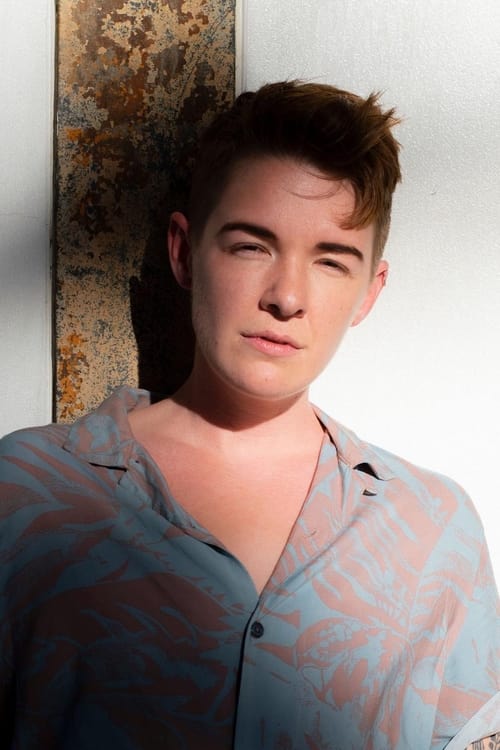
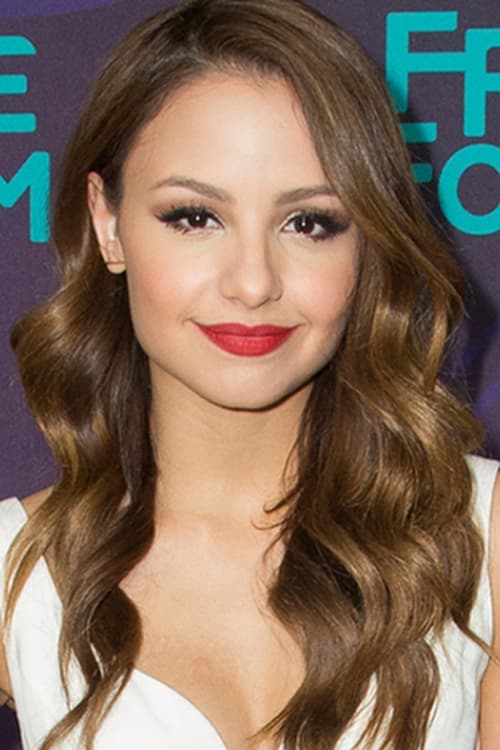
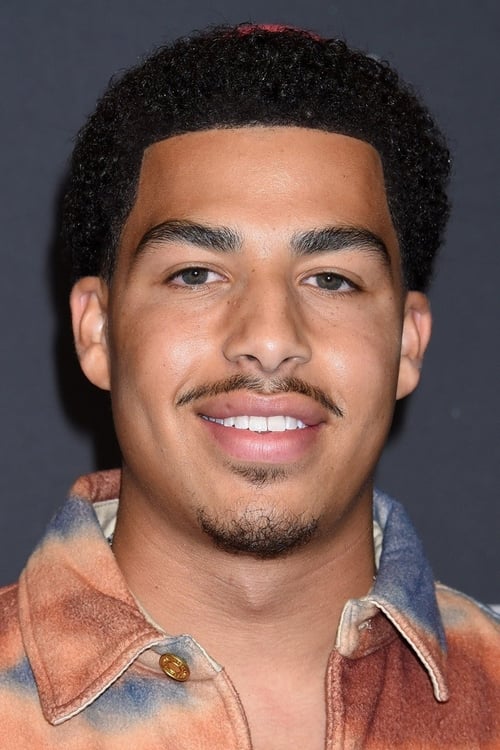
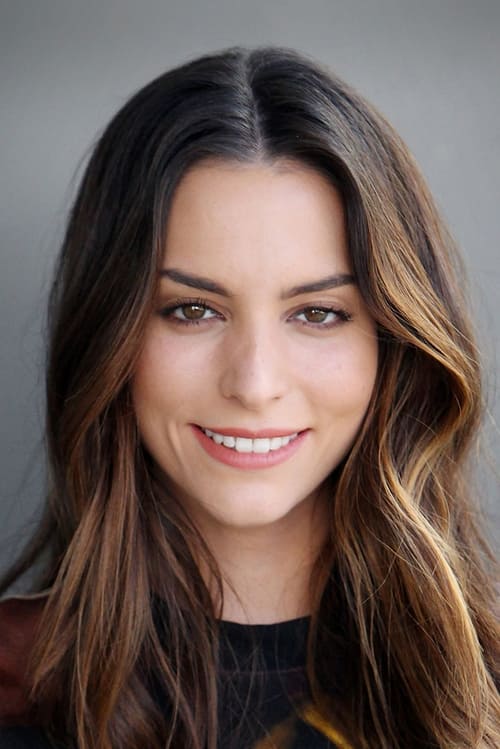
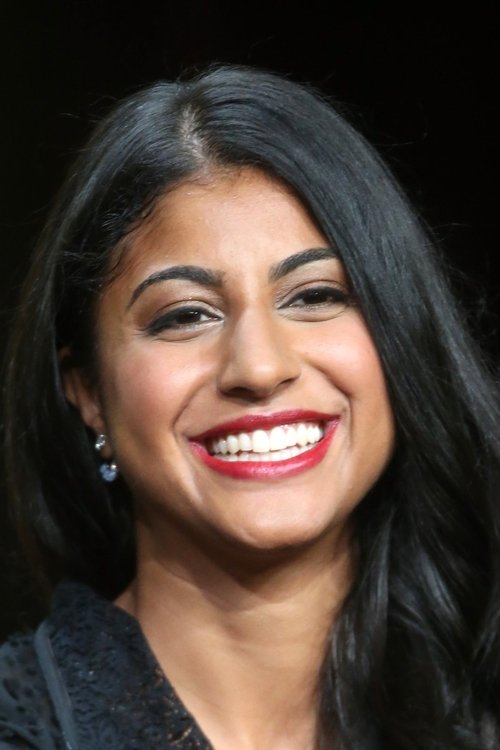
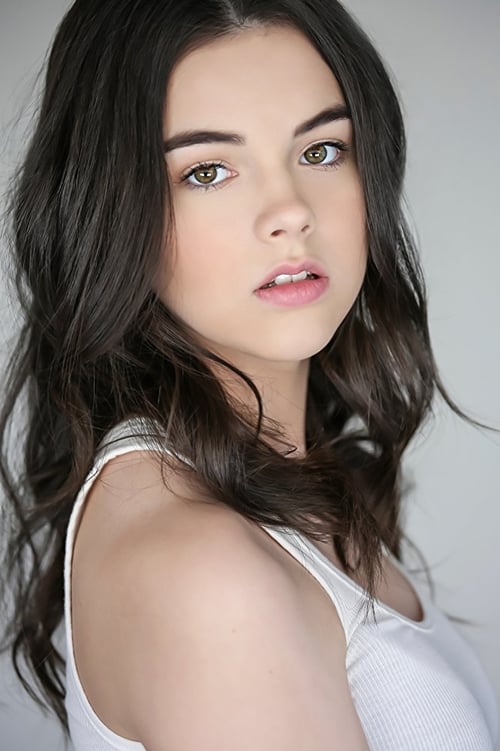
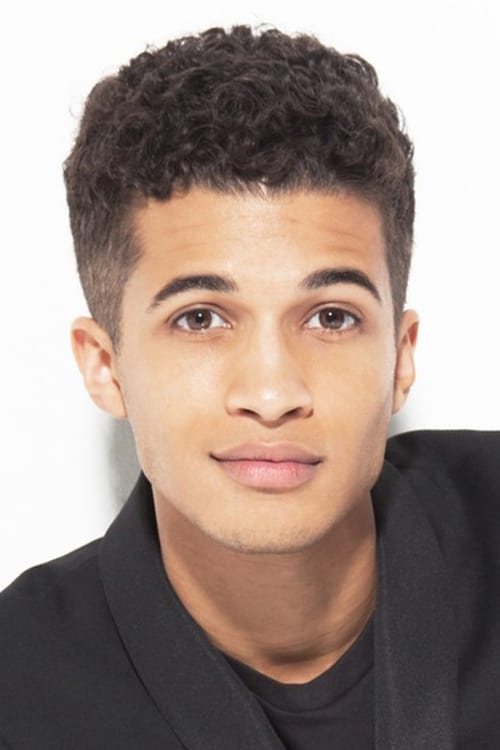
The series' showrunner and creator, ND Stevenson, is a cartoonist who became known for his Eisner Award-winning comics Nimona and Lumberjanes. The principal voice cast includes Aimee Carrero as She-Ra, AJ Michalka as Catra, Karen Fukuhara as Glimmer, and Marcus Scribner as Bow. Mary Elizabeth McGlynn is the voice director. The series has an all-female writers' room, and only one man in the regular voice cast. Around 45 people worked on She-Ra in the DreamWorks offices in Glendale.
Design
Visually, the rebooted She-Ra series takes inspiration from anime and the works of Hayao Miyazaki and Moebius. Whereas the original series' heroines were all of exactly the same size and shape to facilitate animation and toy production, and were all white (with the late exception of Netossa), the new series' characters are intentionally diverse in shape and ethnicity.
After first images of She-Ra's design were released in July 2018, controversy ensued on social media. Some Internet users contended that she was not as "beautiful and sexy", voluptuous or glamorous as in the original series, or that she looked like a boy. Other users responded that the new series tried to avoid sexualizing a children's show, and conveyed body positivity.
J. Michael Straczynski, the co-creator of the original series, commented that his She-Ra was written as "a warrior, first and foremost", and that "anyone who is looking back at [her] as the 'ideal woman' is doing so through the lens of prepubescent ... interest and kind of, understandably, imprinted on her like baby ducks. I get it. But that wasn't the creative intent." Fan artists, mostly young women inspired by the new design's detractors to improve the new character's profile and her reputation, responded to She-Ra's redesign and the controversy over it with a wave of artworks celebrating the heroine's new look.
Music
The series' title song is "Warriors" by Aaliyah Rose. The Washington Post highlighted it as one of the "theme song/opening credits so good it must not be skipped, right up there with Daredevil, The Crown and Narcos".
The soundtrack was composed by Sunna Wehrmeijer. She aimed at creating a "contemporary '80s synth-sound combined with orchestral adventure", based on the creators' desire to feature "big and epic" but also "sparkly" music. A soundtrack album was released on May 8, 2020, which included a cover of the theme song by AJ Michalka.
Broadcast and promotion
Promotion and release
A first teaser trailer released in September 2018 showcased Adora's transformation into She-Ra. Longer trailers were released in October and November 2018. On January 24, 2019, the network announced the series' renewal for a second season, which debuted on April 26 of that year. A third season was released on August 2, 2019. The fourth season was released on November 5, 2019. The fifth and final season was released on May 15, 2020.
As a novelty for a television series, the series' website is available in a virtual reality format, and is set up to present the user with a virtual crystal palace.
In December 2025, ComicBook reported that the series may leave Netflix on February 21, 2026, due to the expiration of DreamWorks' license to keep the series on the streaming service. In subsequent articles, the news was later confirmed by Collider, ComicBook, and CBR noting that it was not known where, and if, the media would be streaming again, and noting that some fans were frustrated and would turn to online piracy to watch the series after it is taken off Netflix. On social media, Stevenson said that this news was not surprising, noting that the same has happened to other DreamWorks series as their Netflix licenses expired, meaning that "years of hard work by many talented crews have ended up without a home," adding that showrunners have no control of it. He also expressed hope that the entire series would find "a new home," that the series would have a full DVD release, and urged fans to watch the series "while you can, and keep records whenever possible. Its legacy is in your hands." In January 2026, Collider, Safwan Azeem said the series removal comes along with the removal of other Netflix Originals and extends to "fan-favorite titles." It was later confirmed that February 20 would be the last day people could stream the series on Netflix, one day earlier than originally reported, with the series' removal described by some as a "betrayal of queer storytelling."
Home media
Reception
Critical response
While Metacritic has not assigned the series a weighted average score, it has given all six reviews by mainstream critics a score of an 80 or above out of 100.
The first season received critical acclaim, with the review aggregator Rotten Tomatoes reporting a 100% approval rating based on 25 reviews, with an average rating of 7.7/10. The site's critical consensus reads: "By the grace of Greyskull, [the first season of] She-Ra and the Princesses of Power packs a powerful visual punch that hits even harder thanks to layered writing and multidimensional characters – the perfect show for seasoned fans and little ones alike." Some stated that the series had a lot in common with shows such as Avatar: The Last Airbender, Steven Universe and Sailor Moon, including characters who "read fluidly on the gender and sexuality spectrum." Vox called the series one of the "most LGBTQ-inclusive and diverse shows on television."
Entertainment Weekly's Darren Franich described the series as "a funny-wonderful pop fantasy animated like disco fireworks, fun for kids of all genders and any parents looking for something happy to cry about". Franich appreciated the self-aware humor and "hiply transgressive newness". Franich also noted some repetition, occasionally flat animation and the final showdown's predictable outcome. He found some of the tension in contemporary American politics reflected in the series' portrayal of the rebuilding of a "coalition of powerful liberal-minded thinkers left in disarray after a brutal defeat years ago by a monstrously all-consuming bad dude". Collider called the series "visually exciting, emotionally charged, and unexpectedly hilarious", and "one of the best new shows of the year". David Griffin at IGN praised the series for successfully rebooting the franchise but concluded that "Adora could have used more time with the Horde to help develop her character".
Hypable praised the series' diversity and the multifaceted relationships among some of its core characters, but found much of the first season's plot "simplistic", and the rotating cast of princesses given short shrift. The Washington Post highlighted the "top-notch" voice cast and particularly the work of Lorraine Toussaint as the sorceress Shadow Weaver. The Verge commented that the series' biggest problem was that it was "retreading territory that Steven Universe and the two Avatar animated series did better", with several characters and plot points heavily reminiscent of elements from these earlier animated series, and also criticized the early episodes' shallow plot. Tor.com's Maya Gittleman stated that the show not only "queers fantasy archetypes" but has a "deliberately inclusive, [and] diverse cast," works to highlight "different means of expressing power," and have room for "an expansive exploration of femininity." Gittleman further argued that the show operates further "outside the gender binary" than any show she knows of, that "Catradora has actually been canon for years" with the show focusing on a world where "the love of two queer girls gets to save the universe." In the end of her review, she says she would like to see more diverse "queer stories" in the years to come.
Legacy and influence
When talking with Entertainment Weekly in May 2020, Stevenson said that he hoped that She-Ra would continue to pave the way, saying he hoped it will be easier to have "romances and relationships that are constant throughout the show" without it taking suspense out of the show itself. In a New York Times profile on July 21, 2020, climate activist Jamie Margolin said she watched all five seasons of the show over a three-day period, telling the interview, "I was like, I hate the real world. I want to live on Etheria".
Scholars have approached the series with different perspectives. Paul Thomas argued the series is monomythic and deploys this, while "queering normative understandings of heroic gender and sexuality," and providing an example for writers wanting to rehabilitate Joseph Campbell's monomyth for the "increasingly queer, feminist, and intersectional world". Diana Burgos argued that the series, like The Legend of Korra and Sailor Moon, provides a roadmap to audiences which are navigating through the "coded systems of gender and sexuality that poison their narratives." Burgos further stated that these three series urge audiences to claim their agency within "our collective unconscious and the liminal digital spaces of our social networks." Others noted that the series proved that LGBTQ representation "does not have to be direct or in your face", and that the series is a manifestation of "queer seriality" in streaming media.