



Sony Group Corporation, colloquially known as Sony, is a Japanese multinational conglomerate headquartered at the Sony City building in Minato, Tokyo. The Sony Group encompasses various businesses, including electronics, imaging and sensing (Sony Semiconductor Solutions), film and television (Sony Pictures Entertainment), music (Sony Music Group and Sony Music Entertainment Japan), video games (Sony Interactive Entertainment), and others.
Sony was founded in 1946 as Tokyo Tsushin Kogyo K.K. by Masaru Ibuka and Akio Morita. In 1958, the company adopted the name Sony Corporation. Initially an electronics firm, it gained early recognition for products such as the TR-55 transistor radio and the CV-2000 home video tape recorder, contributing significantly to Japan's post-war economic recovery. After Ibuka's retirement in the 1970s, Morita served as chairman until 1994, overseeing Sony's rise as a global brand recognized for innovation in consumer electronics. Landmark products included the Trinitron color television, the Walkman portable audio player, and the co-development of the compact disc.
Expanding beyond electronics, Sony acquired CBS Records in 1988 and Columbia Pictures Entertainment in 1989, while also entering the home video game console market with the launch of the PlayStation in 1994. In Japan, the company further diversified by establishing a financial services division in 2001, that would be turned into a separate company in September 2025, with the group maintaining 20% of the shares. In 2021, the company was renamed Sony Group Corporation as it transitioned into a holding company structure, with its electronics business continuing under the name Sony Corporation.
In 2020, Sony held a 55% share of the global image sensor market, making it the largest image sensor manufacturer, the second largest camera manufacturer, a semiconductor sales leader, and the world's third-largest television manufacturer by sales.
Although Sony is not part of a traditional keiretsu, it has historical ties to the Sumitomo Mitsui Financial Group, dating back to the 1950s when it relied exclusively on Mitsui Bank for financing. Sony is publicly traded on the Tokyo Stock Exchange (a component of the Nikkei 225 and TOPIX Core30 indices) and also maintains American depositary receipts on the New York Stock Exchange, where it has been listed since 1961. As of 2021, it ranked 88th on the Fortune Global 500 and 57th on the 2023 Forbes Global 2000 list.
Contents
History
Tokyo Tsushin Kogyo
Sony began in the wake of World War II. In 1946, Masaru Ibuka started an electronics shop in Shirokiya, a department store building in the Nihonbashi area of Tokyo. The company started with a capital of ¥190,000 and a total of eight employees. On 7 May 1946, Ibuka was joined by Akio Morita to establish a company called Tokyo Tsushin Kogyo (東京通信工業, Tōkyō Tsūshin Kōgyō; Tokyo Telecommunications Engineering Corporation). The company built Japan's first tape recorder, called the Type-G. In 1958, the company changed its name to "Sony".
Name
Tokyo Tsushin Kogyo founders Morita and Ibuka realized that to achieve success and grow, their business had to expand to the global market, which required labeling their products with a short and easy brand name. While looking for a romanized name, they at first strongly considered using their initials, TTK. The primary reason they did not is that the railway company Tokyo Kyuko was known as TTK. The company occasionally used the syllabic acronym "Totsuko" in Japan, but during his visit to the United States, Morita discovered that Americans had trouble pronouncing that name. Another early name that was tried out for a while was "Tokyo Teletech" until Akio Morita discovered that there was an American company already using Teletech as a brand name.
The name "Sony" was chosen for the brand as a mix of two words: one was the Latin word "sonus", which is the root of sonic and sound, and the other was "sonny", a common slang term used in 1950s America to call a young boy. In 1950s Japan, "sonny boys" was a loan word in Japanese, which connoted smart and presentable young men, which Akio Morita and Masaru Ibuka considered themselves to be.
The first Sony-branded product, the TR-55 transistor radio, appeared in 1955, but the company name did not change to Sony until January 1958.
At the time of the change, it was unusual for a Japanese company to use Roman letters to spell its name instead of writing it in kanji. The move was not without opposition: TTK's principal bank at the time, Mitsui, had strong feelings about the name. They pushed for a name such as Sony Electronic Industries, or Sony Teletech. Akio Morita was firm, however, as he did not want the company name tied to any particular industry. Eventually, both Ibuka and Mitsui Bank's chairman gave their approval.
Globalization
According to Schiffer, Sony's TR-63 radio "cracked open the U.S. market and launched the new industry of consumer microelectronics." By the mid-1950s, American teens had begun buying portable transistor radios in huge numbers, helping to propel the fledgling industry from an estimated 100,000 units in 1955 to 5 million units by the end of 1968.
Sony co-founder Akio Morita founded Sony Corporation of America in 1960. In the process, he was struck by the mobility of employees between American companies, which was unheard of in Japan at that time. When he returned to Japan, he encouraged experienced, middle-aged employees of other companies to consider joining Sony. The company filled many positions in this manner, and inspired other Japanese companies to do the same. Moreover, Sony played a major role in the development of Japan as a powerful exporter during the 1960s, 1970s and 1980s, supplying the U.S. Military with bomb parts used in the Vietnam War. It also helped to significantly improve American perceptions of "made in Japan" products. Known for its production quality, Sony was able to charge above-market prices for its consumer electronics and resisted lowering prices.
In 1971, Masaru Ibuka handed the position of president over to his co-founder Akio Morita. Sony began a life insurance company in 1979, one of its many peripheral businesses. Amid a global recession in the early 1980s, electronics sales dropped and the company was forced to cut prices. Sony's profits fell sharply. "It's over for Sony", one analyst concluded. "The company's best days are behind it."
Around that time, Norio Ohga took up the role of president. He encouraged the development of the compact disc (CD) in the 1970s and 1980s, and of the PlayStation in the early 1990s. Ohga went on to purchase CBS Records in 1988 and Columbia Pictures in 1989, greatly expanding Sony's media presence. Ohga would succeed Morita as chief executive officer in 1989.
Under the vision of co-founder Akio Morita and his successors, the company had aggressively expanded into new businesses. Part of its motivation for doing so was the pursuit of "convergence", linking film, music and digital electronics via the Internet. This expansion proved unrewarding and unprofitable, threatening Sony's ability to charge a premium on its products as well as its brand name. In 2005, Howard Stringer replaced Nobuyuki Idei as chief executive officer, marking the first time that a foreigner had run a major Japanese electronics firm. Stringer helped to reinvigorate the company's struggling media businesses, encouraging blockbusters such as Spider-Man while cutting 9,000 jobs. He hoped to sell off peripheral business and focus the company again on electronics. Furthermore, he aimed to increase cooperation between business units, which he described as "silos" operating in isolation from one another. In a bid to provide a unified brand for its global operations, Sony introduced a slogan known as "make.believe" in 2009. Despite some successes, the company faced continued struggles in the mid- to late-2000s.
Formats and technologies
Sony has historically been notable for creating its own in-house standards for new recording and storage technologies, instead of adopting those of other manufacturers and standards bodies, while its success in the early years owes to a smooth capitalization on the Digital Compact Cassette standard introduced by Philips, with which Sony went on to enjoy a decades-long technological relationship in various areas.
Sony (either alone or with partners) has introduced several of the most popular recording formats, including the 3.5-inch floppy disk, compact disc and Blu-ray disc.
Video recording
Sony introduced U-matic, the world's first videocassette format, in 1971, but the standard was unpopular for domestic use due to the high price.
The company subsequently launched the Betamax format in 1975. Sony was involved in the videotape format war of the early 1980s, when it was marketing the Betamax system for video cassette recorders against the VHS format developed by JVC. In the end, VHS gained critical mass in the marketbase and became the worldwide standard for consumer VCRs.
Betamax is, for all practical purposes, an obsolete format. Sony's professional-oriented component video format called Betacam, which was derived from Betamax, was used until 2016 when Sony announced it was stopping production of all remaining 1/2-inch video tape recorders and players, including the Digital Betacam format.
In 1985, Sony launched its Handycam products and the Video8 format. Video8 and the follow-on hi-band Hi8 format became popular in the consumer camcorder market.
Visual display
Sony held a patent for its proprietary Trinitron until 1996.
Sony introduced the Triluminos Display, the company's proprietary color reproduction enhancing technology, in 2004, featured in the world's first LED-backlit LCD televisions. It was widely used in other Sony's products as well, including computer monitors, laptops, and smartphones. In 2013, Sony released a new line of televisions with an improved version of the technology, which incorporated quantum dots in the backlight system. It was the first commercial use of quantum dots.
In 2012, the company revealed a prototype of an ultrafine RGB LED display, which it calls the Crystal LED Display.
Audio recording
In 1987 Sony launched the 4 mm DAT or Digital Audio Tape as a new digital audio tape standard.
Sony introduced the MiniDisc format in 1992 as an alternative to Philips DCC or Digital Compact Cassette and as a successor to the Compact Cassette. Since the introduction of MiniDisc, Sony has attempted to promote its own audio compression technologies under the ATRAC brand, against the more widely used MP3. Until late 2004, Sony's Network Walkman line of digital portable music players did not support the MP3 standard natively.
In 2004, Sony built upon the MiniDisc format by releasing Hi-MD. Hi-MD allows the playback and recording of audio on newly introduced 1 GB Hi-MD discs in addition to playback and recording on regular MiniDiscs. In addition to saving audio on the discs, Hi-MD allows the storage of computer files such as documents, videos and photos.
Audio encoding
In 1993, Sony challenged the industry standard Dolby Digital 5.1 surround sound format with a newer and more advanced proprietary motion picture digital audio format called SDDS (Sony Dynamic Digital Sound). This format employed eight channels (7.1) of audio opposed to just six used in Dolby Digital 5.1 at the time. Ultimately, SDDS has been vastly overshadowed by the preferred DTS (Digital Theatre System) and Dolby Digital standards in the motion picture industry. SDDS was solely developed for use in the theatre circuit; Sony never intended to develop a home theatre version of SDDS.
Sony and Philips jointly developed the Sony-Philips digital interface format (S/PDIF) and the high-fidelity audio system SACD. The latter became entrenched in a format war with DVD-Audio. Still, neither gained a major foothold with the general public. CDs had been preferred by consumers because of the ubiquitous presence of CD drives in consumer devices until the early 2000s when the iPod and streaming services became available.
In 2015, Sony introduced LDAC, a proprietary audio coding technology which allows streaming high-resolution audio over Bluetooth connections at up to 990 kbit/s at 32 bit/96 kHz. Sony also contributed it as part of the Android Open Source Project starting from Android 8.0 "Oreo", enabling every OEM to integrate this standard into their own Android devices freely. However the decoder library is proprietary, so receiving devices require licenses. On 17 September 2019, the Japan Audio Society (JAS) certified LDAC with its Hi-Res Audio Wireless certification. Currently the only codecs with the Hi-Res Audio Wireless certification are LDAC and LHDC, another competing standard.
Optical storage
Sony demonstrated an optical digital audio disc in 1977 and soon joined hands with Philips, another major contender for the storage technology, to establish a worldwide standard. In 1983, the two companies jointly announced the Compact Disc (CD). In 1984, Sony launched the Discman series, an expansion of the Walkman brand to portable CD players. Sony began to improve performance and capacity of the novel format. It launched write-once optical discs (WO) and magneto-optical discs which were around 125MB size for the specific use of archival data storage, in 1986 and 1988 respectively.
In the early 1990s, two high-density optical storage standards were being developed: one was the MultiMedia Compact Disc (MMCD), backed by Philips and Sony, and the other was the Super Density Disc (SD), supported by Toshiba and many others. Philips and Sony abandoned its MMCD format and agreed upon Toshiba's SD format with only one modification. The unified disc format was called DVD and was introduced in 1997.
Sony was one of the leading developers of the Blu-ray optical disc format, the newest standard for disc-based content delivery. The first Blu-ray players became commercially available in 2006. The format emerged as the standard for HD media over the competing format, Toshiba's HD DVD, after a two-year-long high-definition optical disc format war.
Sony's laser communication devices for small satellites rely on the technologies developed for the company's optical disc products.
Disk storage
In 1983, Sony introduced 90 mm micro diskettes, better known as 3.5-inch (89 mm) floppy disks, which it had developed at a time when there were 4" floppy disks, and many variations from different companies, to replace the then on-going 5.25" floppy disks. Sony had great success and the format became dominant. 3.5" floppy disks gradually became obsolete as they were replaced by current media formats. Sony held more than a 70 percent share of the market when it decided to pull the plug on the format in 2010.
Sony still develops magnetic tape storage technologies along with IBM, and are one of only two manufacturers of Linear Tape-Open (LTO) cartridges.
Flash memory
In 1998, Sony launched the Memory Stick format, the flash memory cards for use in Sony lines of digital cameras and portable music players. It has seen little support outside of Sony's own products, with Secure Digital cards (SD) commanding considerably greater popularity. Sony has made updates to the Memory Stick format with Memory Stick Duo and Memory Stick Micro. The company has also released USB flash drive products, branded under the Micro Vault line.
Communication
Sony introduced FeliCa, a contactless IC card technology primarily used in contactless payment, as a result of the company's joint development and commercialization of Near-Field Communication (NFC) with Philips. The standard is largely offered in two forms, either chips embedded in smartphones or plastic cards with chips embedded in them. Sony plans to implement this technology in train systems across Asia.
In 2019, Sony launched the ELTRES, the company's proprietary low-power wide-area wireless communication (LPWAN) standard.
Video gaming
Until 1991, Sony had little direct involvement with the video game industry. The company supplied components for other consoles, such as the sound chip for the Super Famicom from Nintendo, and operated a video game studio, Sony Imagesoft. As part of a joint project between Nintendo and Sony that began as early as 1988, the two companies worked to create a CD-ROM version of the Super Famicom, though Nintendo denied the existence of the Sony deal as late as March 1991. At the Consumer Electronics Show in June 1991, Sony revealed a Super Famicom with a built-in CD-ROM drive, named the "Play Station" (also known as SNES-CD). However, a day after the announcement at CES, Nintendo announced that it would be breaking its partnership with Sony, opting to go with Philips instead but using the same technology. The deal was broken by Nintendo after they were unable to come to an agreement on how revenue would be split between the two companies. The breaking of the partnership infuriated Sony President Norio Ohga, who responded by appointing Kutaragi with the responsibility of developing the PlayStation project to rival Nintendo.
At that time, negotiations were still on-going between Nintendo and Sony, with Nintendo offering Sony a "non-gaming role" regarding their new partnership with Philips. This proposal was swiftly rejected by Kutaragi who was facing increasing criticism over his work with regard to entering the video game industry from within Sony. Negotiations officially ended in May 1992 and in order to decide the fate of the PlayStation project, a meeting was held in June 1992, consisting of Sony President Ohga, PlayStation Head Kutaragi and several senior members of Sony's board. At the meeting, Kutaragi unveiled a proprietary CD-ROM-based system he had been working on which involved playing video games with 3D graphics to the board. Eventually, Sony President Ohga decided to retain the project after being reminded by Kutaragi of the humiliation he suffered from Nintendo. Nevertheless, due to strong opposition from a majority present at the meeting as well as widespread internal opposition to the project by the older generation of Sony executives, Kutaragi and his team had to be shifted from Sony's headquarters to Sony Music, a completely separate financial entity owned by Sony, so as to retain the project and maintain relationships with Philips for the MMCD development project (which helped lead to the creation of the DVD)
Continued research and development
In 2021, the WIPO's annual review of the World Intellectual Property Indicators report ranked Sony's as ninth in the world for the number of patent applications published under the PCT System. 1,793 patent applications were published by Sony during 2020. This position is up from its previous ranking as 13th in 2019 with 1,566 applications.
Business units
Sony offers a wide variety of product lines in many areas. At its peak, it was dubbed as a "corporate octopus", for its sprawling ventures from private insurance to chemicals to cosmetics to home shopping to a Tokyo-based French food joint, in addition its core businesses such as electronics and entertainment. Even after it has unwound many business units including Sony Chemicals and Vaio PC, Sony still runs diverse businesses.
As of 2020, Sony is organized into the following business segments: Game & Network Services (G&NS), Music, Pictures, Electronics Products & Solutions (EP&S), Imaging & Sensing Solutions (I&SS), Financial Services, and Others. Usually, each business segment has a handful of corresponding intermediate holding companies under which all the related businesses are folded into, such as Columbia Records being part of Sony Music Group, a subsidiary and, at the same time, a holding company for Sony's music businesses, along with SMEJ.
Electronics
Sony Corporation (Sony Electronics Corporation until 1 April 2021) is the electronics business unit of the Sony Group. It primarily conducts research and development (R&D), planning, designing, manufacturing and marketing for electronics products. Sony Global Manufacturing & Operations Corporation (SGMO) is a wholly owned subsidiary of Sony Corporation and responsible for managing manufacturing operations both in Japan and overseas, through its own factories as well as third party contract manufacturers.
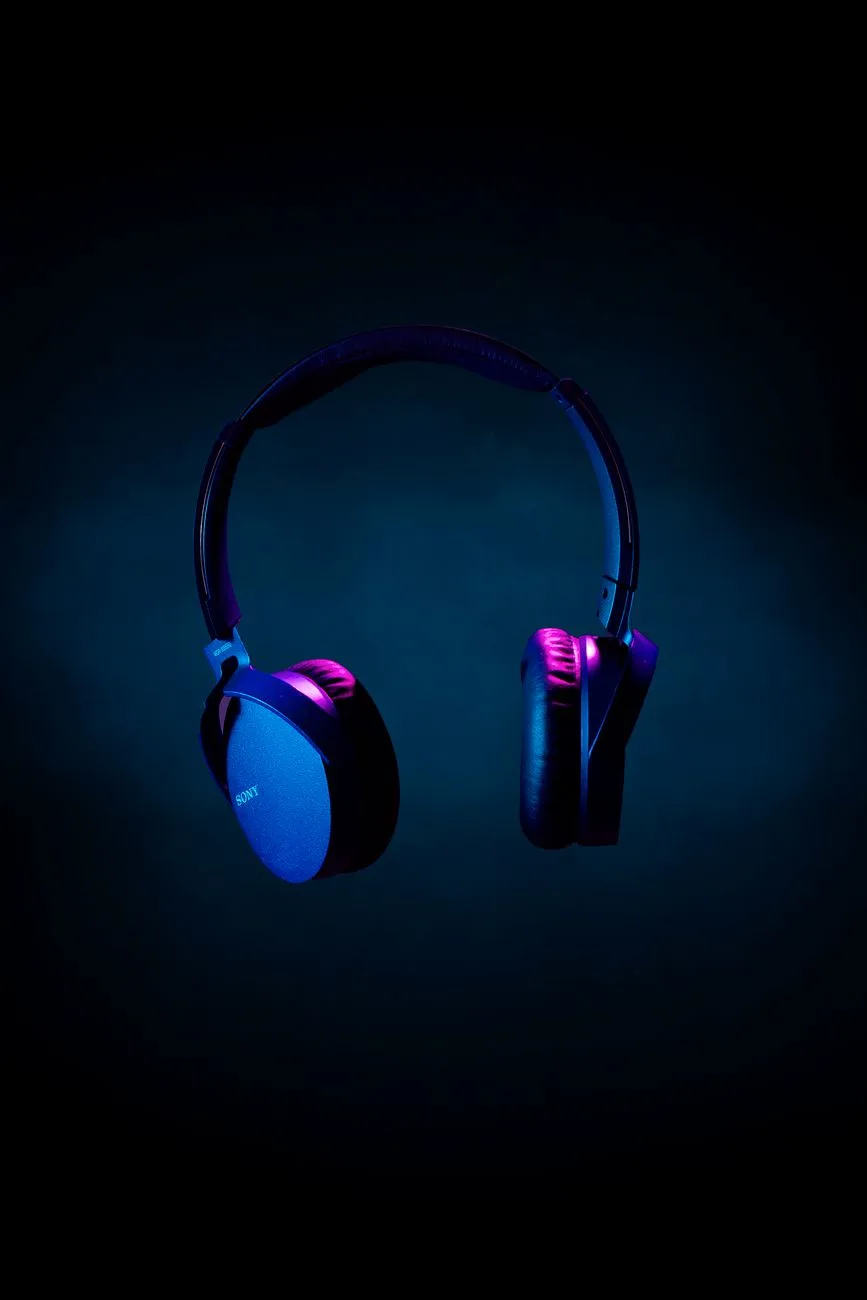
In 1979, Sony released the world's first portable music player, the Walkman, bundled with the MDL-3L2 headphones. This line fostered a fundamental change in music listening habits by allowing people to carry music with them and listen to music through lightweight headphones. Originally used to refer to portable audio cassette players, the Walkman brand has been widely adopted by the company to encompass its portable digital audio and video players as well as a line of former Sony Ericsson mobile phones.
In October 1982, Sony introduced the CDP-101, the world's first commercially available Compact Disc player. Its commercial success demonstrated the viability of digital audio, effectively initiating the transition away from vinyl records and cassette tapes.
In November 1984, Sony released the D-50, the world's first portable Compact Disc player. In late 1985, Sony released the D-50 Mk II, marking the official launch of the Discman brand name printed directly on the chassis. In 1997, Sony officially retired the Discman brand and rebranded its portable CD player lineup under the CD Walkman name.
In 1999, Sony's first portable digital audio players were introduced; one was a player using Memory Stick flash storage created by the Walkman division, and the other was a smaller pen-sized player with embedded flash storage created by the Vaio division; both accompanied with Sony's OpenMG copyright protection technology and PC software for music transfer. Sony continue to develop Walkman digital audio players, although it was unable to capture the large share and influence in the digital world as it did in the cassette era.
In 2025, a model TPS-L2 cassette Walkman from 1979 was included in Pirouette: Turning Points in Design, an exhibition at the Museum of Modern Art featuring "widely recognized design icons [...] highlighting pivotal moments in design history."
Imaging & sensing solutions
Sony traces its roots in the semiconductor business back to 1954, when it became the first Japanese company to commercialize the transistor, invented and licensed by Bell Labs, whilst some of the biggest and well-established names in Japan at the time like Toshiba and Mitsubishi Electric initially stuck with vacuum tubes they had been thriving on; despite being an expert on the vacuum tube himself, Ibuka saw potential of the novel technology and had Morita negotiate the terms for licensing, making Sony into one of the earliest and the youngest licensees of the transistor, together with Texas Instruments. In 1957, Sony employee Leo Esaki and his colleagues invented a tunnel diode (usually referred to as Esaki diode) by which they discovered the quantum tunneling effect in solids, for which Esaki received the Nobel prize in Physics in 1973. Sony has commanded a dominant share in the charge-coupled device market.
As of 2020, Sony is the world's largest manufacturer of CMOS image sensors as its chips are widely used in digital cameras, tablet computers, smartphones, drones and more recently, self-driving systems in automobiles.
As of 2020, the company, through its chip business arm Sony Semiconductor Solutions, designs, manufactures, and sells a wide range of semiconductors and electronic components, including image sensors (HAD CCD, Exmor), image processors (BIONZ), laser diodes, system LSIs, mixed-signal LSIs, emerging memory storage, emerging displays (microLED, microOLED, and holographic display), multi-functional microcomputer (SPRESENSE), etc.
In 2020, Sony has launched the first intelligent vision sensors with AI edge computing capabilies.
Automotive industry
The Sony Vision-S initiative began at CES 2020 as an electric concept vehicle designed to showcase Sony’s advanced imaging, sensing, and entertainment technologies for the automotive industry. The project debuted with the reveal of the Vision-S 01, a fully functional mid-size electric fastback sedan powered by dual 200 kW electric motors that delivered a 0–100 km/h acceleration time of 4.8 seconds and a top speed of 240 km/h (150 mph).
Designed with an emphasis on autonomous driving safety and immersive cabin features, the car showcased panoramic display screens, 360-degree audio systems, and a complex sensor network forming a protective "Safety Cocoon" around the vehicle. Initially launched with 33 sensors to demonstrate Sony’s hardware, the suite was expanded to 40 sensors by CES 2022, alongside the introduction of the 7-seater Vision-S 02 SUV concept.
Following the strong interest generated by the prototypes, the project transitioned into a commercial venture. In March 2022, Sony partnered with Honda to establish Sony Honda Mobility, evolving the Vision-S foundation into a consumer-focused EV brand called Afeela. Designed around Qualcomm’s Snapdragon Digital Chassis and featuring deep PlayStation and spatial audio integration, the line was anchored by the Afeela 1 sedan.
The initiative expanded at CES 2026 with the reveal of the Afeela Prototype 2026 electric SUV concept, which was planned for release in 2028. However, on March 25, 2026, Sony Honda Mobility officially cancelled production of the Afeela 1 and its SUV program following Honda's strategic retreat from its underlying EV platforms.
Sony partnered with Chery to provide OEM car audio for vehicles such as the Tiggo 8 and Tiggo 9, Ford to provide OEM audio for its vehicles such as the F-150, Fiesta, Focus, Mondeo and Taurus, Jaecoo with the Jaecoo 7, Omoda with their Omoda 5 and Omoda 9, Toyota with their Avensis and the Celica, Volkswagen with their Golf, Passat and also the Polo. A specialist Sony Xplod audio system was fitted to the Ford GTX1 supercar.
Sony currently produces aftermarket car audio with its Mobile ES series.
Video game industry
Sony Interactive Entertainment (formerly Sony Computer Entertainment) is most notable for producing PlayStation consoles. The line grew out of a failed partnership with Nintendo. Originally, Nintendo requested Sony to develop an add-on for its Super Nintendo Entertainment System that would play CD-ROMs. In 1991 Sony announced the add-on, as well as a dedicated console known as the "Play Station". However, a disagreement over software licensing for the console caused the partnership to fall through. Sony then continued the project independently.
Launched in Japan in December 1994 and globally in 1995, the original first PlayStation revolutionized the video game industry by establishing 3D real-time graphics as the new standard and utilizing cheap, high-capacity CD-ROMs over traditional cartridges. The system captured 61% of global console sales during its lifetime. This market dominance effectively broke Nintendo's long-standing industry lead, making the system the first home console to surpass 100 million units shipped worldwide. Its success was driven by a vast software library featuring major hits, including exclusive franchises like Gran Turismo, Crash Bandicoot, Spyro the Dragon and Twisted Metal.
Sony released the PlayStation 2 in 2000, achieving even greater commercial success than its predecessor. The platform dominated the market through backward compatibility with original PlayStation titles, an unmatched software library and a built-in DVD player that served as an affordable home media center. The console has become the most successful of all time, surpassing 160 million units sold worldwide over its lifetime. Its market success was driven by major first-party releases such as Gran Turismo 3: A-Spec, God of War, Shadow of the Colossus, Jak and Daxter: The Precursor Legacy and Ratchet & Clank.
Sony released the PlayStation 3 in 2006, introducing high-definition capabilities and becoming the first home console to adopt the Blu-ray disc format. Its proprietary Cell Broadband Engine architecture provided immense processing power, but its high production cost resulted in a launching price point well above competitors like the Xbox 360 and Wii, forcing Sony to lose an estimated $240 to $300 on every console sold at launch. While these launch hurdles and a complex developer environment caused initial sales performance to lag behind rival platforms, structural hardware revisions allowed the system to recover. A strong library of exclusive franchises, including Uncharted, God of War and The Last of Us, helped the console eventually surpass the Xbox 360 with over 87 million units shipped. In 2010, the platform added motion controls with the release of the PlayStation Move controller.
Film and television industry
Sony Pictures Entertainment Inc. operates as the primary film and television production and distribution division of Sony. It is one of the major American film studios. The company entered the entertainment market in 1989 through the $3.4 billion acquisition of Columbia Pictures Entertainment.
Its principal film division, the Sony Pictures Motion Picture Group, encompasses several prominent production studios and labels, including Columbia Pictures, TriStar Pictures, Screen Gems, Sony Pictures Classics, 3000 Pictures, Affirm Films, Stage 6 Films, Destination Films, Sony Pictures International Productions and Ghost Corps. Global theatrical distribution across these banners is handled through Sony Pictures Releasing and Sony Pictures Releasing International, while physical and digital home media distribution is managed by Sony Pictures Home Entertainment.
Over its history, Sony Pictures Entertainment has produced major cinematic franchises, such as Spider-Man, Bad Boys, Ghostbusters, Jumanji, The Karate Kid, Stuart Little and Men in Black. Historically, the studio achieved a 12.5% box office market share in 2011, ranking third among major Hollywood studios, following total group sales of $7.2 billion in 2010.
Sony holds perpetual live-action and animated feature film rights to the Spider-Man character and hundreds of related Marvel Comics figures, acquired from Marvel Entertainment in 1999. Managed primarily under Columbia Pictures, the property forms the core of Sony Pictures Entertainment's primary film franchise assets, spanning standalone blockbuster series (Spider-Man), the animated Spider-Verse franchise (Spider-Man: Into the Spider-Verse), and Sony's Spider-Man Universe spin-offs (Venom). In 2015, Sony entered into a historic licensing and creative partnership with Marvel Studios, allowing Spider-Man to be integrated into the Marvel Cinematic Universe while Sony retains underlying ownership, financing, distribution rights and final creative control over standalone films.
In television, Sony Pictures Entertainment operates Sony Pictures Television, which produces and distributes global programming like Seinfeld, Breaking Bad, The Crown, The Boys, and The Last of Us.
The company's theatrical animated feature films are produced by Sony Pictures Animation. Founded in 2002, the studio creates original computer-animated projects, outside of traditional Japanese anime. The studio has produced critical and commercial hits including Cloudy with a Chance of Meatballs, Hotel Transylvania, Spider-Man: Across the Spider-Verse and KPop Demon Hunters.
Music industry
Sony Music Group (SMG) is an American multinational music conglomerate operating as a subsidiary of Sony Group Corporation through Sony Corporation of America. Serving as the parent corporate umbrella to unite Sony's global recorded music and music publishing operations under unified leadership, SMG houses both Sony Music Entertainment (SME) and Sony Music Publishing (SMP). Positioned alongside Universal Music Group and Warner Music Group, it functions as the second-largest global music enterprise among the "big three" record companies.
A core cornerstone of this division is its group of four frontline flagship labels. Columbia Records serves as the primary flagship, specializing in mainstream pop, rock, and urban releases as the oldest surviving brand name in recorded music. RCA Records specializes in global pop, contemporary R&B, hip-hop, and mainstream crossover acts. Epic Records operates as a frontline hub specializing in hip-hop, R&B, pop, and modern rock. Arista Records functions as a primary flagship label specializing in pop, dance, electronic, and urban music.
The origin of Sony's music business traces back to 1968, when Sony and American publisher CBS Records launched a 50:50 joint venture in Japan called CBS/Sony Records. In March 1988, this venture merged with several related subsidiaries to form Sony Music Entertainment Japan (SMEJ), which continues to operate independently under direct Japanese parent ownership.
In 1988, Sony acquired the CBS Record Group for $2 billion, establishing the foundation for launching Sony Music Entertainment in 1991. The acquisition integrated historic flagship and frontline record labels into Sony's umbrella, including Columbia Records and Epic Records.
To consolidate global market share and navigate the physical-to-digital music transition, Sony executed a major corporate merger in August 2004 by combining its recording operations with Bertelsmann Music Group (BMG) to form a 50:50 joint venture named Sony BMG Music Entertainment. The merger brought together legendary imprints from both conglomerates, uniting Sony's Columbia and Epic labels with BMG's RCA, Arista, Jive and LaFace records. During this era, Sony BMG controlled roughly a quarter of the global music market.
The joint venture came to an end in October 2008 when Sony acquired Bertelsmann's remaining 50% stake for $1.2 billion, gaining full ownership of the joint catalog and reverting the enterprise name back to Sony Music Entertainment. Following the buyout, former BMG imprints like RCA, Arista, and Jive were fully integrated into Sony's corporate hierarchy. During this period of portfolio realignment, Sony acquired digital recognition provider Gracenote for $260 million in 2008 before divesting it to Tribune Media Company for $170 million in 2014. To support independent artists and self-releasing creators, Sony built out distribution and artist services platforms by acquiring global distributor The Orchard for $200 million in 2015 and artist-services platform AWAL for $430 million in 2021.
Financial services
Sony Financial Group is a holding company for Sony's financial services business which includes Sony Life (in Japan and the Philippines), Sony Assurance, Sony Bank, etc. The unit proved to be the most profitable of Sony's businesses in FY 2005, earning $1.7 billion in profit. Sony Financial's low fees have aided the unit's popularity while threatening Sony's premium brand name.
Others
A company behind the commercialization of lithium-ion battery, Sony had been exploring the possibility to manufacture the batteries for electric vehicles. In 2014, Sony participated within NRG Energy eVgo Ready for Electric Vehicle (REV) program, for EV charging parking lots. However, the company then decided to sell its lithium-ion battery business to Murata Manufacturing in 2016.
Corporate information
Institutional ownership
Sony is a kabushiki kaisha (joint stock company) listed on the Tokyo Stock Exchange in Japan with American depositary receipts listed on New York Stock Exchange. As of 31 March 2023, the largest shareholders of Sony are as follows:
The Master Trust Bank of Japan–nominated investment trusts (main account; 17.95%)
Citibank (as depositary bank for American depositary receipt holders; 8.91%)
Japan Trustee Services Bank–nominated investment trusts
Main trust account (6.1%)
Trust account 7 (2.4%)
Trust account 5 (2.1%)
JPMorgan Chase Bank (3.2%)
Business trends
The key trends for Sony are (as of the financial year ending March 31):
As of January 2024, Sony, one of the largest Japanese companies by market capitalization and operating profit, was valued at over $112 billion. At the same period, it was also recognized as the most cash-rich Japanese company, with its net cash reserves of ¥1.8 trillion.
The company was immensely profitable throughout the 1990s and early 2000s in part because of the success of its new PlayStation line. The company encountered financial difficulty in the mid- to late-2000s due to several factors: the Great Recession, increased competition for PlayStation, and the 2011 Tōhoku earthquake and tsunami. The company faced three consecutive years of losses leading up to 2011. While noting the negative effects of intervening circumstances such as natural disasters and fluctuating currency exchange rates, the Financial Times criticized the company for its "lack of resilience" and "inability to gauge the economy," voicing skepticism about Sony's revitalization efforts, given a lack of tangible results.
In September 2000 Sony had a market capitalization of $100 billion; but by December 2011 it had plunged to $18 billion, reflecting falling prospects for Sony but also reflecting grossly inflated share prices of the 'dot-com bubble' years. Net worth, as measured by stockholder equity, has steadily grown from $17.9 billion in March 2002 to $35.6 billion through December 2011. Earnings yield (inverse of the price to earnings ratio) has never been more than 5% and usually much less; thus Sony has always traded in over-priced ranges with the exception of the 2009 market bottom.
On 9 December 2008, Sony announced that it would be cutting 8,000 jobs, dropping 8,000 contractors and reducing its global manufacturing sites by 10% to save $1.1 billion per year.
In April 2012, Sony announced that it would reduce its workforce by 10,000 (6% of its employee base) as part of CEO Kaz Hirai's effort to get the company back into the black. This came after a loss of 520 billion yen (roughly US$6.36 billion) for fiscal 2012, the worst since the company was founded. Accumulation loss for the past four years was 919.32 billion-yen. Sony planned to increase its marketing expenses by 30% in 2012. 1,000 of the jobs cut came from the company's mobile phone unit's workforce, 700 jobs being cut in the 2012–2013 fiscal year and the remaining 300 in the following fiscal year. Sony had revenues of ¥6.493 trillion in 2012 and maintained large reserves of cash, with ¥895 billion on hand as of 2012. In May 2012, Sony's market capitalization was valued at about $15 billion.
Community engagement
EYE SEE projectSony Corporation is actively involved in the EYE SEE project conducted by UNICEF. EYE SEE digital photography workshops have been run for children in Argentina, Tunisia, Mali, South Africa, Ethiopia, Madagascar, Rwanda, Liberia and Pakistan.
South Africa Mobile Library ProjectSony assists The South Africa Primary Education Support Initiative (SAPESI) through financial donations and children book donations to the South Africa Mobile Library Project.
The Sony Canada Charitable FoundationThe Sony Canada Charitable Foundation (SCCF) is a non-profit organization which supports three key charities; the Make-A-Wish Canada, the United Way of Canada and the EarthDay and ECOKIDS program.
Sony Foundation and You CanAfter the 2011 Queensland floods and Victorian bushfires, Sony Music released benefit albums with money raised going to the Sony Foundation. You Can is the youth cancer program of Sony Foundation.
Open Planet Ideas Crowdsourcing ProjectSony launched its Open Planet Ideas Crowdsourcing Project, in partnership with the World Wildlife Fund and the design group, IDEO.
Street Football Stadium ProjectOn the occasion of the 2014 World Cup in Brazil, Sony partnered with streetfootballworld and launched the Street Football Stadium Project to support football-based educational programmes in local communities across Latin America and Brazil. More than 25 Street Stadiums were developed since the project's inception.
The Sony Global Relief Fund for COVID-19During the COVID-19 pandemic, Sony launched a relief fund in line with other media and tech companies to aid individuals working in the medical, education, and entertainment sectors.
Criticism & controversies
Rootkits and customer surveillance
In August 2000, then Sony Pictures Entertainment U.S. senior vice president Steve Heckler was quoted saying "The industry will take whatever steps it needs to protect itself and protect its revenue streams ...". Sony then worked on a DRM system that works like a rootkit in order to enforce its copyright claims upon users of music CDs. These rootkits surveilled users. After public outcry, Sony released an uninstaller that gathered further data on users and created further vulnerabilities, resulting in class action lawsuits, recalls, and settlements.
Removal of features and purchased content
System updates for Sony gaming consoles have occasionally removed previously advertised features or content. These removals were typically cited as measures to reduce licensing costs, enhance system security against modding, or adapt to expiring media distributions.
In December 2023, Sony announced that it will remove the Discovery app and its content, even if previously paid for, from its gaming consoles.Similarly, in 2026, Sony notified users in several European markets that over 550 movies and TV titles produced by Studiocanal would be deleted from PlayStation libraries without refunds, highlighting ongoing concerns regarding digital media ownership and licensing rights.
Smart TVs and customer surveillance
In December 2025, Texas Attorney General Ken Paxton filed a lawsuit against Sony and four other smart TV manufacturers, alleging that the companies were illegally "spying on Texans by secretly recording what consumers watch in their own homes" using automated content recognition (ACR) technology.
Environmental record
In November 2011, Sony was ranked ninth (jointly with Panasonic) in Greenpeace's Guide to Greener Electronics. This chart grades major electronics companies on their environmental work. The company scored 3.6/10, incurring a penalty point for comments it has made in opposition to energy efficiency standards in California. It also risks a further penalty point in future editions for being a member of trade associations that have commented against energy efficiency standards. Together with Philips, Sony receives the highest score for energy policy advocacy after calling on the EU to adopt an unconditional 30% reduction target for greenhouse gas emissions by 2020. Meanwhile, it receives full marks for the efficiency of its products. In June 2007, Sony ranked 14th on the Greenpeace guide. Sony fell from its earlier 11th-place ranking due to Greenpeace's claims that Sony had double standards in its waste policies.
As of May 2018 Greenpeace's 2017 Guide to Greener Electronics rated Sony approximately in the middle among electronics manufacturers with a grade of D+.
Since 1976, Sony has had an Environmental Conference. Sony's policies address its effects on global warming, the environment, and resources. They are taking steps to reduce the amount of greenhouse gases that it puts out as well as regulating the products it gets from its suppliers in a process that it calls "green procurement". Sony has said that it has signed on to have about 75 percent of its Sony Building running on geothermal power. The "Sony Take Back Recycling Program" allow consumers to recycle the electronics products that they buy from Sony by taking them to eCycle (Recycling) drop-off points around the U.S. The company has also developed a biobattery that runs on sugars and carbohydrates that works similarly to the way living creatures work. This is the most powerful small biobattery to date.
In 2000, Sony faced criticism for a document entitled "NGO Strategy" that was leaked to the press. The document involved the company's surveillance of environmental activists in an attempt to plan how to counter their movements. It specifically mentioned environmental groups that were trying to pass laws that held electronics-producing companies responsible for the cleanup of the toxic chemicals contained in its merchandise.
Price fixing
In 2007 an investigation launched in 2002 by the European Commission culminated in Sony, Fuji and Maxell receiving a total of 110 million US dollar fine for fixing professional videotape prices between 1999 and 2002 through regular meetings and other illegal contracts; at the time the three corporations shared a combined 85% control of the market. Sony's part of the fine was raised by a third for trying to obstruct the investigation by refusing to answer inquiries made by the EU officials and shredding of evidence during the multiple law-enforcement raids. During the year 2001 prior to the investigation Sony sold professional videotapes for a total of €115 million inside the EU.
Ending of physical game production
On July 1 2026, Sony Interactive Entertainment announced that physical disc production will end for PlayStation games released after January 2028. The announcement resulted in intense backlash, with the announcement on X being viewed more than 180 million times. After the announcement, PlayStation did not post on social media for 6 days, and thousands of comments were left on every PlayStation and Sony social media post criticizing the decision, including new game releases.
The announcement will have an impact on the pre-owned video game market, which was one of the main selling points of the PlayStation 4. Players have also expressed concern that digital games are licenses that can be revoked at any time, and stated that this decision may impact their future choice of purchasing a console. The PlayStation Store is also only available in 69 countries, leaving a large part of the world cut off from being able to officially purchase digital games.
Along the ongoing criticism and controversy, a senior director and video game industry advisor Mat Piscatella in his July 20 post on Bluesky stated that only 7 PlayStation games sold more than 100,000 physical copies year-to-date. The exact titles were not specified, with speculation falling on 007 First Light and Resident Evil Requiem based on top global estimates.
During the Q1 2026 earnings Q&A, Sony CFO Lin Tao acknowledged the criticism and said that the decision was made due to various reasons, the most notable being the natural progression of digitalization, and that they would be cautiously moving forward with this.