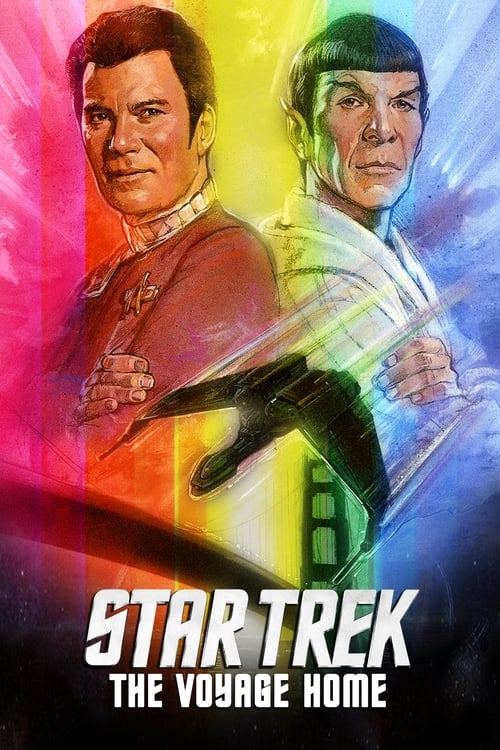
Star Trek IV: The Voyage Home is a 1986 American science fiction film, the fourth installment in the Star Trek film franchise based on the television series Star Trek. The second film directed by Leonard Nimoy, it completes the story arc begun in Star Trek II: The Wrath of Khan (1982) and continued in Star Trek III: The Search for Spock (1984). Intent on returning home to Earth to face consequences for their actions in the previous film, the crew of the USS Enterprise finds the planet in grave danger from an alien probe attempting to contact now-extinct humpback whales. The crew travel to Earth's past to find whales who can answer the probe's call.
After directing The Search for Spock, Nimoy was asked to direct the next feature, and given greater freedom regarding the film's content. Nimoy and producer Harve Bennett conceived a story with an environmental message and no clear-cut villain. Dissatisfied with the first screenplay produced by Steve Meerson and Peter Krikes, Paramount Pictures hired The Wrath of Khan writer and director Nicholas Meyer. Meyer and Bennett divided the story between them and wrote different parts of the script, requiring approval from Nimoy, lead actor William Shatner, and executives at Paramount.
Principal photography commenced on February 24, 1986. Unlike previous Star Trek films, The Voyage Home was shot extensively on location, using many real settings and buildings for scenes set around and in the city of San Francisco. Special effects firm Industrial Light & Magic assisted in post-production and the film's special effects. Few of the humpback whales in the film were real. ILM devised full-size animatronics and small motorized models to stand in for the real creatures. The film was dedicated to the crew of the Space Shuttle Challenger, which broke up 73 seconds after takeoff on the morning of January 28, 1986.
The Voyage Home was released on November 26, 1986, in North America by Paramount Pictures, and became the top-grossing film at the weekend box office. The film's humor, acting, direction, special effects and unconventional story were well received by critics, fans of the series, and the general audience. It was financially successful, grossing $133 million worldwide, and earned several awards and four Academy Award nominations for cinematography and sound. It was followed by Star Trek V: The Final Frontier in 1989.
Contents
Plot
In 2286, an enormous cylindrical probe moves through space, sending out an indecipherable signal and disabling the power of every ship it passes. As it takes up orbit around Earth, its signal disables the global power grid and generates planetary storms, creating catastrophic, sun-blocking cloud cover. Starfleet Command sends out a planetary distress call and warns all space-faring vessels not to approach Earth.
On the planet Vulcan, the former officers of the late USS Enterprise are living in exile. Accompanied by the Vulcan Spock, still recovering from his resurrection, the crew take their captured Klingon Bird of Prey and return to Earth to face trial for their actions. Receiving Starfleet's warning, Spock determines that the probe's signal matches the song of extinct humpback whales and that the object will continue to wreak havoc until its call is answered. The crew uses their ship to travel back in time via a slingshot maneuver around the Sun, planning to return with a whale to answer the alien signal.
Arriving in 1986, the crew finds their ship's power drained by the time travel maneuver. Hiding the ship in San Francisco's Golden Gate Park using its cloaking device, the crew split up to accomplish several tasks: Admiral James T. Kirk and Spock attempt to locate humpback whales, while Montgomery Scott, Leonard McCoy, and Hikaru Sulu construct a tank to hold the whales they need for a return to the 23rd century. Uhura and Pavel Chekov are tasked to find a nuclear reactor, whose energy leakage can be collected and used to regenerate the decaying dilithium crystals.
Kirk and Spock discover a pair of humpback whales in the care of Dr. Gillian Taylor at a Sausalito aquarium and learn they will soon be released into the wild. Kirk tells her of his mission and asks for the tracking frequency for the whales, but she refuses to cooperate. Meanwhile, Scott and McCoy trade the formula of transparent aluminum for the materials needed for the whale tank. At the same time, Sulu secures the use of a "Huey" helicopter to transport them. Uhura and Chekov locate a nuclear-powered ship, the aircraft carrier Enterprise. They collect the power they need but are discovered on board. Uhura is beamed out, but Chekov is captured, interrogated (under the assumption he is a Soviet spy), and subsequently severely injured in an escape attempt.
Gillian learns the whales have been released early and goes to Kirk for assistance. Gillian, Kirk, and McCoy rescue Chekov from a nearby hospital and return to the now-recharged Bird of Prey. After saving the whales from whalers and transporting them aboard, the crew returns with Gillian to their own time. On approaching Earth, the ship loses power due to the alien probe and crash-lands into the waters of San Francisco Bay. Once released from near-drowning, the whales respond to the probe's signal, causing the object to reverse its effects on Earth and return to the depths of space.
Cast
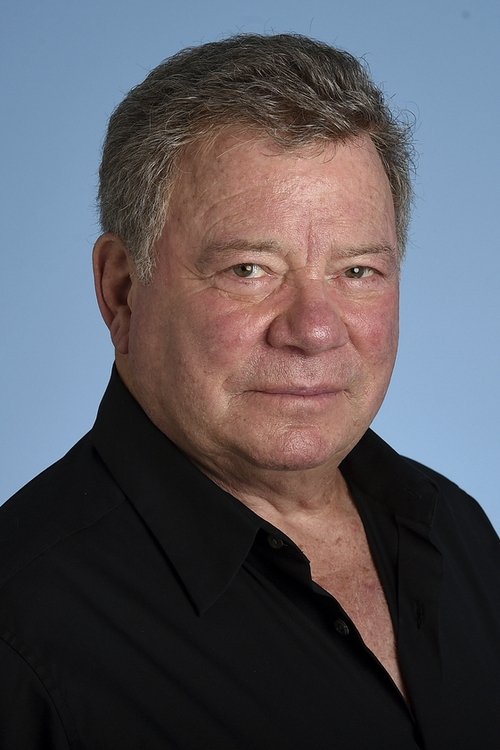
William Shatner portrays Admiral James T. Kirk, former captain of the Enterprise. Shatner was unwilling to reprise the role of Kirk until he received a salary of $2 million and the promise of directing the next film. Shatner described The Voyage Home's comic quality as one "that verges on tongue-in-cheek but isn't; it's as though the characters within the play have a great deal of joy about themselves, a joy of living [and] you play it with the reality you would in a kitchen-sink drama written for today's life".
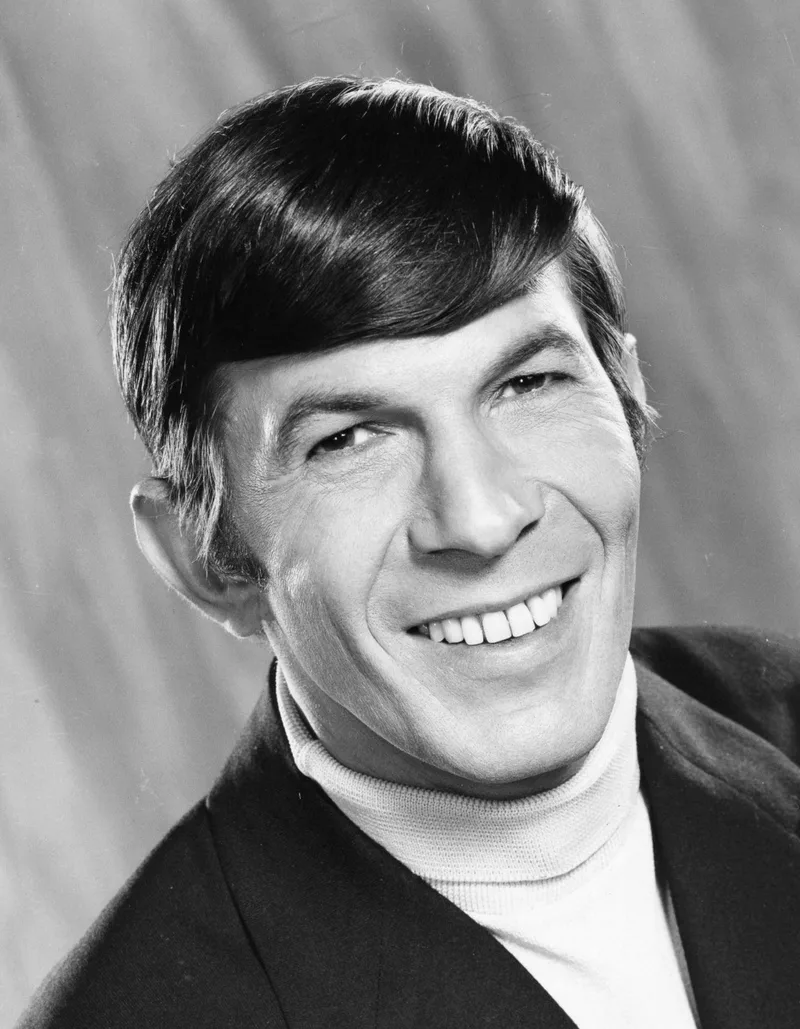
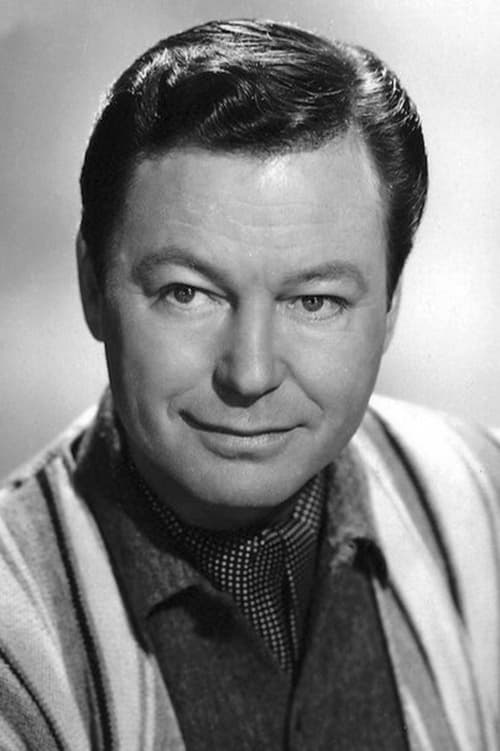
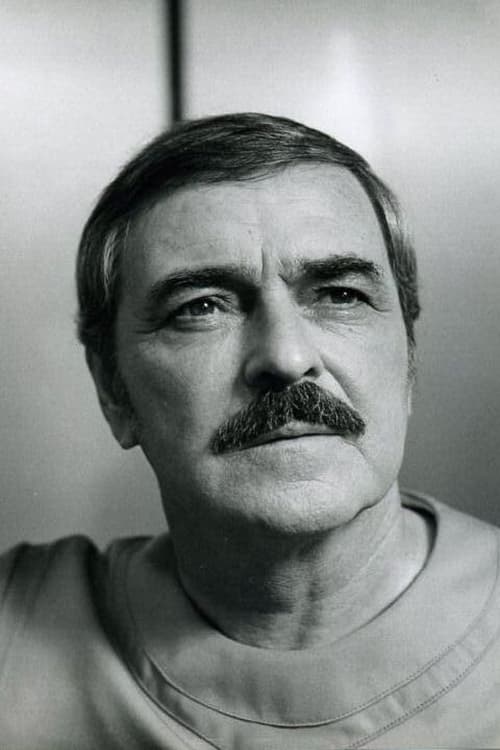
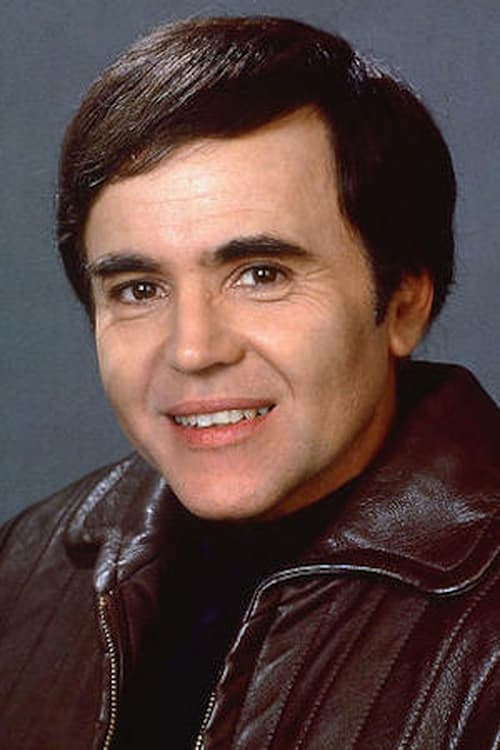
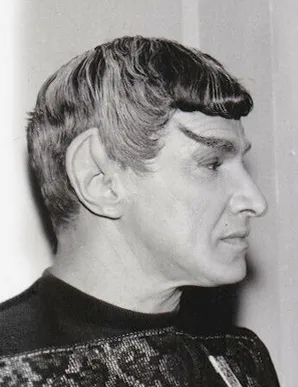
Leonard Nimoy plays Spock, who was resurrected by the effects of the Genesis planet and had his "living spirit" restored to his body in the previous film. DeForest Kelley portrays Doctor Leonard McCoy, who is given many of the film's comedic lines; Kelley's biographer Terry Lee Rioux wrote that in the film "he seemed to be playing straight man to himself." On Earth, McCoy was paired with engineer Montgomery Scott (James Doohan), as producer Harve Bennett felt that Kelley worked well with Doohan's "old vaudeville comic". The other members of the Enterprise crew include George Takei as helmsman Hikaru Sulu, Walter Koenig as Commander Pavel Chekov, and Nichelle Nichols as Uhura. Koenig commented that Chekov was a "delight" to play in this film because he worked best in comedic situations.
Catherine Hicks plays Dr. Gillian Taylor, a cetologist on 20th-century Earth. During production, a rumor circulated that the part had been created after Shatner demanded a love interest, a regular aspect of the television series that was absent from the first three films. Writer Nicholas Meyer denied this, saying that the inspiration for Taylor came from a biologist featured in a National Geographic documentary about whales. Nimoy chose Hicks after inviting her to lunch with Shatner and witnessing a chemistry between the two. The role was originally written for Eddie Murphy as an astrophysicist at Berkeley.
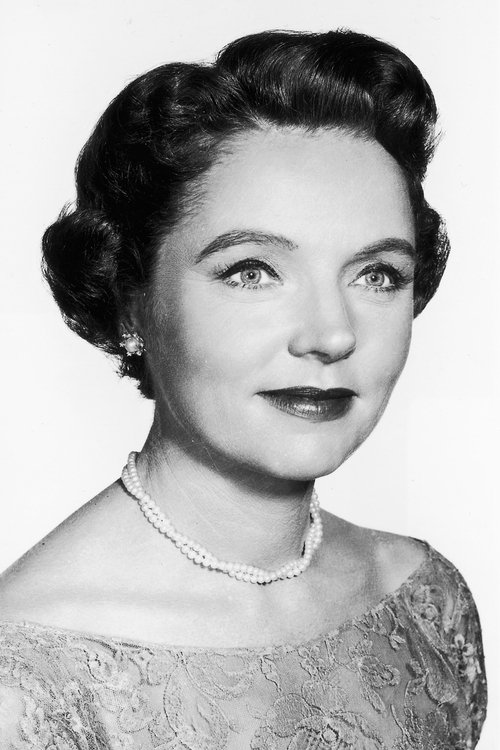
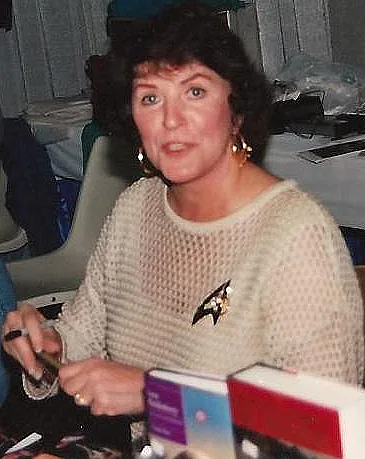
Majel Barrett reprises her role as Christine Chapel, the director of Starfleet Command's medical services. Many of her scenes—some reportedly very large—were omitted in the final cut, angering the actress. Her final role in the film consists of one line of dialogue and a reaction shot. Mark Lenard and Jane Wyatt play Spock's parents, Ambassador Sarek and Amanda Grayson, respectively, both reprising the roles they had previously played in the 1967 episode "Journey to Babel". Wyatt commented that, although she generally disliked working with actors who were directing, she found Nimoy an exception because he could concentrate on being part of the cast as well as setting up the crew. Robin Curtis reprises the role of Saavik, a Starfleet lieutenant. Saavik's role is minimal in the film—originally, she was intended to remain behind on Vulcan because she was pregnant after she had mated with the younger Spock in Star Trek III: The Search for Spock. In the final cut of the film, all references to her condition were dropped.
Production
Development
Before Star Trek III: The Search for Spock was released, its director Leonard Nimoy was asked to return to direct the next film in the Star Trek franchise. Whereas Nimoy had been under certain constraints in filming the previous picture, Paramount Pictures gave the director greater freedom for the sequel. "[Paramount] said flat out that they wanted my vision," Nimoy recalled. In contrast to the drama-heavy and operatic events of the three previous Star Trek features, Nimoy and producer Harve Bennett wanted a lighter movie that did not have a clear-cut villain. As William Shatner was unwilling to return, Nimoy and Bennett spent eight months considering a prequel concept by Ralph Winter about the characters at Starfleet Academy, before Shatner received a pay increase and signed on to star. Nimoy and Shatner each received $2.5 million for the film, less than their original demands, but the film cast's rising salaries caused Paramount to create a new television series entitled Star Trek: The Next Generation (1987), with less-expensive, lesser-known actors.
Despite Shatner's doubts, Nimoy and Bennett selected a time travel story in which the Enterprise crew encounters a problem that could be fixed by something only available in the present day (the Star Trek characters' past). They considered ideas about violin makers and oil drillers or a disease that had its cure destroyed with the rainforests. "But the depiction of thousands of sick and dying people seemed rather gruesome for our light-hearted film, and the thought of our crew taking a 600-year round trip just to bring back a snail darter wasn't all that thrilling," explained Nimoy. The director read a book on extinct animals and conceived the storyline that was eventually adopted. Nimoy hit upon the idea of humpback whales after talking with a friend—their song added mystery to the story, and their size added logistical challenges the heroes would have to overcome.
Nimoy approached Beverly Hills Cop writer Daniel Petrie Jr. to write the screenplay when a concept that executive producer Jeffrey Katzenberg described as "either the best or worst idea in the world" arose—Star Trek fan Eddie Murphy wanted a starring role. Nimoy and Murphy acknowledged his part would attract non-Star Trek fans to the franchise following the rising popularity of Murphy, but it also meant the film might be ridiculed. Steve Meerson and Peter Krikes were hired to write a script with Murphy as a college professor who believes in aliens and likes to play whale songs. Murphy disliked the part, and chose to make The Golden Child. Paramount was also averse to the idea of combining two of their strongest franchises of the era, fearing that a failure could damage them both. The character intended for Murphy was combined with those of a marine biologist and a female reporter to become Gillian Taylor.
Design
Industrial Light & Magic (ILM) was responsible for The Voyage Home's model design and optical effects. The alien probe was the responsibility of ILM's model shop, which brought in outside help like illustrator Ralph McQuarrie for concept art. The modelmakers started with art director Nilo Rodis' basic design, a simple cylinder with whalelike qualities. The prototype was covered with barnacles and colored. The ball-shaped antenna that juts out from the bottom of the probe was created out of a piece of irrigation pipe; internal machinery turned the device. Three sizes of the "whale probe" were created; the primary eight-foot (2.4 m) probe model was supplemented by a smaller model for wide shots and a large 20-foot (6.1 m) model that used forced perspective to give the probe the illusion of massive dimensions.
The effects crew focused on using in-camera tricks to realize the probe; post-production effects were time-consuming, so lighting effects were done on stage while filming. Model shop supervisor Jeff Mann filled the probe's antenna with tube lamps and halogen bulbs that were turned on in sequence for different exposures; three different camera passes for each exposure were combined for the final effect. After watching the first shot, the team found the original, whalelike probe design lacking in menace. The modelmakers repainted the probe a shiny black, pockmarked its surface for greater texture and interest, and re-shot the scene. Although they wanted to avoid post-production effects work, the opticals team had to recolor the antenna ball in a blue hue, as the original orange looked too much like a spinning basketball.
Aside from the probe, The Voyage Home required no new starship designs. The USS Saratoga, the first Federation starship disabled by the probe, was the USS Reliant model from The Wrath of Khan. The Bird-of-Prey model from The Search for Spock was reused, but ILM built additional sturdy versions for The Voyage Home's action sequences. The inside of the Bird-of-Prey was represented by a different set than The Search for Spock, but the designers made sure to adhere to a sharp and alien architectural aesthetic. To give the set a smokier, atmospheric look, the designers rigged display and instrumentation lights to be bright enough that they could light the characters, rather than relying on ambient or rigged lighting. While Paramount had instructed ILM to trash the large Spacedock model created for The Search for Spock, the team had been loath to discard the complicated model and its miles of fiber optic lighting. When The Voyage Home called for the return of Spacedock, ILM had only to reassemble the model from storage.
Filming
Nimoy chose Donald Peterman, ASC, as director of photography. Nimoy said he regarded the cinematographer as a fellow artist, and that it was important for them to agree on "a certain look" that Peterman was committed to delivering. Nimoy had seen Peterman's work and felt it was more nuanced than simply lighting a scene and capturing an image.
The film's opening scenes aboard the starship Saratoga were the first to be shot; principal photography commenced on February 24, 1986. The set was a redress of the science vessel Grissom's bridge from The Search for Spock, in turn a redress of the Enterprise bridge created for The Motion Picture. The scenes were filmed first to allow time for the set to be revamped as the bridge of the new Enterprise-A at the end of filming.
As with previous Star Trek films, existing props and footage were reused where possible to save money, though The Voyage Home required less of this than previous films. The Earth Spacedock interiors and control booth sets were reused from The Search for Spock, although the computer monitors in these scenes featured new graphics—the old reels had deteriorated in storage. Stock footage of the destruction of the Enterprise and the Bird-of-Prey's movement through space were reused. While the Bird-of-Prey bridge was a completely new design, other parts of the craft's interior were also redresses; the computer room was a modification of the reactor room where Spock died in The Wrath of Khan. After all other Bird-of-Prey bridge scenes were completed, the entire set was painted white for one shot that transitioned into a dream sequence during the time travel.
The Voyage Home was the first Star Trek film to extensively film on location—only one day was spent doing so in The Search for Spock. Much of the production was filmed in and around San Francisco during ten days of shooting. The production wanted to film scenes that were readily identifiable as the city. The use of extensive location shooting caused logistical problems, such as a scene in which Kirk is nearly run over by an irate cab driver requiring 12–15 cars to be repositioned if the shot was incorrect, taking a half-hour to reshoot. Other scenes were filmed in the city but used sets rather than real locations, such as an Italian restaurant where Taylor and Kirk eat. In the film, the Bird-of-Prey lands cloaked in Golden Gate Park, surprising trashmen who flee the scene in their truck. The production had planned to film in the real park, where they had filmed scenes for The Wrath of Khan, but heavy rains before the day of shooting prevented it—the garbage truck would have become bogged down in the mud. Will Rogers Park in western Los Angeles was used instead.
Effects
Nimoy approached ILM early in development and helped create storyboards for the optical effects sequences. Many shots used matte paintings to extend backgrounds and create establishing shots without the cost of building a set. Matte supervisor Chris Evans attempted to create paintings that felt less contrived and more real—while the natural instinct of filmmaking is to place important elements in an orderly fashion, Evans said that photographers would "shoot things that [...] are odd in some way" and end up with results that look natural instead. The task of establishing the location and atmosphere at Starfleet Headquarters fell to the matte department, who had to make it feel like a bustling futuristic version of San Francisco. The matte personnel and Ralph McQuarrie provided design input. The designers decided to make actors in the foreground more prominent, and filmed them on a large area of smooth concrete runway at the Oakland Airport. Elements like a shuttlecraft that thirty extras appeared to interact with were also mattes blended to appear as if they were sitting by the actors. Ultimately the artists were not satisfied with how the shot turned out; matte photography supervisor Craig Barron believed that there were too many elements in the scene.
The scenes of the Bird-of-Prey on Vulcan were combinations of live-action footage—actors on a set in the Paramount parking lot that was covered with clay and used backdrops—and matte paintings for the ship itself and harsh background terrain. The scene of the ship's departure from Vulcan for Earth was more difficult to accomplish, because the camera pans behind live-action characters to follow the ship as it leaves the atmosphere, and other items like flaming pillars and a flaring sun had to be integrated into the shot. Rather than try to match and combine camera pans of each element, each component was shot with a static camera and the pan was added to the resulting composite by a motion control camera. The sun (a light bulb focused by a convex lens) was shot in different passes to create realistic light effects on the Bird-of-Prey without having the light bleed around other elements in the shot.
The script called for the probe to vaporize the Earth's oceans, generating heavy cloud cover. While effects cinematographer Don Dow wanted to go to sea and record plumes of water created by exploding detonating cords in the water, the team decided to create the probe's climatic effect in another way after a government fishing agency voiced concerns for the welfare of marine life in the area. The team used a combination of baking soda and cloud tank effects. The swirling mist created by the water-filled tank was shot on black velvet, and color and dynamic swirls were added by injecting paint into the tank. These shots were composited onto a painting of the Earth along with overlaid lightning effects, created by double-exposing lights as they moved across the screen.
Sound and music
James Horner, composer for The Wrath of Khan and The Search for Spock, declined to return for The Voyage Home. Nimoy turned to his friend Leonard Rosenman, who had written the music to Fantastic Voyage, Ralph Bakshi's The Lord of the Rings, and two Planet of the Apes sequels. Rosenman wrote an arrangement of Alexander Courage's Star Trek television theme as the title music for The Voyage Home, but Nimoy requested an original composition. Music critic Jeff Bond writes, "The final result was one of the most unusual Star Trek movie themes," consisting of a six-note theme and variations set against a repetitious four-note brass motif; the theme's bridge borrows content from Rosenman's "Frodo March" for The Lord of the Rings. A cycle of fifths is heard for the second subject. The melody is played in the beginning of the film on Vulcan and the scenes of Taylor's search for Kirk to help find her whales.
The Earth-based setting of the filming gave Rosenman leeway to write a variety of music in different styles. Nimoy intended the crew's introduction to the streets of San Francisco to be accompanied by something reminiscent of George Gershwin, but Rosenman changed the director's mind, and the scene was scored with a contemporary jazz fusion piece by Yellowjackets. When Chekov flees detention aboard the aircraft carrier, Rosenman wrote a bright cue that incorporates classical Russian compositions. The music for the escape from the hospital was done in a baroque style. More familiar Rosenman compositions include the action music for the face off between the Bird-of-Prey and a whaling ship in open water, and the atmospheric music (reminiscent of the composer's work in Fantastic Voyage) during the probe's communication. After the probe leaves, a Vivaldiesque "whale fugue" begins. The first sighting of the Enterprise-A uses the Alexander Courage theme before the end titles.
Mark Mangini served as The Voyage Home's sound designer. He described it as different from working on many other films because Nimoy appreciated the role of sound effects and made sure that they were prominent in the film. Since many sounds familiar to Star Trek had been established—the Bird-of-Prey's cloaking device, the transporter beam, et al.—Mangini focused on making only small changes to them. The most important sounds were those of the whales and the probe. Mangini's brother lived near biologist Roger Payne, who had recordings of whale song. Mangini went through the tapes and chose sounds that could be mixed to suggest conversation and language. The probe's screeching calls were the whale song in distorted form. The humpback's communication with the probe at the climax of the film contained no dramatic music, meaning that Mangini's sounds had to stand alone. He recalled that he had difficulty with envisioning how the scene would unfold, leading Bennett to perform a puppet show to explain.
Reception
Release
The Voyage Home opened theatrically in North America on Thanksgiving weekend, November 26, 1986. Since Star Trek had traditionally performed poorly internationally, the producers created a special trailer for foreign markets that de-emphasized the Star Trek part of the title, as well as retelling the events of The Wrath of Khan and The Search for Spock. Winter recalled that the marketing did not seem to make a difference. The Voyage Home was the first Star Trek film shown in the Soviet Union, screened by the World Wildlife Fund on June 26, 1987, in Moscow to celebrate a ban on whaling. Attending the screening with Nimoy, Bennett was amazed the film proved as entertaining to the Russians as it did with American audiences; he said, "The single most rewarding moment of my Star Trek life" was when the Moscow audience applauded at McCoy's line, "The bureaucratic mentality is the only constant in the universe. We'll get a freighter." Bennett believed it was a clear "messenger of what was to come".
Vonda N. McIntyre wrote a novelization that was released at the same time as the film. It was the biggest tie-in novel published by Pocket Books, and spent eight weeks on The New York Times bestseller list, peaking at #3. MCA Records released the film's soundtrack November 26, 1986.
In its first week, The Voyage Home ended Crocodile Dundee's eight-week reign of the American box office. The Star Trek film made $39.6 million in its first five days of release, exceeding The Search for Spock's opening by $14 million. Ultimately, the film grossed a global total of $133 million against its $21–25 million cost. In six weeks, The Voyage Home sold $81.3 million in tickets, more than the franchise's second or third film, and almost as much as Star Trek: The Motion Picture. The film was a major commercial success for Paramount, which released five of the top ten films of the year, and garnered 22 percent of all money taken in at American theaters. Much of the credit for Paramount's success was given to chairman Frank Mancuso Sr., who moved The Voyage Home's release from Christmas to Thanksgiving after research showed that the film might draw filmgoers away from The Golden Child.
Critical response
The Voyage Home received mostly positive reviews—Nimoy called it the most well received of all Star Trek films made at that point—and it appealed to general audiences in addition to franchise fans. Audiences polled by CinemaScore gave the film an average grade of "A+" on an A+ to F scale. The movie was a "loose, jovial, immensely pleasurable Christmas entertainment" for The Washington Post's Paul Attanasio, and a retrospective BBC review called the film "one of the series' strongest episodes and proof that the franchise could weather the absence of space-bound action and the iconic USS Enterprise, and still be highly enjoyable". Although Janet Maslin of The New York Times admitted the film's plot was "demented", she wrote that the film "has done a great deal to ensure the series' longevity". Rushworth Kidder of the Christian Science Monitor praised the film for giving audiences a view of their modern life from a different perspective (the mooreeffoc effect), while simultaneously proving that a film does not need to have murder, violence, innuendo or even a main villain for dramatic storytelling.
The film's "fish out of water" comedy and acting were mostly lauded. The Courier Mail wrote that the film was funnier than its predecessors and, while not "flippant", a sense of humor was revealed through the efforts of the cast, writers and director. Newsweek's David Ansen considered The Voyage Home not only the most light-hearted of the movie franchise, but the most true in spirit to the original television series. A more negative review was offered by Liam Lacey of The Globe and Mail, who wrote that under Nimoy's "choppy" direction there was a lack of comic timing paired with feeble humor. American film critic Pauline Kael commented, "The crewmates are supposed to be technical wizards of the 23rd century, but they deliver their lines as if they were ancient tortoises who had to get their heads out and up before they could say anything. It's a relief to hear two San Francisco garbagemen talk, because there's some energy in their voices, and when Madge Sinclair turns up for a minute, as the captain of the S. S. Saratoga, her crisp, urgent tone is like a handclap."
The special effects were generally well received; critics for The Sydney Morning Herald and Courier Mail noted that the effects played a lesser role in the film compared to the characters and dialogue. Similarly, USA Today felt the lack of special effects allowed the cast to "prove themselves more capable actors than ever before". Maslin wrote that Nimoy's technical direction left "much to be desired" (pointing out a special effects scene where the Bird-of-Prey does not cast a shadow on the whaling ship as a mistake), but his "unmistakable" sincerity made up for these issues.
Home media
The Voyage Home was first released on VHS home media on September 30, 1987. Paramount Home Video spent $20 million marketing the film's release alongside 10 episodes of The Original Series. The video sold hundreds of thousands of copies in the United States and Canadian markets, and was in the top ten rankings for sales and rentals in December and January 1988. Paramount re-released the film on March 12, 1992, with Fatal Attraction as part of a "Director's Series", these editions having additional commentary and being presented in a widescreen letterboxed format to preserve the films' original cinematography. Nimoy was interviewed on the Paramount lots and discussed his acting career as well as his favorable opinion of the widescreen format.
A "bare bones" DVD of the film was released on November 9, 1999. Aside from the film, the contents include the original theatrical trailer and the introduction from the "Director's Series" VHS release. Three-and-a-half years later, a two-disc "Collector's Edition" was released with supplemental material and the same video transfer as the original DVD release. Among other special features, it contains a text commentary by Michael Okuda and an audio commentary from director Leonard Nimoy and star William Shatner.
The film was released on Blu-ray Disc in May 2009 to coincide with the new Star Trek feature, along with the other five films that feature the original crew in Star Trek: Original Motion Picture Collection. The Voyage Home was remastered in 1080p high definition. Each film in the set has an additional soundtrack, enhanced to 7.1 Dolby TrueHD standard. The disc features a new commentary track by Roberto Orci and Alex Kurtzman, the writers of the 2009 Star Trek film. On July 7, 2021, it was announced that a 4K Ultra HD Blu-ray box set containing the first four Star Trek films would be released on September 7 of that year to commemorate the franchise's 55th anniversary.