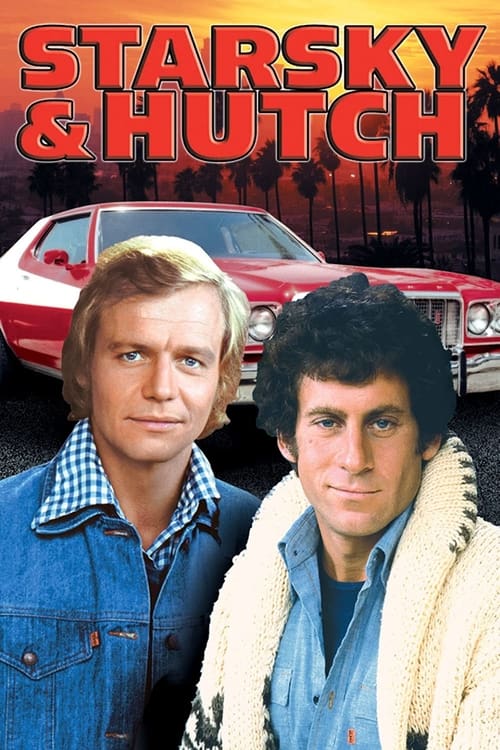
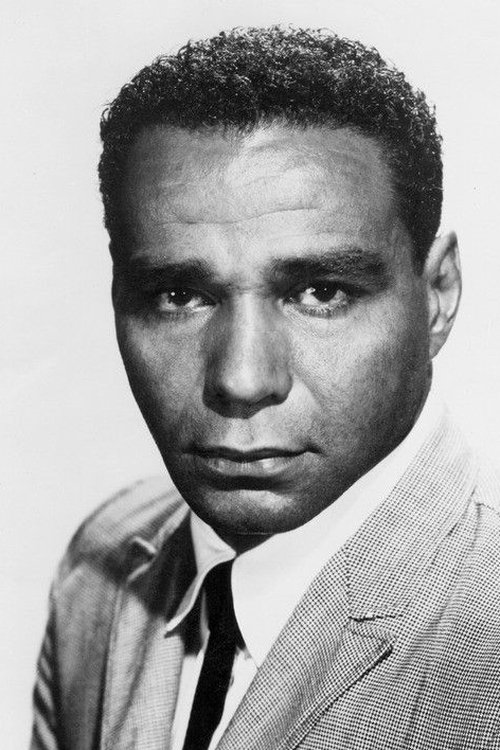
Starsky & Hutch is an American action television series, which consisted of a 72-minute pilot movie (originally aired as a Movie of the Week entry) and 92 episodes of 50 minutes each. The show was created by William Blinn (inspired by the success of the then recent movie Busting), produced by Spelling-Goldberg Productions and starred Paul Michael Glaser and David Soul in the title roles, Starsky and Hutch. It was broadcast from April 1975 (pilot movie) to August 1979 on the ABC network.
Starsky & Hutch was distributed by Columbia Pictures Television in the United States. Sony Pictures Television is now the worldwide distributor for the series. The series later inspired a video game and a feature film.
Contents
Cast
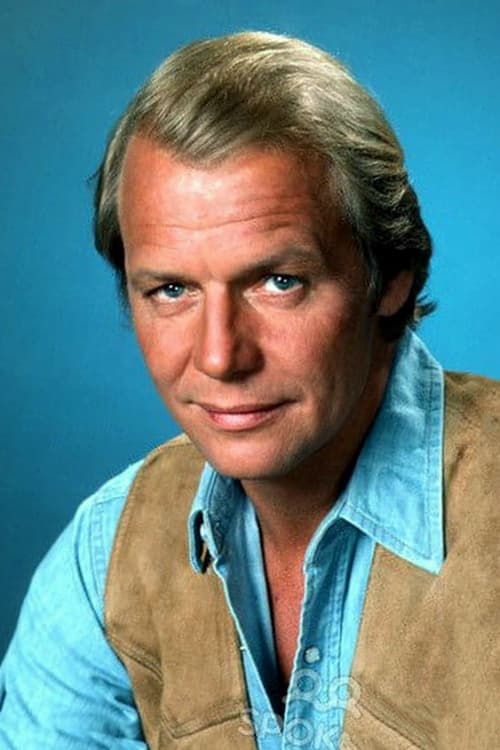
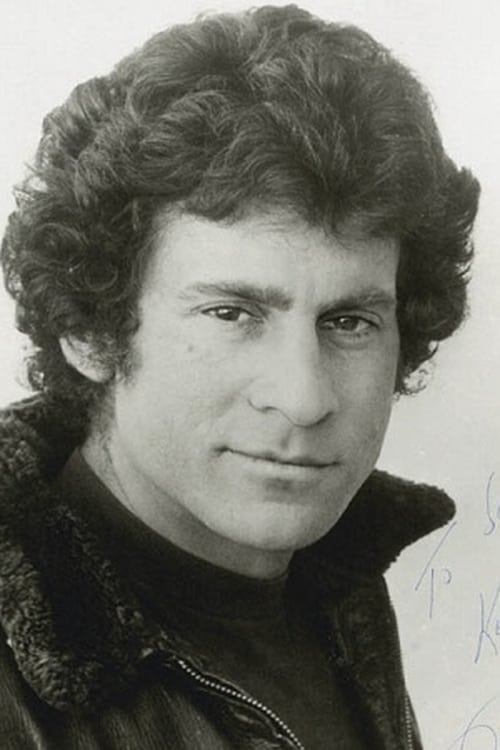
The series' protagonists were two Southern California police detectives: Sergeant David Michael Starsky (Paul Michael Glaser) and Sergeant Kenneth Richard "Hutch" Hutchinson (David Soul). Starsky is a dark-haired, Brooklyn transplant and U.S. Army veteran, with a street-wise manner and intense, sometimes childlike moodiness. Hutch is the divorced, blond, Duluth, Minnesota native with a more reserved and intellectual approach. Under the radio call sign "Zebra Three", they were known for usually tearing around the streets of fictional Bay City, California. Much of the series was shot on location in the Los Angeles beach community of San Pedro. The building that was used as the Metropolitan Division police headquarters in the first season is now the City of Los Angeles' San Pedro Neighborhood City Hall.
Supporting characters
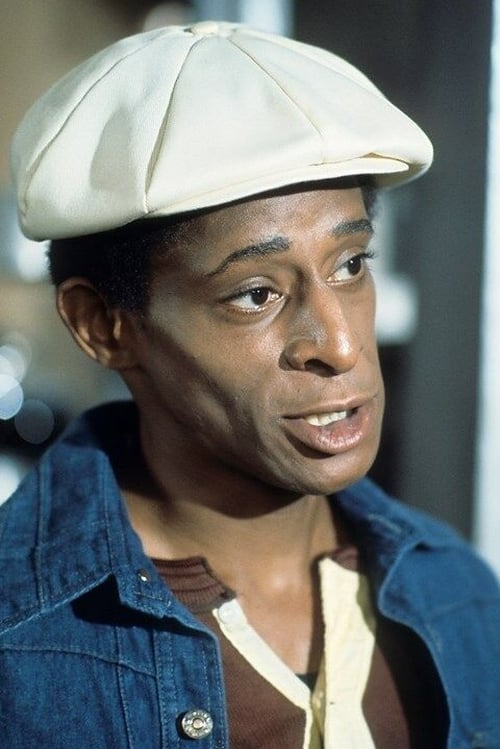
The detectives' main confidential informant was the street-wise, ethically ambiguous, "jive-talking" Huggy Bear (Antonio Fargas), who often dressed in a flashy manner and operated his own bar (first named "Huggy Bear's", and later, "The Pits"). The duo's boss was the gruff, no-nonsense-but-fair Captain Harold C. Dobey (Bernie Hamilton in the series, and gravel-voiced Richard Ward in the pilot). Series creator William Blinn first used the name Huggy Bear on-screen for a character, also a confidential informant, in an episode penned by Blinn for the TV series The Rookies during the 1973 second season, "Prayers Unanswered Prayers Unheard", there, played by actor Johnny Brown.
Seasons
Seasons 1 and 2
In contrast to police characters on American TV in prior years, Starsky and Hutch were open with physical gestures of friendly/brotherly affection toward one another, often declaring that they trusted only each other (in an "us against the world"–type sense). While likely "normal" by American social standards since the 1990s, such body language conflicted with 1970s norms of (emotionally restrained) masculinity. In a show documentary tape made during the show's run that can be found on YouTube, the narrator intones that some Hollywood industry types referred to the characters as "French kissing prime-time homos". Soul verified this statement in a 1999 cast reunion interview in the United Kingdom.
Many fans were attracted not just by the characters, but the quality of writing during the first two seasons (despite the fact that the majority of first-season stories were actually existing scripts that were merely adapted to fit the series). The second-season episode "Long Walk Down a Short Dirt Road", featured country star Lynn Anderson as a singer being stalked by a deranged person, played by Joshua Bryant; it was based upon a real-life incident involving country music legend Dolly Parton. The part was written with Parton in mind, but Anderson wound up playing the role.
Season 1: Starsky & Hutch aired on Wednesday nights at 10 p.m. and aired against Kate McShane on CBS and the second season law drama Petrocelli on NBC. Starsky & Hutch had no trouble beating its competition and finished #16 with a 22.5 share in the A.C. Nielsen Ratings.
Season 2: Starsky & Hutch was moved to Saturday night for the second season and was up against tough competition on CBS with The Mary Tyler Moore Show followed by The Bob Newhart Show. NBC had NBC Saturday Night at the Movies. Although the show lost some of their viewers from the move from the Wednesday night time slot from the previous season, Starsky & Hutch held its own, finishing #34 with a 19.6 rating in the Nielsens.
Season 3
In 1977, a rising concern in America about violence on TV, along with Glaser's own concerns about the level of violence in the series, forced the writers to reduce the violent "action" scenes, with more romantically and socially themed storylines, and play-up the "buddy-buddy" aspect of the show's leads even more. At the same time, the lead actors—Glaser in particular—became jaded with the general theme; these and other factors contributed to the fading popularity of the series.
Glaser indicated several times that he wanted to get out of his contract and quit the series; he even sued the producers to force a release from his contract before the start of the third season. It seemed that he would not be returning for filming, so to fill the presumed void, the character "Officer Linda Baylor" (played by Roz Kelly) was created, and a number of alternative scripts featuring her instead of Starsky were written (whether the show's name would have remained the same is unknown). After being granted more creative control over scripts, opportunities to direct episodes, and a per-episode pay raise (to $35,000, up from $5,000), Glaser returned to the show. Ultimately, Officer Baylor only appeared in one episode the episode "Fatal Charm".
Despite this major change in the tone of the show, with a lot of the violence reduced and more of a focus on the friendship of the two leads, viewership remained steady during the season. From September to December 1977, the show stayed in its Saturday-night time slot, now up against The Jeffersons and The Tony Randall Show on CBS and NBC Saturday Night at the Movies. It was the first lead-in to The Love Boat and after its immediate success, The Love Boat was moved up an hour in January 1978 into the 9:00 slot. Having been displaced on Saturday nights, Starsky & Hutch moved back to its original Wednesday-night time slot of 10 p.m. The ratings dropped a little bit, but Starsky & Hutch finished #33 (tied with ABC's Lucan) with a 19.2 Nielsen rating.
Season 4
Glaser again voiced his desires to leave during the fourth and final season. This time, Starsky's wayward younger brother Nick (John Herzfeld) was introduced, in the episode "Starsky's Brother". It was intended that if Glaser was to quit, that the reformed Nick would take David's place on the police force (and allow the series to avoid a title change). Ultimately, the disgruntled Glaser decided to return, yet again, to finish out the season. Although a fifth season was planned, increasing production costs, Glaser's persistent (and oft-publicized) desire to move on, and declining ratings, brought an end to the series.
The final episode, "Sweet Revenge" (which has Starsky fighting for his life after being gunned down), originally had its co-lead dying in the early drafts. The producers decided to have the character survive, as it was felt that a dead Starsky would disrupt the continuity of reruns/syndication, and preclude the option of the producers' reviving the series in the near future. Starsky & Hutch finished #36 in the Nielsen Ratings in its final season. Network reruns continued on ABC on Tuesday nights until August 21, 1979.
Syndication
After its prime-time run, Starsky & Hutch was sold into syndication, and has been shown on several local channels and cable networks (e.g., The National Network, and WWME-CA, also known as MeTV, in Chicago). The series made its cable debut on TNT in 1994 and later appeared on TV Land beginning in 2000. In 2015–2016, the series aired on cable's El Rey Network on weekday mornings. Several episodes from the first two seasons can be viewed for free in Minisode and in regular format on Crackle. The show has also been broadcast on Cozi TV and getTV.
Home media
Sony Pictures Home Entertainment has released 4 Seasons on DVD in Regions 1 and 2 between 2004 and 2006.
Mill Creek Entertainment acquired the rights to various television series from the Sony Pictures library including Starsky & Hutch in 2013. They re-released the first season on DVD on March 4, 2014.
Mill Creek released Starsky & Hutch - The Complete Series on DVD in Region 1 on November 11, 2014.
International broadcasts
On March 15, 1979, in Italy, Starsky and Hutch was aired on Rai Due, achieving smash-hit status. In 1987, it was broadcast again, this time in the late afternoon, on Italia 1 and, in 2007, on Rai Tre at lunchtime. After some reruns on Italia 1 and AXN, in 2009, the series appeared Mondays on Fox Retro. It was aired in the early morning on Rete 4. In Summer 2015, it was aired on La7.
In France, the show was shown on TF1 between 1978 and 1984, and subsequently on other channels. The French version replaces the original theme(s) with a French song, singing about "Starsky et Hutch". The voices of Jacques Balutin and Francis Lax, the two French actors dubbing the series, played a part in the popularity of the series in France as well as their adding comedic ad-libs whenever possible. One of the voice-over actors later said that David Soul had acknowledged that he and Paul Michael Glaser had to be much more restrained when they played.
In the United Kingdom, the series was an immediate hit when it began showing on Saturday nights on BBC1 (debuting April 23, 1976, and soon catching up with US broadcasts), with occasional repeats through to the early 1990s. During its prime-time run, however, the BBC heavily edited certain episodes; in fact, the first-series episode "The Fix" (in which mobsters inject Hutch with heroin in order to extract information from him) was deemed too graphic and was effectively "banned" from all the corporation's runs of the series. "The Fix" wasn't shown on British-terrestrial television until May 31, 1999, as part of Channel 4's "Starsky & Hutch Night," which also included the pilot, The Word On The Street - a documentary about the series - and the second-series episode "Gillian". The BBC broadcast the series in a different order to the US run, and as the Radio Times listings did not always give episode titles, the exact first-run order for the series is not entirely clear. "Savage Sunday" was omitted from the first Season One broadcast, and there is no listed later airing of the episode. There are also no Radio Times listed airdates for the episodes "Vendetta," "Nightmare," "Bloodbath," or "Murder Ward." The series was rerun by Five in 2003 in a 10 a.m. slot (later 11 a.m., and eventually moving to a 2:30 p.m. slot); was also shown on the UK satellite channel Granada Plus, and is now running on Zone Thriller, which was rebranded as CBS Action in November 2009. The channel has broadcast all episodes, with minor edits in a few cases. In August 2019, the channel True Entertainment, which later became Sony Channel, are now showing repeats.
Cars
Stunt cars, camera cars, tow cars, dolly cars, and cars used for "beauty" shots varied in model year from 1974 to 1976 Ford Torinos, since the body style of the Gran Torino was unchanged.
Originally, Blinn was to have Starsky drive a Chevrolet Camaro convertible because he fondly remembered a green and white one that he owned. However, when production started on the pilot episode, Ford Motor Company's Studio-TV Car Loan Program was the lease supplier for Spelling-Goldberg.
They looked at lease stock and chose two 1975 351 Windsor V8-powered (VIN code "H") "Bright Red" (paint code 2B) 2-door Gran Torinos. Both cars had a role in the pilot movie, one being "Starsky's" car, and the other being a similar car which is mistaken for Starsky's car by the film's villains. They each had body-side mouldings along with a black interior with vinyl bench seats. One of the pilot cars had the luxury remote-control chrome mirrors installed, while the other pilot car had the cheaper, entry-level manual chrome mirrors installed; in editing the film, Starsky and Hutch are shown to be driving around in each of the two cars at different times during the film.
The cars were also custom painted (on top of the factory red paint color) with the distinctive white "vector" stripe designed by Spelling-Goldberg's transportation coordinator George Grenier. The rear ends were lifted by air shocks, and had Ansen Sprint 5-slot mag wheels added with larger rear tires. While the tires were mounted so that only the black wall side would show, thus hiding any unauthorized brand-name display, in one first-season episode ("Kill Huggy Bear"), a close-up shot of the villain cutting the rear brake lines shows the letters on the inside-facing side of the tires to say Firestone.
It is reported that the original 2.75:1 ratio rear axle gearing (standard on non-police Torinos from 1975 onward) was replaced with numerically higher ratio gears for better acceleration during stunt driving scenes; in the 1999 interview, Glaser said that "we finally had to get a new rear end put in it so that at zero to sixty it had some pop". At least one of the second-season cars was known to have a Dymo label prominently attached to the dashboard which read "DO NOT EXCEED 50 MPH"; this was probably due to the fact that the revised gearing would cause the engine RPM to go to a higher level, possibly leading to engine damage.
Theme music
The first season of the show had a dark and ominous theme written by Lalo Schifrin that seemed to fit the hard action and violence of the season; the main title version was edited down from the chase climax cue of his score for the pilot episode (the climax contains the shot of Hutch leaping off a fire escape and landing on his car which appears in the opening titles of all subsequent episodes). The end credits featured a similar piece of ominous music.
The first season theme was replaced for the second season by a Tom Scott written theme entitled "Gotcha". "Gotcha" is the best known of the show's themes, and has been covered by several musicians, including the James Taylor Quartet and The Ventures. It also appears on the title screen of the Nintendo Entertainment System game Treasure Master, covered by Tim Follin. A version of "Gotcha" was featured on Scott's 1977 album Blow It Out and is also on the album Best Of Tom Scott. For the third season, a more dramatic theme was used that highlighted the show's move to more socially conscious and light-hearted stories. It was written by Mark Snow and released on an LP around 1979.
A reworked "Gotcha", similar in style (but not identical) to the version on Blow It Out, returned for the fourth and last season. The revamped version was the most easy-going of the different themes for the series, reflecting the last season's increased "buddy cop" feel.
Schifrin, Scott and Snow also scored several episodes; Alan Silvestri also worked on the series, scoring three episodes.
Reception
Retrospective reviews have been generally positive. Television Heaven described the show as a "worldwide smash of seventies cool" and the perfect example of the "mismatched buddy sub-genre." According to the website movieplayer.it, Starsky & Hutch is in second place among the best TV series of the seventies, and in seventieth place in the ranking of the 100 best TV series of all time.
Other media
Tie-in novels
A series of novels by Max Franklin (Richard Deming) were published by Ballantine Books in the United States and the United Kingdom between 1976 and 1978. The US and UK editions were identical except that the words "ABC series" on the covers were changed to "BBC series" for the UK editions. Each book was a novelisation of a specific TV series episode, with the original script writer(s) credited on the cover.
Starsky & Hutch # 1 (novelisation of pilot episode)
Starsky & Hutch # 2 (novelisation of "Kill Huggy Bear")
Starsky & Hutch # 3 (novelisation of "Death Ride")
Starsky & Hutch # 4 (novelisation of "Bounty Hunter")
Starsky & Hutch # 5 (novelisation of "Terror on the Docks")
Starsky & Hutch # 6 (novelisation of "The Psychic")
Starsky & Hutch # 7 (novelisation of "The Set-Up: Parts 1&2")
Starsky & Hutch # 8 (novelisation of "Starsky & Hutch on Voodoo Island: Parts 1&2")
Film
A theatrical film produced by Weed Road Pictures and Red Hour Productions and distributed by Warner Bros. Pictures and Dimension Films was released in theatres on March 5, 2004. The film stars Ben Stiller as Starsky, Owen Wilson as Hutch and Snoop Dogg as Huggy Bear, as they attempt to stop a drug kingpin played by Vince Vaughn. The film grossed $170 million worldwide against a $60 million production budget.
Video game
A video game based on the series was developed by Mind's Eye Productions and published by Empire Interactive for PlayStation 2, Xbox, GameCube, Microsoft Windows, and Game Boy Advance in 2003. The game combines driving and shooting gameplay and features the original voice of Huggy Bear, Antonio Fargas.
Television series reboot
In February 2023, The Hollywood Reporter reported that a "modern reimagining" of the series was being developed with a female-led cast. The plot would follow two female detectives, Sasha Starsky and Nicole Hutchinson, who would be attempting to uncover the truth behind their fathers' wrongful imprisonment 15 years prior. At that time, no actors were attached to the potential new series, though Sam Sklaver and Elizabeth Peterson were attached as writers and showrunners, while Sony Pictures Television and Fox Entertainment would be the production companies. As of September 2026, no other updates have been provided regarding the status of any potential reboot.


