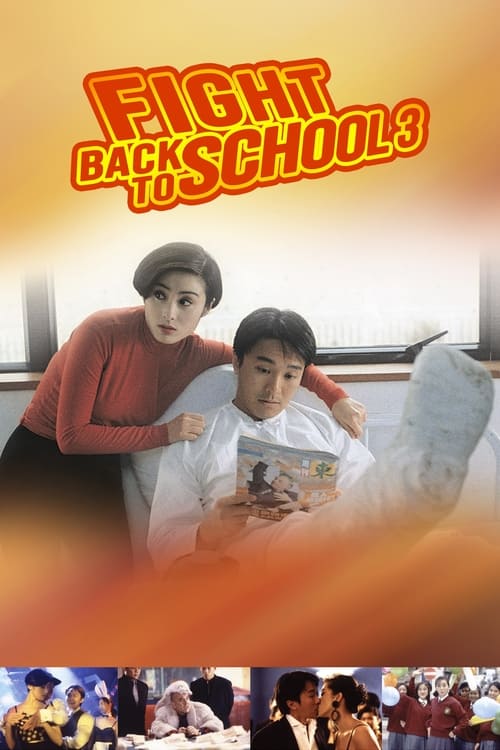
Stephen Chow Sing-chi (Chinese: 周星馳; born 22 June 1962) is a Hong Kong filmmaker and former actor, known for his mo lei tau comedy, which has a significant influence on Chinese popular culture. His career began in television, where he gained recognition through variety shows and TV dramas. Chow's breakthrough came in 1989 with the comedy dramas The Final Combat and The Justice of Life, the latter marking the beginning of his on-screen collaboration with Ng Man-tat. He consecutively broke Hong Kong’s box office records in the next two years with films All for the Winner (1990) and Fight Back to School (1991), cementing his status as one of the region's most popular actors.
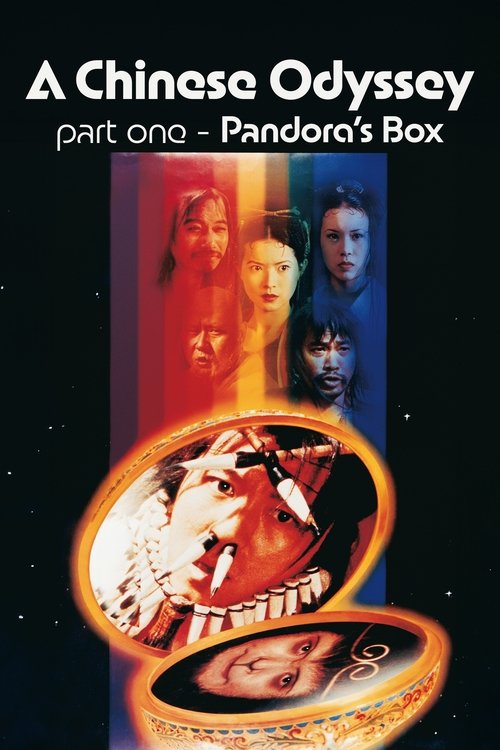
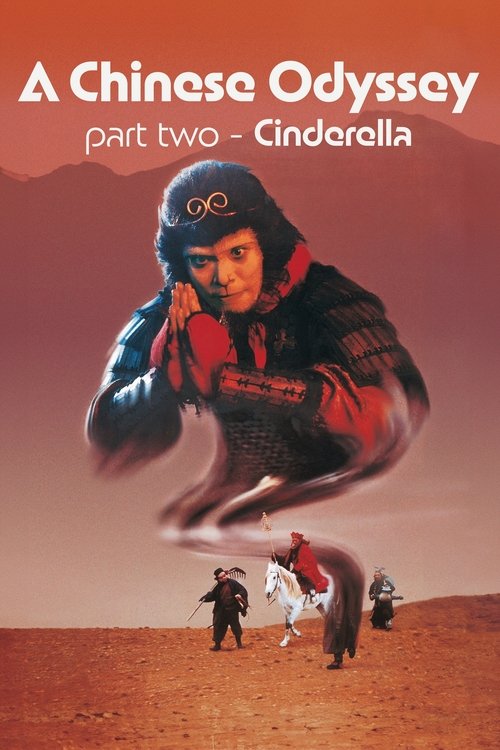
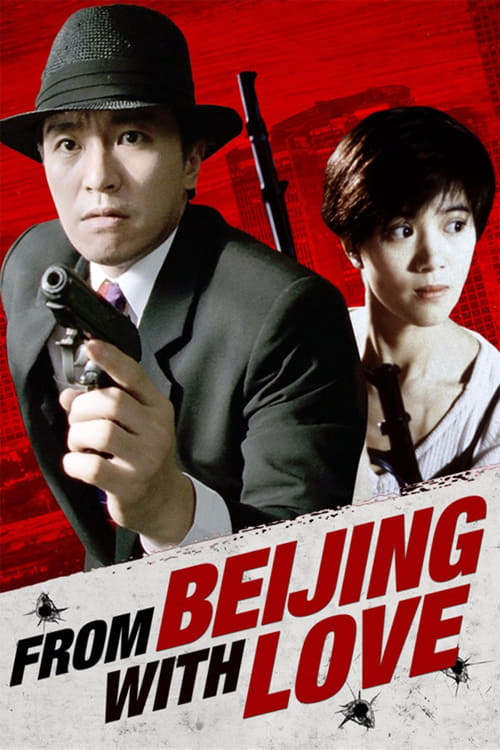
Since the early 1990s, Chow began working as a screenwriter and director, serving as a de facto director for Flirting Scholar (1993) before receiving his first directorial credit with From Beijing with Love (1994). His first two attempts at Hong Kong–mainland co-productions, Flirting Scholar and A Chinese Odyssey (1995), received mixed reviews and underperformed at the box office in both markets upon release. However, they gained popularity over time, and by the 2000s, A Chinese Odyssey had particularly elevated his status as a cultural icon in China.
In 2001, he directed and starred in Shaolin Soccer (2001), which brought him international recognition, furthered by Kung Fu Hustle (2004). His final on-screen performance was in CJ7 (2008), after which he transitioned fully to filmmaking, achieving great success with comedies such as Journey to the West (2013) and The Mermaid (2016).
Contents
Early life and education
Stephen Chow was born in Hong Kong on 22 June 1962 to Ling Po-yee (凌寶兒), an alumna of Guangzhou Normal University, and Chow Yik-sheung (周驛尚), an immigrant from Ningbo, Zhejiang. Chow has an elder sister named Chow Man-kei (周文姬) and a younger sister named Chow Sing-ha (周星霞). Chow's given name "Sing-chi" (星馳) derives from Tang dynasty (618–907) Chinese poet Wang Bo's essay Preface to the Prince of Teng's Pavilion. After his parents divorced when he was seven, Chow was raised by his mother. Chow attended Heep Woh Primary School, a missionary school attached to the Hong Kong Council of the Church of Christ in China in Prince Edward Road, Kowloon Peninsula. When he was nine, he saw Bruce Lee's film The Big Boss, which inspired him to become a martial arts star. Chow entered San Marino Secondary School, where he studied alongside Lee Kin-yan. After graduation, he joined the TVB's acting classes.
Career
Chow began his career as an extra for Rediffusion Television. Around 1980 he applied for TVB's famous artist training course alongside his friend, Tony Leung Chiu-wai. Leung Chiu-wai won a place in the class, but Chow was rejected and became an office assistant for a shipping company, a job he describes as "so boring." A year later, his friend and neighbor, Jaime Chik Mei-jan, a veteran of the previous year's training course, put in a word for Chow and he was admitted to the 1982 training class.
He captured the attention of the public as host of the TVB Jade children's program 430 Space Shuttle. He stayed with the show for five years. Producer and actor Danny Lee signed him to a two year contract with his company, Magnum Films, and cast him in a supporting role in the crime drama Final Justice (1988), which won him the Golden Horse Award for Best Supporting Actor at the Golden Horse Awards.
For the next two years, Chow capitalized on that success, working non-stop. He shot to further television stardom in the TVB wuxia series The Final Combat (1989). In addition to shooting the 30 episodes of The Final Combat, he also appeared in 12 feature films during that same period, most of them triad movies, action films, or dramas. Jeff Lau directed him in the police thriller Thunder Cops II (1989) and remembered him in early 1990 when producer Ng See-yuen tried to capitalize on the success of the previous year's hit Chow Yun-fat vehicle God of Gamblers. Chow would not return to shoot a sequel and so, sensing a hole in the marketplace, Ng hired Jeff Lau to direct a parody. Remembering his work with Stephen Chow, Lau hired him to star, pairing him with Sharla Cheung (who would appear as Chow's co-star in 12 more films) and Ng Man-tat, a big star in the Seventies before a gambling addiction wrecked his career. He was then trying to make a comeback as a character actor.
All for the Winner (1990) became the highest grossing Hong Kong film of all time and the number one film for the year. Wong Jing hired Chow to star in the official sequels God of Gamblers II (1990) and God of Gamblers III: Back to Shanghai (1991) sequels which Wong wrote and directed (Chow Yun-fat would return to the role he made famous in 1994's God of Gamblers Return, also written and directed by Wong). Lau had vowed never to work with Stephen Chow again after All for the Winner and so when it came time to make the sequel to that hit, Stephen Chow only appeared in a brief cameo.
2001–2010: International stardom
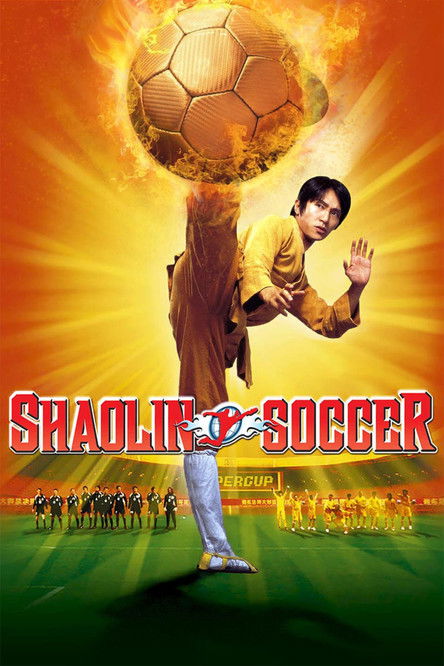
In 2001, his film Shaolin Soccer grossed over US$50 million worldwide. Chow won Best Director and Best Actor at the 2002 Hong Kong Film Awards, and the film went on to garner additional awards including a Blue Ribbon Awards for Best Foreign Language Film and the Golden Bauhinia Award for Best Picture and Best Director. It was the highest-grossing domestic film in Hong Kong at the time, grossing $46 million in the Asia region.
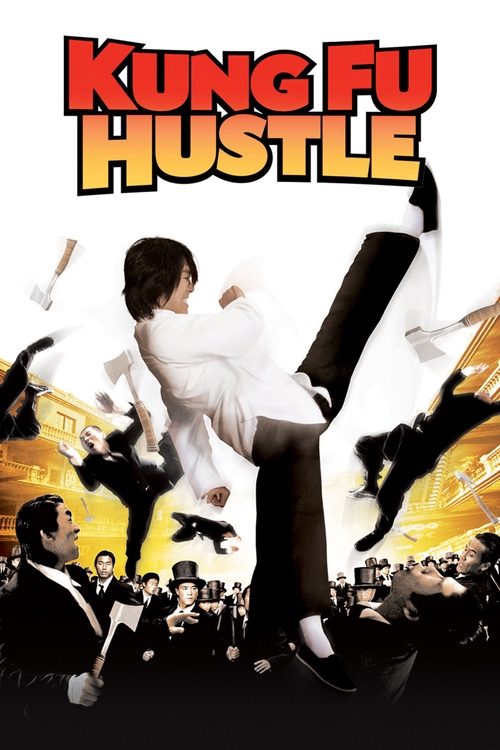
In 2004, his film Kung Fu Hustle grossed over US$106 million worldwide. Chow also won Best Director at the Taiwan Golden Horse Awards and Best Picture of Imagine Film Festival as well as over twenty international awards. Comedian Bill Murray said that the film was "the supreme achievement of the modern age in terms of comedy".
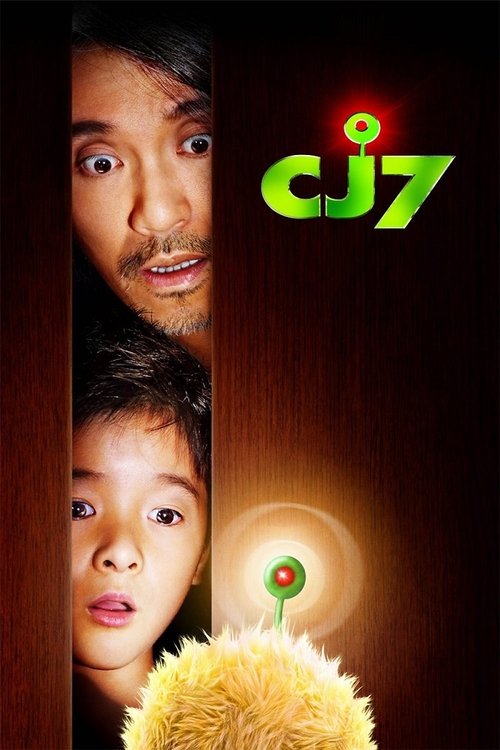
His final role film CJ7 began filming in July 2006 in the eastern Chinese port of Ningbo. In August 2007, the film was given the title CJ7, a play on China's successful Shenzhou crewed space missions—Shenzhou 5 and Shenzhou 6.
For his work in comedy, he has received praise from notable institutions such as the Brooklyn Academy of Music, which has called him the King of Comedy.
2010–present: Focus on directing
In 2010, he became the executive director and major shareholder of Bingo Group.
In 2013, his film Journey to the West: Conquering the Demons was the highest-grossing Chinese film of all time.
In 2016, his film The Mermaid broke numerous box office records, and became the highest-grossing film of 2016 in China. The Mermaid was released in Vietnam on 10 February 2016. On 14 March, it became the third-highest-grossing film of all time in Vietnam. It has now grossed over US$553.81 million worldwide. Chow became the ninth-top-grossing Hollywood director in 2016.
Chow spent 4 years writing, directing and producing the remake of his 1999 film King of Comedy, the film was titled The New King of Comedy, released in February 2019.
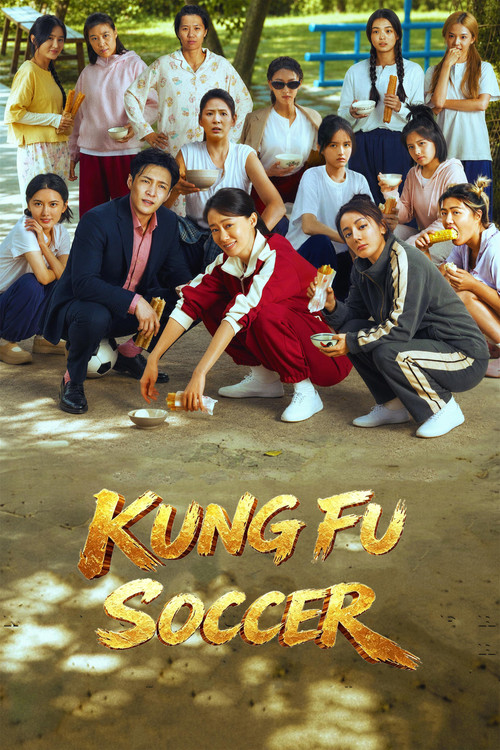
In 2026, Chow's film Kung Fu Soccer, where he makes a cameo in the end, was released.
Personal life
Chow and Jacqueline Law met while filming the TV series The Final Combat in 1989 and began dating shortly thereafter. In the autumn of 1992, they broke up. Law later struggled with depression and recalled mentioning marriage to Chow, only to be dismissed as “crazy,” which left her heartbroken: “I longed to start a family with him, but he treated me like a lunatic.” Years later, when Law announced she had cancer, Chow was working on Journey to the West: Conquering the Demons. Among other memorial references, he named the film’s female lead Miss Duan, referencing The Final Combat, where Chow and Law portrayed Mr. and Mrs. Duan. The film premiered after Law's death.
Chow and Athena Chu started dating after working together on Fight Back to School. Their secret relationship lasted for more than three years, ending due to Chow's alleged infidelity. In a 2008 interview on Be My Guest, Chu recalled the breakup: "One day, after wrapping up work, I went to visit my boyfriend’s room. The door was locked, and when he opened it, he looked flustered. I touched the bed, and it was warm, while the bathroom door was locked from the inside." Chu stated that she didn't know who the other person was and suspected there were more than just one. Despite this, Chu continued to work alongside Chow until the film finished. Karen Mok, the often suspected mistress at the time, denied being involved with anyone during the filming of A Chinese Odyssey. According to Tiffany Chen, however, during the filming Chow had relationships with Yammie Lam, Chu and Mok. From 1995 to 1998, Chow had a public relationship with Mok, who starred alongside him in several films.
Chow had a relationship with Alice Yu Man-fung, daughter of business mogul Yu Ching-Po, for 12 to 13 years until March 2010, during which Yu also assisted Chow with personal investments and was paid a salary based on a written contract from 2002, initially at HK$20,000 a month. Chow had paid Yu HK$19.5 million at her request between 2007 and 2011, and an additional HK$10 million in February 2012 in “appreciation for [her] friendship and support over the years”. In September 2012, Yu filed a lawsuit against Chow, asserting that there was an additional oral agreement purportedly reached around Christmas of 2002 for Chow to pay her a 10 per cent share of net profits on all successful investments she recommended. Yu’s claim for damages of some HK$80 million was based on her purported share of the profits from Chow’s investments in his current luxury home at 12 Pollock’s Path on The Peak, three houses at The Beverley Hills in Tai Po and a private equity fund. In 2021, a lower court ruled the pair never made that deal, a decision that was upheld on appeal.
Politics
In 2013, Chow was elected a member of the 11th Guangdong Provincial Committee of the Chinese People's Political Consultative Conference (CPPCC). According to media exposure, Chow often arrives late and leaves early at the conference, and has not put forward any proposals.
Filmography
Film
Acting roles
Filmmaking credits
Feature film