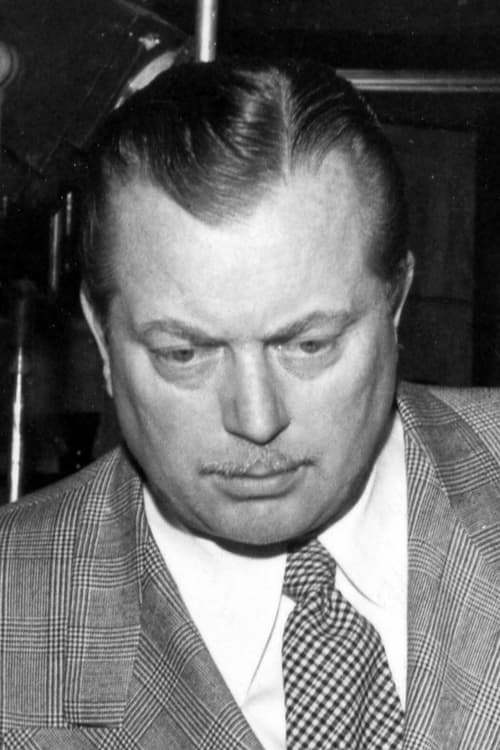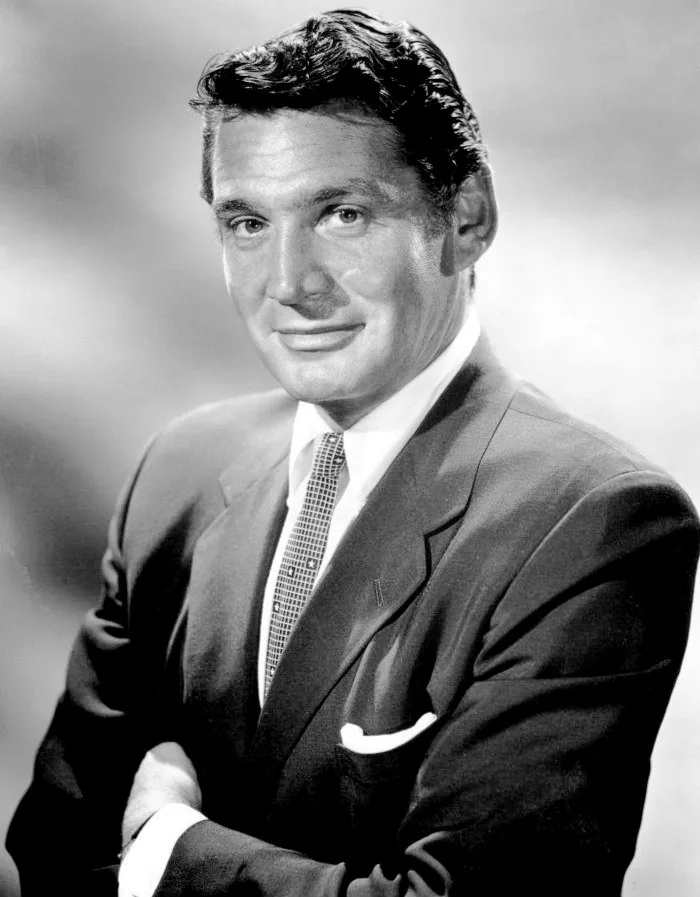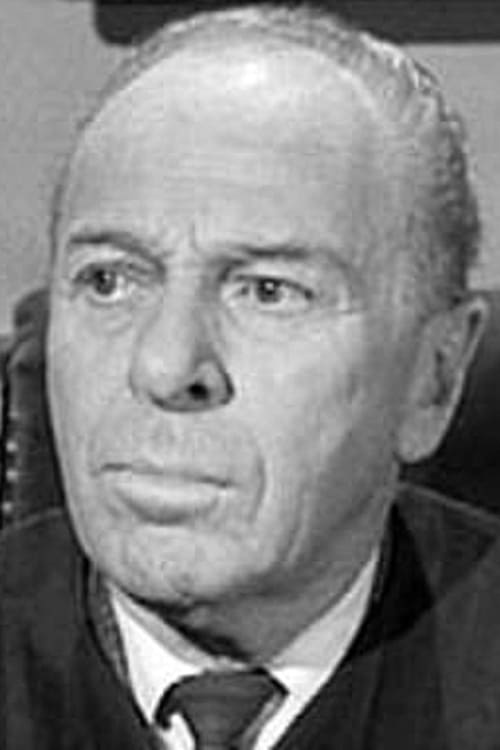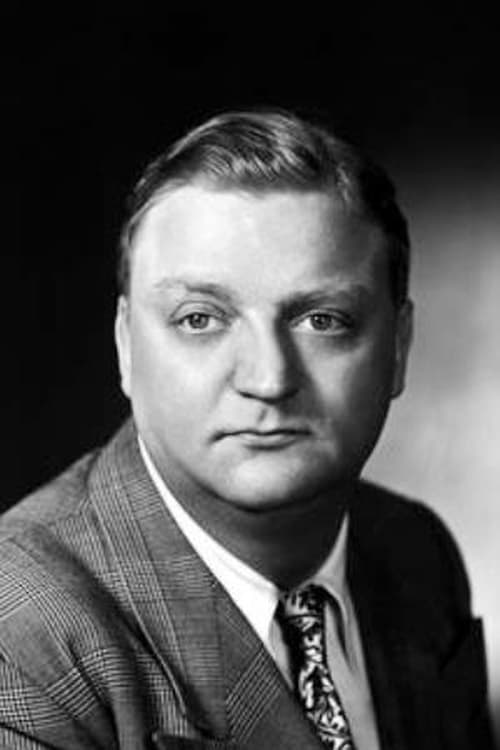


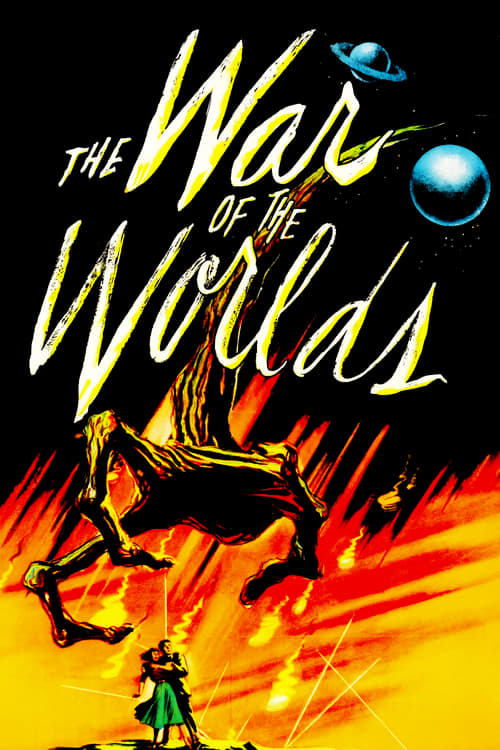
The War of the Worlds (also known in promotional material as H. G. Wells' The War of the Worlds) is a 1953 American science fiction thriller film directed by Byron Haskin, produced by George Pal, and starring Gene Barry and Ann Robinson. The first film adaptation of H. G. Wells' 1898 novel of the same name in which Earth is invaded by Martians, the setting is changed from Victorian era England to 1950s Southern California.
The first of two adaptations of Wells's classic science fiction filmed by Pal, The War of the Worlds won the Academy Award for Best Visual Effects and went on to influence other science fiction films. It is considered one of the great science fiction films of the 1950s. In 2011, it was selected for preservation in the National Film Registry by the United States Library of Congress, who deemed it "culturally, historically, or aesthetically significant".
Contents
Plot
A narrated prologue shows the weapons of modern warfare from World War I and World War II, then warns of the upcoming "War of the Worlds" fought with "the terrible weapons of super-science menacing all mankind and every creature on Earth". It is explained that the Martians decided to invade Earth because their own planet was dying and after determining that the other planets in the Solar System were unsuitable as a new home.
A large meteor impacts near the small town of Linda Rosa, California, on a summer evening. Local residents come to see the object, still glowing hot. Vacationing nuclear physicist Dr. Clayton Forrester suspects it may be hollow because the crater is so shallow, and determines it is radioactive. He meets Sylvia Van Buren and her uncle, Pastor Collins. Together, they attend an evening square dance. Back at the crash site, a hatch on the object unscrews and falls away. An electronic eye on a flexible neck emerges. As three men standing guard attempt to make contact with the occupants waving a white flag, a heat-ray incinerates them, the resulting fire causing a sudden power outage. Forrester and the local sheriff arrive at the gully to find the ashes of the three men and survive a heat-ray attack. They see a second meteor landing elsewhere. The Marines deploy near the gully to confront the Martians as reports pour in of more cylinders landing all over Earth and attacking. Three Martian machines emerge from the gully. Pastor Collins approaches alone on foot to attempt peaceful communication, holding a bible, but is killed by a heat-ray. The military opens fire with artillery, but are unable to penetrate the invaders' force field. The aliens counterattack with death ray weaponry, killing troops and destroying their weapons and vehicles. The surviving forces retreat. Air Force jets attack, but are annihilated.
Forrester and Sylvia escape in a small plane and crash land. Hiding in an abandoned farmhouse, they are nearly killed by yet another crashing cylinder. As several others land together, one of the Martian ships extends a long cable with an electronic eye to explore the house, but Forrester severs it with an axe. A Martian creature enters and surprises Sylvia but retreats with a piercing scream when Forrester throws the axe at it; some of its blood lands on Sylvia's scarf. The pair escape just before the farmhouse is destroyed. Forrester takes the electronic eye and blood sample to a team of scientists at a Los Angeles university. It is discovered that the blood is extremely anemic. Dr. Duprey observes, "They may be mental giants, but, by our standards, physically, they must be very primitive."
Production
Paramount Pictures first attempted to adapt The War of the Worlds when the studio bought the film rights to the novel in 1925. Ray Pomeroy began working on an outline with Cecil B. DeMille planned as director, but the project was put into turn-around. Later in the 1930s, Paramount assigned Sergei Eisenstein to direct an adaptation of the novel under his contract with the studio but failed to produce a film. Alfred Hitchcock also entered discussions about adapting the novel with Wells and Gaumont-British may have optioned the rights, but the project did not go forward. Alexander Korda also expressed interest in adapting the novel.
The film finally began moving forward after George Pal was assigned to the project in July 1951. Pal originally envisioned a film more faithful to the source material in which a scientist would search for his wife after the invasion destroyed society, but Paramount Pictures production head Don Hartman demanded changes including a romantic subplot in which the scientist would meet and fall in love with a woman. For budgetary reasons, the setting was changed to 1950s America. Lyndon originally created a pilot-turned-oil prospector as the hero. Pal wanted a scientist.
Pal had planned for the final third of the film to be shot in the new 3D process to visually enhance the Martians' attack on Los Angeles. The plan was dropped before production began. World War II stock footage was used to produce a montage of destruction to show the worldwide invasion, with armies of all nations joining to fight the invaders.
The American composer Leith Stevens was chosen to score The War of the Worlds. He had written the orchestral music for George Pal's previous science fiction films Destination Moon in 1950 and When Worlds Collide in 1951, and had been a devoted reader of pulp science fiction back during his musical studies. In the case of The War of the Worlds, his music would convey the sinister nature of the Martians, along with the fear and intense emotions of the humans in the face of a ruthless alien enemy bent on mass destruction, using different orchestral effects. Stevens's score was praised by early reviewers, who noted that it "heightens the frightening mood" and made the film "a genuine emotional experience." Although the different sound effects associated with the Martian machines and weapons were created with electronic manipulation of electric guitars and tape recorders, Stevens only used two electronic instruments in his orchestral score, a Novachord and a vibraphone.
Differences from the Wells novel
Caroline Blake has written that the film is very different from the original novel in its attitude toward religion, as reflected especially in the depiction of clergymen. "The staunchly secularist Wells depicted a cowardly and thoroughly uninspiring Curate, whom the narrator regards with disgust, with which the reader is invited to concur. In the film, there is instead the sympathetic and heroic Pastor Collins who dies a martyr's death, and the film's final scene in the church, strongly emphasizing the Divine nature of Humanity's deliverance, has no parallel in the original book."
Pal's adaptation has many other differences from H. G. Wells's novel. The closest resemblance is probably that of the antagonists. The Martians invade Earth for the same reasons as those stated in the novel. The state of Mars suggests that it is becoming unable to support life, leading to the Martians' decision to try to make Earth their new home. They land in the same way, by crashing to Earth. The novel's spacecraft, however, are large, cylindrical projectiles fired from the Martian surface from a cannon, instead of the film's meteorite-spaceships; but the Martians emerge from their craft in the same way, by unscrewing a large, round hatch. In the novel, the invaders are observed "feeding" on humans by fatally transfusing their captives' blood supply directly into Martian bodies through pipettes. There is later speculation about the Martians' eventually using trained human slaves to hunt down all remaining survivors after they conquer Earth. Early storyline hints at the aliens' vampirism were dropped. The Martians do not bring their fast-growing red weed with them, but they are defeated by Earth microorganisms, as in the novel.
The film's Martians bear no physical resemblance to those of the novel, who are described as bear-sized, roundish creatures with grayish-brown bodies, "merely heads", with quivering beak-like, V-shaped mouths dripping saliva. They have sixteen whip-like tentacles in two groupings of eight arranged on each side of their mouths and two large "luminous, disk-like eyes". Because of budget constraints, their film counterparts are short, reddish-brown creatures with two long, thin arms with three long, thin fingers with suction-cup tips. The Martian head is a broad "face" at the top-front of its broad-shouldered upper torso, with one large central eye with three distinctly colored lenses of red, blue, and green. A greatly enlarged brain projects behind the top of the body, glimpsed as a screaming Martian flees the wrecked farmhouse after being injured by Forrester. The Martians' lower extremities are never shown. Some speculative designs suggest three thin legs resembling their fingers, and others show them as bipeds with short, stubby legs with three-toed feet.
Special effects
As recounted in an article for Astounding Science Fiction in 1953, producer George Pal realized that much of the box-office and critical success of his motion picture would depend on the quality of the special effects. Half the scenes in the final film involved some sort of special effects. A particular challenge was the creation of believable, highly realistic scale-model miniatures of Los Angeles neighborhoods and the City Hall, which is destroyed by the Martians. Pal noted with sadness that Paramount Pictures Special-Effects Director Gordon Jennings, who had worked on The War of the Worlds, died of a heart attack before the film premiered for the public. An estimated $1.4 million worth of the film's $2 million budget was spent on the many special effects needed.
The War of the Worlds would win the Best Visual Effects Oscar at the 1954 Academy Awards.
An effort was made to avoid the stereotypical flying saucer look of UFOs. The Martian war machines were designed by Albert Nozaki with a sinister manta ray shape floating above the ground. Three Martian war machine props were made of copper and reportedly were later melted for a scrap copper recycling drive. The same blueprints were used a decade later (without neck and cobra head) to construct the alien spacecraft in the film Robinson Crusoe on Mars, also directed by Byron Haskin.
Each Martian machine is topped with an articulated metal neck and arm, culminating in the cobra head heat ray projector, housing a single electronic eye that operates both as a periscope and as a weapon. The electronic eye houses a heat ray, which pulses and fires red sparking beams, all accompanied by thrumming and a high-pitched clattering shriek when the ray was used. As explained by Rubin (page 42) in 1977: "[T]he sinister power surge and resulting enfilade, was an effect achieved entirely by electric guitars." The sound engineers "would record the high-pitched electronic screeching and edit it down, playing it backwards as well, adjusting the volume and tone until they found the proper effect." Composer Stevens had created a score of the scene in which the three men monitoring the space object are attacked by the heat ray, but this music was replaced by the manipulated electric guitar sounds in the final film (Rosar page 418). Live burning welding wire simulated the fiery blast of the heat ray, with a blower forcing the resulting sparks toward the camera. The optical effect was then matted into the scenes where the Martians deploy the weapon on humans and buildings (Rubin page 34).
Quality of special effects
For 50 years, from the late 1960s when The War of the Worlds 3-strip Technicolor prints were replaced by the easier-to-use and less expensive Eastman Color stock, the quality of the film's special effects suffered dramatically. This degraded the lighting, timing, and image resolution, causing the original invisible overhead wires suspending the Martian war machines to become increasingly visible with each succeeding film and video format change. This led many, including respected critics, to mistakenly believe the effects were originally of low quality. The original high quality of the 3-strip Technicolor special effects as seen in 1953 is now evident in the 2018 4K resolution restoration of the film, with the wires that suspend the Martian machines no longer obvious as in later prints.
Reception
Release
The official Hollywood premiere of The War of the Worlds was on February 20, 1953, although it did not go into general theatrical release until late that year. The film was both a critical and box-office success. The film accrued $2,000,000 in distributors' domestic (U.S. and Canada) rentals, making the film the year's biggest science fiction hit. ("Rentals" refers to the distributor and studio's share of the box-office gross, which, according to Gebert, is roughly half of the money generated by ticket sales.)
On its 1953 release, The War of the Worlds was rated X by the British Board of Film Classification (BBFC) for its alarming and "horrific" content, meaning no one under 16 could see the film. This was unsuccessfully protested by several local authorities, believing the rating should be lower. In 1961, Paramount Pictures sought to have the film's certificate reduced to A, meaning persons under 16 could view the film if accompanied by an adult, but this was rejected. The film was reclassified A in 1981, now meaning that the film may be unsuitable to under 14s. For its 1986 VHS release, The War of the Worlds was re-rated PG (meaning all audiences can see it but some scenes may be unsuitable for young children). It is an unusual example of a film that was once rated X but now stands as a PG.
Critical response
In The New York Times, A. H. Weiler's review commented: "[The film is] an imaginatively conceived, professionally turned adventure, which makes excellent use of Technicolor, special effects by a crew of experts, and impressively drawn backgrounds ... Director Byron Haskin, working from a tight script by Barré Lyndon, has made this excursion suspenseful, fast and, on occasion, properly chilling". William Brogdon in Variety said, "[It is] a socko science-fiction feature, as fearsome as a film as was the Orson Welles 1938 radio interpretation ... what starring honors there are go strictly to the special effects, which create an atmosphere of soul-chilling apprehension so effectively [that] audiences will actually take alarm at the danger posed in the picture. It can't be recommended for the weak-hearted, but to the many who delight in an occasional good scare, it's socko entertainment of hackle-raising quality". The Monthly Film Bulletin of the UK called it "the best of the postwar American science-fiction films; the Martian machines have a quality of real terror, their sinister apparitions, prowlings and pulverisings are spectacularly well done, and the scenes of panic and destruction are staged with real flair". Richard L. Coe of The Washington Post called it "to put it gently, terrific", and "for my money, the King Kong of its day".
The War of the Worlds won a Special Achievement Award in 1954 from the Academy for its Visual Effects, as there was no competitive category that year. Everett Douglas was nominated for Film Editing, and the Paramount Studio Sound Department and Loren L. Ryder were nominated for Sound Recording. The War of the Worlds also received the Motion Picture Sound Editors first annual award in 1954 for "the most dramatic use of sound effects in 1953". At the time, the Motion Picture Academy did not have an award category specifically for sound effects.
In 2004, The War of the Worlds was presented with a Retrospective Hugo Award for 1954 in the category of Best Dramatic Presentation — Short Form (works running 90 minutes or less).
Film historian and critic Leonard Maltin described the film as "... vivid, frightening."
The War of the Worlds still receives high acclaim from some critics. On the film review aggregator website Rotten Tomatoes, it has an 89% rating based on 47 critics, with an average rating of 7.20/10. The consensus states: "Though it's dated in spots, The War of the Worlds retains an unnerving power, updating H. G. Wells's classic sci-fi tale to the Cold War era and featuring some of the best special effects of any 1950s film".
4K restoration
In 2018, a new, fully restored 4K Dolby Vision transfer from the original three-strip Technicolor negatives was published on iTunes. In July 2020, the 4K restoration was released on Blu-ray and DVD via The Criterion Collection in the United States. The transfer process and careful color and contrast calibrations allowed the special effects to be restored to Technicolor release print quality, without the war machine's supporting wires. The film was released on 4K UHD Blu-ray in September 2023 via Paramount Presents, bundled with the 1951 film When Worlds Collide (also produced by George Pal). A year later, the film was given its own separate 4K UHD Blu-ray release for its 70th anniversary via Paramount Pictures.
Legacy
The War of the Worlds was deemed culturally, historically, or aesthetically significant in 2011 by the United States Library of Congress for preservation in the National Film Registry. The Registry noted the film's release during the early years of the Cold War and how it used "the apocalyptic paranoia of the atomic age". The Registry also cited the special effects, which at its release were called "soul-chilling, hackle-raising, and not for the faint of heart".
The Martians were ranked the 27th best villains in the American Film Institute's list AFI's 100 Years...100 Heroes and Villains.
The 1988 War of the Worlds TV series serves as a sequel to the original film. The series retcon that rather than being killed outright by germs at the end of the film, the aliens had all slipped into a state of suspended animation, and they are not Martians but are actually from Mor-Tax—a garden planet 40 light-years away in the Taurus constellation orbiting a dying sun. Ann Robinson reprises her role as Sylvia Van Buren in three episodes. Robinson also reprises her role in two other films, first as Dr. Van Buren in 1988's Midnight Movie Massacre and then as Dr. Sylvia Van Buren in 2005's The Naked Monster.
Warning from Space (1956), the first colored tokusatsu film in Japan, bears similarities in its plot to The War of the Worlds.
The 1996 film Independence Day has several allusions to Pal's 1953 War of the Worlds. The failed attempt of a dropped atomic bomb is replaced with a nuclear-armed cruise missile launched by a B-2 Spirit bomber (a direct descendant of the Northrop YB-49 bomber in the 1953 film) and Captain Hiller being based in El Toro, California, which Dr. Forrester mentions as the home of the Marines, which make the first assault on the invading Martians in Pal's film.
The Asylum's 2005 direct-to-DVD H. G. Wells' War of the Worlds has mild references to the Pal version. The Martian's mouth has three tongues that closely resemble the three Martian fingers in the Pal film. The Asylum film has scenes of power outages after the aliens' arrival via meteorite-ships. As in the Pal film, refugees hide in the mountains, instead of hiding underground as in the Wells novel, and the protagonist actively tries to fight the aliens by biological means.