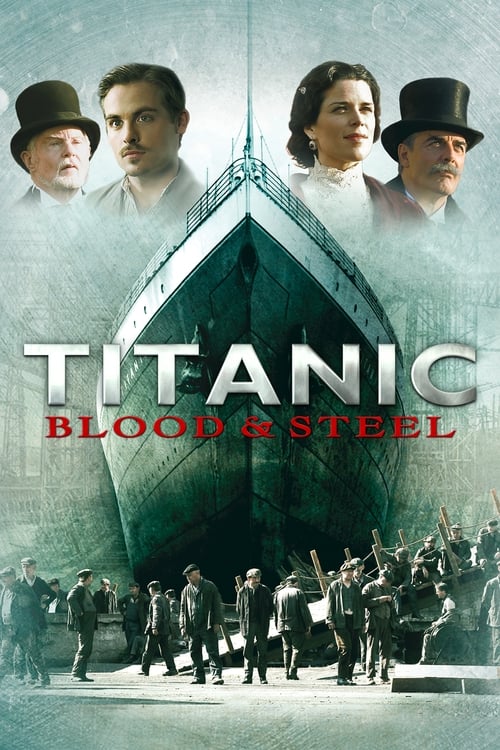
Titanic: Blood and Steel is a 12-part television costume drama series about the construction of the RMS Titanic. Produced by History Asia, it is one of two large budget television dramas aired in April 2012, the centenary of the disaster; the other is Titanic.
Titanic: Blood and Steel premiered in Germany and Denmark on April 15, 2012, in Italy on April 22, 2012, and in France in December 2012. Part of the filming took place in Serbia, where the series aired beginning September 9, 2012. In Canada, it began to air on September 19, 2012, on CBC. It was aired in the United States as a six-part mini-series with two episodes back-to-back from October 8, 2012, until October 13, 2012, on Encore.
Contents
Cast
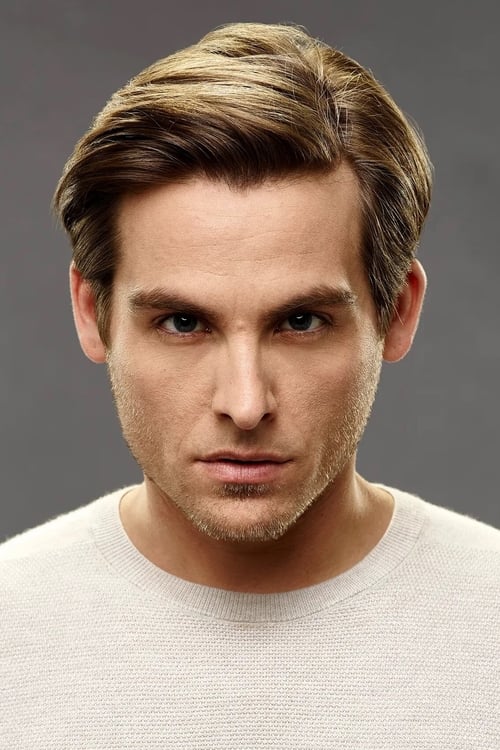
Kevin Zegers as Mark Muir/Marcus Malone
Alessandra Mastronardi as Sofia Silvestri
Derek Jacobi as William Pirrie, 1st Viscount Pirrie
Neve Campbell as Joanna Yaegar
Ophelia Lovibond as Kitty Carlton / Burlington
Billy Carter as Thomas Andrews
Branwell Donaghey as Michael McCann
Martin McCann as Conor McCann
Ian McElhinney as Sir Henry Carlton
Valentina Corti as Violetta Silvestri
Denise Gough as Emily Hill
Jonathan Harden as Walter Hill
Edoardo Leo as Andrea Valle
Gray O'Brien as J. Bruce Ismay
Michael McElhatton as Albert Hatton
Liam Cunningham as James Larkin
Chris Noth as J. P. Morgan
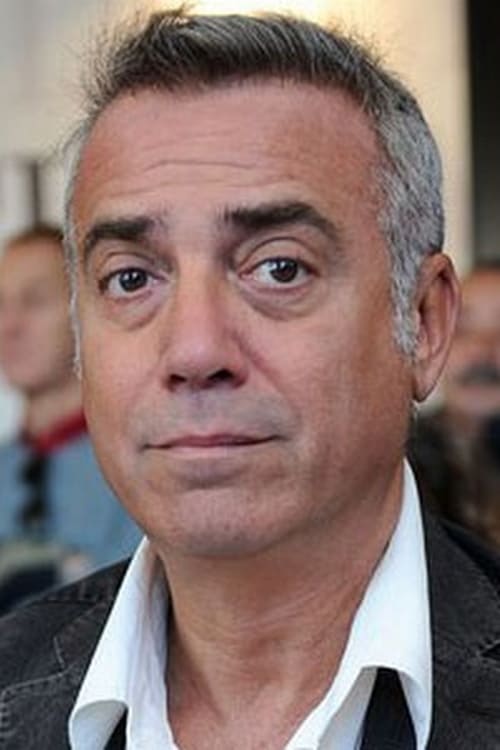
Massimo Ghini as Pietro Silvestri
Paul Herwig as Florian von Altenberg
Liam Carney as Sean Malone
Bill Murphy as Bremner
Eleanor Methven as Margaret Montgomery Pirrie
Michael Cochrane as Captain Edward Smith
Barry Barnes as Father Thomas Byles
Michael Grennell as R. J. McMordie, Mayor of Belfast
Robert Whitelock as Winston Churchill
Summary
The series follows the lives of the people who made the Titanic, from the workers who built it to its rich financiers. Dr. Mark Muir, an engineer and metallurgist, convinces American tycoon J. P. Morgan to hire him for the biggest shipping project in the world, the construction of the RMS Titanic at Belfast's Harland and Wolff shipyard. Mark is, in truth, a Belfast native born Marcus Malone. Now, with a new name and identity, he tries to hide his heritage from his employers, as he is Catholic and his employers, the Protestant elite that rule Belfast, dislike Catholics.
While working there, Mark falls in love with Sofia Silvestri, an Italian immigrant. However, during the construction of the Titanic, tensions rise between the lower-class workers and the rich elite. More setbacks stall the construction: Harland and Wolff want to save costs and use cheaper materials, the workers wish to form a trade union, the women suffrage movement heats up in the UK, and the pro Home Rule and pro-Unionist groups battle each other. Mark attempts to deal with these while trying to escape his past.
Deviations from historical fact
Below is a selection of some deviations from historical fact:
The riots and labour unrest in the series are portrayed as safety and wage related; however, they were caused by Harland and Wolff's hiring practices. Harland and Wolff practiced sectarian discrimination and hired predominantly Protestant workers. Catholics rioted against this and the Royal Irish Constabulary were called in. For the period, Harland and Wolff's wages were considered fair, as were the death and injury benefits paid to workers, or to their families, who suffered mishap in their yard. That said, in the plot the sectarian tensions are shown to be a driving force among the various socioeconomic levels and how they relate to each other; including in the fifth episode Lord Pirrie regretfully acknowledging to Dr. Muir that he could have never been employed at White Star at his level if it was known that he was a Catholic, even with a letter of recommendation from J. P. Morgan himself.
It is also insinuated that Harland and Wolff favored cheaper steel of lower quality to save money, with the implication that cheaper steel played a part in the sinking and loss of life. It has been thoroughly documented, however, that the ship's steel plates were of good quality for the period. Indeed, the RMS Olympic showed great inherent strength prior to the Titanic disaster, and remained in service on the Atlantic until the mid-1930s; Titanic's hull strength is demonstrated by the fact that, even after her bow section plunged 2+1⁄2 miles to the sea floor, it still remains largely intact. Although her hull broke apart in the final few minutes of the sinking, this was because the strains imposed upon it were simply greater than any ocean liner was designed to bear, and not a symptom of structural weakness.
American Financier J. P. Morgan is portrayed as overseeing construction of the Titanic, heavily involved in decisions regarding the liner's construction. Although Morgan had acquired the White Star Line in 1902, and had rolled it into his shipping combine, the International Mercantile Marine (or IMM), the White Star Line was run by its managing director, J. Bruce Ismay. Ismay, in turn, became President of the IMM in 1904. It was in fact White Star, not Morgan and IMM, which financed the construction of Olympic, Titanic and Britannic. However the series does correctly show that it was Ismay, not Morgan, who was involved in decisions regarding the ships' design, interior appointments, safety features, etc. His domineering character which is the traditional depiction of his reputation is intact.
Nielsen Ratings
In the United States, Titanic: Blood and Steel aired on Encore, which does not publish Nielsen Ratings on a frequent basis. Due to the lack of published reports, only ratings for certain episodes are available.
Home media release
Lions Gate Entertainment has released the 12-part miniseries on DVD and Blu-ray Disc on December 4, 2012.



.jpg?width=400)