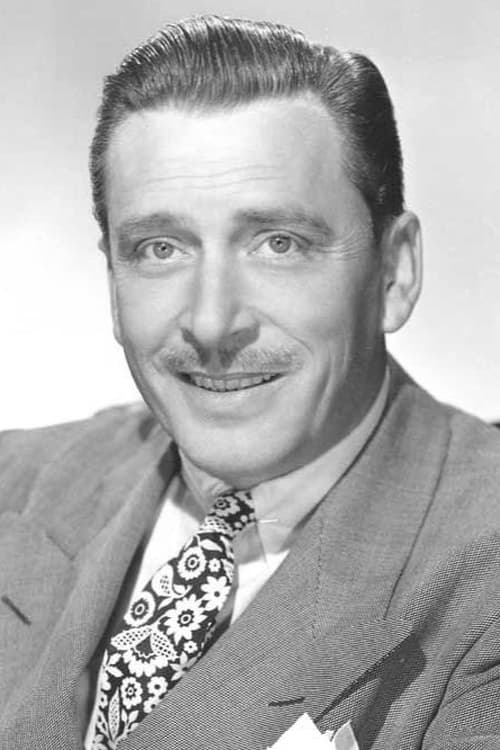
_-_Martin_Balsam.jpg?width=400)
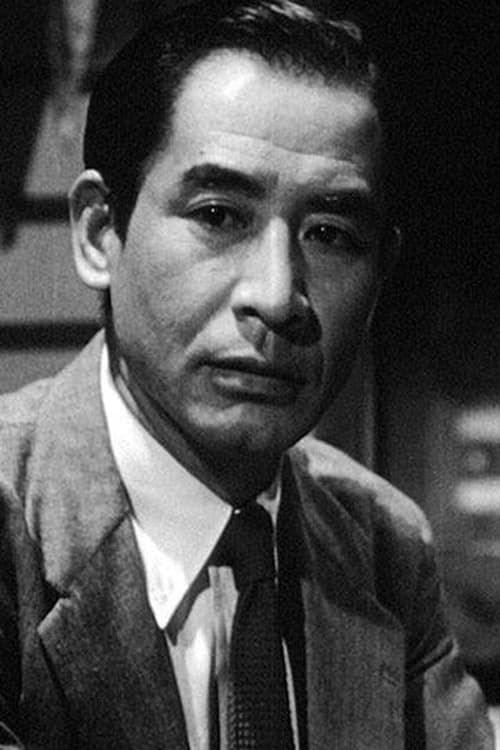


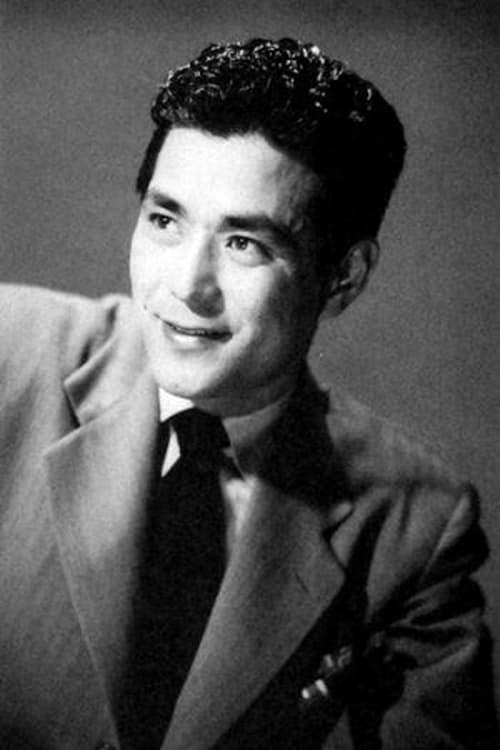
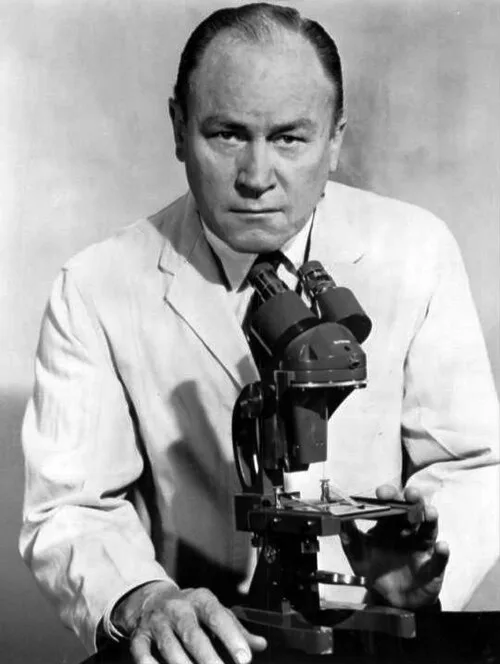
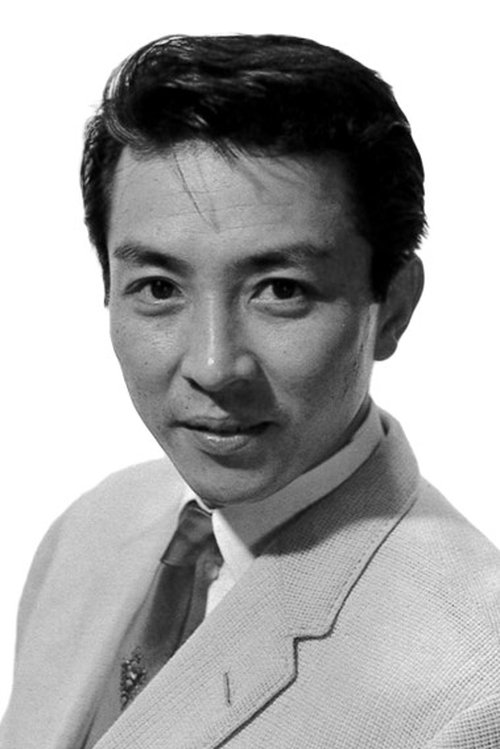


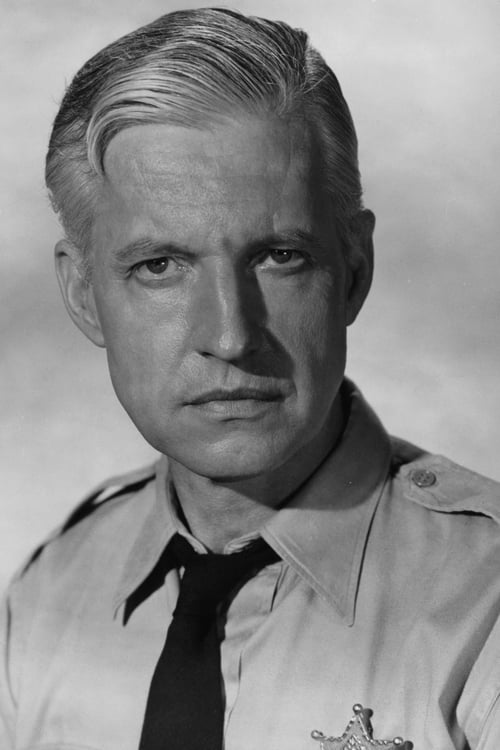
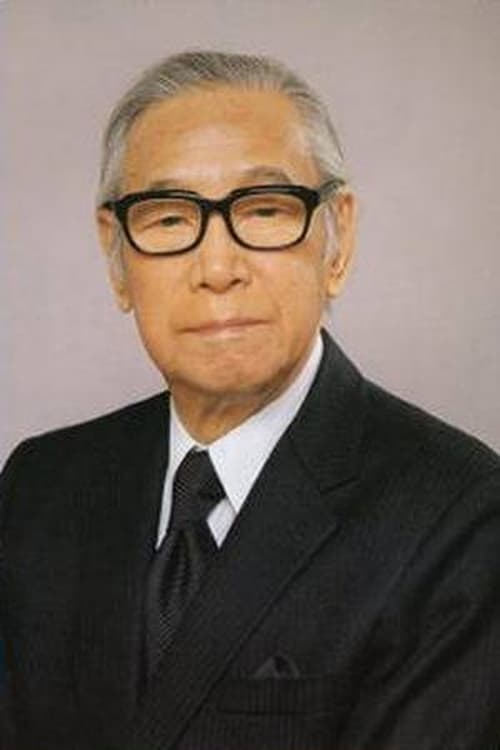
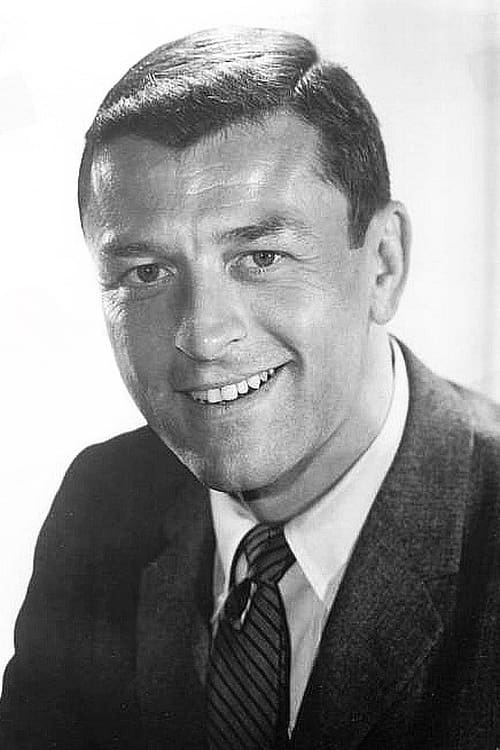
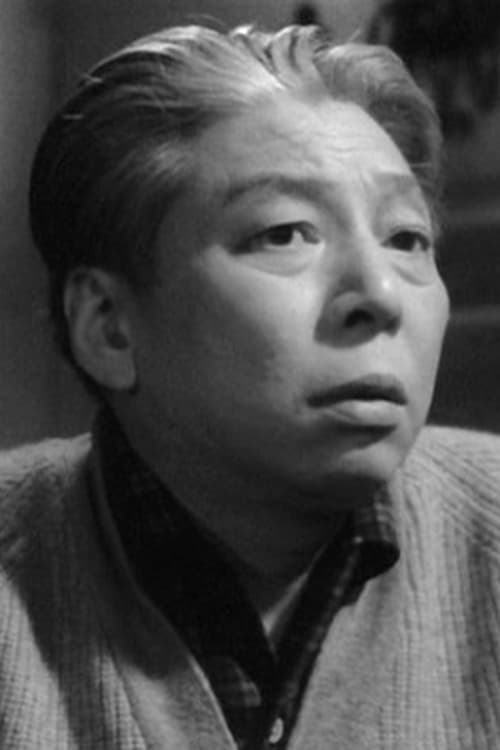
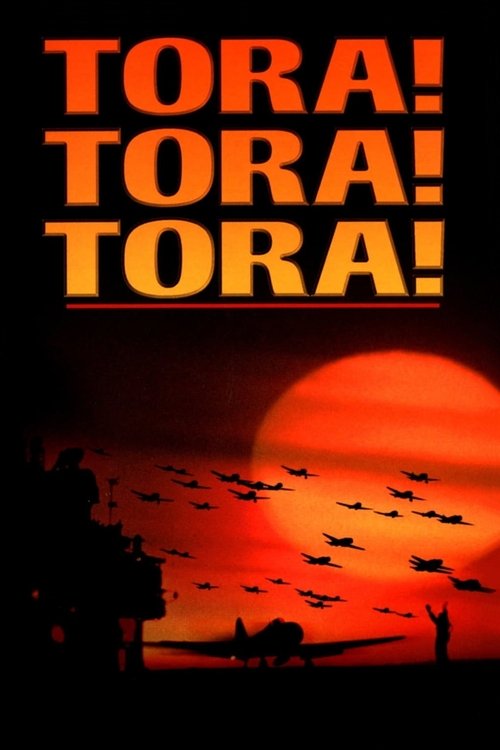
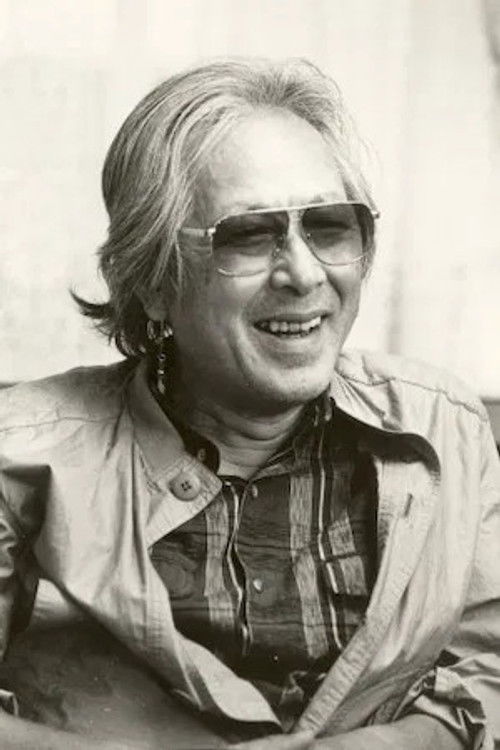
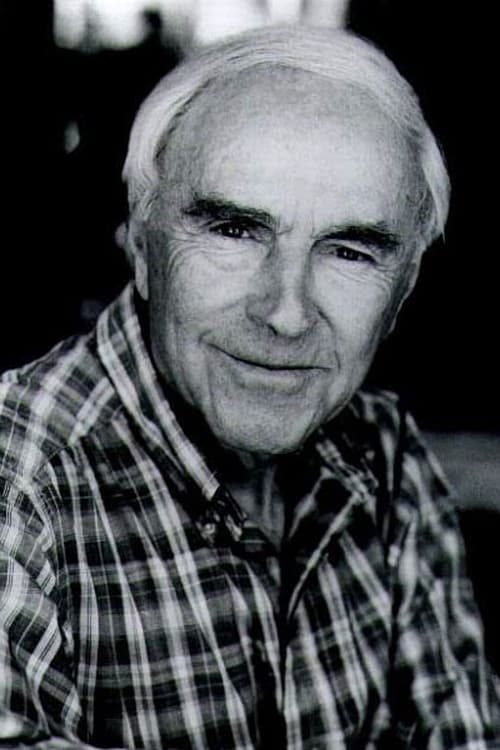
Tora! Tora! Tora! (Japanese: トラ・トラ・トラ!) is a 1970 Japanese-American war film that dramatizes the events leading up to the Japanese attack on Pearl Harbor in 1941, from both American and Japanese positions. The film was produced by Elmo Williams and directed by Richard Fleischer, Toshio Masuda and Kinji Fukasaku. It features an ensemble cast, including Martin Balsam, Joseph Cotten, So Yamamura, E.G. Marshall, James Whitmore, Tatsuya Mihashi, Takahiro Tamura, Wesley Addy, and Jason Robards. It was both Masuda's and Fukasaku's first English-language film and first international co-production.
The tora of the title, although literally meaning "tiger", is actually a two-syllable codeword that abbreviated the longer phrase totsugeki raigeki 突撃雷撃 ("lightning attack"), used by the invaders to indicate that complete surprise had been achieved.
The film was released in the United States by 20th Century-Fox on September 23, 1970, and in Japan by the Toei Company on September 25. It received mixed reviews from American critics, but was praised for its historical accuracy and attention to detail, its visual effects, and its action sequences.
Tora! Tora! Tora! was nominated for five Oscars at the 43rd Academy Awards, including Best Cinematography and Best Film Editing, winning Best Visual Effects (L.B. Abbott and A.D. Flowers). The National Board of Review ranked it in its Top Ten Films of 1971. A 1994 survey at the USS Arizona Memorial determined that for Americans the film was the most common source of popular knowledge about the Pearl Harbor attack.
Contents
Plot
In September 1940, following a severe trade embargo imposed on a belligerent Japan by the United States a year prior, influential Japanese army figures and politicians push through an alliance with Germany and Italy, despite opposition from the Japanese navy, and prepare for war. The newly appointed Commander-in-Chief of the Combined Fleet, Admiral Isoroku Yamamoto, reluctantly plans a pre-emptive strike, believing Japan's best hope of controlling the Pacific Ocean is to quickly annihilate the American Pacific fleet anchored at Pearl Harbor. Air Staff Officer Minoru Genda is chosen to mastermind the operation, while his old Naval Academy classmate Mitsuo Fuchida is selected to lead the attack.
In Washington, U.S. military intelligence has broken the Japanese Purple Code, allowing them to intercept secret Japanese radio transmissions indicating increased Japanese naval activity. U.S. Army Colonel Rufus S. Bratton and U.S. Navy Lieutenant Commander Alwin Kramer monitor the transmissions. At Pearl Harbor, Admiral Husband E. Kimmel increases defensive naval and air patrols around Hawaii. General Walter Short orders aircraft concentrated on the airfield runways to avoid sabotage by enemy agents, while some planes are dispersed to other airfields on Oahu.
Diplomatic tensions escalate as the Japanese ambassador to Washington continues negotiations to stall for time. Bratton and Kramer learn from intercepted radio messages that the Japanese planned to send 14 messages from Tokyo to their embassy in Washington, with orders to destroy their code machines after receiving the final message. Deducing that the Japanese will launch a surprise attack after the messages are delivered, Bratton tries to warn his superiors. However, Chief of Naval Operations Harold R. Stark is indecisive over notifying Hawaii without first alerting President Franklin D. Roosevelt. In contrast, Army Chief of Staff General George Marshall's order to alert Pearl Harbor of an attack is stymied by poor atmospheric conditions that prevent radio transmission and by a warning telegram not marked urgent. The Japanese fleet launches its aircraft at dawn on December 7, 1941. Two radar operators detect their approach to Hawaii, but the duty officer, Lieutenant Kermit Tyler, dismisses their concerns. Similarly, the claim by the destroyer USS Ward to have sunk a Japanese miniature submarine off the entrance to Pearl Harbor is dismissed as unimportant. The Japanese achieve total surprise, which Commander Fuchida indicates with the code signal "Tora! Tora! Tora!"
The damage to the naval base is catastrophic, and casualties are severe. Several battleships are either sunk or heavily damaged; General Short's anti-sabotage precautions allow Japanese aircraft to easily destroy American planes on the ground. In Washington, a stunned Secretary of State Cordell Hull is asked to receive the Japanese ambassador Kichisaburō Nomura. The 14-part message – including a declaration that peace negotiations were at an end – was meant to be forwarded to the Americans thirty minutes before the attack, but the Japanese embassy failed to decode and transcribe it in time. The attack started while the two nations were technically still at peace. The distraught Nomura, helpless to explain the late ultimatum and unaware of the ongoing attack, is rebuffed by Hull.
Cast
Production
Veteran 20th Century-Fox executive Darryl F. Zanuck, who had earlier produced The Longest Day (1962), wanted to create an epic that depicted what "really happened on December 7, 1941", with a "revisionist's approach". He believed that the commanders in Hawaii, General Walter Short and Admiral Husband E. Kimmel, though scapegoated for decades, provided adequate defensive measures for the apparent threats, including relocation of the fighter aircraft at Pearl Harbor to the middle of the base, in response to fears of sabotage from local Japanese. Despite a breakthrough in intelligence, they had received limited warning of the increasing risk of aerial attack. Recognizing that a balanced and objective recounting was necessary, Zanuck developed an American-Japanese co-production, allowing for "a point of view from both nations". He was helped out by his son, Richard D. Zanuck, who was chief executive at Fox during this time.
Production on Tora! Tora! Tora! took three years to plan and prepare for the eight months of principal photography. The film was created in two separate productions, one based in the United States, directed by Richard Fleischer, and one based in Japan. The Japanese side was initially to be directed by Akira Kurosawa, who worked on script development and pre-production for two years. However, after two weeks of shooting, he was replaced by Toshio Masuda and Kinji Fukasaku, who directed the Japanese sections. Toshiro Mifune reportedly had been scheduled to play Isoroku Yamamoto but withdrew when Kurosawa left the project.
Richard Fleischer said of Akira Kurosawa's role in the project:
Well, I always thought that even though Kurosawa was a genius at film-making and indeed he was, I sincerely believe that he was miscast for this film, this was not his type of film to make, he never made anything like it and it just wasn't his style. I felt he was not only uncomfortable directing this kind of movie but also he wasn't used to having somebody tell him how he should make his film. He always had complete autonomy, and nobody would dare make a suggestion to Kurosawa about the budget, or shooting schedule, or anything like that. And then here he was, with Darryl Zanuck on his back and Richard Zanuck on him and Elmo Williams and the production managers, and it was all stuff that he never had run into before, because he was always untouchable. I think he was getting more and more nervous and more insecure about how he was going to work on this film. And of course, the press got a hold of a lot of this unrest on the set and they made a lot out of that in Japan, and it was more pressure on him, and he wasn't used to that kind of pressure.
Casting
The film was deliberately cast with actors who were not true box-office stars, including many Japanese amateurs, in order to place the emphasis on the story rather than the actors who were in it.
Several members of the cast had themselves served in World War II.
Some crew members also served in the war.
Some cast members served before or after World War II.
Historical accuracy
Tora! Tora! Tora! is regarded highly by Pearl Harbor historians and survivors for its accuracy.
Parts of the film showing the takeoff of the Japanese aircraft utilize an Essex-class aircraft carrier, Yorktown, which was commissioned in 1943 and modernized after the war to have a very slightly angled flight deck. The ship was leased by the film producers, who needed an aircraft carrier for the film, and as Yorktown was scheduled to be decommissioned in 1970, the Navy made her available. She was used largely in the takeoff sequence of the Japanese attack aircraft. The sequence shows interchanging shots of models of the Japanese aircraft carriers and Yorktown. She does not look like any of the Japanese carriers involved in the attack, due to her large bridge island and her angled landing deck. The Japanese carriers had small bridge islands, and it was not until after the war that angled flight decks were developed. In addition, during the scene in which Admiral Halsey is watching bombing practice, an aircraft carrier with the hull number 14 is shown. Admiral Halsey was on USS Enterprise, not the Essex-class carrier USS Ticonderoga, which would not be commissioned until 1944. This is understandable, however, as Enterprise and all six of the Japanese carriers from the attack had been scrapped or sunk.
Another error involves the model of the Japanese aircraft carrier Akagi. In the film, Akagi's bridge island is positioned on the starboard side of the ship, which is typical on most aircraft carriers. However, Akagi was an exception; her bridge island was on the port side of the ship. Despite this, the bridge section appeared accurately as a mirrored version of Akagi's real port-side bridge. Secondly, all of the Japanese aircraft in the footage bear the markings of Akagi's aircraft (a single vertical red stripe following the red sun symbol of Japan), even though five other aircraft carriers participated, each having its own markings. In addition, the markings do not display the aircraft's identification numbers as was the case in the actual battle. The white surround on the roundel on the Japanese aircraft was only used from 1942 onwards. Prior to this, the roundel was red only.
USS Ward (DD-139) was an old "4-piper" destroyer commissioned in 1918; the ship used in the movie, USS Finch (DE-328), which portrays Ward, looked far different from the original destroyer. In addition, in the movie, she fired two shots from her #1 gun turret. In reality, Ward fired the first shot from the #1 4-inch (102 mm) un-turreted gunmount and the second shot from the #3 wing mount. The attack on the midget submarine by USS Ward was previously mentioned in the film In Harm's Way.
Release
The film had its world premiere on September 23, 1970, in New York, Tokyo, Honolulu and Los Angeles.
Reception
Box office
At the time of its initial release, Tora! Tora! Tora! was thought to be a box office disappointment in North America. Its domestic box office of $29,548,291 made it the ninth-highest-grossing film of 1970, with distributor rentals of $14.53 million.
It was a major hit in Japan, and over the years, home media releases provided a larger overall profit. The film had earned ¥194.22 million in Japanese distributor rentals by 1971, becoming the sixth-highest-grossing film of 1971 in Japan. The film grossed a total of $3.15 million in Japan.
According to Fox records, the film required $37.15 million in rentals to break even, and had done so by December 11, 1970.
Critical response
On Rotten Tomatoes, the film holds a 57% rating based on 30 reviews. The site's consensus states: "Tora! Tora! Tora! is scrupulously accurate and lays out of the tragedy of Pearl Harbor with intricate detail, but the film's clinical approach to the sound and fury signifies little feeling." On Metacritic it has a score of 46% based on reviews from 8 critics, indicating "mixed or average reviews".
Roger Ebert gave the film one star and felt that Tora! Tora! Tora! was "one of the deadest, dullest blockbusters ever made" and suffered from not having "some characters to identify with." In addition, he criticized the film for poor acting and special effects in his 1970 review. Vincent Canby, reviewer for The New York Times, was similarly unimpressed, noting the film was "nothing less than a $25-million irrelevancy." Variety also found the film to be boring; however, the magazine praised the film's action sequences and production values. Charles Champlin in his review for the Los Angeles Times on September 23, 1970, considered the movie's chief virtues as a "spectacular", and the careful recreation of a historical event.
Despite the initial negative reviews, the film was critically acclaimed for its vivid action scenes and found favor with aviation aficionados. However, even the team of Jack Hardwick and Ed Schnepf, who had been involved in research on aviation films, relegated Tora! Tora! Tora! to the "also-ran" status due to its slow-moving plotline.
Several later films and TV series relating to World War II in the Pacific have used footage from Tora! Tora! Tora!. These productions include the films Midway (1976; in the Tora! Tora! Tora! DVD commentary, Fleischer expressed anger that Universal used the footage), All This and World War II (film 1976), Pearl (TV mini-series 1978), From Here to Eternity (TV mini-series 1979), The Final Countdown (1980), and Australia (2008) as well as the Magnum, P. I. television series episode titled "Lest We Forget" (first airdate February 12, 1981).
In 1994, a survey at the USS Arizona Memorial in Honolulu determined that for Americans the film was the most common source of popular knowledge about the Pearl Harbor attack.
Clark Collis of Empire gave the film three out of five stars, writing that the film "is high on historical veracity but low on drama". In 2016, Cinema Retro released a special issue dedicated to Tora! Tora! Tora! which detailed the Blu-ray release of the film. Stating that the film "has only grown in stature over the decades", it praises the attack sequences, calling them "quite spectacular", and commends the portrayal of the Japanese as "anything but ethnic stereotypes, which adds immensely to the impact of their side of the story". It also praises the "innovative, pulse-pounding" soundtrack. Reviewers called the film as being "meticulous" in its approach to dissecting the situation leading up to the attack. A reviewer called Tora! Tora! Tora! a fine documentary-style film about the Japanese attack on Pearl Harbor. The usage of both American and Japanese filmmakers provides an unbiased film and unique viewing experience, and is uncommon in the genre. A 2018 article described the film as doing "a most memorable job in portraying the whole Pearl Harbor experience".


