
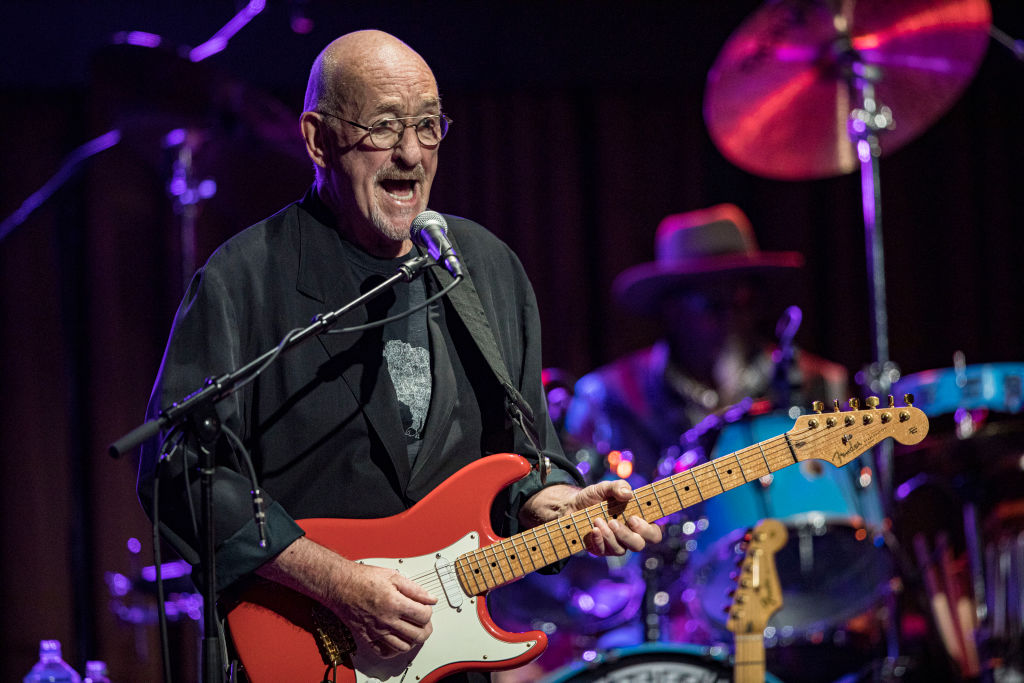
Traffic were an English rock band formed in Birmingham in April 1967 by Steve Winwood (formerly of the Spencer Davis Group), Jim Capaldi, Chris Wood and Dave Mason. They began as a psychedelic rock group and diversified their sound through the use of instruments such as keyboards (the Mellotron and harpsichord), sitar, and various reed instruments, and by incorporating jazz and improvisational techniques in their music.
The band had early success in the UK with their debut album Mr. Fantasy and non-album singles "Paper Sun", "Hole in My Shoe", and "Here We Go Round the Mulberry Bush". Their follow-up self-titled 1968 album was their most successful in Britain and featured one of their most popular songs, the widely covered "Feelin' Alright?". Mason left the band shortly after the album's release, moving on to a solo career that produced a few minor hit songs in the 1970s. Traffic disbanded at the beginning of 1969, when Winwood co-formed the supergroup Blind Faith. An album compiled from studio and live recordings, Last Exit, was released that May.
By 1970, Blind Faith had also broken up and Winwood, Capaldi and Wood reformed Traffic (minus Mason), with John Barleycorn Must Die being the band's comeback album. It became the band's biggest success in the United States to that point, reaching number 5. Their next LP, The Low Spark of High Heeled Boys (1971), went platinum in the US and became popular on FM radio, establishing Traffic as a leading progressive rock band. 1973's Shoot Out at the Fantasy Factory and 1974's When the Eagle Flies were further top 10 successes for the band in the US, and were both certified gold, though neither sold well in the UK. Also in 1974, the band broke up again. Winwood went on to a successful solo career, with several hit singles and albums during the 1980s. Capaldi also had some minor solo hits in the 1970s in his native UK but was less successful abroad. Wood did sporadic session work until his death in 1983.
Winwood and Capaldi reformed as Traffic for a final album and tour in 1994. Traffic were inducted into the Rock and Roll Hall of Fame in 2004. Capaldi died the following year. Mason died in 2026, leaving Winwood as the last surviving original member.
Contents
History
1960s: 1967–1969
Traffic's singer/keyboardist/guitarist Steve Winwood was the lead singer for the Spencer Davis Group at age 14. The Spencer Davis Group released four Top 10 singles, including two number ones, and three Top 10 albums in the United Kingdom, as well as two Top 10 singles in the United States. Drummer/singer/lyricist Jim Capaldi and guitarist/singer Dave Mason had both been in the Hellions and Deep Feeling, while woodwinds player Chris Wood came out of Locomotive.
The first time all four original members of Traffic met each other was in 1965, when they jammed together at The Elbow Room, a club in Aston, Birmingham. After Winwood left the Spencer Davis Group in April 1967, the quartet formed Traffic. Capaldi came up with the name of the group while the four of them were waiting to cross the street in Dorchester, and was not referring to drug trafficking, as was later rumoured. Soon thereafter, they rented a cottage near the rural village of Aston Tirrold, Berkshire to write and rehearse new music.
Traffic signed to Chris Blackwell's Island Records label (where Winwood's elder brother Muff, also a member of the Spencer Davis Group, later became a record producer and executive), and scored a hit with their debut single "Paper Sun", which reached No. 5 in the UK (No. 4 in Canada). Their second single, Mason's psych-pop "Hole in My Shoe", was an even bigger hit, reaching No. 2 in the UK (No. 4 Canada). The band's third single, "Here We Go Round the Mulberry Bush", was made for the soundtrack of the 1967 British feature film of the same name. It was Traffic's third consecutive UK Top 10 single, reaching No. 8. Their debut album, Mr. Fantasy, was produced by Jimmy Miller, and like the singles it was a success in the UK, reaching No. 16, but was less successful in the US, where it charted at No. 88.
Mason briefly left the group at the end of 1967, due to artistic differences. He rejoined in the spring of 1968, writing five of the ten songs on Traffic's self-titled second album, released in late 1968, including "Feelin' Alright", which was later covered with great success by Joe Cocker and has since been covered by many others, going on to become a standard. Winwood, Wood and Capaldi were still facing musical and lifestyle differences with Mason, leading him to leave the band a second time soon after the album's completion. The remaining trio enjoyed a successful tour of the US in late 1968. In 1968, Winwood and Wood often played with Jimi Hendrix, and they both appear on The Jimi Hendrix Experience's 1968 double album Electric Ladyland, as did an uncredited Mason.
1970s: 1970–1974
After the break-up of Blind Faith in 1969, Winwood began working on a solo recording, bringing in Wood and Capaldi to contribute, and the project eventually turned into a new Traffic album, 1970's John Barleycorn Must Die, their most successful album yet. Soon after the album was released, Traffic expanded its lineup with the addition of Winwood's former Blind Faith bandmate Ric Grech on bass. In 1971, Capaldi stopped drumming and nearly left the band after his infant son died from cot death. Drummer Jim Gordon of Derek and the Dominos and percussionist Rebop Kwaku Baah were added, while Capaldi switched to a role as percussionist, co-vocalist, and master of ceremonies.
Mason also returned at this time for a third stint with the band, though this lasted only six performances, some of which was captured on the live album Welcome to the Canteen, released in September 1971. Marking the band's break with United Artists Records, the album did not bear the "Traffic" name on the cover or the record label, although the band's logo appeared on the back cover. Instead, the album was credited to the band's seven individual members (Winwood, Capaldi, Mason, Wood, Grech, Kwaku Baah, and Gordon). The album ended with a version of The Spencer Davis Group song "Gimme Some Loving", which became a minor hit.
Following the departure of Mason, Traffic released The Low Spark of High Heeled Boys (1971), which was a Top 10 American album but did not chart in the UK. It sold over half a million copies in 1972 when it received a gold disc, and was awarded a R.I.A.A. platinum disc in March 1976 for over a million total sales. Once again, personnel problems wracked the band, as Grech and Gordon were fired in December 1971 due to excessive drug use, and the month after, Winwood's struggles with peritonitis brought Traffic to a standstill.
Capaldi used this hiatus to record a solo album, Oh How We Danced, which proved to be the beginning of a long and successful solo career. The album included a surplus recording from The Low Spark of High-Heeled Boys, "Open Your Heart", and the new tracks featured drummer Roger Hawkins and bassist David Hood, from the Muscle Shoals Sound Studio house band. Capaldi soon recruited Hawkins and Hood into Traffic to replace Grech and Gordon.
The new lineup (Winwood, Capaldi, Wood, Kwaku Baah, Hawkins, Hood) toured America in early 1972 to promote the LP, and their concert at the Santa Monica Civic Auditorium on 21 February was recorded in multitrack audio and captured on colour videotape with multiple cameras. The 64-minute performance is thought to be the only extended live footage of the group. It was evidently not broadcast on television at the time, but was later released on home video and DVD.
Reunion
All of the living members of Traffic's most recent lineup - Steve Winwood, Jim Capaldi, and Rosko Gee - reunited in 1994 for a one-off tour, after a fan left a voice mail message at Bob Weir's (of the Grateful Dead) hotel in Chicago during the 1992 "Scaring the Children" tour, and suggested it would be cool if Traffic toured with the (then Grateful) Dead. Traffic opened for the Grateful Dead during their summer tour. The flute/sax role on the tour was played by Randall Bramblett, who had worked extensively with Winwood. Bramblett had never played flute before and had to learn to play it for his role in Traffic.
Mike McEvoy joined the lineup playing keyboards, guitar and viola, and Walfredo Reyes, Jr. played drums and percussion. As a duo, Winwood and Capaldi recorded and released a new Traffic studio album, Far from Home, which broke the Top 40 in both the UK and USA. The Last Great Traffic Jam, a double live album and DVD released in 2005, documents the band's 1994 reunion tour.
The four original members of Traffic were inducted for their contributions in the Rock and Roll Hall of Fame on 15 March 2004. Winwood, Capaldi, Mason, and Stephanie Wood standing in for her late brother Chris, all attended the ceremony. Winwood and Capaldi performed "Dear Mr. Fantasy" at the induction performance, and were joined by Mason for "Feelin' Alright" during the grand finale, which also featured Keith Richards, Tom Petty, and the Temptations. Bramblett also performed at the ceremony, though he was not one of the members inducted.
Tentative plans for another Traffic project were cut short by Capaldi's death from stomach cancer at age 60 in January 2005, ending the songwriting partnership with Winwood that had fueled Traffic from its beginning. Winwood subsequently dedicated The Last Great Traffic Jam "to the man without whom Traffic could never be: my lifelong friend and partner, Jim Capaldi."
The band's 1970 instrumental "Glad" was sampled on American singer Christina Aguilera's track "Makes Me Wanna Pray" (from her 2006 album Back to Basics), with Winwood credited as a featured artist.
Dear Mr. Fantasy was a celebration for Capaldi that took place at the Roundhouse in Camden Town, London on 21 January 2007. Guests included Winwood, Paul Weller, Pete Townshend, and many more. Dear Mr. Fantasy featured the music of Capaldi and Traffic, and all profits went to the Jubilee Action Street Children Appeal.
Discography
Studio albums
Mr. Fantasy (1967)
Traffic (1968)
Last Exit (1969; part live)
John Barleycorn Must Die (1970)
The Low Spark of High Heeled Boys (1971)
Shoot Out at the Fantasy Factory (1973)
When the Eagle Flies (1974)
Far from Home (1994)