1940–1949: Marriage and early collaborations with Olivier
In February 1940, Jill Esmond agreed to divorce Laurence Olivier, and Leigh Holman agreed to divorce Vivien, although they maintained a strong friendship for the rest of Leigh's life. Esmond was granted custody of Tarquin, her son with Olivier. Holman was granted custody of Suzanne, his daughter with Leigh. On 31 August 1940, Olivier and Leigh were married at the San Ysidro Ranch in Santa Barbara, California, in a ceremony attended only by their hosts, Ronald and Benita Colman and witnesses, Katharine Hepburn and Garson Kanin. Leigh had made a screen test and hoped to co-star with Olivier in Rebecca, which was to be directed by Alfred Hitchcock with Olivier in the leading role. After viewing Leigh's screen test, David Selznick noted that "she doesn't seem right as to sincerity or age or innocence", a view shared by Hitchcock and Leigh's mentor, George Cukor.
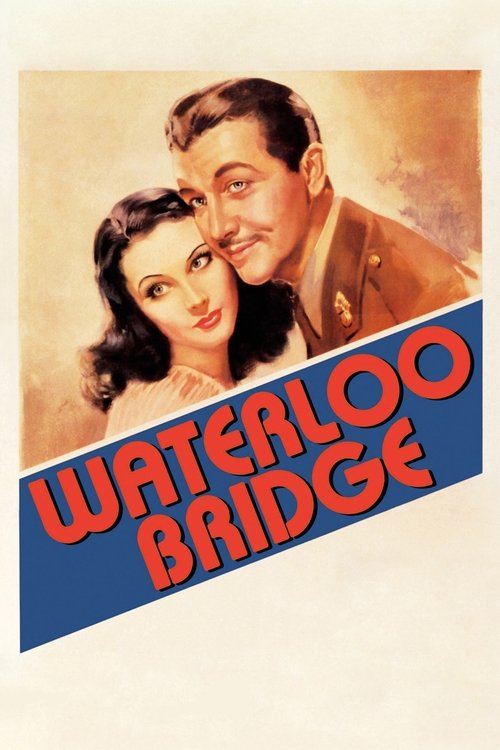
Selznick observed that she had shown no enthusiasm for the part until Olivier had been confirmed as the lead actor, so he cast Joan Fontaine. He refused to allow her to join Olivier in Pride and Prejudice (1940), and Greer Garson played the role Leigh had wanted for herself. Waterloo Bridge (1940) was to have starred Olivier and Leigh; however, Selznick replaced Olivier with Robert Taylor, then at the peak of his success as one of Metro-Goldwyn-Mayer's most popular male stars. Her top billing reflected her status in Hollywood, and the film was popular with audiences and critics.
The Oliviers mounted a stage production of Romeo and Juliet for Broadway. The New York press publicised the adulterous nature of the beginning of Olivier and Leigh's relationship and questioned their ethics in not returning to the UK to help with the war effort. After Olivier enrolled in the Fleet Air Arm, he served for two years as a pilot, resigning his commission in 1943 as a lieutenant-commander. Ultimately, Ralph Richardson and others dissuaded him, convincing Olivier that his contribution to the war effort should be on stage and in film. Critics were hostile in their assessment of Romeo and Juliet. Brooks Atkinson for The New York Times wrote: "Although Miss Leigh and Mr. Olivier are handsome young people, they hardly act their parts at all." While most of the blame was attributed to Olivier's acting and direction, Leigh was also criticised, with Bernard Grebanier commenting on the "thin, shopgirl quality of Miss Leigh's voice". The couple had invested almost all of their combined savings of $40,000 (equivalent to $920,000 in 2025) in the project, and the failure was a financial disaster for them.
The Oliviers filmed That Hamilton Woman (1941) with Olivier as Horatio Nelson and Leigh as Emma Hamilton. With the United States not yet having entered the war, it was one of several Hollywood films made with the aim of arousing a pro-British sentiment among American audiences. The film was popular in the United States and an outstanding success in the Soviet Union. Winston Churchill arranged a screening for a party that included Franklin D. Roosevelt and, on its conclusion, addressed the group, saying, "Gentlemen, I thought this film would interest you, showing great events similar to those in which you have just been taking part." The Oliviers remained favourites of Churchill, attending dinners and occasions at his request for the rest of his life; and, of Leigh, he was quoted as saying, "By Jove, she's a clinker."
The Oliviers returned to Britain in January 1941, and Leigh toured through North Africa in 1943 as part of a revue for the armed forces stationed in the region. She reportedly turned down a studio contract worth $5,000 a week (equivalent to $93,000 in 2025) in order to volunteer as part of the war effort. Leigh performed for troops before falling ill with a persistent cough and fevers. In 1944, she was diagnosed as having tuberculosis in her left lung and spent several weeks in hospital before appearing to have recovered. Leigh was filming Caesar and Cleopatra (1945) when she discovered she was pregnant, then had a miscarriage. Leigh temporarily fell into a deep depression that hit its low point with her falling to the floor, sobbing in a hysterical fit. This was the first of many major bipolar disorder breakdowns. Olivier later came to recognise the symptoms of an impending episode—several days of hyperactivity followed by a period of depression and an explosive breakdown, after which Leigh would have no memory of the event, but would be acutely embarrassed and remorseful.
With her doctor's approval, Leigh was well enough to resume acting in 1946, starring in a successful London production of Thornton Wilder's The Skin of Our Teeth; but her films of this period, Caesar and Cleopatra (1945) and Anna Karenina (1948), were not great commercial successes. All British films in this period were adversely affected by a Hollywood boycott of British films. In 1947, Olivier was knighted and Leigh accompanied him to Buckingham Palace for the investiture. She became Lady Olivier.
By 1948, Olivier was on the board of directors for the Old Vic Theatre, and he and Leigh embarked on a six-month tour of Australia and New Zealand to raise funds for the theatre. Olivier played the lead in Richard III and also performed with Leigh in The School for Scandal and The Skin of Our Teeth. The tour was an outstanding success and, although Leigh was plagued with insomnia and allowed her understudy to replace her for a week while she was ill, she generally withstood the demands placed upon her, with Olivier noting her ability to "charm the press". Members of the company later recalled several quarrels between the couple as Olivier was increasingly resentful of the demands placed on him during the tour. The most dramatic altercation occurred in Christchurch, New Zealand, when her shoes were not found and Leigh refused to go onstage without them. Olivier screamed an obscenity at her and slapped her face, and a devastated Leigh slapped him in return, dismayed that he would hit her publicly. Subsequently, she made her way to the stage in borrowed pumps, and in seconds, had "dried her tears and smiled brightly onstage". By the end of the tour, both were exhausted and ill. Olivier told a journalist, "You may not know it, but you are talking to a couple of walking corpses." Later, he would observe that he "lost Vivien" in Australia. The success of the tour encouraged the Oliviers to make their first West End appearance together, performing the same works with one addition, Antigone, included at Leigh's insistence because she wished to play a role in a tragedy.