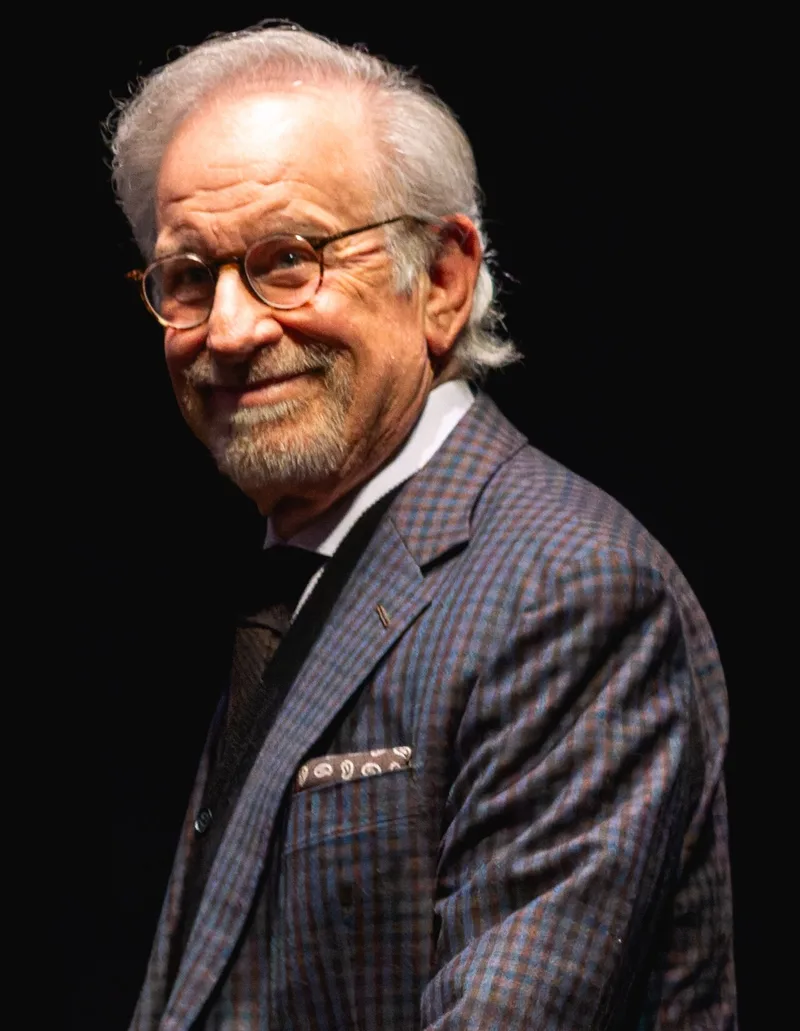
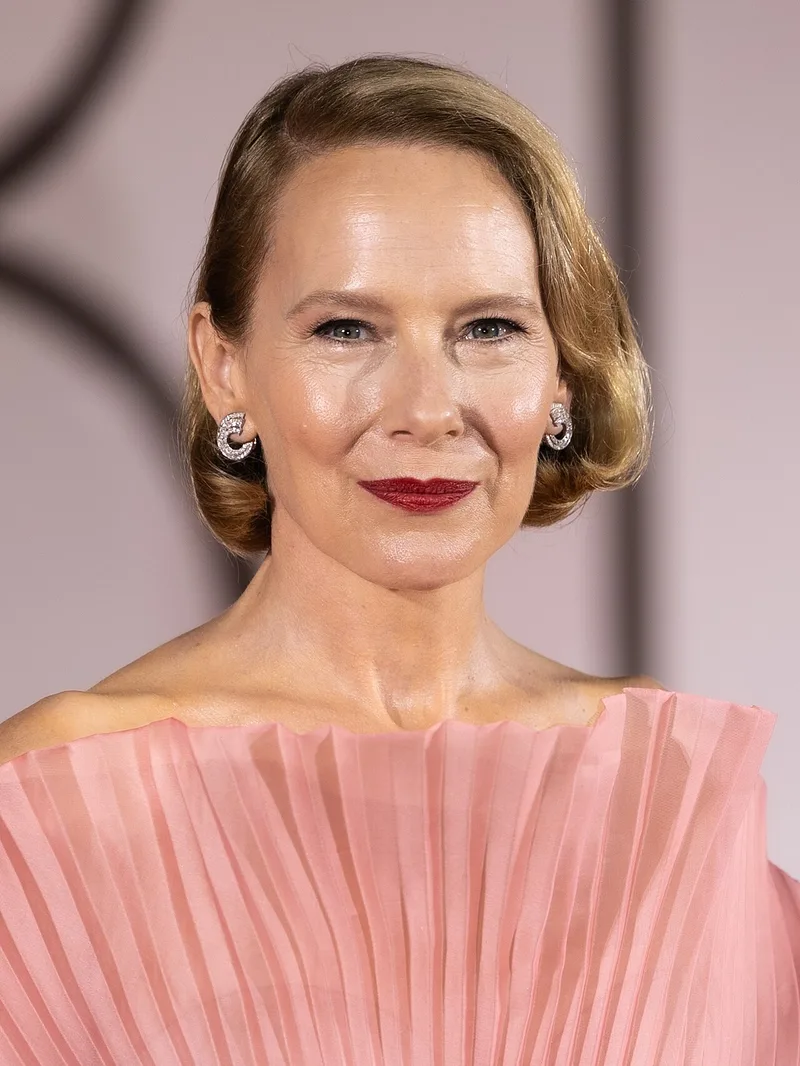
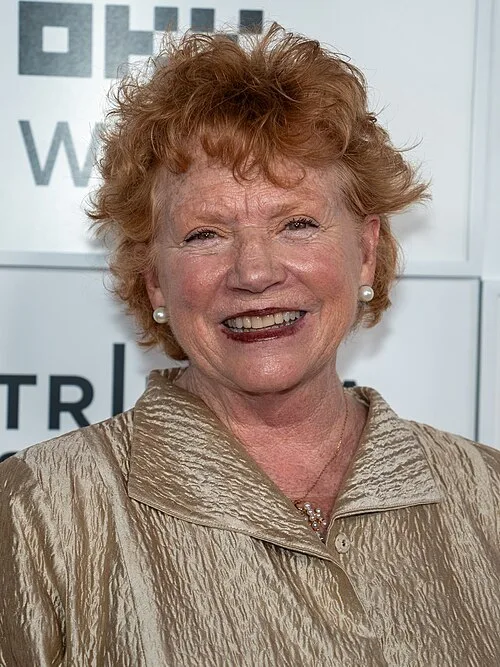
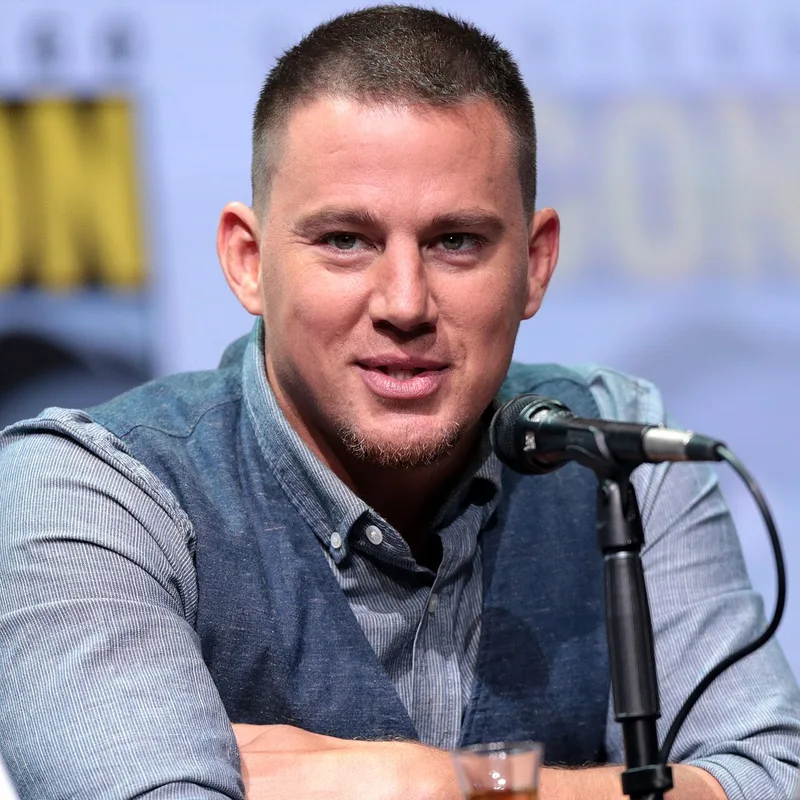
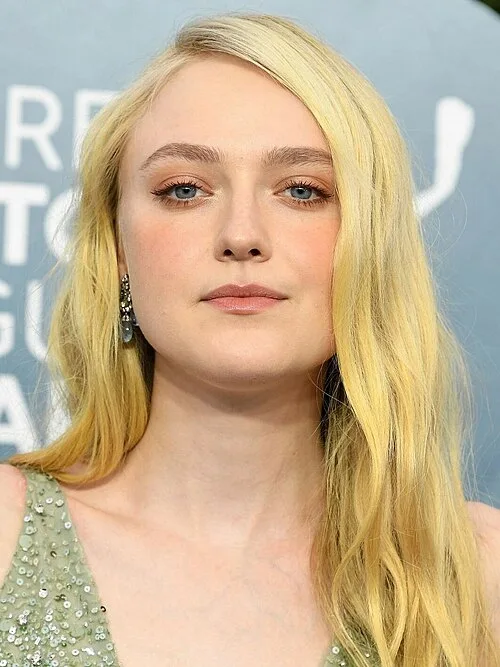
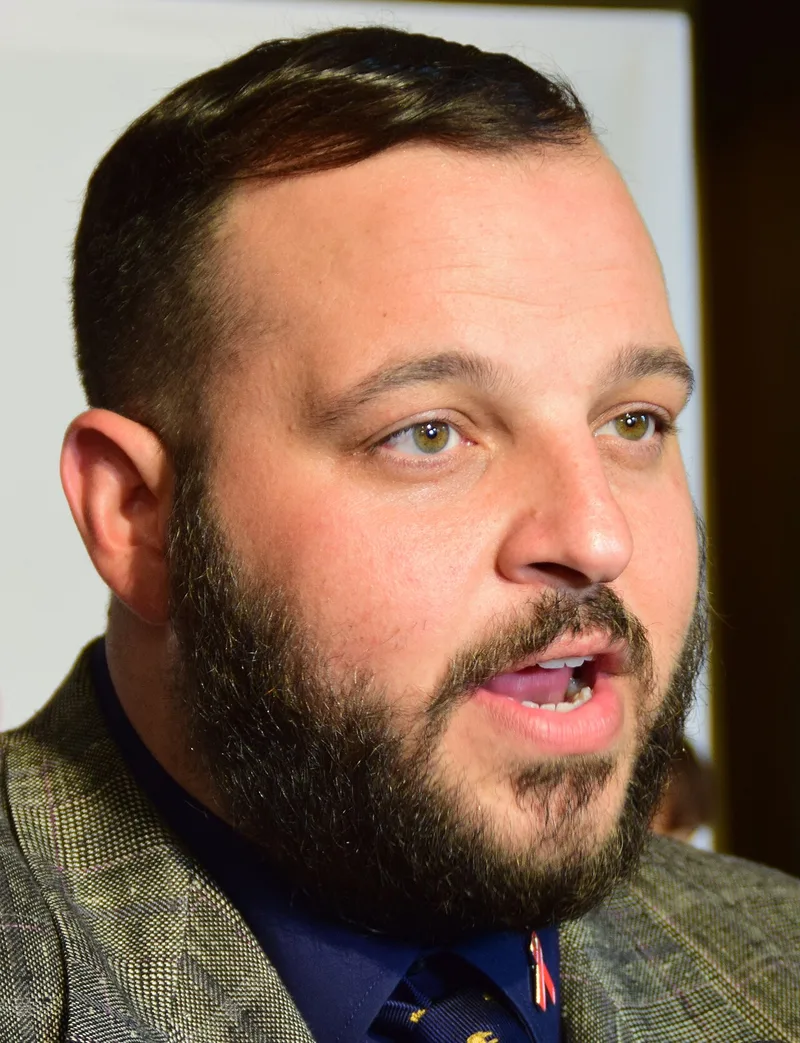
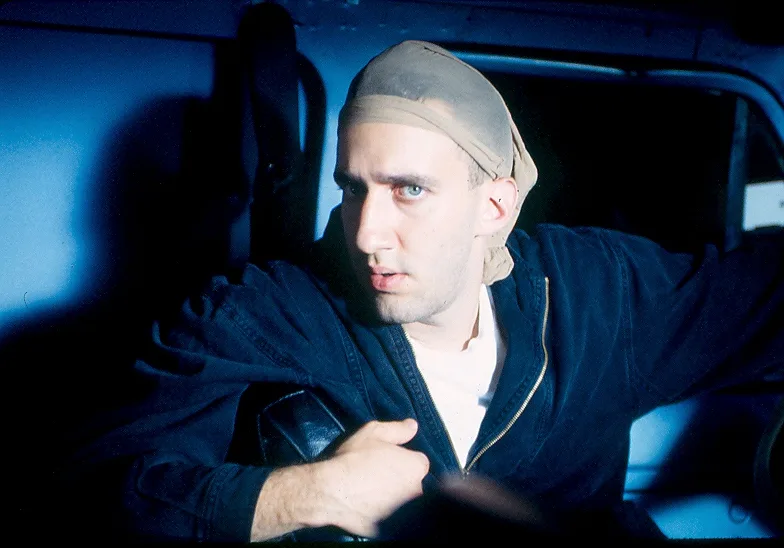
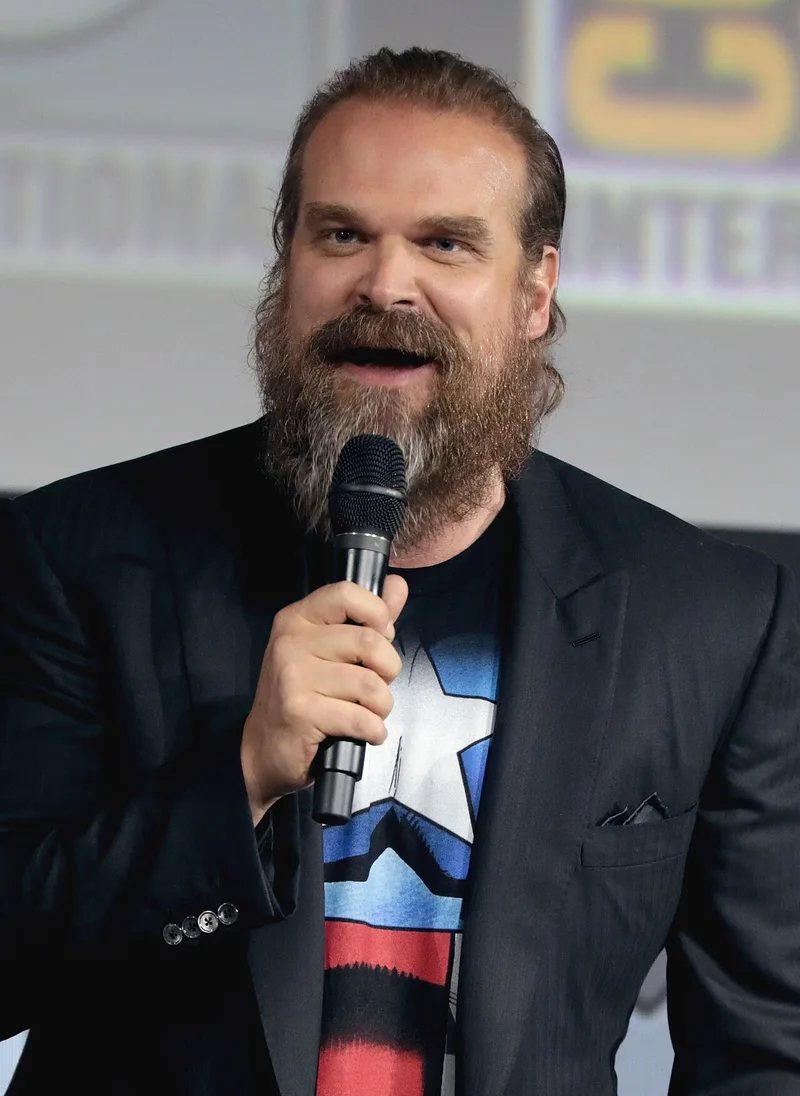
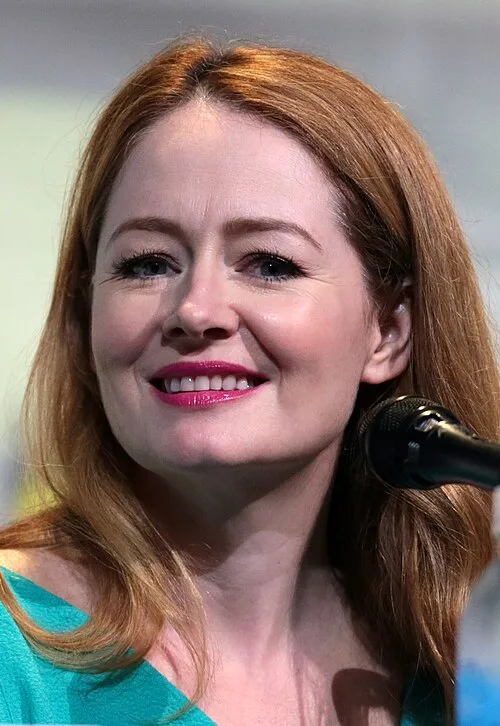
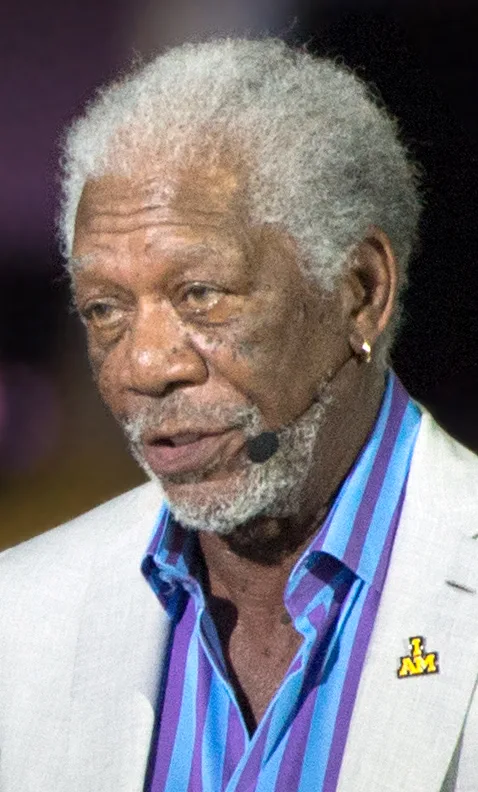
War of the Worlds is a 2005 American science fiction action thriller film directed by Steven Spielberg and written by Josh Friedman and David Koepp, based on H. G. Wells' 1898 novel, The War of the Worlds. Tom Cruise stars in the main role alongside Dakota Fanning, Miranda Otto, and Tim Robbins, with narration by Morgan Freeman. It follows an American dock worker who must look after his estranged children as he struggles to protect and reunite them with their mother when extraterrestrials invade Earth and devastate cities with giant war machines.
Produced by Paramount Pictures, DreamWorks Pictures, Amblin Entertainment, and Cruise/Wagner Productions, the film was shot in 73 days, using five different sound stages as well as locations in California, Connecticut, New Jersey, New York, and Virginia. It was surrounded by a secrecy campaign so few details would be leaked before its release. Tie-in promotions were made with several companies, including Hitachi.
War of the Worlds premiered at the Ziegfeld Theatre on June 23, 2005, and was released theatrically by Paramount Pictures on June 29. The film was released on June 13, 2005 in Tokyo. The film received generally positive reviews, with praise for effectively capturing the thrilling and suspenseful elements of Wells's novel while modernizing the action and effects to appeal to contemporary audiences. It was also a commercial success, grossing $604 million worldwide against a $132 million production budget, making it the fourth-most successful film of 2005. It earned Academy Awards nominations for Best Visual Effects, Best Sound Mixing and Best Sound Editing.
Contents
Plot
Charming but self-absorbed longshoreman Ray Ferrier, working as a crane operator in Brooklyn, New York, has his estranged children - teenage son Robbie and ten-year-old daughter Rachel - dropped off with him by his pregnant ex-wife Mary Ann while she visits her parents in Boston. After which, a thunderstorm strikes a nearby intersection multiple times, causing an electromagnetic pulse that immediately disables all electronic devices. Ray investigates the site of the impacts, where an earthquake begins, and witnesses a massive "tripod" war machine emerging from the ground, which uses energy weapons to begin disintegrating the witnesses.
Ray gathers supplies and loads Rachel and Robbie into the only working vehicle and attempts to persuade his friend Manny to come with them, but is forced to leave due to a tripod attack. Ray drives his children to Mary Ann's empty suburban New Jersey home to take refuge, where a Boeing 747 crashes into the neighborhood. Ray meets a wandering television news team scavenging the wreckage, upon which a correspondent reveals that many tripods have attacked major cities around the world and that they are protected by force shields. She adds that the tripods' pilots seemingly traveled to Earth within the lightning storms to enter their machines, presumed to have been buried underground long ago.
Ray attempts to transport his children to Boston to their mother, but a desperate mob swarms their vehicle, forcing them to abandon it. After which, Ray is reunited with his friend Sheryl and her daughter, Nora, while trying to board a ferry crossing over the Hudson River, but are separated when the ferry is subsequently capsized by tripods that emerge from the water. Afterwards, to Ray and Rachel's dismay, Robbie joins in with a US military counter-offensive against the tripods, which is obliterated.
Now alone, Ray and Rachel are offered shelter in the home of a former ambulance driver, Harlan Ogilvy. While they remain undetected, tensions soon arise between Harlan and Ray, with Harlan insistent on fighting and killing the aliens, having heard that the Japanese military was successful in doing so in Osaka, while Ray prefers hiding with Rachel to avoid being killed by the aliens. After witnessing the aliens cultivating a red-colored vegetation across the landscape, fertilized by the tripods harvesting human blood and tissue, Harlan suffers a mental breakdown and, fearing that his loud shouting will alert the aliens, Ray reluctantly kills him.
Production
Development
After collaborating on 2002's Minority Report, Steven Spielberg and Tom Cruise were interested in working together again. Spielberg stated about Cruise, "He's such an intelligent, creative partner, and brings such great ideas to the set that we just spark each other. I love working with Tom Cruise." Cruise met with Spielberg during the filming of Spielberg's Catch Me If You Can (2002) and gave three options of films to create together, one of them being an adaptation of The War of the Worlds. Spielberg chose The War of the Worlds and stated, "We looked at each other and the lights went on. As soon as I heard it, I said 'Oh my God! War of the Worlds – absolutely.' That was it."
The film is Spielberg's third on the subject of alien visitation, along with Close Encounters of the Third Kind (1977) and E.T. the Extra-Terrestrial (1982). Producer and longtime collaborator Kathleen Kennedy notes that with War of the Worlds, Spielberg had the opportunity to explore the antithesis of the characters brought to life in E.T. and Close Encounters of the Third Kind. "When we first started developing E.T., it was a much edgier, darker story and it actually evolved into something that was more benign. I think that the edgier, darker story has always been somewhere inside him. Now, he's telling that story." Spielberg stated that he just thought it would be fun to make a "really scary film with really scary aliens", something which he had never done before. Spielberg cited Ridley Scott's Alien (1979) for inspiration for the film. Spielberg was intent on telling a contemporary story, with Kennedy stating the story was created as a fantasy, but depicted in a hyper-realistic way.
J. J. Abrams was asked by Spielberg and Cruise to write the script but had to turn down the offer as he was working on the pilot for his television series Lost. Josh Friedman delivered a screenplay, which was then rewritten by David Koepp. After re-reading the novel, Koepp decided to do the script following a single narrator, "a very limited point of view, from someone on the very periphery of events rather than someone involved in events", and created a list of elements he would not use due to being "cliché", such as the destruction of landmark buildings. Some aspects of the book were heavily adapted and condensed: Tim Robbins' character was an amalgam of two characters in the book, with the name borrowed from a third. While changing the setting from 19th century to present day, Koepp also tried to "take the modern world back to the 1800s", with the characters being devoid of electricity and modern techniques of communication.
Filming
Filming took place in Virginia, Connecticut, New Jersey, California, and New York. The film shooting lasted an estimated 73 days. Spielberg originally intended to shoot War of the Worlds after Munich (2005), but Tom Cruise liked David Koepp's script so much that he suggested Spielberg postpone the former while he would do the same with Mission: Impossible III (2006). Most of Munich's crew was brought in to work on War of the Worlds as well. In 2004, the production crews quickly were set up on both coasts to prepare for the start date, scouting locations up and down the Eastern Seaboard and preparing stages and sets which would be used when the company returned to Los Angeles after the winter holiday. Pre-production took place in only three months, essentially half the amount of time normally allotted for a film of similar size and scope. Spielberg notes, however, "This wasn't a cram course for War of the Worlds. This was my longest schedule in about 12 years. We took our time." Spielberg collaborated with crews at the beginning of pre-production with the use of previsualization, considering the tight schedule.
The scene depicting the first appearance of the Tripods was filmed at the intersection of Ferry Street, Merchant Street, and Wilson Avenue, in Newark, New Jersey. Later, Spielberg filmed several scenes in Virginia.
The ferry scene was filmed in the New York town of Athens, and Mary Ann's parents' house was located in Brooklyn (but was featured in the film as Boston). For the neighborhood plane crash scene, the production crew bought a retired Boeing 747 formerly operated by All Nippon Airways as JA8147, with transportation costs of $2 million, dismantled it into several pieces, and built houses around them. The destroyed plane was kept for the Universal Studios back-lot tour. Ferrier's house was filmed in Bayonne, New Jersey (with a soundstage doubling the interior); meanwhile, the valley war sequence was filmed in Lexington, Virginia and Mystery Mesa in California. The scene where the tripod is shot down and crashes through a factory was filmed in Naugatuck, Connecticut at an abandoned chemical plant. The scene of the bodies floating down the river was filmed on the Farmington River in Windsor, Connecticut by a second unit directed by Vic Armstrong using a stand in for Dakota Fanning shot from behind with the portion showing the faces of the credited actors cut in later. Some filming was shot on the Korean War Veterans Parkway in Staten Island, New York. The film used six sound stages, spread over three studio lots.
Principal photography began on November 8, 2004, and wrapped on March 7, 2005.
Design and visual effects
Industrial Light & Magic was the main special effects company for the movie. While Spielberg had used computers to help visualize sequences in pre-production before, Spielberg said, "This is the first film I really tackled using the computer to animate all the storyboards." He decided to employ the technique extensively after a visit to his friend George Lucas. In order to keep the realism, the usage of computer-generated imagery shots and bluescreen was limited, with most of the digital effects being blended with miniature and live-action footage.
The design of the Tripods was described by Spielberg as "graceful," with artist Doug Chiang replicating aquatic life forms. At the same time, the director wanted a design that would be iconic while still providing a tribute to the original Tripods, as well as intimidating so the audience would not be more interested in the aliens inside than in the vehicle itself. The visual effects crew tried to blend organic and mechanical elements in the Tripods depiction, and made extensive studies for the movements of the vehicle to be believable, considering the "contradiction" of having a large tank-like head being carried by thin and flexible legs. Animator Randal M. Dutra considered the movements themselves to have a "terrestrial buoyance", in that they were walking on land but had an aquatic flow, and Spielberg described the Tripods as moving like "scary ballet dancers". Most of the alien elements revolved around the number three— the Tripod had three eyes, and both the vehicle and the aliens had three main limbs with three fingers each.
Visual effects supervisor Pablo Helman considered depicting the scale of the Tripod as challenging, considering "Steven wanted to make sure that these creatures were 150 feet tall", as it was the height described by Wells in the novel. The aliens themselves had designs based on jellyfish, with movements inspired by red-eyed tree frogs, and an amphibian quality particularly on the wet skin. A styrofoam alien was used as a stand-in to guide the actors in the basement scene. Spielberg did not want any blood or gore during the Heat-Ray deaths; in the words of Helman, "this was going to be a horror movie for kids". So the effects crew came up with the vaporization of the bodies, and considering it could not be fully digital due to both the complexity of the effect and the schedule, live-action dust was used alongside the CGI ray assimilation and particles. Digital birds followed the Tripods in most scenes to symbolize the presence of death, which Chiang compared to vultures and added that "you don't know if these birds are going to the danger or away from it, if you should follow them or run away."
Soundtrack
Longtime Spielberg collaborator John Williams composed the score. He decided not to compose Harry Potter and the Goblet of Fire in favor of War of the Worlds, as well as Star Wars: Episode III – Revenge of the Sith, Memoirs of a Geisha and Munich. A soundtrack album was released on June 21, 2005, by Decca Records, followed by an expanded "limited edition" soundtrack released through Intrada Records in 2020.
Themes
The film was described as an anti-war film, as civilians run and only try to save themselves and their family instead of fighting back against the alien Tripods. Debra J. Saunders of San Francisco Chronicle described the film as "If aliens invade, don't fight back. Run." Saunders compared the film to Independence Day, where the civilians do run, but they support the military efforts. Many reviewers felt that the film tried to recreate the atmosphere of the September 11 attacks, with bystanders struggling to survive and the usage of missing-persons displays. Spielberg declared to Reader's Digest that beside the work being a fantasy, the threat represented was real: "They are a wake-up call to face our fears as we confront a force intent on destroying our way of life." Screenwriter David Koepp stated that he tried not to put explicit references to September 11 or the Iraq War, but said that the inspiration for the scene where Robbie joins the Marines was teenagers fighting in the Gaza Strip —"I was thinking of teenagers in Gaza throwing bottles and rocks at tanks, and I think that when you're that age you don't fully consider the ramifications of what you're doing and you're very much caught up in the moment and passion, whether that's a good idea or not." Retained from the novel is the aliens being defeated, not by men's weapons, but the planet's smallest creatures, bacteria, which Koepp described as "nature, in a way, knowing a whole lot more than we do".
Lawrence Brown wrote: "Spielberg's decision to present the invaders' fighting machines as having been there all along, buried deep under the Earth, raises questions which did not exist in the original Wells book. In Spielberg's version, these invaders had been here before, long ago, in prehistoric times. They had set up their machines deep underground, and departed. Why? Why not take over the Earth right there and then? Spielberg does not provide an answer, and the characters are too busy surviving to wonder about this. An answer suggests itself— a very chilling answer. The invaders were interested in humans as food animals. When they came here before, humans were very scarce. The aliens left their hidden machines and departed, patiently observing the Earth until humans would multiply to the requisite numbers— and then they came back, to take over. Under this interpretation, all of us— all humans over the whole of history— have been livestock living in an alien food farm, destined to be 'harvested'".
Release
War of the Worlds premiered at the Ziegfeld Theatre on June 23, 2005. There, Tom Cruise revealed his relationship with Katie Holmes. Six days later, on June 29, the film was released in approximately 3,908 theaters across America. The home video was released on November 22, 2005.
Secrecy
Spielberg kept most of the parts secret in the filmmaking, as the cast and crew were left confused about how the aliens looked. When asked about the secrecy of the screenplay, David Koepp answered, "[Spielberg] wouldn't give [the screenplay] to anybody." Koepp explained he would e-mail it to him, and he would give a section of the script that was relating to whatever somebody was doing. Miranda Otto thought of not even discussing the story with her family and friends. Otto said, "I know some people who always say, 'Oh, everything's so secret.' I think it's good. In the old days people didn't get to know much about movies before they came out and nowadays there's just so much information. I think a bit of mystery is always really good. You don't want to blow all of your cards beforehand."
Spielberg admitted after keeping things secret for so long, there is in the end the temptation to reveal too much to the detriment of the story at the press conference of War of the Worlds. So, Spielberg only revealed the hill scene, where Ferrier tries to stop his son from leaving, stating "to say more would reveal too much." The actual budget of the film was $132 million.
According to Vanity Fair, Spielberg's relations with Cruise were "poor" during the film's release because Spielberg believed Cruise's "antics" at the time (such as an erratic appearance on the Oprah Winfrey show) had "hurt" the film; also, a doctor whose name Spielberg had given to Cruise was picketed by Scientologists.
Marketing and home media releases
Paramount Pictures Interactive Marketing debuted a human survival online game on its official website on April 14 to promote the film. Hitachi collaborated with Paramount Pictures for a worldwide promotional campaign, under the title of "The Ultimate Visual Experience". The agreement was announced by Kazuhiro Tachibana, general manager of Hitachi's Consumer Business Group. Kazuhiro stated, "Our 'The Ultimate Visual Experience' campaign is a perfect match between Spielberg and Cruise's pursuit of the world's best in film entertainment and Hitachi's commitment to the highest picture quality through its digital consumer electronic products."
The film was released on VHS and DVD on November 22, 2005, with both a single-disc edition and a two-disc special edition which included production featurettes, documentaries and various trailers. The film grossed $113 million in DVD sales, bringing its total film gross to $704,745,540, ranking tenth place in the 2005 DVD sales chart. Paramount released the film on Blu-ray Disc on June 1, 2010.
Reception
Box office
On June 29, 2005 (2005-06-29), the film grossed $81 million worldwide, and earned the 38th-biggest opening week by grossing $98.8 million in 3,908 theaters, an average of $25,288. On Independence Day weekend, it grossed $64.9 million, an average of $16,601, and gave Tom Cruise his biggest opening weekend, replacing Mission: Impossible 2. This record would last until the release of Top Gun: Maverick in May 2022. It was the second-biggest film opening on Independence Day weekend, after Spider-Man 2. During its first five days of release, it made $100.2 million, breaking The Lost World: Jurassic Park's record for being the fastest Steven Spielberg film to reach $100 million. It earned $200 million in 24 days, ranking 37th in the list of fastest films to gross $200 million. It went on to make a total gross of $603.9 million worldwide. The film would remain as Tom Cruise's highest-grossing film until 2011 when it was dethroned by Mission: Impossible – Ghost Protocol. Overall, it was the fourth-highest-grossing film of 2005.
Critical response
On Rotten Tomatoes, War of the Worlds holds an approval rating of 76% based on 265 reviews, and an average rating of 7/10. The site's critical consensus states: "Steven Spielberg's adaptation of War of the Worlds delivers on the thrill and paranoia of H.G. Wells' classic novel while impressively updating the action and effects for modern audiences." Review aggregator website Metacritic gave the film an average score of 73 out of 100 based on 40 critics, indicating "generally favorable reviews". Audiences polled by CinemaScore gave the film an average grade of "B+" on an A+ to F scale.
James Berardinelli praised the acting and considered that focusing the narrative on the struggle of one character made the film more effective, but described the ending as weak, even though Spielberg "does the best he can to make it cinematically dramatic". Total Film's review gave War of the Worlds four out of five stars, considering that "Spielberg finds fresh juice in a tale already adapted for film, TV, stage, radio and record", and describing the film as having many "startling images", comparing the first Tripod attack to the Omaha Beach landing from Saving Private Ryan.
Los Angeles Times' Kenneth Turan, who commended the film's special effects, stated that Spielberg may actually have done his job in War of the Worlds "better than he realizes". Turan claimed that, by "showing us how fragile our world is", Spielberg raises a provocative question: "Is the ultimate fantasy an invasion from outer space, or is it the survival of the human race?" However, Broomfield Enterprise's Dan Marcucci and Nancy Serougi did not share Berardinelli and Turan's opinion. They felt that Morgan Freeman's narration was unnecessary, and that the first half was "great" but the second half "became filled with clichés, riddled with holes, and tainted by Tim Robbins".
Michael Wilmington of the Chicago Tribune gave the film three-and-a-half stars out of four, writing "War of the Worlds definitely wins its battle, but not the war." Wilmington stated that the film "takes [viewers] on a wild journey through two sides of [Spielberg]: the dark and the light." He also said the film contained a core sentiment similar to that of Spielberg's E.T. the Extra-Terrestrial. About.com's Rebecca Murray gave a positive review, stating, "Spielberg almost succeeds in creating the perfect alien movie", with criticism only for the ending.
Jonathan Rosenbaum of Chicago Reader criticized the film as "shamelessly hokey", but was relatively more favorable towards the special effects and Cruise's performance. Roger Ebert criticized the "retro design" and considered that despite the big budget, the alien invasion was "rudimentary" and "not very interesting", regarding the best scenes as Ferrier walking among the airliner wreckage and a train running in flames, declaring that "such scenes seem to come from a kind of reality different from that of the tripods."