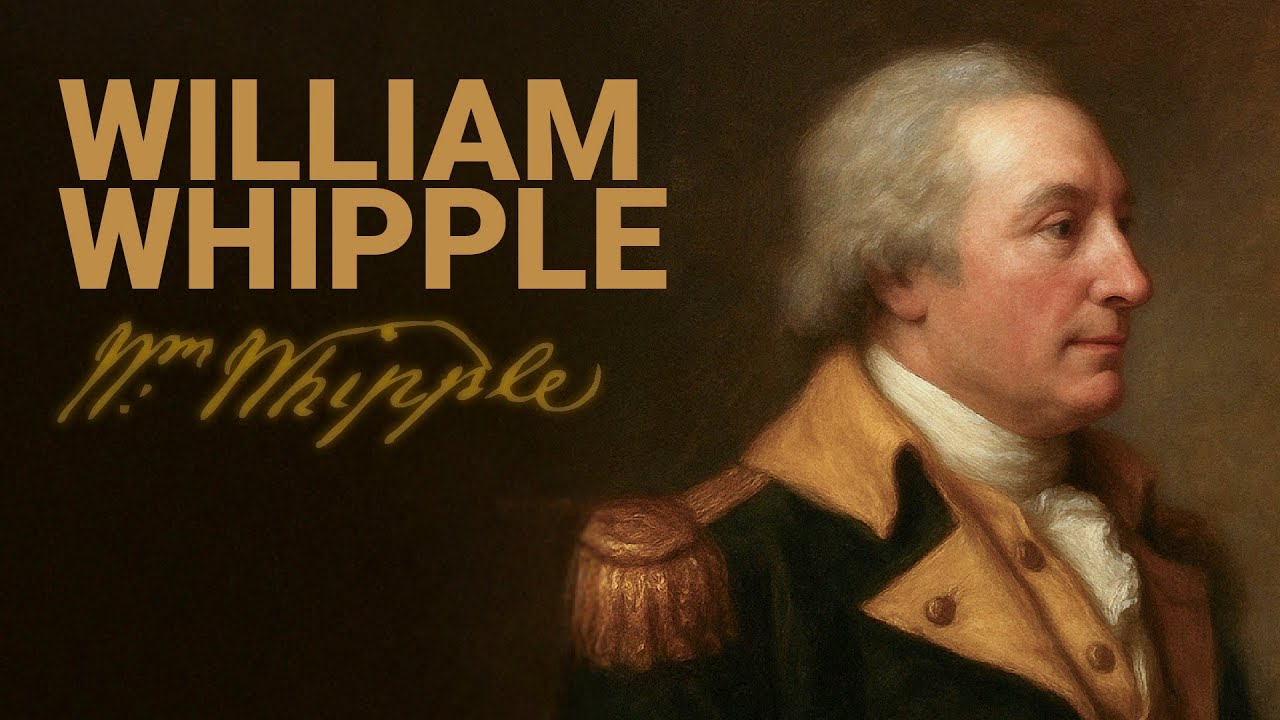
Overview
William Whipple Jr. (January 25, 1731 NS [January 14, 1730 OS] – November 28, 1785) was an American Founding Father and signatory of the United States Declaration of Independence. He represented New Hampshire as a member of the Continental Congress from 1776 through 1779. He worked as both a ship's captain and a merchant, and he studied in college to become a judge. He died of heart complications in 1785, aged 55.
Early life and education
Whipple was born in Kittery in Massachusetts Bay (now Maine) in the William Whipple House to Captain William Whipple Sr. and his wife Mary (née Cutt). He was educated at a common school until he went off to sea, where he became a ship's master at age 21. He married his first cousin Catherine Moffat in 1767, and they moved into the Moffatt-Ladd House on Market Street in Portsmouth in 1769. Their son William Whipple III died in infancy. Whipple was a descendant of Samuel Appleton, early settler in Ipswich, Massachusetts.
Whipple earned his fortune participating in the triangular trade between North America, the West Indies, and Africa, dealing in wood, rum, and enslaved people. He established himself as a merchant in Portsmouth in 1759, in partnership with his brother Joseph.
Political career
In 1775, New Hampshire dissolved the British Royal government and organized a House of Representatives and an Executive Council known collectively as a [[Provincial Congress]. Whipple was elected to represent Portsmouth. He became a member of the Committee of Safety. He was then elected to the Continental Congress and signed the United States Declaration of Independence. He was the second cousin of fellow signatory Stephen Hopkins. In January 1776, Whipple wrote to fellow signatory Josiah Bartlett of the approaching convention:
From Wikipedia (CC BY-SA 4.0).