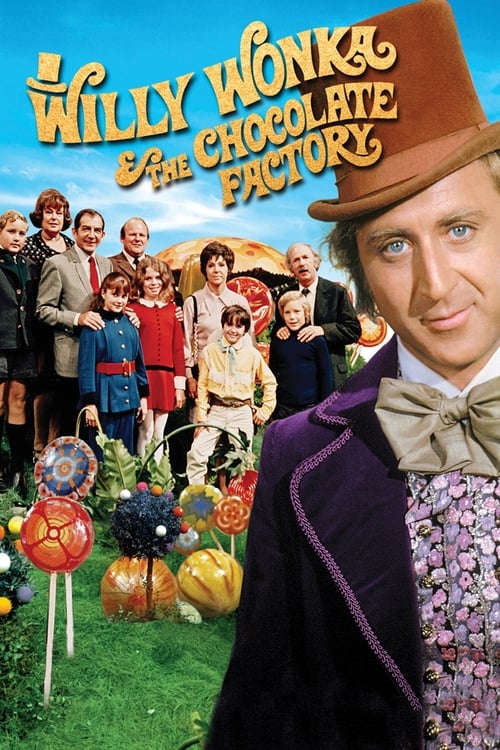


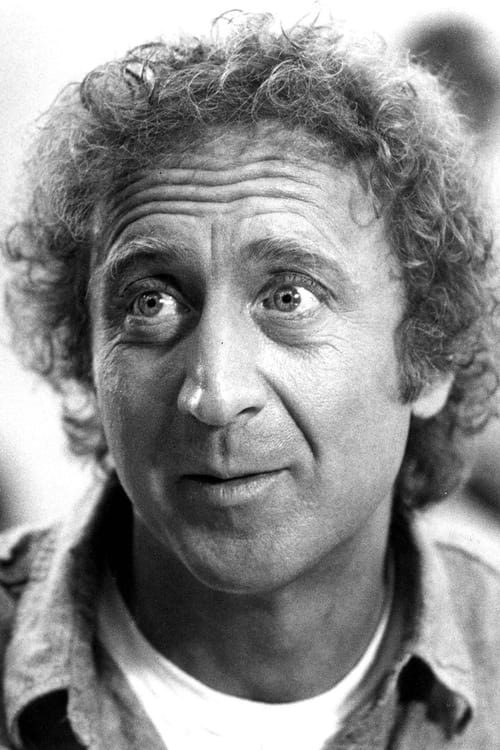
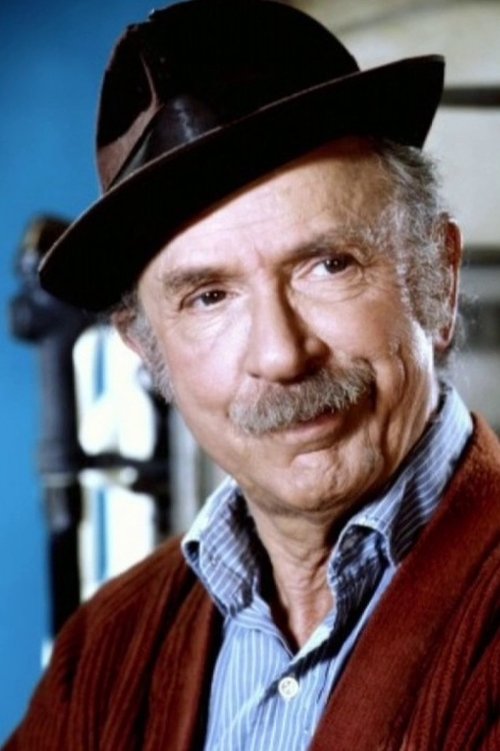








Willy Wonka & the Chocolate Factory is a 1971 American musical fantasy film directed by Mel Stuart from a screenplay by Roald Dahl, based on Dahl's 1964 novel Charlie and the Chocolate Factory. It stars Gene Wilder as chocolatier Willy Wonka. The film tells the story of a poor child named Charlie Bucket (Peter Ostrum) who, upon finding a Golden Ticket in a chocolate bar, wins the chance to visit Willy Wonka's chocolate factory along with four other children from around the world.
Filming took place in Munich from August to November 1970. Dahl was credited with writing the film's screenplay; however, David Seltzer was brought in to do an uncredited rewrite. Against Dahl's wishes, changes were made to the story, and other decisions made by the director led Dahl to disown the film. The musical numbers were written by Leslie Bricusse and Anthony Newley while Walter Scharf arranged and conducted the orchestral score.
Willy Wonka & the Chocolate Factory was released in the United States on June 30, 1971, by Paramount Pictures. While the film received positive reviews from critics, it was not a major financial success, earning just $4 million by the end of its original run. It received a nomination for Best Original Score at the 44th Academy Awards and Wilder was nominated for Best Performance in a Motion Picture – Comedy or Musical at the 29th Golden Globe Awards. The film also introduced the song "The Candy Man", which went on to be recorded by Sammy Davis Jr. and become a popular hit. Willy Wonka & the Chocolate Factory has since become highly popular through television airings and home video sales. In 2014, the film was selected for preservation in the United States National Film Registry by the Library of Congress, as being "culturally, historically, or aesthetically significant".
Contents
Plot
Charlie Bucket, a 12-year-old paperboy from a poor family, passes by Willy Wonka's chocolate factory in Charlie's town, where a tinker tells him that nobody ever enters or exits the building. Charlie's grandfather, Joe, reveals that Wonka shut down the factory some years earlier due to espionage from rival confectioners. Though production resumed three years later, the factory remained closed to the public and the identities of the new workers remain unknown.
The next day, it is globally announced that Wonka has hidden five Golden Tickets in Wonka Bars; the finders of the tickets will receive a private tour of the factory and a lifetime supply of chocolate. The first four tickets are found by the gluttonous West German Augustus Gloop, the spoiled Veruca Salt, the gum-loving Violet Beauregarde, and the television-loving Mike Teevee. A mysterious man is seen speaking to each child.
Then, someone in Paraguay claims to have found the last ticket, but the authorities discover that it was forged. On the day before the factory tour, Charlie finds money in a gutter and uses it to purchase a Wonka Bar, which contains the fifth Golden Ticket. On his way home, he encounters the man who spoke to the other winners. The man introduces himself as Arthur Slugworth, one of Wonka's rivals, and offers Charlie a large sum of money in exchange for a sample of Wonka's latest invention, the Everlasting Gobstopper. Arriving home with the Golden Ticket, Charlie asks Grandpa Joe to chaperone him to the factory.
The next day, Wonka greets the children and the 5 accompanied adults at the factory gates and leads them inside, passing "Slugworth" on the way, and once inside they are required to sign a contract. Inside, they meet the Oompa-Loompas, Wonka's workforce, and receive Everlasting Gobstoppers. All of the children except for Charlie have separate incidents disobeying Wonka's instructions and are expelled from the tour: Augustus is sucked up a pipe after falling into the Chocolate River, Violet is transformed into a giant blueberry from chewing experimental gum, Veruca falls down a garbage chute, and Mike is shrunken after misusing the Wonkavision teleporter. At one point, Charlie and Grandpa Joe sample Fizzy Lifting Drinks causing them to float dangerously close to a large fan but descend safely by burping.
When the tour is over, Wonka hastily dismisses Charlie and Grandpa Joe and retreats to his office. When Grandpa Joe asks Wonka about Charlie's promised lifetime supply of chocolate, Wonka tells them that they have forfeited it on the grounds that they violated the contract by stealing the Fizzy Lifting Drinks. Grandpa Joe wishes to give the Gobstopper to Slugworth out of spite, but Charlie returns it to Wonka. Wonka declares Charlie the winner of the contest and reveals that "Slugworth" was actually one of his employees, Mr. Wilkinson, and that the offer was a test of character for the kids. Wonka then invites Charlie and Grandpa Joe to fly over the town in the Wonkavator, a multi-directional glass elevator. Wonka then explains to Charlie that he created the contest to find an honest child to succeed him as the factory's owner after deciding to retire. Charlie, having fulfilled that, is given immediate ownership of the chocolate factory and his family, ending their poverty. Charlie embraces Wonka with a hug and tells Charlie to never forget what happened to the man who got everything he always wanted. Charlie asks what happened. Wonka replies "he lived happily ever after". With a big smile Wonka and Charlie embrace each other with another hug and Wonkavator disappears into the clouds.
Production
Development
The idea for adapting the Roald Dahl book Charlie and the Chocolate Factory into a film came about when director Mel Stuart's 10-year-old daughter read the book and asked her father to make a film out of it, with "Uncle Dave" (producer David L. Wolper, who was not related to the Stuarts) producing. Stuart showed the book to Wolper, who happened to be in the midst of talks with the Quaker Oats Company regarding a vehicle to introduce a new candy bar from its Chicago-based Breaker Confections subsidiary (subsequently renamed The Willy Wonka Candy Company and sold to Nestlé). Wolper persuaded the company, which had no previous experience in the film industry, to buy the rights to the book and finance the picture for the purpose of promoting a new Quaker Oats "Wonka Bar".
Wolper and Roald Dahl agreed that Dahl would also write the screenplay. Though credited for the film, Dahl had not delivered a completed screenplay at the start of production and only gave an outline pointing to sections of the book. Wolper called in David Seltzer for an uncredited rewrite after Dahl left over creative differences. Wolper promised to produce Seltzer's next film for his lack of a credit as they needed to maintain credibility by keeping Dahl's name attached to the production. Also uncredited were several short humorous scenes by screenwriter Robert Kaufman about the Golden Ticket hysteria. Changes to the story included Willy Wonka's character given more emphasis over Charlie Bucket; Arthur Slugworth, originally a minor character who was a Wonka industry rival in the book, reworked into a spy so that the film could have a villain for intrigue; the absence of Mr. Bucket; a belching scene added with Grandpa Joe and Charlie having "fizzy lifting drinks"; the walnut-shelling squirrels changed to golden-egg-laying geese; and the ending dialogue.
Seltzer also created a recurring theme that had Wonka quote from various literary sources, such as Arthur O'Shaughnessy's Ode, Oscar Wilde's The Importance of Being Earnest, Samuel Taylor Coleridge's The Rime of the Ancient Mariner and William Shakespeare's The Merchant of Venice. After completing the screenplay, Seltzer was exhausted and went on vacation to a remote cabin in Maine. However, while filming the final scene, Stuart was unhappy with the ending having Dahl's version of Grandpa Joe just exclaiming "Yippee!" The director tracked down the writer to the only phone in the area which was attached to a tree. By chance, Seltzer was passing and answered the call. Stuart told him to think up an ending quickly as the production was waiting at great expense. Seltzer could only recall the overused phrase to fairytale endings and therefore reworked Wonka's final line to Charlie: "Don't forget what happened to the man who suddenly got everything he always wanted? ... He lived happily ever after."
Casting
Before Wilder was officially cast as Willy Wonka, producers considered many actors. All six members of Monty Python (Graham Chapman, John Cleese, Eric Idle, Terry Gilliam, Terry Jones, and Michael Palin) expressed interest in playing Wonka, but at the time they were deemed not big enough names for an international audience. Spike Milligan was Roald Dahl's original choice. Peter Sellers reportedly begged Dahl for the role. Joel Grey was the front runner for the part but Stuart decided he was not physically imposing enough as the actor's height was five-foot-five. The producers learned that Fred Astaire wanted the part but the 72-year-old may have considered himself too old.
Actors were auditioned for the role of Willy Wonka in a suite at the Plaza Hotel in New York and by the end of the week Wilder had walked in. It was then Stuart and producer Wolper realised that they could stop looking. Wolper remarked, "The role fit him tighter than one of Jacques Cousteau's wetsuits." Stuart was captivated by Wilder's "humor in his eyes" and said, "His inflection was perfect. He had the sardonic, demonic edge that we were looking for." Wolper tried to suppress Stuart's eagerness for Wilder as he wanted to negotiate the salary. Regardless, Stuart ran out into the hall as Wilder was leaving and offered him the part of Wonka.
When Wilder was cast as Wonka, he accepted the role on one condition:When I make my first entrance, I'd like to come out of the door carrying a cane and then walk toward the crowd with a limp. After the crowd sees Willy Wonka is a cripple, they all whisper to themselves and then become deathly quiet. As I walk toward them, my cane sinks into one of the cobblestones I'm walking on and stands straight up, by itself; but I keep on walking, until I realize that I no longer have my cane. I start to fall forward, and just before I hit the ground, I do a beautiful forward somersault and bounce back up, to great applause. Stuart responded, "What do you want to do that for?" Wilder answered, "From that time on, no one will know if I'm lying or telling the truth." Wilder was adamant that he would decline the role otherwise.
Jean Stapleton turned down the role of Mrs. Teevee. Jim Backus was considered for the role of Sam Beauregarde. Sammy Davis Jr. wanted to play Bill, the owner of Bill's Candy Shop but Stuart did not like the idea because he felt that the presence of a big star in the candy store scene would break the reality; however, Davis turned Bill's signature song, "The Candy Man", into a big hit. Anthony Newley also wanted to play Bill but Stuart also dissuaded him for the same reason.
Filming
Principal photography commenced on August 31, 1970, and ended on November 19, 1970. After location scouting in Europe, including the Guinness brewery in Ireland and a real-life chocolate factory in Spain, production designer Harper Goff decided to house the factory sets and the massive Chocolate Room at Bavaria Studios. It was also significantly cheaper than filming in the United States, and the primary shooting locations in Munich, Bavaria, West Germany were conducive to the desired atmosphere for Wonka's factory. Stuart also liked the ambiguity and unfamiliarity of the location.
External shots of the factory were filmed at the gasworks of Stadtwerke München (Emmy-Noether-Straße 10); the entrance and side buildings still exist as of 2021. The exterior of Charlie Bucket's house, a set constructed solely for the film, was filmed at Quellenstraße in Munich. Charlie's school was filmed at Katholisches Pfarramt St. Sylvester, Biedersteiner Straße 1 in Munich. Bill's Candy Shop was filmed at Lilienstraße, Munich. The closing sequence, in which the Wonkavator is flying above the factory, is footage of Nördlingen, Bavaria and the elevator rising shot showing that it shoots out of the factory was from Bößeneckerstraße 4, 86720 Nördlingen, Germany, now the location of a CAP-Märkte.
The construction of the original Inventing Room was meant to be an industrial room with steel tubes. Stuart envisioned it differently as a wacky inventor's laboratory, with Rube Goldberg-type mechanisms and unusual contraptions and wanted it redesigned to be like Wonka's personality. Goff sent his construction crew into Munich searching junkyards, bakeries and car dealers for discarded machinery, tin funnels, and any other raw materials. This included building Wonka's three-course gum machine, which was originally a solid-state device but Stuart requested an appliance whose operations had a visual experience for the audience. Stuart also instructed Goff to have all the props, furniture and fittings, excluding the light bulbs, in Wonka's original office to be cut in half, to reflect the character's eccentricity. Stuart stated, "I couldn't face the thought of ending the journey through this fabulous factory in an ordinary-looking office."
About a third of the props in the Chocolate Room set were edible. Veruca Salt (Cole) had a chocolate watermelon; Mike Teevee (Themmen) had gum balls from a tree; Violet Beauregarde (Nickerson)'s "three-course gum" was actually a toffee-based candy and marzipan was freely available on set; also there were giant mushrooms filled with whipped cream, and the trees had edible leaves. The inedible items included giant gummy bears that were plastic (the ears were edible, however); the flavored wallpaper was not actually flavored; and Wonka's flower cup was made of wax which Wilder would chew on camera and spit out after each take.
Release
Theatrical
Willy Wonka & the Chocolate Factory was released by Paramount Pictures on June 30, 1971. The film was not a big success, eventually earning $4 million worldwide on a budget of $3 million, and was the 24th highest-grossing film of the year in North America.
For the promotion before its release, the film received advance publicity through TV commercials offering a "Willy Wonka candy factory kit" for sending $1.00 and two seals from boxes of Quaker cereals such as King Vitaman, Life and any of the Cap'n Crunch brands.
Television
The film made its television debut on Thanksgiving night, November 28, 1974, on NBC. The film was repeated the following year on November 23, 1975, on NBC. There was some controversy with the broadcast, as a football game between the Oakland Raiders and Washington Redskins went into overtime, and the first 40 minutes of the film were cut. The film placed 19th in the television ratings for the week ending November 23, beating out The Streets of San Francisco and Little House on the Prairie. The next television showing of the film was on May 2, 1976, when it placed 46th in the ratings. Some television listings indicate the showing was part of The Wonderful World of Disney time slot.
Home media
In December 1984, the film became available on VHS and Betamax in the United Kingdom and was released in the United States on VHS the same year.
In 1996, the film was released on LaserDisc as a "25th anniversary edition". Additional features included the original and reissue theatrical trailers and music minus vocals for "sing-alongs". Notes explain the letterboxed version as "presented in a "matted" widescreen format preserving the 1.85:1 aspect ratio of its original theatrical presentation. The black bars at the top and bottom of the screen are normal for this format". VHS copies were also available, but only containing the "standard" full screen version. The "standard" version is an open matte print, in which the mattes used to make the image "widescreen" are removed, revealing more picture at the top and bottom that was masked off from viewers.
In 1997, the film was first released on DVD in a "25th anniversary edition" as a double sided disc containing a "widescreen" and "standard" version. On August 28, 2001, a remastered special edition DVD was released, celebrating the film's 30th anniversary, but in "standard" full screen only. Because there was no "widescreen" release, fans' petitions eventually led Warner Home Video to issue a letterboxed version on November 13, 2001. Several original cast members reunited to film a "making-of" documentary titled Pure Imagination: The Story of 'Willy Wonka and the Chocolate Factory'. The two format editions featured restored sound and better picture quality. In addition to the Pure Imagination feature, the DVD included a trailer, a gallery and audio commentary by the cast. It was also released on VHS, with only one of the special features (the Pure Imagination documentary).
In 2007, Warner Home Video released the film on HD DVD with all the bonus features from the 2001 DVD. On October 20, 2009, the film was released on Blu-ray. It included all the bonus features from the 2001 DVD and 2007 HD DVD as well as a 38-page book. On November 1, 2011, a deluxe edition set was released for the film's 40th anniversary. The set included the film on Blu-ray and DVD, a bonus disc and a number of collectible items, including a Wonka Bar tin, four scented pencils, a scented eraser, a book about the making of the film, original production notes, and a "Golden Ticket" for the chance to win a trip to Los Angeles.
On June 29, 2021, a 4K Blu-ray was released by Warner Bros. Home Entertainment to coincide with the film's 50th anniversary. This edition restored the original Paramount logo at the beginning of the film. The film was also available to stream and download digitally in 4K high definition, including standard definition, on devices from various online video platforms.
Reception
Critical response
Roger Ebert gave the film four out of four stars, calling it:
Probably the best film of its sort since The Wizard of Oz. It is everything that family movies usually claim to be, but aren't: Delightful, funny, scary, exciting, and most of all, a genuine work of imagination. Willy Wonka is such a surely and wonderfully spun fantasy that it works on all kinds of minds, and it is fascinating because, like all classic fantasy, it is fascinated with itself.
Charles Champlin of the Los Angeles Times praised the film as "lively and enjoyable" and called Wilder's performance "a real star turn", but thought the songs were "instantly forgettable" and that the factory looked "a lot more literal and industrial and less empathic than it might have". Variety called the film "an okay family musical fantasy" that had "good" performances but lacked any tunes that were "especially rousing or memorable". Howard Thompson of The New York Times panned it as "tedious and stagy with little sparkle and precious little humor". Gene Siskel gave the film two stars out of four, writing, "Anticipation of what Wonka's factory is like is so well developed that its eventual appearance is a terrible letdown. Sure enough there is a chocolate river, but it looks too much like the Chicago River to be appealing. The quality of the color photography is flat. The other items in Wonka's factory—bubblegum trees and lollypop flowers—also look cheap. Nothing in the factory is appealing." Jan Dawson of The Monthly Film Bulletin wrote that after a slow start the second half of the film was "an unqualified delight—one of those rare, genuinely imaginative children's entertainments at which no adult need be embarrassed to be seen".
On review aggregator website Rotten Tomatoes, the film has an 84% approval rating and an average rating of 8/10 based on 124 reviews. The site's critical consensus states: "Whimsically inventive and imaginative, Willy Wonka & the Chocolate Factory serves up a scrumdiddlyumptious children's fantasy packed with memorable songs, droll satire, and a charmingly unpredictable Gene Wilder." Metacritic, which uses a weighted average, assigned the film a score of 67 out of 100, based on 10 critics, indicating "generally favorable" reviews.
Roald Dahl's reaction
Dahl disowned the film and was "infuriated" by the plot deviations and considered the music to be "saccharine, sappy and sentimental". He was also disappointed because the film "placed too much emphasis on Willy Wonka and not enough on Charlie" and because Wilder was cast as Wonka instead of Spike Milligan. In 1996, Dahl's second wife, Felicity, commented on her husband's objections toward film adaptations of his works, saying, "They always want to change a book's storyline. What makes Hollywood think children want the endings changed for a film, when they accept it in a book?"
Legacy
Willy Wonka & the Chocolate Factory remained in obscurity in the years immediately following its original release. When the distribution rights lapsed in 1977, Paramount declined to renew, considering it not viable. The rights defaulted back to the Quaker Oats Company, which was no longer involved in the film business, and therefore sold them to Warner Bros. for $500,000. Wolper engineered the rights sale to Warner Bros., where he became a corporate director after selling his production company to it the previous year.
By the 1980s, the film had experienced an increase in popularity due to repeated television broadcasts; it also gained cult status with a new audience in home video sales. In 1996, there was a 25th anniversary theatrical re-release which grossed the film a further $21 million. In 2003, Entertainment Weekly ranked it 25th in the "Top 50 Cult Movies" of all time. The tunnel scene during the boat ride has been cited as one of the scariest in a film for children, for its surreal visuals, and was ranked No. 74 on Bravo's The 100 Scariest Movie Moments. The scene has also been interpreted as a psychedelic trip, though director Stuart denied that was his intention.
In 2014, the film was selected for preservation in the United States National Film Registry by the Library of Congress as being "culturally, historically, or aesthetically significant".
Music
The original score and songs were composed by Leslie Bricusse and Anthony Newley, and musical direction was by Walter Scharf. The soundtrack was first released by Paramount Records in 1971.
Sammy Davis Jr. recorded the song "The Candy Man", which became his only number-one hit. It spent three weeks at the top of the Billboard Hot 100 chart starting June 10, 1972 and two weeks at the top of the easy-listening chart.
On October 8, 1996, Hip-O Records (in conjunction with MCA Records, which owned the Paramount catalog by then), released the soundtrack on CD as a 25th Anniversary Edition. In 2016, UMe and Geffen Records released a 45th Anniversary Edition LP.
In popular culture
Various comedy television series have referenced the film, mainly as a parody. They include Malcolm in the Middle, My Wife and Kids, the American version of The Office, Saturday Night Live and That '70s Show. Animated television series have also done parodies respectively, Dexter's Laboratory ("Golden Diskette" in 1997); The Simpsons (season 9's "Trash of the Titans" in 1998 and season 20's "Eeny Teeny Maya Moe" in 2009); Futurama (season 1's "Fry and the Slurm Factory" in 1999); Family Guy (season 2's "Wasted Talent" in 2000); Hi Hi Puffy AmiYumi ("Taffy Trouble" in 2004); South Park (season 11's "Le Petit Tourette" in 2007); Rick and Morty (season 3's "Tales from the Citadel" in 2017); and American Dad! (season 16's "Jeff and the Dank Ass Weed Factory" in 2019).
Marilyn Manson's 1995 music video for their song "Dope Hat" was influenced by the boat ride scene. In 2001, the music video of Alien Ant Farm's song "Movies" paid homage to various Hollywood films and included a scene in which the band members were dressed as Oompa-Loompas. In 2014, the American experimental rock band Primus released the album Primus & the Chocolate Factory with the Fungi Ensemble. The album features a re-imagined version of the film's soundtrack and songs.
In the 2010s, a still from the movie became a popular Internet meme known as Condescending Wonka. In 2017, in an episode of the TV series Pawn Stars a combination of the original Everlasting Gobstopper and Wonka Bar props sold for $105,000, and a 2017 animated adaptation of the film with Tom and Jerry was released as Tom and Jerry: Willy Wonka and the Chocolate Factory. In 2023, elements from the film, including the Oompa-Loompa design and the song "Pure Imagination", were used in the origin story film Wonka.