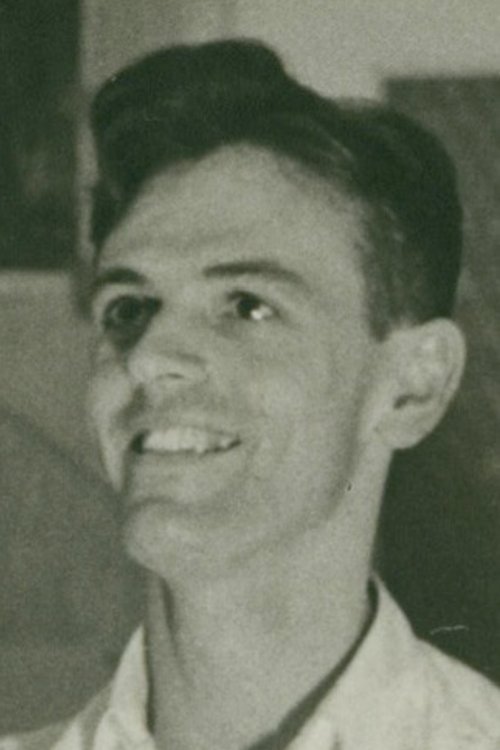
Wolfgang Reitherman (June 26, 1909 – May 22, 1985), also known and sometimes credited as Woolie Reitherman, was a German-American animator, director and producer. As a member of the "Nine Old Men" at Walt Disney Productions, Reitherman was known for his action-oriented animation.
Born in Munich, Reitherman relocated to the United States with his family. He attended Pasadena Junior College and briefly worked as a draftsman for Douglas Aircraft Company. Desiring a career in visual arts, Reitherman studied at the Chouinard Art Institute. On the advice of an art instructor, Reitherman applied as an animator for Walt Disney Productions. Reitherman animated on several Silly Symphonies cartoon shorts. He next animated the Slave in the Magic Mirror in Snow White and the Seven Dwarfs (1937), Monstro in Pinocchio (1940), and the climactic dinosaur fight in Igor Stravinsky's "Rite of Spring" segment of Fantasia (1940).
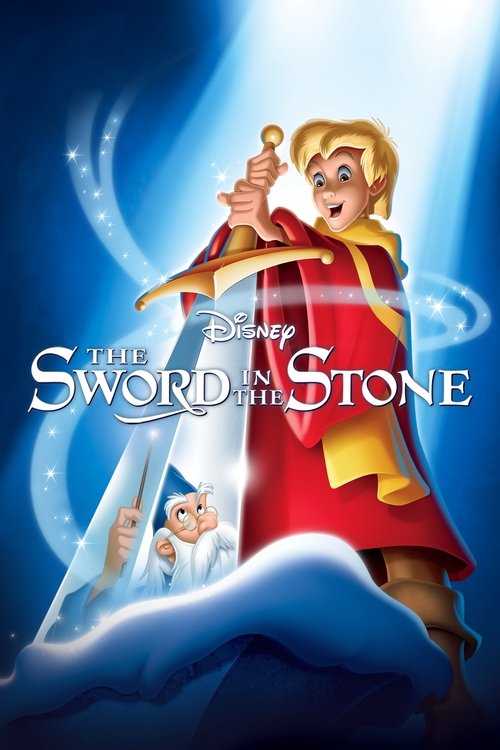
By 1941, the United States entered World War II, and Reitherman enlisted into the United States Army Air Forces (USAAF). While in service, he flew on several combat missions and was awarded the Distinguished Flying Cross. In 1947, Reitherman returned to the Disney studios as an animator, and within a few years, became a member of Disney's "Nine Old Men". He made his directorial debut with the 1957 short film The Truth About Mother Goose; within years, he became the first sole director for a Disney animated feature, beginning with The Sword in the Stone (1963).
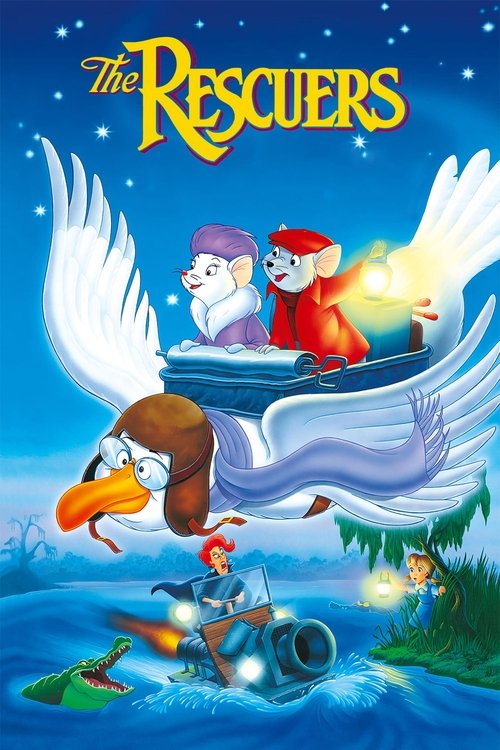
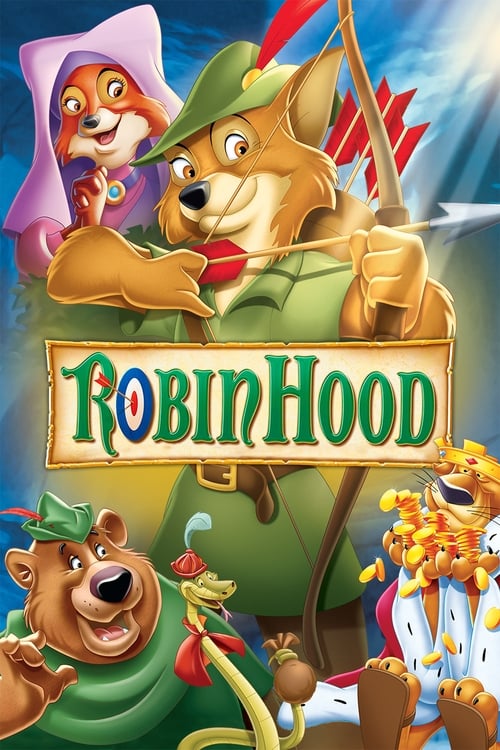
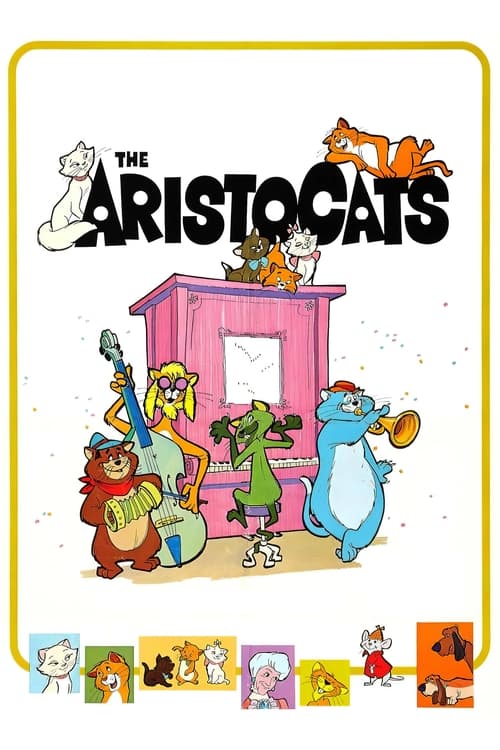
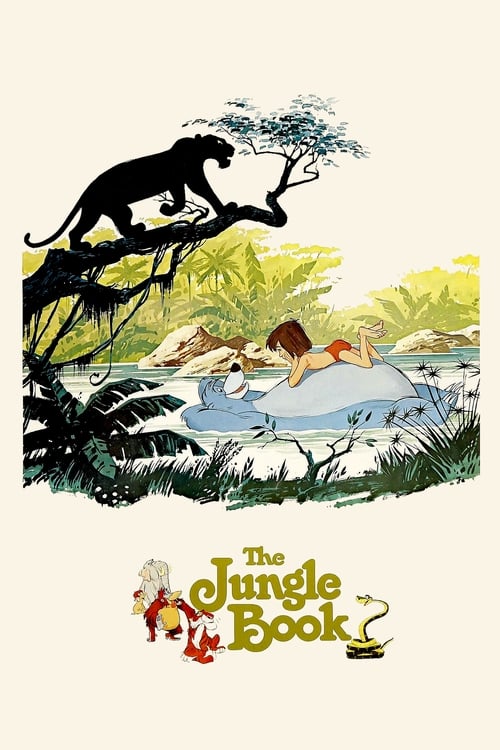
During production on The Jungle Book (1967), Walt Disney died, and Reitherman assumed the creative leadership, remaining as director and producer on several consecutive Disney animated feature films throughout the 1970s. Additionally, he directed the Winnie the Pooh featurettes: Winnie the Pooh and the Honey Tree (1966) and Winnie the Pooh and the Blustery Day (1968), which won the Academy Award for Best Animated Short Film.
By 1977, Reitherman had intended to direct The Fox and the Hound (1981), but he left the project after having creative differences with Art Stevens. After developing unproduced animation projects, Reitherman retired from Disney in 1981. In 1983, he was awarded the Winsor McCay Award, and in 1985, Reitherman died in a single-car accident. He was posthumously honored as a Disney Legend in 1989.
Contents
Early life
Wolfgang Reitherman was born on June 26, 1909, in Munich, German Empire to Philip Reitherman and Marie Keuhner. He was the last born of seven children. Philip and Marie had eloped and married in London and lived briefly in France, before returning to Munich. In 1911, owing to political unrest, the family relocated to the United States when he was a child, where they first settled in Kansas City, Missouri, where one of Philip's brothers had lived. At home, English was the preferred language, and as a result of his parents' assimilation, Wolfgang understood little German.
They next moved to Sierra Madre, California. As a young man, Reitherman had a passion for flying and aspired to become an aeronautical engineer; as a hobby, he drew cartoon gags. He attended Pasadena Junior College, but left to work as a draftsman for the Douglas Aircraft Company. By 1931, Reitherman had decided he would rather be an artist than an engineer, and soon enrolled into the Chouinard Art Institute.
Career
1933–1946: Animator and military service
While Reitherman was studying at Chouinard Art Institute, his paintings attracted the attention of Philip L. Dike, a drawing and painting instructor. Impressed with his artwork, Dike showed them to Disney, after which Reitherman was invited to the studio. He initially wanted to work as a watercolorist, but Walt Disney suggested he should be an animator. Reitherman was hired at Walt Disney Productions on May 21, 1933. His first project as an animator was the Silly Symphonies cartoon Funny Little Bunnies (1934). Reitherman worked on numerous animated shorts, including The Band Concert (1935), Music Land (1935), and Elmer Elephant (1936). He animated the Slave in the Magic Mirror in Snow White and the Seven Dwarfs (1937).
Reitherman's next assignments were animating Monstro in Pinocchio (1940) and the climactic dinosaur fight in Igor Stravinsky's "Rite of Spring" segment of Fantasia (1940). The night he had finished his animation, Reitherman attended a Christmas staff party and played a tape recording of Stravinsky's piece in reverse. He remembered, "anyway, there's a knock on the door, and someone goes over to answer it, and standing there is Walt ... with Igor Stravinsky. But, he [Stravinsky] was very nice. He said, 'Sounds good backwards, too.' and left."
Reitherman then followed up with animating several scenes of Timothy Q. Mouse in Dumbo (1941). In December 1941, Pearl Harbor was bombed, and Reitherman, at the age of 32, enlisted into the United States Army Air Forces (USAAF) as a pilot. While in service, he participated in the Air Transport Command in Africa, China, India, and the Philippines. Reitherman remembered living in China at one point, stating, "I was flying all the time, so I wasn't there all that time. A wonderful country. Wonderful people." He was honorably discharged in February 1946, having earned the military rank of Major. After several years of service, Reitherman was awarded the Distinguished Flying Cross and the Air Medal with one bronze oak leaf cluster.
1947–1955: Return to Disney
Reitherman rejoined the Disney studios in April 1947, where he animated the Headless Horseman chase sequence in The Legend of Sleepy Hollow section of The Adventures of Ichabod and Mr. Toad (1949), alongside John Sibley. Around this time, Reitherman claimed he was instrumental in helping Walt Disney commit to producing Cinderella (1950) as an animated film. After he had glanced at some storyboards, Reitherman recalled, "I just went in his office, which I rarely did, and I said, 'Gee, that looks great. We ought to do it.' It might have been a little nudge to say, 'Hey, let's get going again and let's do a feature'."
On Cinderella, Reitherman was the directing animator of the sequence in which Jaq and Gus laboriously push and pull the key up the stairs to Cinderella. By this point, Disney began devoting less time and energy into animation, as he sought to expand into developing an amusement theme park and television projects. Nine veteran animators—Les Clark, Marc Davis, Ollie Johnston, Milt Kahl, Ward Kimball, Eric Larson, John Lounsbery, Reitherman, and Frank Thomas—began to consolidate and were known as the "Nine Old Men", in reference to U.S. President Franklin D. Roosevelt's denigration of the Supreme Court. As it became harder to get Disney to attend story meetings, animation responsibilities was increasingly left to their creative judgment.
On Alice in Wonderland (1951), Reitherman animated the scene in which the White Rabbit's home is destroyed by an enlarged Alice. On Peter Pan (1953), he animated the scene of Captain Hook attempting to escape the crocodile. For Lady and the Tramp (1955), Reitherman animated the alley dog fight sequence and Tramp's fight with the rat in the nursery room. Animation historian Charles Solomon praised the alley sequence, writing, it is "a textbook example of a Reitherman fight scene: Tramp defeats a pack of vicious mongrels to save Lady, helpless in her muzzle." Reitherman also appeared as himself in a Disneyland episode "A Story of Dogs", reenacting a production meeting about the alley dog fight sequence, which aired on December 1, 1954.
1955–1977: Directing career
In 1957, Reitherman made his directorial debut with the short film The Truth About Mother Goose, which was nominated for the Academy Award for Best Animated Short Film, but it lost to the Merrie Melodies cartoon Birds Anonymous. He later joined the production team working on Sleeping Beauty (1959). Reitherman's colleague Eric Larson had been the film's sole director until he was removed from the project by 1957. Clyde Geronimi became the film's new supervising director. Reitherman joined the project as a sequence director for Prince Phillip's climactic fight against Maleficent as a dragon. Years later, in 1981, Reitherman told the Los Angeles Times: "We took the approach that we were going to kill that damned prince!" Released in 1959, Sleeping Beauty underperformed at the box office and earned mixed reviews from film critics. Bosley Crowther, in his New York Times review, warned the dragon fight sequence "will make a few adults groan. Mr. Disney here reaches the apex of his build-up of animated horror." The fight sequence has since been praised as among the finest in Disney animation.
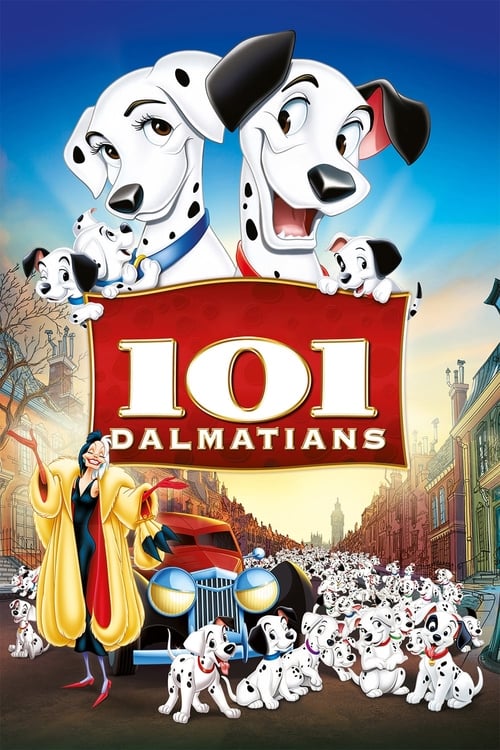
Reitherman next directed the 1960 short film Goliath II, which has the distinction of being the first Disney animation project to fully use the Xerox process by transferring the animators' drawings directly onto transparent cels. Simultaneously, Reitherman directed the "Twilight Bark" sequence for One Hundred and One Dalmatians (1961), serving as a sequence director alongside Geronimi and Hamilton Luske. That same year, he solely directed a Goofy cartoon short, Aquamania (1961).
The Sword in the Stone had been a film project Walt Disney first acquired in 1939, following the success of Snow White and the Seven Dwarfs. It had been long delayed in development for over two decades. With a new policy in place, it was decided that one feature-length animated film would be released within three or four years with an occasional special project. An attempt to adapt the medieval fable Chanticleer and the Fox had been rejected in favor of The Sword in the Stone. Contemporary studio publicity materials reported that Reitherman was the first sole director over a Disney animated feature, which was in direct contrast to having multiple directors over an animated feature. However, further research has disproven this, as David Hand had been a supervising director.
Animator Ward Kimball claimed Reitherman was selected due to his work compatibility and willingness to accept any project "with a smile". Animator Bob Carlson quoted Disney as stating, "Whenever I want to know what the public thinks about a film I'm making, I ask Woolie, because in a way he's the All-American boy." The animation staff was further streamlined with one director (Reitherman), one art director (Ken Anderson), one story director (Bill Peet), and four supervising animators (Ollie Johnston, Milt Kahl, John Lounsbery, Frank Thomas).
1977–1984: The Fox and the Hound, unproduced projects, and retirement
Following The Rescuers, Reitherman was initially slated to direct The Fox and the Hound (1981). A loose adaptation of the 1967 novel by Daniel P. Mannix, the film tells of the friendship between Tod, a red fox, and Copper, a bloodhound dog, who become natural enemies as they mature as adults. Reitherman had read the original novel and placed the adaptation into active production, as one of his sons had once owned a pet fox years prior. Frank Thomas and Ollie Johnston, the last two remaining "Nine Old Men" animators, contributed animation to the film before retiring to publish their 1981 joint book Disney Animation: The Illusion of Life. During production, Reitherman was assisted by Art Stevens, the film's co-director. However, Reitherman largely shut out Stevens from the creative responsibilities.
The animators were divided into two factions, some of whom supported Reitherman while another supported Stevens. Looking to retool the film's second half, Reitherman decided to add a goofy musical sequence of two swooping cranes, with the voices of Phil Harris and Charo, who would cheer up Tod after he was dropped off at the game reserve. Stevens complained about the sequence feeling out of place, and it was eventually removed. Stevens further complained to Ron Miller, which resulted in Miller telling Reitherman: "You're over 70 years old, back off and leave it to the young guys." Reitherman decided to step down as director and remain on as co-producer. Ted Berman and Richard Rich joined The Fox and the Hound as the new co-directors.
Shortly after, Reitherman began developing a film adaptation of Catfish Bend, based on the book series by Ben Lucien Burman. In 1980, the Los Angeles Times reported that Reitherman and artist Mel Shaw were developing Musicana, a follow-up anthology project to Fantasia (1940). That same year, Reitherman developed an adaptation of the children's novel The Little Broomstick by Mary Stewart, but it was perceived as being too similar to Bedknobs and Broomsticks (1971). Further development was discontinued due to The Black Cauldron (1985) advancing into production.
In 1981, after The Fox and the Hound had been released, Reitherman told the Los Angeles Times he had retired from Disney: "They asked me not to say I quit. It made it sound like I was mad. The studio has been good to me. And I'm awfully happy to have been part of it." In 1983, he was awarded the Winsor McCay Award.
Personal life and death
In 1946, while Reitherman was piloting for the Far East Air Transport, he met Janie Marie McMillan, who was serving as the chief air stewardess. After World War II ended, Reitherman received an honorable discharge in February 1946. Three months after meeting her, Reitherman married McMillan on November 26, 1946, in Manila.
All three of Reitherman's sons—Bruce, Richard and Robert—provided voices for Disney characters, including Mowgli in The Jungle Book, Christopher Robin in Winnie the Pooh and the Honey Tree, and Wart in The Sword in the Stone. In 1971, Janie started her own travel agency in Burbank, which ran for more than two decades and specialized in trips to Asia. With an office staff of five, Reitherman occasionally assisted in the agency.
On May 22, 1985, Reitherman and his wife were planning a three-week vacation to Maui. Two blocks away from his Burbank, California residence, Reitherman apparently suffered cardiac arrest while driving from a bank, and his vehicle veered to the right and struck a tree. He was rushed to the nearby St. Joseph Medical Center and pronounced dead from injuries related to the single-car accident, at the age of 75. He was posthumously named a Disney Legend in 1989.