Shaft
In 1995, Shaft managing director Mitsutoshi Kubota asked Shinbo to direct episodes to the studio's first original television work, Juuni Senshi Bakuretsu Eto Ranger, but was unable to due to conflicts with his schedule. Although unable to participate in Eto Ranger, Shaft was later gross outsourced to for an episode of Shinbo's The SoulTaker. Later, in 2004, Shaft's first president and studio founder Hiroshi Wakao retired from his position, and Kubota succeeded him as president. According to Shinbo, Nippon Victor producer Hiroyuki Birukawa, whom Shinbo worked with on Metal Fighter Miku, approached him with the idea of directing an adaptation of Tsukuyomi: Moon Phase, but did not have an animation studio in mind. Shinbo liked the studio's work on The SoulTaker, so he recommended Shaft and attempted to get a hold of Kubota through the studio's phone line, but was given the answering machine on several occasions. Kubota eventually heard about the offer and accepted it, citing the answering machine issue as comically bad timing due to the staff always being out when Shinbo called. Kubota, now the studio's president, wanted to transform Shaft into a studio with recognizable characteristics and visual flair that made its productions distinct from the works of others in the industry; and Shinbo, whom Kubota had seen several works of (in specific Starship Girl Yamamoto Yohko, The SoulTaker, and Le Portrait de Petit Cossette), was a director capable of leading that transformation.
Shinbo chief directed Tsukuyomi: Moon Phase (assisted by Toshimasa Suzuki) that year. He believed he shouldn't add much of his signature style to the series due to the change in genre from his previous works, and that he should instead focus on "making things properly", but was asked by the series' sponsors to add some of his aesthetics anyway. The series, which Shinbo described as "moe", was challenging due to the fact that he didn't understand "moe" at the time, so he took great care in receiving help from staff members more experienced with the aesthetics of moe. In particular, previous collaborator Shin Oonuma was invited to Shaft by Shinbo due to the former's ability to utilize digital technology, and the fact that his fondness of "gal games" and "moe anime" ultimately helped Shinbo with the series' aesthetics of "moe." Kubota knew that Shinbo had worked several times with scriptwriter Mayori Sekijima, and so they asked him to take on the role of series composition writer. Shinbo also wanted the visual aspect of the series to have a solid foundation, and he specifically wanted someone with strong art setting (美術設定) sensibilities to do the work; however, he didn't want someone from a background art studio to take on the role (which was common), and instead wanted an associate of Shaft to handle the work. Kubota suggested Nobuyuki Takeuchi (who worked with Shaft often) to act as the "visual director." A few of the directing staff for Shaft's projects for the next several years also worked on the project to some degree, including the aforementioned Takeuchi and Oonuma; and also Tatsuya Oishi and Ryouki Kamitsubo. Oishi previously worked with Shaft as an animator on several works, as well as with Shinbo on an episode of Yu Yu Hakusho, so his connections with both converged into his work as an episode director on Tsukuyomi, which was a new experience for him. Shinbo attributed Tsukuyomi as the foundation for his experimentalism with Shaft, and that without the work's out-of-the-ordinary approach, it would not have been possible to collaborate with other like-minded people; and it was because of that approach that they gained recognition, thus allowing for such creators to come together.
The earlier Magical Girl Lyrical Nanoha series also served as the vessel for the eventual collaboration between Shinbo and animator Kazuhiro Oota. Oota, who was a fan of Shinbo's prior works (Tenamonya Voyagers, Starship Girl Yamamoto Yohko, and The SoulTaker), was given the opportunity to act as animation director for two of Nanoha's outsourced episodes (episode 4 and 7). He later found out that Shinbo was directing Tsukuyomi at the same time as Nanoha, and watched the first episode, which he though was closer to Shinbo's style than Nanoha. He also found out that an acquaintance of his worked at Shaft, and got their phone number to join the Tsukuyomi team and Shaft. At that point, Shinbo was already aware of Oota and praised his work on Nanoha as being some of the best outsourced episodes he had seen while working on TV anime, and was surprised that Oota wanted to join Shaft to work on Tsukuyomi with him. For his work on Tsukuyomi, Shinbo chose Oota to be the character designer of his next work at Shaft.
In 2005, Shinbo and Oonuma worked together as series co-directors for the first time on Pani Poni Dash!, and Oota designed the characters. Shinbo wanted to expand on the visual cross-cutting (in which buildings are spliced on the camera as if it was a stage production) techniques Nobuyuki Takeuchi used in Tsukuyomi while also expanding on other experimentalist ideas from the series. He also wanted the staff members to showcase their own abilities while keeping consistent direction, a philosophy he compared to Time Bokan (1975). Another idea for the team came from eyecatches, which weren't new to either Shaft or Shinbo, but the concept of using eyecatches consistently arose when the planners from King Records asked the staff to include the character Behoimi in every episode, but because she did not show up often early on in the story, it was decided that they would compromise by putting her in the eyecatches. Shinbo attributed part of Pani Poni Dash!'s success to King Records producer Atsushi Moriyama and TV Tokyo manager Fukashi Azuma, who fought for Shaft's ability to use certain references and parodies, thus giving the team a higher degree of overall freedom.
Between 2006 and 2009, Shinbo directed several more television series and OVAs with various in-house and freelance directors. In 2006: Negima!? with Oonuma; in 2007: Hidamari Sketch with Ryouki Kamitsubo, Sayonara, Zetsubou-Sensei (assisted by Naoyuki Tatsuwa), as well as serving as a supervisor on Oonuma's own series Ef: A Tale of Memories and its sequel Ef: A Tale of Melodies; in 2008: (Zoku) Sayonara, Zetsubou-Sensei and its sequel (Zan) Sayonara, Zetsubou-Sensei with Yukihiro Miyamoto (again assisted by Tatsuwa), and Hidamari Sketch x 365 (assisted by production director Tatsuya Oishi); and in 2009: Maria Holic with Miyamoto; as well as Natsu no Arashi! with Oonuma, and its sequel Natsu no Arashi! Akinai-chū with Oonuma and Kenichi Ishikura. Between 2008 and 2010, the studio also produced a series of Negima! Magister Negi Magi OVAs with several guest directors working under Shinbo including Miyamoto, Tomoyuki Itamura, Hiroaki Tomita, Kōbun Shizuno, Tomokazu Tokoro, and Tatsufumi Itō, and a series of Sayonara, Zetsubou-Sensei OVAs directed by Shinbo and Miyamoto (assisted by Tatsuwa as well).
When he received the offer to direct the adaptation of Ume Aoki's Hidamari Sketch, Shinbo was initially worried that the viewer would change the channel if it was too boring as a slice of life work. However, he had seen Aria the Animation, which was a story that lacked a particularly singular narrative or any conflict, which surprised him due to its success. Knowing Aria's success, he was convinced not to overdo himself on Hidamari Sketch, but he also found himself conflicted on whether or not he should use experimental visual elements like live-action photography and manga-like backgrounds. Aoki thought that Shinbo's visual experimentation with Hidamari Sketch was balanced by the stability of the show's structure and his comprehension of the characters, and felt that he truly understood her work. Character designer Yoshiaki Itou and Oishi (who served as production designer in the second season) were in charge of the series' general art design of the series, and Shinbo's orders consisted of each of the girl's rooms shown only at selective angles with few "cameras". The show also exclusively featured mostly women as the series scriptwriters and composition writers, as Shinbo thought that the words men and women would use in depicting everyday life would be different. Even though many of the scenes and conversations lacked punchlines, he and the writers thought that it would be okay as long the characters were having fun, and Shinbo imagined the series as being like a conversational drama similar to Yappari Neko ga Suki. The series was also Shinbo and art director Hisaharu Iijima's first time working together since Le Portrait de Petit Cossette. Iijima was no longer employed by Studio Easter and had started his own company, Ryuubidou, which Shinbo found the website for decided to ask him to work on the show.
For Sayonara, Zetsubou-Sensei, Shinbo wanted to make something unique but in line with the manga. He told Oishi, who was in charge of the opening, to not make something too offensive; and he decided to work with Tatsuwa as the assistant director and Hiroki Yamamura from Studio Pastoral as the chief animation director alongside character designer Hideyuki Morioka. Tatsuwa and Yamamura were both fans of the source material's author, Kōji Kumeta, and Shinbo believed that they could help him to understand the parts that he didn't get. Shinbo also thought that Yamamura's drawings tended to appeal to women which he wanted in order to appeal to a broader audience.
Ef: A Tale of Memories and its sequel series Ef: A Tale of Melodies were the first (and only) series produced at Shaft that involved Shinbo outside of a directing role for the next 13 years. Oonuma was instead granted complete freedom as director of the project, a first in his career; and Shinbo instead oversaw certain aspects of the production as supervisor and gave advice to Oonuma. According to Oonuma, Shinbo generally helped oversee some of the screenplay and storyboards; but the most significant contribution in his opinion was storyboarding the second episode, which let Oonuma understand Shinbo's ideas more directly than words could describe. The end of the episode features a sequence in which one of the heroines, Shindo, is revealed to have a memory disorder. The storyboards did not advise on the direction of the scene, and during the editing stage, Shinbo advised that the direction correlate with that theme, and so Oonuma used heavy cutting through various flashback sequences. Oonuma considered the sequence to be broadly influential to his future directorial projects.
A second season of Hidamari Sketch with the title Hidamari Sketch x 365 was produced the year after, with Tatsuya Oishi taking on the role of production director following Kamitsubo's leave as chief director. Oishi was already involved with the first season as an episode director, storyboard artist, and one of the art designers, and Shinbo wanted Oishi to have more input in the second series, so he became involved as the "production director" and had a hand in checking episodes that he wasn't otherwise involved in.
Although the two had never worked together before, Natsu no Arashi! manga author Jin Kobayashi attended Shinbo's drinking and book reading sessions, where they would read other works. Eventually, it was decided that Shaft, Shinbo, and Oonuma would make an adaptation of Kobayashi's manga. Shinbo felt that one of the most particular aspects of the series was its portrayal of summer (thus, "natsu" in the title), so he asked Oonuma to come up with a way of emphasizing the summer heat. After he discussed with the art team, Oonuma decided that the shading and lit areas by the sun would have substantially different contrasts in order to bring out a feeling of harsh heat from the sunlight. Shinbo himself contributed to the look of the lighting itself, which takes the form of linear and geometric shapes, a style that art director Yuuji Ikeda influenced him with when they worked together on Marude Dameo. Although he had used such a style in previous works, Natsu no Arashi! was the first time it was implemented in the foundation of one.
For Maria Holic, the team made the conscious decision of directing the series using some of the techniques and aesthetics headed by Dezaki, such as his "three pan" (三回パン) shots technique, which show the subject three times for dramatic effect; and the aesthetics of shōjo manga, like Aim for the Ace! and The Rose of Versailles (which had adaptations by Dezaki). Tatsuwa was brought on board as the assistant director and he was mainly given responsibility of overseeing the production site as well as checking layouts and other miscellaneous jobs; while Miyamoto was responsible for managing the processing during production. Shinbo suggested early on in pre-production that the screenwriters should add more monologues than what the original manga contained, which posed a problem as the runtime for episodes would often go over the limit. Minari Endou, the original author, joked that most authors would ask whether certain parts could be kept or added rather than suggesting where to make cuts to fit the runtime as was in her case.
In April 2008, an anime adaptation of Nisio Isin's novel Bakemonogatari was announced. Shinbo was originally the only director, but he requested that Tatsuya Oishi work with him as series director. Previous Shinbo collaborator Akio Watanabe was also brought onto the project as character designer and chief animation director, as well as art director Hisaharu Iijima. According to Watanabe, he was originally not asked to draw designs for Bakemonogatari, but instead for an adaptation Shaft was planning for the Zaregoto series. He had received the call from Mitsutoshi Kubota for the work, but was called sometime later to say that they had changed their mind and would adapt Bakemonogatari instead (though Shaft, Shinbo, and Watanabe later worked on Zaregoto as well). Several episodes were notably storyboarded and directed by members outside of Shaft's usual connections, one of whom was episode 10's storyboard artist Ei Aoki. Iwakami introduced Shinbo to the first The Garden of Sinners film, which Aoki directed, and he liked it and requested Aoki storyboard an episode of Bakemonogatari.
Shinbo initially thought that adapting such a work, in which characters speak for a large portion of the runtime, would be difficult. Pondering this, he thought about Isao Takahata's 1979 anime series Anne of Green Gables and its portrayal of mundane and daily life, much of which also consisted of a lot of dialogue. From there, he believed that if he presented Monogatari in a similar way, it would avoid getting tired of it. He had also chosen Tatsuya Oishi to act as series director due to the latter's stylistic affinity for interesting colors and his ability to use cool lettering and Kanji in the animated medium, which he thought were beneficial in adapting such a unique novel series. He wanted to keep the dialogue more-or-less the same, despite the amount of dialogue in the work, which would be interesting as an anime; though, this philosophy in making the work proved to be somewhat problematic, as Aniplex producer Atsuhiro Iwakami planned the series as a 13-episode work. Enough content existed in the original novel to add another episode in the Suruga Monkey and Mayoi Snail arcs that would be otherwise cut following Iwakami's 13-episode plan. Despite the episode limit, Shinbo was adamant that the anime wouldn't truly be Bakemonogatari without the inclusion of Koyomi and Mayoi's banter and dialogue in the Mayoi Snail arc, for example. The total episode count was then increased to 15, but a separate problem of TV airing came into question: how would the team air 15-episodes in a television slot that only had room for the original 13? To Shinbo's fortune, the 12th episode of the series was the date between Koyomi and Hitagi, which he wanted to dedicate the entire episode to anyway; and in doing so, the rest of the Tsubasa Cat arc was moved to an online release in 2010, and only 12 episodes were broadcast on TV in 2009.
Bakemonogatari received cult fame and was widely praised for its aesthetics upon its initial release, and is regarded by some critics as the series that pushed Shaft "into fame", with writers from Funimation describing it as a "hit." Whereas most of the studio's works prior to Bakemonogatatari are described as being closer to comedies (such as the Hidamari Sketch franchise, Pani Poni Dash!, and Tsukuyomi: Moon Phase), the series was described as darker in nature. Stylistically, Bakemonogatari is praised considered to be a "visually striking" production by various critics, and in 2017, the Tokyo Anime Award Festival selected Bakemonogatari as the best anime of 2009. The series was also an immediate financial success, as indicated by the 6th Blu-ray (BD) release breaking records for the number of copies sold on its first day.
In 2010, Shinbo directed Arakawa Under the Bridge and its sequel Arakawa Under the Bridge x Bridge with Miyamoto. Although a comedy series, he and sound director Youta Tsuruoka intended for the series to have a "mature" feeling, which included choosing sound effects not always representational of the series' comedy and insisting to composer Masaru Yokoyama to keep the feeling of the song "Memphis Underground" by Herbie Mann in mind. Although a romantic comedy, the two felt that it required less "childishness" in its presentation. Tsuruoka believed the experience of also being the sound director for Bakemonogatari helped with his work on Arakawa, as both series utilize few setting changes (with Arakawa primarily being set on a riverbank and Monogatari featuring many long scenes set in singular rooms) and Shinbo often using short cuts of animation in both. Shinbo and writer Deko Akao also reorganized parts of the manga to fit the anime medium while paying close attention not to inconsistently portray the characters and their relationships, and the two also received permission from the original author, Hikaru Nakamura, to add lines of dialogue to characters who are otherwise silent in the manga.
Shinbo expressed desire to produce another magical girl series in various casual conversations because he thought there were improvements to be made in his portrayal of the genre from Magical Girl Lyrical Nanoha. Atsuhiro Iwakami heard about Shinbo wanting to produce a magical girl series around Bakemonogatari's production, which spawned the initial development of Puella Magi Madoka Magica. Iwakami decided early on that they would produce an original project to give Shinbo more freedom in his directing, and to develop an anime that could appeal to a wider audience than the usual demographic that the magical girl genre was aimed towards, intending for the series to be accessible to "the general anime fan." Gen Urobuchi and Ume Aoki were suggested by Iwakami to work on the project as the screenwriter and original character designer, respectively, and the four (Shinbo, Urobuchi, Aoki, and Shaft) collectively created the series as the "Magica Quartet", with the first meeting between the core staff held in October of 2008. The team agreed that the work would have a copious amount of blood and a "heavy" storyline that was unique in comparison to other magical girl series. Urobuchi's tentative title while working on the project was Magical Girl Apocalypse Madoka Magica (魔法少女黙示録 まどかマギカ), and the staff got used to calling it simply "Madoka Magica" while working on it. Eventually, the working title was proposed as the actual title, with the "Magical Girl Apocalypse" part dropped, but Shinbo was adamant about retaining "magical girl" as part of the title. Yukihiro Miyamoto was put on the project as series director alongside Shinbo 3 to 4 months before the series was aired, and animation troupe Gekidan Inu Curry, old classmates of Miyamoto's who were working on Sayonara, Zetsubou-Sensei, were brought on to design the "Alternate Space" world. Shinbo didn't have an idea for who would compose the series' music, but Iwakami suggested Cossette composer Yuki Kajiura; and after listening to a sample she provided, Shinbo believed she was a perfect match for the series.
Urobuchi was initially reluctant as he didn't know how to write about magical girls, and had never thought about it, so he did research by watching Shinbo's previous magical girl work Magical Girl Lyrical Nanoha. He also watched Hidamari Sketch, directed by Shinbo and based on original character designer Aoki's manga, to try and grasp what kind of characters to write. One of the themes he noted was the theme of "friendship", but was still uncertain as to how to write Madoka Magica. Afterwards, he saw Shinbo's gothic OVA Le Portrait de Petite Cossette and decided that he wanted to mix the "disturbing" and "mysterious" atmosphere of Cossette with Aoki's cute characters. With Gekidan Inu Curry's help, he believed that the two series were successfully linked together. Shinbo attributed his success with the series to the culmination of projects that he had been involved with up until that point, especially with Shaft. One particular series was Oonuma's Ef series which—although not involved with as a director, but rather as a supervisor—he described as exemplifying the idea that beautiful or cutely-drawn characters can be mixed with a story featuring heavy themes.
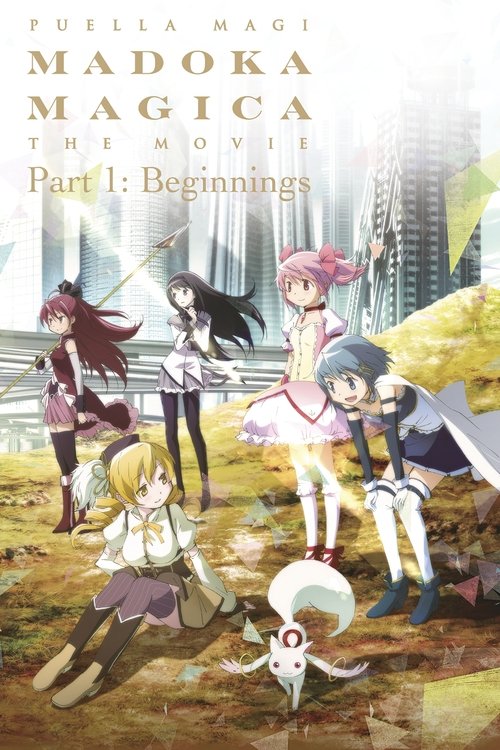
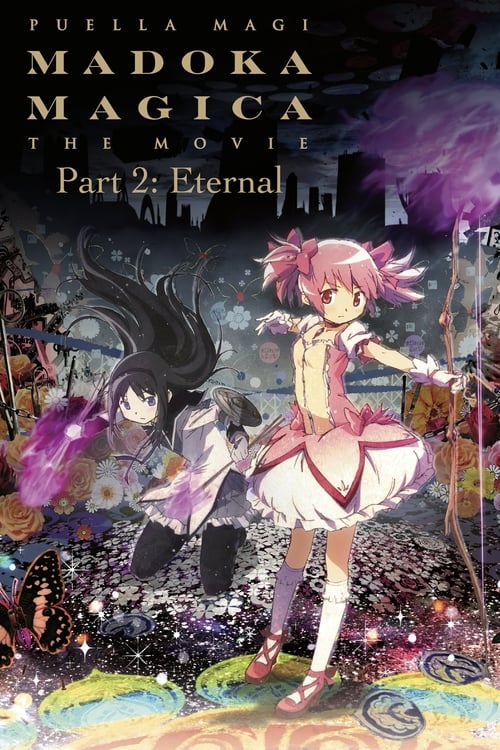
Released in 2011 to critical acclaim, Madoka Magica has been cited by several critics as one of the greatest anime series of the 2010s, and one of the greatest anime series of all time. Shinbo won the best director awards at the 11th Tokyo Anime Award, and the 2011 Newtype Anime Award for his work on Madoka Magica. In 2017, Shinbo was also chosen by Japanese critics as one of the greatest anime directors of all time for his work on Madoka Magica. The series was also a financial success and broke the record for the number of BD volumes sold on the first day (a record previously held by Shinbo's Bakemonogatari) with its 1st BD release, which the series broke again with the following release, and ultimately garnered over ¥40 billion ($400 million) from the sales of related goods by 2013. Retrospectively, anime director Tatsuyuki Nagai considered Madoka to be the culmination of Shinbo's directing works throughout the years, especially in regard to Nanoha and Hidamari, which he believed were essential to its success. The success of the series allowed for it to become a larger franchise, and the following two years a trilogy film series consisting of two recap films with updated animation and a third sequel film, with Shinbo chief directing and Miyamoto directing.
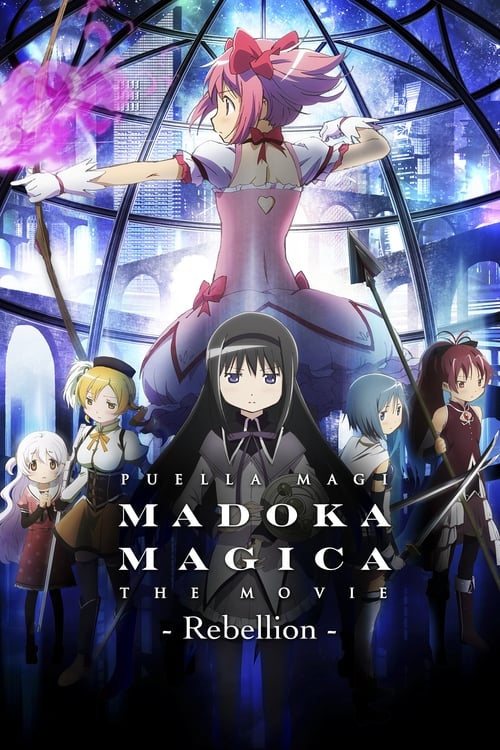
Around the end of the release of the Madoka Magica TV series, Urobuchi and Iwakami had separately decided that they wanted to do more with the story. Urobuchi wrote a script for a new project which had not been planned for any particular release format, and Mitsutoshi Kubota recalled Iwakami saying that it seemed fitting for a theatrical release. The drafted script went through several revisions and was extended from its original 70-minute runtime to its final length of 116 minutes. Shinbo didn't intend to make the scenario itself longer, but requested additions such as the action scene at the beginning of the film. Although Urobuchi's scenario was originally titled "Madoka 2", Shinbo and the staff had difficulty in deciding if the work was to be marketed as a sequel to the previous parts of the franchise. Eventually, it was Iwakami who decided to call it a sequel film. In the meantime, the staff also worked to release a compilation duology of the first season into film format, with Shinbo intending to release it as a compilation film similar to those found in franchises like Space Battleship Yamato. Unlike previous works Shinbo had been involved with, the compilation movies would update the visuals but keep the existing footage otherwise the same, which Shinbo proclaimed he was not good at doing and would rather rethink the storyboards or add new cuts from scratch. To help with the process, Shinbo asked editor Rie Matsubara to create a rough template outlining what parts of the story could be condensed into what sections of the film, and then he made suggestions, cuts, and additions from there. Miyamoto had not yet been asked to act as director of the films (rather than series director) until Mitsutoshi Kubota asked him to when they happened to meet at a convenience store near Shaft. Alternate space designers Gekidan Inu Curry had also become more involved with the production of the films, especially the sequel film, Rebellion, and directly contributed to the addition of scenes (such as the "tea party" scene) and scriptwriting dialogue for Bebe (the witch form of Nagisa Momoe). While Shinbo said that he tends to want to make things more "unusual", Gekidan Inu Curry's designs were amazing enough that it wasn't needed. Gekidan Inu Curry's parts were supported by the film's art director Ken Naitou and analog artist Youichi Nangou, the latter of whom had previously worked for Shinbo as art director of Twilight of the Dark Master and was especially involved with Gekidan Inu Curry's work on the film.
Shinbo and Shaft continued production on a number of other series concurrently between 2010 and 2013. In 2010: Hidamari Sketch x Hoshimittsu with Ishikura, Dance in the Vampire Bund with Masahiro Sonoda, and And Yet the Town Moves (although Tatsuwa is credited as the "assistant director", Shinbo has referred to him as the show's "series director"); in 2011: Katte ni Kaizō with Tatsuwa, Ground Control to Psychoelectric Girl with Miyamoto, Maria Holic Alive with Tomokazu Tokoro (and Ishikura as assistant), Hidamari Sketch x SP, and Mahou Sensei Negima! Anime Finale (assisted by Ishikura). In 2012, he directed Hidamari Sketch x Honeycomb with Yuki Yase, and this year marked the continuation of the Monogatari series with Nisemonogatari and Nekomonogatari: Black, with director Tomoyuki Itamura replacing Tatsuya Oishi. In 2013, Shinbo returned with Itamura for Monogatari Series Second Season, featuring Yase and Tatsuwa as series directors for the Kabukimonogatari and Onimonogatari arcs. Yase also directed the final OVA series in the Hidamari Sketch anime franchise under Shinbo, and Shinbo directed (assisted by Tatsuwa) Sasami-san@Ganbaranai.
Itamura served as the series director of Nisemonogatari due to Shinbo's trust in his capability. Shinbo had been aware of Itamura's work at Shaft since he had joined 3 years prior, and he believed that the second episode of Bakemonogatari (which Itamura had directed) was very good.
Shinbo interpreted the source material for And Yet the Town Moves as being inspired by and written like an older manga series. For that reason, he directed the series as if it was an older anime, using less-common techniques in the modern era of the time like people reflected in objects and fish-eye lenses.
Shinbo noted that both himself and the original author to Ground Control to Psychoelectric Girl, Hitoma Iruma, were male, so he thought the series would've been more interesting if the series composition was instead written from the perspective of a woman. Eventually, Yuniko Ayana was hired to be the series composition writer by request of Shinbo.
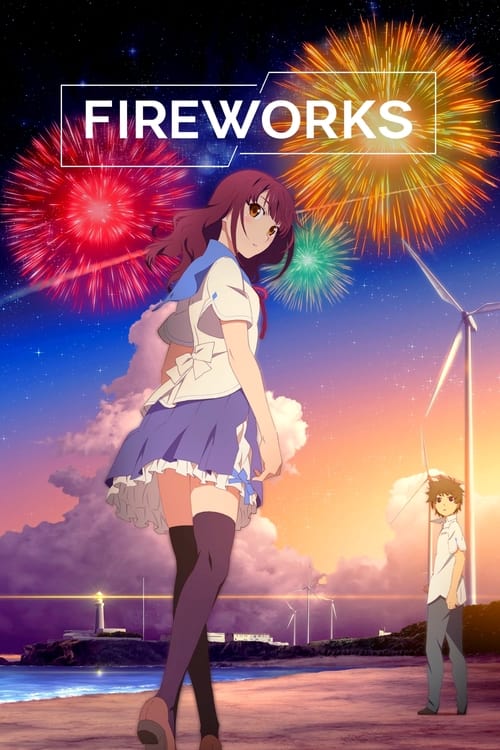
In 2014, Shinbo directed Nisekoi with Tatsuwa, Mekakucity Actors with Yase, the final arc to Monogatari Series Second Season, Hanamonogatari, with Itamura, and the first arc in Monogatari Series Final Season, Tsukimonogatari also with Itamura. Throughout the next several years, Shinbo continued to direct series with Shaft's other directors, including Gourmet Girl Graffiti (2015) with Tatsuwa, Nisekoi: (2015) with Miyamoto, The Beheading Cycle: The Blue Savant and the Nonsense Bearer (2016–17) with Yase, March Comes In like a Lion (2016–18) with Kenjirou Okada, the film Fireworks (2017) with Nobuyuki Takeuchi (assisted by Seimei Kidokoro), and Fate/Extra: Last Encore (2018) with Miyamoto.
Manga author Chika Umino was a fan of Shinbo's works with Shaft and stated that she did not want an adaptation of March Comes In like a Lion unless it was a Shaft-Shinbo production. Her editor from Hakusensha, Ryou Tomoda, asked about the possibility of receiving an adaptation from the director and studio, but was told it would be impossible. However, the son of shogi player Torahiko Tanaka, Makoto Tanaka, who worked at Tohokushinsha Film, was a fan of Umino's manga, and approached Tomoda about adapting the anime. From there, Tomoda met with recently promoted Aniplex CEO Atsuhiro Iwakami about the prospects of a Shaft-Shinbo adaptation, and Iwakami met with Kubota and Shinbo, and they agreed to the project. Umino had originally wanted the series to have a similar aesthetic to Bakemonogatari, which she was a fan of, but Shinbo said that it wasn't a good idea; instead of the Bakemonogatari-esque background art Umino had in mind, for example, the series was made with a watercolor-style. Umino also wanted Akio Watanabe to design the characters for animation, but the schedule didn't align (instead, Shaft animator Nobuhiro Sugiyama designed the characters).
Planning and produce[sic] Genki Kawamura gave permission for Shinbo to make an anime film adaptation of Shunji Iwai's live-action television film Fireworks in 2013. Iwai suggested scriptwriter Hitoshi Ōne for the film, and Kawamura was similarly eyeing his work. At the same time, Kawamura had seen Bakemonogatari and Puella Magi Madoka Magica, and was interested in working with Shinbo and Shaft. Initial planning for the film began with 7 to 8 members of the production team (including Ōne, Shinbo, Iwai, and Kawamura) meeting every two weeks for about half a year to discuss ideas. Although Shinbo said that he didn't contribute much to the discussion, Oone said that it was Shinbo's idea to change the age of the characters from elementary school students (as they are in the original film) to junior high students. Shinbo struggled to decide on whether the characters should be more comedic or realistic, but after reading Ōne's screenplay, decided that it would be okay to have a little of both, especially since he felt that the character designs (designed by Watanabe) suited such a mixture.
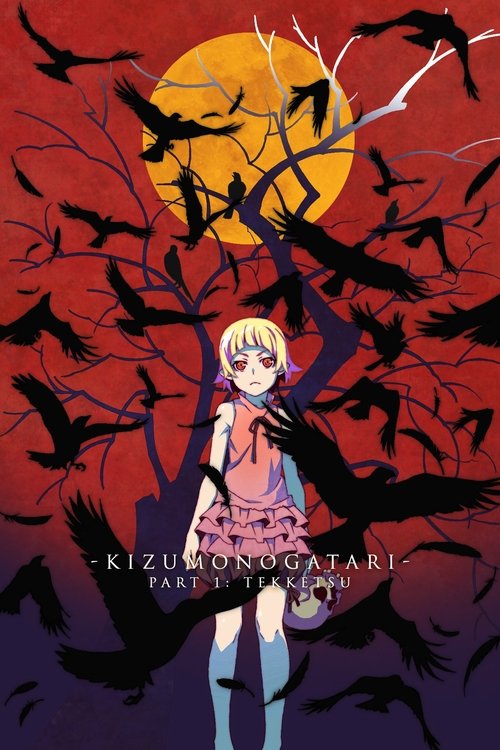
The second arc to Monogatari Series Final Season, Owarimonogatari I, was released in 2015, adapting the first two of three volumes of the original Owarimonogatari novel. Every year thereafter, new series in the franchise were produced, with Koyomimonogatari being released in 2016, and Owarimonogatari II being released in 2017, all of which were co-directed with Itamura. At the same time, however, Tatsuya Oishi had been busy working on the Kizumonogatari trilogy, which had started 4 to 6 years prior, and also involved Shinbo as chief director. The same year as Kizumonogatari III and Owarimonogatari II's release, however, Itamura left the studio, and Oishi seemingly disappeared from the anime industry after directing the opening animation to a video game released in 2018.
Both Itamura's and Oishi's absences as series directors led to Shinbo seemingly directing Zoku Owarimonogatari, the final novel in Final Season, by himself. The season, initially released as a film in 2018, is the only arc in the Monogatari series directed solely by Shinbo, solely by one director, and the first time he had directed a project without assistants or co-directors since 2011 (Hidamari Sketch x SP). He mentioned that many of the staff members by this point had been with the series since its beginnings, but that many had also joined partway through; nonetheless, he believed that the episode directors were able to show their individuality and expressions more strongly than in previous installments in the series. One of the instructions he gave to the storyboard artists for the season was to lower the number of camera cuts compared to previous seasons, as well, in order to create a more relaxed tempo. In 2019, he stated that the Monogatari series was his life's work, and that he wanted to continue adapting the series and Nisio Isin's other novels.
In 2016, Shinbo also expanded his work outside of Shaft alongside light novel author Reki Kawahara and novelist and scriptwriter Ichiro Okouchi as shareholders and collaborators to the then newly-established Egg Firm production studio.
Shinbo and studio Shaft took a hiatus from major animation works in 2019. The only major product from the team that year was the televised release of Zoku Owarimonogatari. The following year, they returned for the adaptation of the spin-off Madoka Magica series Magia Record: Puella Magi Madoka Magica Side Story. The series was not directed by Shinbo, however; instead, Doroinu (one of the two members of Gekidan Inu Curry) served as chief director, and Shinbo served as animation supervisor. Shinbo took a step back from acting as a director on the series for the purpose of separating the original Madoka Magica and Magia Record in order to clearly express that Magia Record is a spin-off series, rather than a continuation of the original series. As "animation supervisor", Shinbo often made suggestions and supervised the work at scenario meetings and the post-recording sessions, and he mainly assisted with setting up the connections between Magia Record and Madoka Magica. According to Aniplex producer Tatsuya Ishikawa, Shinbo's opinion served as guidelines for the staff so that they did not carelessly omit explanations and logic that would otherwise confuse the audience. Though Shinbo said he did not interefere much with the staff, he did contribute ideas, like one that eventually led to the creation of the anime-original character Kuroe. It was through Shinbo's request to Doroinu that the anime not follow the flow of the game due to a difference in mediums being untranslatable that also led to the anime ultimately pursuing an original story.
In 2021, he returned to the director's chair with an adaptation of Nisio Isin's Pretty Boy Detective Club, with Hajime Ootani as director (and Kenjirou Okada assisting). In April of the same year, it was announced that Puella Magi Madoka Magica: Rebellion (2013), the final film in the Madoka Magica trilogy remake, would receive a sequel with Shinbo returning as chief director and Miyamoto as director, and the second season of Magia Record were announced to be airing in July, again with Doroinu chief directing and Shinbo acting as animation supervisor, but with Miyamoto as director. A "final" season consisting of four episodes with the same staff premiered in March 2022 after a delay from fall 2021.
In 2024, an adaptation of the Off Season and Monster Season series of novels of Nisio Isin's Monogatari series was announced, with Shinbo, Shaft, and Akio Watanabe returning to their respective roles; and with the debut of Midori Yoshizawa as series director, who was an assistant director on Magia Record. Aniplex producer Tatsuya Ishikawa approached Shaft with the idea of continuing the Monogatari anime in the fall of 2022, with the studio agreeing. Yoshizawa was chosen to direct by studio president Kubota and had been a part of the project since the scriptwriting stage. Shinbo relied on Yoshizawa for her art design sensibilities and decided to make changes to some of the formats from her predecessors. The previous seasons in the series had used eyecatches to a limited degree, and Shinbo wanted Yoshizawa to use more freely with Off & Monster Season. For the Nademonogatari arc (second arc in the season), he wanted the eyecatches to act like the spines on Dragon Ball volumes; and for Shinobumonogatari (fourth and final arc), he wanted the eyecatches to be like a tour of famous areas in Japan. As a director at Shaft, Shinbo had generally been responsible or co-responsible (often with the other series directors) for much of the storyboard checks and corrections throughout various works, but he often delegates the task of storyboarding to other people entirely, with his most recent storyboard credits being short promotional videos and commercials like the Bakemonogatari manga PV released in 2022 and the Madoka Magica Concept Movie in 2015, but he had not storyboarded a full television episode since Hidamari Sketch x SP in 2011 (which he received credit for under the pseudonym "Satoko Shindou"). For Wazamonogatari (the third arc in the season), Shinbo was not originally in charge of storyboarding the arc, but ultimately revised the storyboards to the point that he received co-credit for both episodes under Shaft's collective pseudonym of Fuyashi Tou.