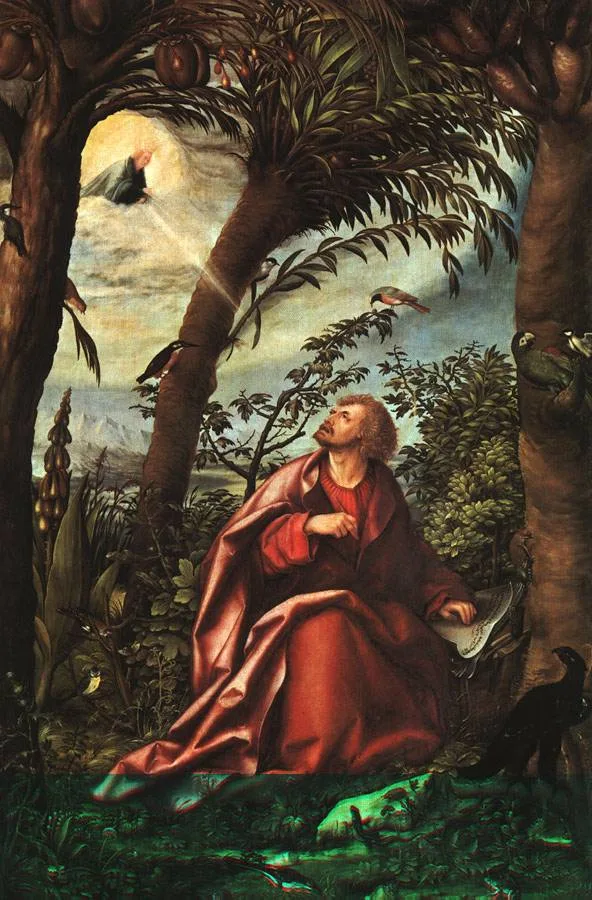
Topic
apocalypse
10 members
Comments
Ask Genius by OpenServe:
Free account · your comment posts right after signup
Top videos
Topic
Free account · your comment posts right after signup
Top videos
“I believe in the premillenial, pre-tribulational coming of Christ for all of his church, and to summarize that, your first poll, do you believe Jesus coming the second time will be in the future, I would vote yes with the 59 percent and with Billy Graham and most evangelicals.”
“"Listen," croaked Skuzz. "Got something important to tell you. The Four Horsemen of the Apocalypse … they're right bastards, all four of them."”
“Someone once said that it is easier to imagine the end of the world than to imagine the end of capitalism. We can now revise that and witness the attempt to imagine capitalism by way of imagining the end of the world.”
“Surely the Hour is coming--I am about to make it manifest--so that every soul may be rewarded as it strives. So let not him, who believes not in it and follows his low desire, turn thee away from it, lest thou perish.”
“His feet were like fine copper when glowing in a furnace; and his voice was as the sound of many waters.”
“It has been granted to her to be clothed with bright, clean, fine linen—for the fine linen stands for the righteous acts of the holy ones.”
Quotes via Wikiquote (CC BY-SA), each with its original source.
Not who you're looking for? Others named apocalypse: 2013 album by Thundercat · Bill Callahan album · roller coaster in Drayton Manor · novel by Tim Bowler
Apocalyptic literature is a literary genre originating in Judaism in the centuries following the Babylonian exile but persisting in Christianity and Islam. In apocalypse, a supernatural being reveals cosmic mysteries or the past to a human intermediary. The means of mediation include dreams, visions and heavenly journeys, and they typically feature symbolic imagery drawn from the Jewish Bible, cosmological and (pessimistic) historical surveys, the division of time into periods, esoteric numerology, and claims of ecstasy and inspiration. It is "an unveiling or unfolding of things not previously known and which could not be known apart from the unveiling". Almost all are written under pseudonyms, claiming as author a venerated hero from previous centuries, as with the Book of Daniel, composed during the 2nd century BCE but bearing the name of the legendary Daniel from the 6th century BCE.


