


Cecil Blount DeMille (; August 12, 1881 – January 21, 1959), often known in popular culture as Mr. DeMille, was an American filmmaker and actor. Between 1914 and 1958, he created 70 features including silent and sound films. He is acknowledged as a founding father of American cinema and the most commercially successful producer-director in film history, with many films dominating the box office three or four at a time. His films were distinguished by their epic scale and by his cinematic showmanship. His silent films included social dramas, comedies, Westerns, farces, morality plays, and historical pageants.
Born in Ashfield, Massachusetts, and raised in New York City, DeMille began his career as a stage actor in 1900. He later began to write and direct stage plays, a few with his older brother William de Mille, and some with Jesse L. Lasky, who was then a vaudeville producer. DeMille's first film, The Squaw Man (1914), was the first full-length feature film shot in Hollywood. Its interracial love story was commercially successful, and the film marked Hollywood as the new home of the U.S. film industry. Based on continued film successes, DeMille founded Famous Players-Lasky, which was later reverse merged into Paramount Pictures with Lasky and Adolph Zukor. His first biblical epic, The Ten Commandments (1923), was both a critical and commercial success; it held the Paramount revenue record for 25 years.
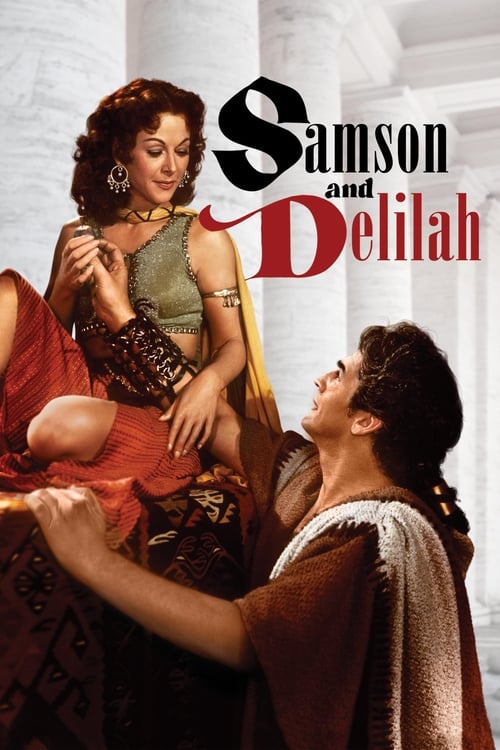
DeMille directed The King of Kings (1927), a biography of Jesus, which gained approval for its sensitivity and reached more than 800 million viewers. The Sign of the Cross (1932) is said to be the first sound film to integrate all aspects of cinematic technique. Cleopatra (1934) was his first film to be nominated for the Academy Award for Best Picture. After more than 30 years in film production, DeMille reached a pinnacle in his career with Samson and Delilah (1949), a biblical epic that became the highest-grossing film of 1950. Along with biblical and historical narratives, he also directed films oriented toward "neo-naturalism", which focused on portraying the laws of man fighting the forces of nature.
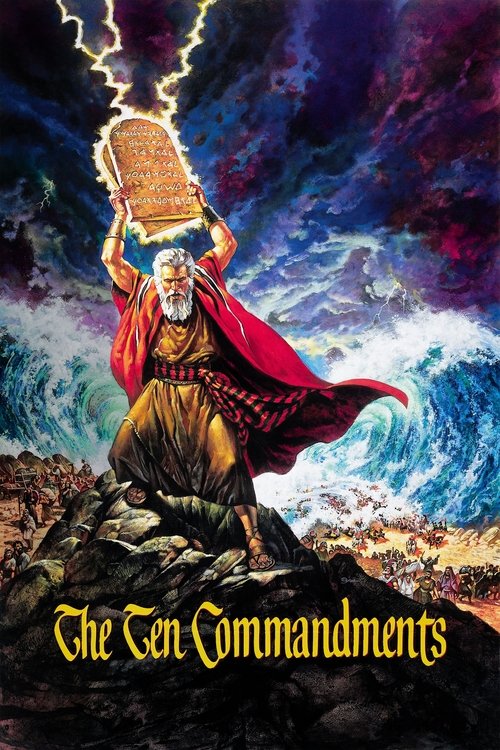
DeMille received his first nomination for the Academy Award for Best Director for his circus drama The Greatest Show on Earth (1952), which won both the Academy Award for Best Picture and the Golden Globe Award for Best Motion Picture — Drama. His 1956 remake of The Ten Commandments became his final and best-known film; also, a Best Picture Academy Award nominee, it is the eighth highest-grossing film of all time, adjusted for inflation. In addition to his Best Picture Awards, DeMille received an Academy Honorary Award for his film contributions, the Palme d'Or (posthumously) for Union Pacific (1939), a DGA Award for Lifetime Achievement, and the Irving G. Thalberg Memorial Award. He was the first recipient of the Golden Globe Cecil B. DeMille Award, which was named in his honor. DeMille's reputation had a renaissance in the 2010s, and his work has influenced numerous other films and directors.
Contents
Biography
1881–1899: early years
Cecil Blount DeMille was of paternal Dutch ancestry. His surname was spelled de Mil before his grandfather William added an "le" for "visual symmetry".
As an adult, Cecil De Mille adopted the spelling DeMille because he believed it would look better on a marquee, but continued to use de Mille in private life. The family name de Mille was used by his children, Cecilia, John, Richard, and Katherine. Cecil's brother, William, and his daughters, Margaret and Agnes, as well as DeMille's granddaughter, Cecilia de Mille Presley, also used the de Mille spelling.
DeMille was born on August 12, 1881, in a boarding house on Main Street in Ashfield, Massachusetts, where his parents had been vacationing for the summer. On September 1, 1881, the family returned with the newborn DeMille to their flat in New York. DeMille was named after his grandmothers, Cecilia Wolff and Margarete Blount. He was the second of three children of Henry Churchill de Mille (September 4, 1853 – February 10, 1893) and his wife, Matilda Beatrice DeMille (née Samuel; January 30, 1853 – October 8, 1923), known as Beatrice. His older brother, William C. DeMille, was born on July 25, 1878.
Henry de Mille, whose ancestors were of English and Dutch Belgian descent, was a North Carolina-born dramatist, actor, and lay reader in the Episcopal Church. In New York, Henry also taught English at Columbia College (now Columbia University). He worked as a playwright, administrator, and faculty member during the early years of the American Academy of Dramatic Arts, established in New York City in 1884. Henry de Mille frequently collaborated with David Belasco in playwriting; their best-known collaborations included "The Wife", "Lord Chumley", "The Charity Ball", and "Men and Women".
Cecil B. DeMille's mother, Beatrice, a literary agent and scriptwriter, was the daughter of German Jews. She had emigrated from England with her parents in 1871 when she was 18; the newly arrived family settled in Brooklyn, New York, where they maintained a middle-class, English-speaking household.
DeMille's parents met as members of a music and literary society in New York. Henry was a tall, red-headed student. Beatrice was intelligent, educated, forthright, and strong-willed. They married on July 1, 1876, despite Beatrice's parents' objections due to the young couple's differing religions; Beatrice converted to Episcopalianism.
1900–1912: theater
Cecil B. DeMille began his career as an actor on stage in 1900 with the theatrical company of Charles Frohman. He debuted on February 21, 1900, in the play Hearts Are Trumps at New York's Garden Theater. In 1901, DeMille starred in productions of A Repentance, To Have and to Hold, and Are You a Mason? At age 21, he married Constance Adams on August 16, 1902, at Adams's father's home in East Orange, New Jersey. The wedding party was small. Beatrice DeMille's family did not attend. Simon Louvish suggests that this was to conceal DeMille's partial Jewish heritage. Adams was 29 years old at the time of the marriage. They had met in a theater in Washington, D.C. while they were both acting in Hearts Are Trumps.
They were sexually incompatible; according to DeMille, Adams was too "pure" to "feel such violent and evil passions" as he. DeMille had more violent sexual preferences and fetishes than his wife. Adams allowed DeMille to have several long-term mistresses during their marriage as an outlet while maintaining an appearance of a faithful marriage. One of DeMille's affairs was with his screenwriter Jeanie MacPherson. Despite his reputation for extramarital affairs, DeMille did not like to have affairs with his stars, as he believed it would cause him to lose control as a director. He once said he maintained his self-control when Gloria Swanson sat on his lap and refused to touch her.
In 1902, he played a minor role in Hamlet. Publicists wrote that he became an actor to learn how to direct and produce, but DeMille admitted that he became an actor to pay the bills. From 1904 to 1905, he attempted to make a living as a stock theater actor with his wife, Constance. DeMille made a 1905 reprise in Hamlet as Osric. In the summer of 1905, DeMille joined the stock cast at the Elitch Theatre in Denver, Colorado. He appeared in 11 of the 15 plays presented that season, all in minor roles. Maude Fealy was the featured actress in several productions that summer and developed a lasting friendship with DeMille. (He later cast her in The Ten Commandments.)
His brother, William, was establishing himself as a playwright and sometimes invited DeMille to collaborate. DeMille and William collaborated on The Genius, The Royal Mounted, and After Five. None of these was very successful. William DeMille was most successful when he worked alone.
DeMille and his brother at times worked with the legendary impresario David Belasco, who had been a friend and collaborator of their father. DeMille later adapted Belasco's The Girl of the Golden West, Rose of the Rancho, and The Warrens of Virginia into films. He was credited with the conception of Belasco's The Return of Peter Grimm. The Return of Peter Grimm sparked controversy because Belasco had taken DeMille's unnamed screenplay, changed the characters, and named it The Return of Peter Grimm, producing and presenting it as his own work. DeMille was credited in small print as "based on an idea by Cecil DeMille". The play was successful, and DeMille was distraught that his childhood idol had plagiarized his work.
1913–1914: entering films
Desiring a change of scene, DeMille, Lasky, Sam Goldfish (later Samuel Goldwyn), and a group of East Coast businessmen created the Jesse L. Lasky Feature Play Company in 1913, of which DeMille became director-general. Lasky and DeMille were said to have sketched out the organization of the company on the back of a restaurant menu. As director-general, DeMille's job was to make the films. In addition to directing, he was the supervisor and consultant for the first year of films the company made. Sometimes, he directed scenes for other directors at the company in order to release films on time. Moreover, he co-authored other Lasky Company scripts and created screen adaptations that others directed.
The Lasky Play Company tried to recruit William de Mille, but he rejected the offer because he did not believe there was any promise in a film career. When William found out that DeMille had begun working in the motion picture industry, he wrote his brother a letter, saying that he was disappointed that Cecil was willing "to throw away [his] future" when he was "born and raised in the finest traditions of the theater".
The Lasky Company wanted to attract high-class audiences to their films, so it began producing films from literary works. The company bought the rights to Edwin Milton Royle's play The Squaw Man and cast Dustin Farnum in the lead role. It offered Farnum a choice between a quarter's stock in the company or $250 in weekly salary. Farnum chose the salary. Already $15,000 in debt to Royle for the screenplay of The Squaw Man, Lasky's relatives bought the $5,000 stock to save the Lasky Company from bankruptcy. With no knowledge of filmmaking, DeMille was introduced to observe the process at film studios. He was eventually introduced to Oscar Apfel, a stage director who had been a director with the Edison Company.
On December 12, 1913, DeMille, his cast, and crew boarded a Southern Pacific train bound for Flagstaff via New Orleans. His tentative plan was to shoot a film in Arizona, but he felt that Arizona lacked the Western look they were searching for. They also learned that other filmmakers were successfully shooting in Los Angeles, even in winter. He continued to Los Angeles. Once there, he chose not to shoot in Edendale, where many studios were, but in Hollywood. DeMille rented a barn to function as their film studio. Filming began on December 29, 1913, and lasted three weeks. Apfel filmed most of The Squaw Man due to DeMille's inexperience, but DeMille learned quickly and was particularly adept at impromptu screenwriting as necessary. He made his first film run 60 minutes, as long as a short play. The Squaw Man (1914), co-directed by Apfel, was a sensation, and it established the Lasky Company. It was the first feature-length film made in Hollywood. There were problems with the perforation of the film stock, and it was discovered that DeMille had brought a cheap British film perforator that had punched in 65 holes per foot instead of the industry standard of 64. Lasky and DeMille convinced film pioneer Siegmund Lubin of the Lubin Manufacturing Company to have his experienced technicians reperforate the film.
1915–1928: silent era
Cecil B. DeMille's second film, credited exclusively to him, was The Virginian. It is the earliest of DeMille's films available in a quality, color-tinted video format, but that version is actually a 1918 rerelease. The Lasky Company's first few years were spent making films nonstop. DeMille directed 20 films by 1915. The most successful films during this period were Brewster's Millions, Rose of the Rancho, and The Ghost Breaker. DeMille adapted Belasco's dramatic lighting techniques to film technology, mimicking moonlight with U.S. cinema's first attempts at "motivated lighting" in The Warrens of Virginia. This was the first of a few film collaborations with his brother William. They struggled to adapt the play from the stage to the set. After the film was shown, viewers complained that the shadows and lighting prevented the audience from seeing the actors' full faces and said they would pay only half price. Sam Goldwyn suggested that if they called it "Rembrandt" lighting, the audience would pay double the price. Additionally, because of DeMille's cordiality after the Peter Grimm incident, DeMille was able to rekindle his partnership with Belasco. He adapted several of Belasco's screenplays into film.
DeMille's most successful film was The Cheat; his direction in the film was critically acclaimed. In 1916, exhausted from three years of nonstop filmmaking, DeMille purchased land in the Angeles National Forest for a ranch that would become his getaway. He called this place "Paradise", declaring it a wildlife sanctuary; no shooting of animals besides snakes was allowed. His wife did not like Paradise, so DeMille often brought his mistresses there with him, including actress Julia Faye. In 1921, DeMille purchased a yacht he called The Seaward.
While filming The Captive in 1915, an extra, Charles Chandler, died on set when another extra failed to heed DeMille's orders to unload all guns for rehearsal. DeMille instructed the guilty man to leave town and never reveal his name. Lasky and DeMille maintained Chandler's widow on the payroll and, according to leading actor House Peters Sr., DeMille refused to stop production for Chandler's funeral. Peters said that he encouraged the cast to attend the funeral with him anyway, since DeMille would not be able to shoot the film without him. On July 19, 1916, the Jesse Lasky Feature Play Company merged with Adolph Zukor's Famous Players Film Company, becoming Famous Players–Lasky. Zukor became president, Lasky vice president, DeMille director-general, and Goldwyn chairman of the board. Famous Players–Lasky later fired Goldwyn for frequent clashes with Lasky, DeMille, and Zukor. While on a European vacation in 1921, DeMille contracted rheumatic fever in Paris. He was confined to bed and unable to eat. His poor physical condition upon returning home affected the production of his 1922 film Manslaughter. According to Richard Birchard, DeMille's weakened state during production may have led to the film being received as uncharacteristically substandard.
1929–1956: sound era
When "talking pictures" were invented in 1928, DeMille made a successful transition, offering his own innovations to the painful process; he devised a microphone boom and a soundproof camera blimp. He also popularized the camera crane. His first three sound films, Dynamite, Madame Satan, and his 1931 remake of The Squaw Man, were produced at Metro-Goldwyn-Mayer. These films were critically and financially unsuccessful. He had completely adapted to the production of sound film despite the film's poor dialogue. After his contract ended at MGM, he left, but no production studios would hire him. He attempted to create a guild of six directors with the same creative desires called the Director's Guild, but the idea failed due to a lack of funding and commitment. Moreover, the Internal Revenue Service audited DeMille due to issues with his production company. This was, according to DeMille, the lowest point of his career. He traveled abroad to find employment until he was offered a deal at Paramount.
In 1932, DeMille returned to Paramount at Lasky's request, bringing with him his own production unit. His first film back at Paramount, The Sign of the Cross, was also his first success since leaving Paramount besides The King of Kings. Zukor approved DeMille's return on the condition that DeMille not exceed his production budget of $650,000 for The Sign of the Cross. Produced in eight weeks without exceeding budget, the film was financially successful. The Sign of the Cross was the first film to integrate all cinematic techniques. The film was considered a "masterpiece" and surpassed the quality of other sound films of the time. DeMille followed this epic with two dramas released in 1933 and 1934, This Day and Age and Four Frightened People. These were box-office disappointments, though Four Frightened People received good reviews. DeMille stuck to large-budget spectaculars for the rest of his career.
DeMille was outspoken about his Episcopalian integrity, but his private life included mistresses and adultery. He was a conservative Republican activist, becoming more conservative as he aged. He was known as anti-union and worked to prevent the unionization of film production studios. But according to DeMille himself, he was not anti-union and belonged to a few unions. He said he was rather against union leaders such as Walter Reuther and Harry Bridges, whom he compared to dictators. He supported Herbert Hoover and, in 1928, made his largest campaign donation to Hoover. But DeMille also liked Franklin D. Roosevelt, finding him charismatic, tenacious, and intelligent, and agreeing with Roosevelt's abhorrence of Prohibition. DeMille lent Roosevelt a car for his 1932 United States presidential election campaign and voted for him. He never again voted for a Democratic candidate in a presidential election.
Filmmaking
Influences
DeMille believed his first influences to be his parents, Henry and Beatrice DeMille. His playwright father introduced him to the theater at a young age. Henry was heavily influenced by the work of Charles Kingsley, whose ideas trickled down to DeMille. DeMille noted that his mother had a "high sense of the dramatic" and was determined to continue the artistic legacy of her husband after he died. Beatrice became a play broker and author's agent, influencing DeMille's early life and career. DeMille's father worked with David Belasco, a theatrical producer, impresario, and playwright. Belasco was known for adding realistic elements in his plays, such as real flowers, food, and aromas that could transport his audiences into the scenes. While working in the theatre, DeMille used real fruit trees in his play California, as influenced by Belasco. Similar to Belasco, DeMille's theatre revolved around entertainment rather than artistry. Generally, Belasco's influence on DeMille's career can be seen in DeMille's showmanship and narration. E. H. Sothern's early influence on DeMille's work can be seen in DeMille's perfectionism. DeMille recalled that one of the most influential plays he saw was Hamlet, directed by Sothern.
Method
DeMille's filmmaking process always began with extensive research. Next, he would work with writers to develop the story that he was envisioning. Then, he would help writers construct a script. Finally, he would leave the script with artists and allow them to create artistic depictions and renderings of each scene. Plot and dialogue were not a strong point of DeMille's films. Consequently, he focused his efforts on his films' visuals. He worked with visual technicians, editors, art directors, costume designers, cinematographers, and set carpenters in order to perfect the visual aspects of his films. With his editor, Anne Bauchens, DeMille used editing techniques to allow the visual images to bring the plot to a climax rather than dialogue. DeMille had large and frequent office conferences to discuss and examine all aspects of the working film, including storyboards, props, and special effects.
DeMille rarely gave direction to actors; he preferred to "office-direct", where he would work with actors in his office, going over characters and reading through scripts. Any problems on the set were often fixed by writers in the office rather than on the set. DeMille did not believe a large movie set was the place to discuss minor character or line issues. DeMille was particularly adept at directing and managing large crowds in his films. Martin Scorsese recalled that DeMille had the skill to maintain control not only of the lead actors in a frame but also of the many extras in the frame. DeMille was adept at directing "thousands of extras", and many of his pictures include spectacular set pieces: the toppling of the pagan temple in Samson and Delilah; train wrecks in The Road to Yesterday, Union Pacific and The Greatest Show on Earth; the destruction of an airship in Madam Satan; and the parting of the Red Sea in both versions of The Ten Commandments.
In his early films, DeMille experimented with photographic light and shade, which created dramatic shadows instead of glare. His specific use of lighting, influenced by his mentor David Belasco, was for the purpose of creating "striking images" and heightening "dramatic situations". DeMille was unique in using this technique. In addition to his use of volatile and abrupt film editing, his lighting and composition were innovative for the time period, as filmmakers were primarily concerned with a clear, realistic image. Another important aspect of DeMille's editing technique was to put the film away for a week or two after an initial edit to re-edit the picture with a fresh mind. This allowed for the rapid production of his films in the early years of the Lasky Company. The cuts were sometimes rough, but the movies were always interesting.
Style and themes
Cecil B. DeMille's film production career evolved from critically significant silent films to financially significant sound films. He began his career with reserved yet brilliant melodramas; from there, his style developed into marital comedies with outrageously melodramatic plots. To attract a high-class audience, DeMille based many of his early films on stage melodramas, novels, and short stories. He began producing epics earlier in his career, but they solidified his career in the 1920s. By 1930, DeMille had perfected his film style of mass-interest spectacle films with Western, Roman, or Biblical themes. DeMille was often criticized for making his spectacles too colorful and for being too occupied with entertaining the audience rather than exploring the artistic and auteur possibilities that film could provide. However, others interpreted DeMille's work as visually impressive, thrilling, and nostalgic. Along the same lines, critics of DeMille often qualify him by his later spectacles and fail to consider several decades of ingenuity and energy that defined him during his generation. Throughout his career, he did not alter his films to better adhere to contemporary or popular styles. Actor Charlton Heston admitted DeMille was "terribly unfashionable" and Sidney Lumet called DeMille, "the cheap version of D. W. Griffith", adding that DeMille, "[didn't have]...an original thought in his head", though Heston added that DeMille was much more than that.
According to Scott Eyman, DeMille's films were at the same time masculine and feminine due to his thematic adventurousness and his eye for the extravagant. DeMille's distinctive style can be seen through camera and lighting effects as early as The Squaw Man with the use of daydream images; moonlight and sunset on a mountain; and side-lighting through a tent flap. In the early age of cinema, DeMille differentiated the Lasky Company from other production companies due to the use of dramatic, low-key lighting they called "Lasky lighting" and marketed as "Rembrandt lighting" to appeal to the public. DeMille achieved international recognition for his unique use of lighting and color tint in his film The Cheat. DeMille's 1956 version of The Ten Commandments, according to director Martin Scorsese, is renowned for its level of production and the care and detail that went into creating the film. He stated that The Ten Commandments was the final culmination of DeMille's style.
DeMille was interested in art, and his favorite artist was Gustave Doré; DeMille based some of his most well-known scenes on the work of Doré. DeMille was the first director to connect art to filmmaking; he created the title of "art director" on the film set. DeMille was also known for his use of special effects without the use of digital technology. Notably, DeMille had cinematographer John P. Fulton create the parting of the Red Sea scene in his 1956 film The Ten Commandments, which was one of the most expensive special effects in film history, and has been called by Steven Spielberg "the greatest special effect in film history". The actual parting of the sea was created by releasing 360,000 gallons of water into a huge water tank split by a U-shaped trough, overlaying it with a film of a giant waterfall that was built on the Paramount backlot, and playing the clip backward.
Legacy
Known as the father of the Hollywood motion picture industry, Cecil B. DeMille made 70 films, including several box-office hits. DeMille is one of the more commercially successful film directors in history, with his films before the release of The Ten Commandments estimated to have grossed $650 million worldwide. Adjusted for inflation, DeMille's remake of The Ten Commandments is the eighth highest-grossing film in the world.
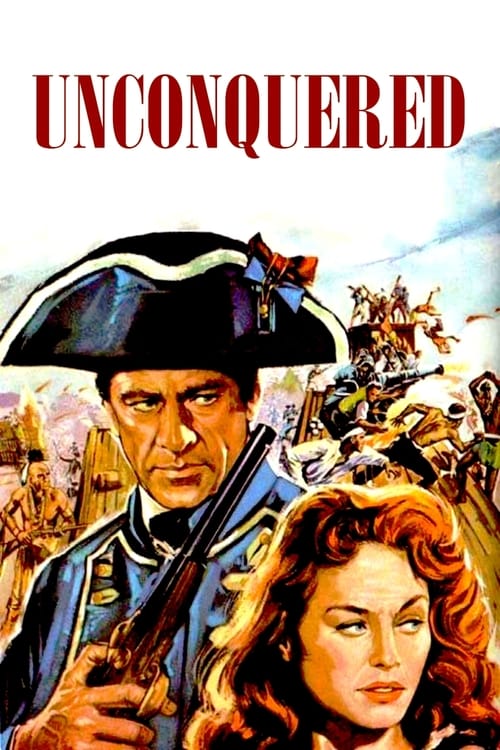
According to Sam Goldwyn, critics did not like DeMille's films, but the audiences did, and "they have the final word". Similarly, scholar David Blanke argued that DeMille had lost the respect of his colleagues and film critics by the late stages of his film career. However, his final films demonstrated that DeMille was still respected by his audiences. Five of DeMille's films were the highest-grossing films of the year of their release, with only Spielberg topping him with six of his films as the highest-grossing films of the year. DeMille's highest-grossing films include: The Sign of the Cross (1932), Unconquered (1947), Samson and Delilah (1949), The Greatest Show on Earth (1952), and The Ten Commandments (1956). Director Ridley Scott has been called "the Cecil B. DeMille of the digital era" due to his classical and medieval epics.
Despite his box-office success, awards, and artistic achievements, DeMille has been dismissed and ignored by critics both during his life and posthumously. He was consistently criticized for producing shallow films without talent or artistic care. Compared to other directors, few film scholars have taken the time to academically analyze his films and style. During the French New Wave, critics began to categorize certain filmmakers as auteurs, such as Howard Hawks, John Ford, and Raoul Walsh. DeMille was omitted from the list, thought to be too unsophisticated and antiquated to be considered an auteur. However, Simon Louvish wrote "he was the complete master and auteur of his films", and Anton Kozlovic called him the "unsung American auteur". Andrew Sarris, a leading proponent of the auteur theory, ranked DeMille highly as an auteur in "Far Side of Paradise", just below the "Pantheon". Sarris added that despite the influence of the styles of contemporary directors throughout his career, DeMille's style remained unchanged. Robert Birchard wrote that one could argue the auteurship of DeMille on the basis that DeMille's thematic and visual style remained consistent throughout his career. However, Birchard acknowledged that Sarris's point was more likely that DeMille's style was behind the development of film as an art form. Meanwhile, Sumiko Higashi sees DeMille as "not only a figure who was shaped and influenced by the forces of his era but as a filmmaker who left his own signature on the culture industry." The critic Camille Paglia has called The Ten Commandments one of the ten greatest films of all time.
Commemoration and tributes
The original Lasky-DeMille Barn, in which The Squaw Man was filmed, was converted into a museum named the "Hollywood Heritage Museum". It opened on December 13, 1985, and features some of DeMille's personal artifacts. The Lasky-DeMille Barn was dedicated as a California historical landmark in a ceremony on December 27, 1956; DeMille was the keynote speaker. It was listed on the National Register of Historic Places in 2014. The Dunes Center in Guadalupe, California, contains an exhibition of artifacts uncovered in the desert near Guadalupe from DeMille's set of his 1923 version of The Ten Commandments, known as the "Lost City of Cecil B. DeMille". Donated by the Cecil B. DeMille Foundation in 2004, the moving image collection of Cecil B. DeMille is held at the Academy Film Archive and includes home movies, outtakes, and never-before-seen test footage.
In summer 2019, The Friends of the Pompton Lakes Library hosted a Cecil B. DeMille film festival to celebrate DeMille's achievements and connection to Pompton Lakes. They screened four of his films at Christ Church, where DeMille and his family attended church when they lived there. Two schools have been named after him: Cecil B. DeMille Middle School, in Long Beach, California, which was closed and demolished in 2010 to make way for a new high school, and Cecil B. DeMille Elementary School in Midway City, California. The former film building at Chapman University in Orange, California, is named in honor of DeMille. During the Apollo 11 mission, Buzz Aldrin referred to himself in one instance as "Cecil B. DeAldrin", as a humorous nod to DeMille. The title of the 2000 John Waters film Cecil B. Demented alludes to DeMille.
DeMille's legacy is maintained by his granddaughter Cecilia DeMille Presley, who serves as the president of the Cecil B. DeMille Foundation, which strives to support higher education, child welfare, and film in Southern California. In 1963, the Cecil B. DeMille Foundation donated the "Paradise" ranch to the Hathaway Foundation, which cares for emotionally disturbed and abused children. A large collection of DeMille's materials, including scripts, storyboards, and films, resides at Brigham Young University in L. Tom Perry Special Collections.
Awards and recognition
Cecil B. DeMille received many awards and honors, especially later in his career.
In August 1941, DeMille was honored with a block in the forecourt of Grauman's Chinese Theatre.
The American Academy of Dramatic Arts honored DeMille with an Alumni Achievement Award in 1958.
In 1957, DeMille gave the commencement address for the graduation ceremony of Brigham Young University, wherein he received an honorary Doctorate of Letter degree. Additionally, in 1958, he received an honorary Doctorate of Law degree from Temple University.
From the film industry, DeMille received the Irving G. Thalberg Memorial Award at the Academy Awards in 1953, and a Lifetime Achievement Award from the Directors Guild of America Award the same year. In the same ceremony, DeMille received a nomination from the Directors Guild of America Award for Outstanding Directorial Achievement in Motion Pictures for The Greatest Show on Earth. In 1952, DeMille was awarded the first Cecil B. DeMille Award at the Golden Globes. An annual award, the Golden Globe's Cecil B. DeMille Award recognizes lifetime achievement in the film industry. For his contribution to the motion picture and radio industry, DeMille has two stars on the Hollywood Walk of Fame. The first, for radio contributions, is located at 6240 Hollywood Blvd. The second star is located at 1725 Vine Street.
DeMille received two Academy Awards: an Honorary Award for "37 years of brilliant showmanship" in 1950 and a Best Picture award in 1953 for The Greatest Show on Earth. DeMille received a Golden Globe Award for Best Director and was additionally nominated for the Best Director category at the 1953 Academy Awards for the same film. He was further nominated in the Best Picture category for The Ten Commandments at the 1957 Academy Awards. DeMille's Union Pacific received a Palme d'Or in retrospect at the 2002 Cannes Film Festival.
Two of DeMille's films have been selected for preservation in the National Film Registry by the United States Library of Congress: The Cheat (1915) and The Ten Commandments (1956).
Filmography
DeMille made 70 features, 52 of which are silent. The first 24 of his silents were produced during the first three years of his career (1913–1916). Eight of his films were "epics" with five classified as "Biblical". Six of DeMille's films — The Arab, The Wild Goose Chase, The Dream Girl, The Devil-Stone, We Can't Have Everything, and The Squaw Man (1918) — were destroyed by nitrate decomposition and are considered lost. The Ten Commandments is broadcast every Saturday at Passover in the United States on the ABC Television Network.
Directed features
Filmography obtained from Fifty Hollywood Directors.
All films shown below entered the public domain in 2024.
Sound films
Other production credits
These are films which DeMille produced or assisted in directing, credited or uncredited.
Brewster's Millions (1914, lost)
The Master Mind (1914, lost)
The Only Son (1914, lost)
The Man on the Box (1914)
The Ghost Breaker (1914, lost)
After Five (1915)
Nan of Music Mountain (1917)
Chicago (1927, Producer, uncredited)
When Worlds Collide (1951, executive producer)
The War of the Worlds (1953, executive producer)
The Buccaneer (1958, producer)
Acting and cameos
DeMille frequently made cameos as himself in other Paramount films. Additionally, he often starred in prologues and special trailers that he created for his films, given the opportunity to personally address the audience.