1929–1956: sound era
When "talking pictures" were invented in 1928, DeMille made a successful transition, offering his own innovations to the painful process; he devised a microphone boom and a soundproof camera blimp. He also popularized the camera crane. His first three sound films, Dynamite, Madame Satan, and his 1931 remake of The Squaw Man, were produced at Metro-Goldwyn-Mayer. These films were critically and financially unsuccessful. He had completely adapted to the production of sound film despite the film's poor dialogue. After his contract ended at MGM, he left, but no production studios would hire him. He attempted to create a guild of six directors with the same creative desires called the Director's Guild, but the idea failed due to a lack of funding and commitment. Moreover, the Internal Revenue Service audited DeMille due to issues with his production company. This was, according to DeMille, the lowest point of his career. He traveled abroad to find employment until he was offered a deal at Paramount.
In 1932, DeMille returned to Paramount at Lasky's request, bringing with him his own production unit. His first film back at Paramount, The Sign of the Cross, was also his first success since leaving Paramount besides The King of Kings. Zukor approved DeMille's return on the condition that DeMille not exceed his production budget of $650,000 for The Sign of the Cross. Produced in eight weeks without exceeding budget, the film was financially successful. The Sign of the Cross was the first film to integrate all cinematic techniques. The film was considered a "masterpiece" and surpassed the quality of other sound films of the time. DeMille followed this epic with two dramas released in 1933 and 1934, This Day and Age and Four Frightened People. These were box-office disappointments, though Four Frightened People received good reviews. DeMille stuck to large-budget spectaculars for the rest of his career.
DeMille was outspoken about his Episcopalian integrity, but his private life included mistresses and adultery. He was a conservative Republican activist, becoming more conservative as he aged. He was known as anti-union and worked to prevent the unionization of film production studios. But according to DeMille himself, he was not anti-union and belonged to a few unions. He said he was rather against union leaders such as Walter Reuther and Harry Bridges, whom he compared to dictators. He supported Herbert Hoover and, in 1928, made his largest campaign donation to Hoover. But DeMille also liked Franklin D. Roosevelt, finding him charismatic, tenacious, and intelligent, and agreeing with Roosevelt's abhorrence of Prohibition. DeMille lent Roosevelt a car for his 1932 United States presidential election campaign and voted for him. He never again voted for a Democratic candidate in a presidential election.
From June 1, 1936, until January 22, 1945, DeMille hosted and directed Lux Radio Theatre, a weekly digest of current feature films. Broadcast on the Columbia Broadcasting System (CBS) from 1935 to 1954, Lux Radio was one of the most popular weekly shows in radio history. While DeMille was host, the show had 40 million weekly listeners, and DeMille had an annual salary of $100,000. From 1936 to 1945, he produced, hosted, and directed every show, with the occasional exception of a guest director. He resigned from Lux Radio because he refused to pay a dollar to the American Federation of Radio Artists (AFRA), on the principle that no organization had the right to "levy a compulsory assessment upon any member".
DeMille sued the union for reinstatement but lost. He appealed to the California Supreme Court and lost again. When the AFRA expanded to television, DeMille was banned from television appearances. Consequently, he formed the DeMille Foundation for Political Freedom to campaign for the right to work. He gave speeches across the nation for the next few years. DeMille's primary criticism was of closed shops, but later included criticism of communism and unions in general. The U.S. Supreme Court declined to review his case, but DeMille lobbied for the Taft–Hartley Act, which passed. It prohibited denying anyone the right to work if they refused to pay a political assessment. But the law did not apply retroactively, so DeMille's television and radio appearance ban lasted the rest of his life, though he was permitted to appear on radio or television to publicize a movie. William Keighley replaced him. DeMille never worked in radio again.
In 1939, DeMille's Union Pacific was successful through DeMille's collaboration with the Union Pacific Railroad. The Union Pacific gave DeMille access to historical data, early period trains, and expert crews, adding to the film's authenticity. During pre-production, DeMille was dealing with his first serious health issue. In March 1938, he underwent a major emergency prostatectomy. He had a post-surgery infection from which he nearly did not recover, citing streptomycin as his saving grace. The surgery caused him to suffer from sexual dysfunction for the rest of his life, according to some family members. After his surgery and the success of Union Pacific, DeMille first used three-strip Technicolor in 1940, in North West Mounted Police. DeMille wanted to film in Canada, but due to budget constraints, the film was instead shot in Oregon and Hollywood. Critics were impressed with the visuals but found the scripts dull, calling it DeMille's "poorest Western". Despite the criticism, it was Paramount's highest-grossing film of the year. Audiences liked its highly saturated color, so DeMille made no further black-and-white features. DeMille was anti-communist and abandoned a project in 1940 to film Ernest Hemingway's For Whom the Bell Tolls due to its communist themes, even though he had already paid $100,000 for the rights to the novel. He was so eager to produce the film that he hadn't yet read it. He claimed he abandoned the project in order to complete a different project, but it was actually to preserve his reputation and avoid appearing reactionary. While concurrently filmmaking, he served during World War II at age 60 as his neighborhood air-raid warden.
In 1942, DeMille worked with Jeanie MacPherson and William DeMille to produce a film, Queen of Queens, that was intended to be about Mary, mother of Jesus. After reading the screenplay, Daniel A. Lord warned DeMille that Catholics would find the film too irreverent while non-Catholics would consider it Catholic propaganda. Consequently, the film was never made. MacPherson worked as a scriptwriter on many of DeMille's films. In 1938, DeMille supervised the film compilation Land of Liberty as the American film industry's contribution to the 1939 New York World's Fair. He used clips from his own films in it. Land of Liberty was not a high-grossing film, but it was well-received, and DeMille was asked to shorten its running time to accommodate more showings per day. MGM distributed the film in 1941 and donated profits to World War II relief charities.
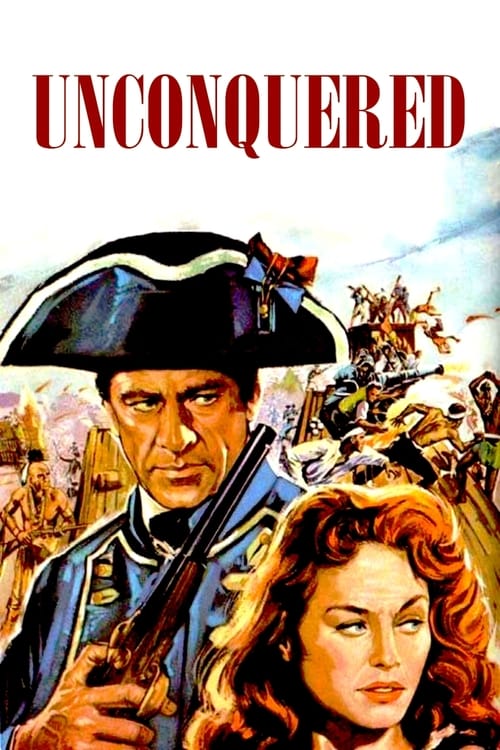
In 1942, DeMille released Paramount's most successful film, Reap the Wild Wind. It had a large budget and many special effects, including an electronically operated giant squid. After working on it, DeMille was the master of ceremonies at a rally organized by David O. Selznick in the Los Angeles Coliseum in support of the Dewey–Bricker presidential ticket as well as Governor Earl Warren of California. DeMille's 1947 film Unconquered had the longest running time (146 minutes), longest filming schedule (102 days), and largest budget ($5 million). Its sets and effects were so realistic that 30 extras needed to be hospitalized due to a scene with fireballs and flaming arrows. It was commercially very successful.
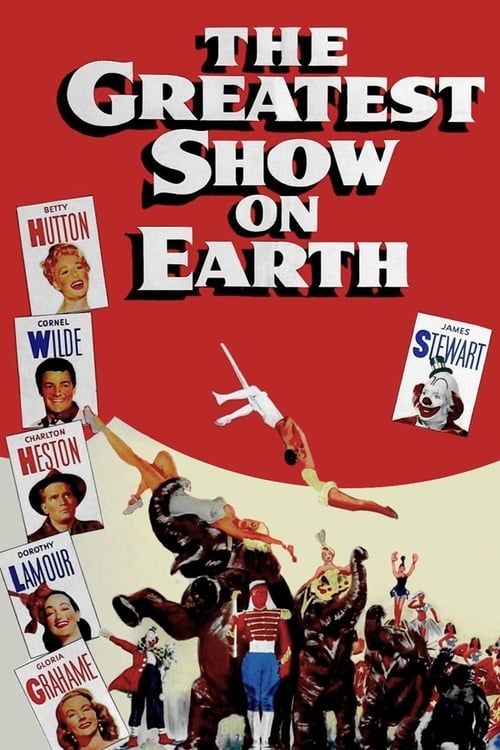
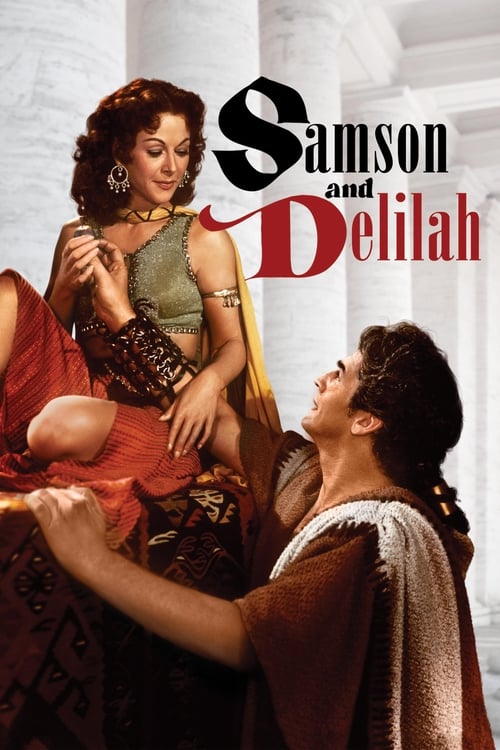
DeMille's next film, Samson and Delilah (1949), was Paramount's highest-grossing film up to that time. A Biblical epic with sex, it was a characteristically DeMille film. 1952's The Greatest Show on Earth became Paramount's highest-grossing film to that point and won the Academy Award for Best Picture and the Academy Award for Best Story. It began production in 1949. Ringling Brothers-Barnum and Bailey were paid $250,000 for use of the title and facilities. DeMille toured with the circus while helping write the script. Noisy and bright, the film was not well received by critics but was an audience favorite. In 1953, DeMille signed a contract with Prentice Hall to publish an autobiography. He reminisced into a voice recorder, the recording was transcribed, and the information was organized by topic. Art Arthur also interviewed people for the autobiography. DeMille did not like the biography's first draft, saying he thought the person portrayed in it was an egotistical "SOB". In the early 1950s, Allen Dulles and Frank Wisner recruited DeMille to serve on the board of the anti-communist National Committee for a Free Europe, the public face of the organization that oversaw Radio Free Europe. In 1954, Secretary of the Air Force Harold E. Talbott asked DeMille for help designing the cadet uniforms at the newly established United States Air Force Academy. DeMille's designs, most notably the cadet parade uniform, were praised by Air Force and Academy leadership, adopted, and still worn.
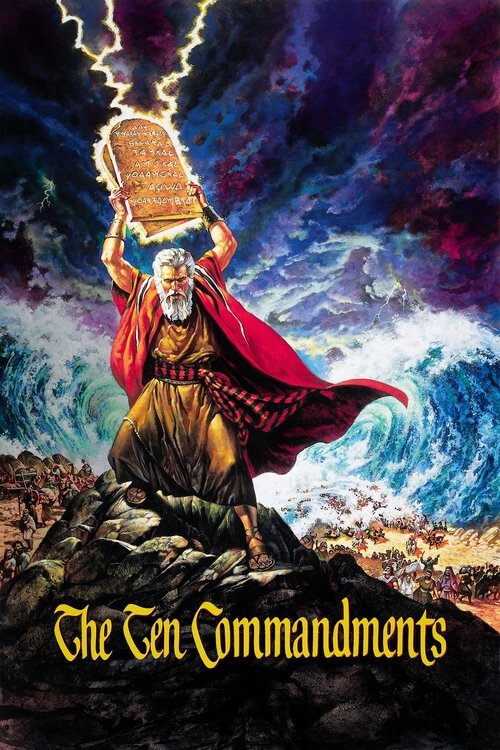
In 1952, DeMille sought approval for a lavish remake of his 1923 silent film The Ten Commandments. He went before the Paramount board of directors, which was mostly Jewish-American. The board rejected his proposal, even though his last two films, Samson and Delilah and The Greatest Show on Earth, had been record-breaking hits. Adolph Zukor convinced the board to change its mind on the grounds of morality. DeMille did not have an exact budget proposal for the project, and it promised to be the most costly in U.S. film history. Still, the board unanimously approved it. The Ten Commandments, released in 1956, was DeMille's final film. It was the longest (3 hours, 39 minutes) and most expensive ($13 million) film in Paramount history. Production began in October 1954. The Exodus scene was filmed on-site in Egypt with four Technicolor-VistaVision cameras filming 12,000 people. Filming continued in 1955 in Paris and Hollywood on 30 different sound stages. They even expanded to RKO sound studios for filming. Post-production lasted a year, and the film premiered in Salt Lake City. Nominated for an Academy Award for Best Picture, it grossed over $80 million, which surpassed the gross of The Greatest Show on Earth and every other film in history except Gone with the Wind. DeMille offered ten percent of his profit to the crew, a unique practice at the time.
On November 7, 1954, while in Egypt filming the Exodus sequence for The Ten Commandments, DeMille (who was 73) climbed a 107-foot (33 m) ladder to the top of the set and had a serious heart attack. Despite the urging of his associate producer, DeMille wanted to return to the set right away. He developed a plan with his doctor to allow him to continue directing while reducing his physical stress. DeMille completed the film, but several more heart attacks diminished his health. His daughter Cecilia took over as director as DeMille sat behind the camera with Loyal Griggs as the cinematographer. This film was his last.
Due to his frequent heart attacks, DeMille asked his son-in-law, actor Anthony Quinn, to direct a remake of his 1938 film The Buccaneer. DeMille served as executive producer, overseeing producer Henry Wilcoxon. Despite a cast led by Charlton Heston and Yul Brynner, the 1958 film The Buccaneer was a disappointment. DeMille attended the Santa Barbara premiere in December 1958. He was unable to attend its Los Angeles premiere. In the months before his death, DeMille was researching a film biography of Robert Baden-Powell, the founder of the Scout Movement. DeMille asked David Niven to star in the film, but it was never made. DeMille was also planning a biblical epic film based on the Book of Revelation. His autobiography was mostly complete when he died and was published in November 1959.
DeMille suffered a series of heart attacks from June 1958 to January 1959, and died on January 21, 1959, following an attack. His funeral was held on January 23 at St. Stephen's Episcopal Church. He was entombed at the Hollywood Memorial Cemetery (now known as Hollywood Forever). After his death, news outlets such as The New York Times, the Los Angeles Times, and The Guardian called DeMille a "pioneer of movies", "the greatest creator and showman of our industry", and "the founder of Hollywood". DeMille left his multi-million dollar estate in Los Feliz, Los Angeles, in Laughlin Park to his daughter Cecilia because his wife had dementia and was unable to care for the estate. She died a year later. His personal will drew a line between Cecilia and his three adopted children, with Cecilia receiving a majority of DeMille's inheritance and estate. The other three children were surprised by this, as DeMille had not treated them differently in life. Cecilia lived in the house until she died in 1984. The house was auctioned by his granddaughter Cecilia DeMille Presley, who also lived there in the late 1980s.