Apollo 16
Young, Mattingly and Duke were officially named as the crew of Apollo 16, the fifth lunar landing mission, on March 3, 1971. The Descartes Highlands were chosen as the landing site on June 3, 1971. This was the highest region on the near side of the Moon. It was believed to be volcanic in origin and mainly composed of basalt, based upon the tones of gray observed from Earth. It was hoped that rock samples retrieved by Apollo 16 would provide clues about the processes that formed the highlands, and perhaps even show that such processes were still active.
Training was conducted in the Lunar Module simulator, which used a TV camera and a scale model of the landing area. Other activities included driving a training version of the Lunar Roving Vehicle (LRV), and collecting geological samples. A final geological field trip was made to the big island of Hawaii in December 1971. On the second day of the trip, Duke caught the flu. By New Year's Day he was so ill that he was unable to get out of bed, and asked the Astronaut Office to send someone to take him to the doctor at the Kennedy Space Center. The doctor took an X-ray that revealed pneumonia in both lungs and called an ambulance to take Duke to the Patrick Air Force Base hospital.
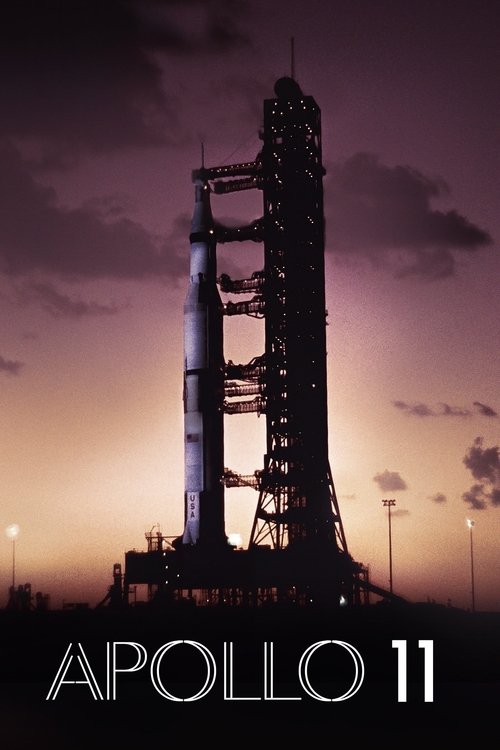
Duke feared that he might not recover in time for the launch, which was scheduled for March 17, 1972. The spacecraft and Saturn V launch vehicle had already been rolled out to Launch Pad 39A on December 13. Luck was with Duke: Grumman engineers wanted more time to test the increased capacity of the LM's batteries; a fault was found with the explosive cords that separate the LM from the CSM that warranted their replacement; and a failure of a clamp in Duke's spacesuit during training required the modification of all three astronauts' suits. This caused the launch date to be postponed to the next launch window, on April 16. This proved fortunate when an error by launch pad technicians caused one of the CM's Teflon fuel tank bladders to rupture, and the entire space vehicle had to be returned to the Vehicle Assembly Building. Slayton noted that "there wasn't even any discussion of replacing him; that was one of the lessons we'd learned on 13."
The astronauts went into quarantine and were allowed out only to fly T-38s for an hour a day. The day before liftoff, the Apollo Program director, Rocco Petrone saw someone he believed to be Duke around the pool at the Holiday Inn. A furious Petrone called the crew quarters demanding to know why Duke had broken quarantine. The staff's protestations that Duke was still there and had not left did not placate Petrone, and they had to track down Duke in training, who suggested that Petrone might have seen his brother Bill. When Apollo 16 was launched at 12:54 Eastern Standard Time (17:54 UTC) on April 16, 1972, Duke became the first twin to fly in space.
The launch was normal; the crew experienced vibration similar to that of previous crews. The first and second stages of the Saturn V performed flawlessly, and the spacecraft entered low Earth orbit just under 12 minutes after liftoff. In Earth orbit, the crew faced minor technical issues, including a potential problem with the environmental control system and the S-IVB third stage's attitude control system, but these were resolved or compensated for. After 1.5 orbits, it reignited for just over five minutes, propelling the craft towards the Moon at 35,000 km/h (22,000 mph).
In lunar orbit, the crew faced a series of problems. Duke was unable to get the S-band steerable antenna on the LM Orion to move in the yaw axis, and therefore could not align it correctly. This resulted in poor communications with the ground stations, and consequently a loss of the computer uplink. This meant that Duke had to copy down 35 five-digit numbers and enter them into the computer. Correcting any mistake was a complicated procedure. Fortunately, the astronauts could still hear Mission Control clearly, although the reverse was not the case.
When Young went to activate the reaction control system, they suffered a double failure on the pressurization system. Young described this as "the worst jam I was ever in". A long debate between the astronauts and with Mission Control followed. It was the only time during the flight that Duke could recall arguing with Young. Although they could not fix the problem, they were able to work around it by shifting propellant into the ascent storage tank. None was lost; it was just moved into another tank.
With the preparations finished, Young and Duke undocked Orion from Mattingly in the CSM Casper. Mattingly prepared to shift Casper to a circular orbit while Young and Duke prepared Orion for the descent to the lunar surface. At this point, during tests of the CSM's steerable rocket engine in preparation for the burn to modify the craft's orbit, a malfunction occurred in the engine's backup system, causing such severe oscillations that Casper seemed to be shaking itself to pieces. According to mission rules, Orion should have then re-docked with Casper in case Mission Control decided to abort the landing and use Orion's engines for the return trip to Earth. This was not done, and the two spacecraft flew on in formation. A decision to land had to be made within five orbits (about ten hours), after which the spacecraft would have drifted too far to reach the landing site.
After four hours and three orbits, Mission Control determined that the malfunction could be worked around and told Young and Duke to proceed with the landing. As a result of the delay, powered descent to the lunar surface began about six hours behind schedule, and Young and Duke began their descent to the surface at an altitude 5,000 m (16,000 ft) higher than normal. At an altitude of about 4,000 m (13,000 ft), Young was able to view the landing site in its entirety. Orion landed on the Cayley Plains, 270 m (886 ft) northwest of the planned landing site, at 02:23:35 UTC on April 21.
Duke became the tenth person to walk upon the surface of the Moon, following Young, who became the ninth. Apollo 16 was the first scientific expedition to inspect, survey, and sample materials and surface features in the rugged lunar highlands. In a stay of 71 hours and 14 minutes, Duke and Young conducted three excursions onto the lunar surface, during which Duke logged 20 hours and 15 minutes in extravehicular activities. These included the emplacement and activation of scientific equipment and experiments, the collection of nearly 97 kilograms (213 lb) of rock and soil samples, and the evaluation and use of the LRV over the roughest surface yet encountered on the Moon.
During their final few minutes on the surface, Duke attempted to set a lunar high jump record. He jumped about 2 feet 8 inches (0.81 m), but overbalanced, and fell over backwards on his primary life support system (PLSS). It could have been a fatal accident; had his suit ruptured or PLSS broken, he might have died. "That ain't very smart", Young noted.
On the way back to Earth, Duke assisted in a deep-space EVA that lasted 1 hour and 23 minutes, when Mattingly climbed out of the Casper spacecraft and retrieved film cassettes from the service module. After a journey during which Casper had traveled 2,238,598 kilometers (1,208,746 nmi), the Apollo 16 mission concluded with a splashdown in the Pacific Ocean at 19:45:05 UTC on April 27, and recovery by the aircraft carrier USS Ticonderoga.
Duke left two items on the Moon, both of which he photographed. The most famous is a plastic-encased photo portrait of his family taken by NASA photographer Ludy Benjamin. The reverse of the photo was signed and thumb printed by Duke's family and bore this message: "This is the family of Astronaut Duke from Planet Earth, who landed on the Moon on the twentieth of April 1972."
The other item was a commemorative medal issued by the Air Force, which was celebrating its 25th anniversary in 1972. Duke was the only Air Force officer to visit the Moon that year. With the approval of the Chief of Staff of the United States Air Force, General John D. Ryan, and the Secretary of the Air Force, Robert Seamans, Duke took two silver medallions commemorating the anniversary. He left one on the Moon and donated the other to the Air Force. Today it is on display at the National Museum of the United States Air Force at Wright-Patterson Air Force Base in Dayton, Ohio, along with a Moon rock from the Apollo 16 mission.
In the wake of the Apollo 15 postal covers scandal, Slayton replaced the Apollo 15 crew as the backup for the Apollo 17 mission with the Apollo 16 one. Duke became the backup LMP, Young the backup commander, and Roosa the backup CMP. They went into training again in June 1972, just two months after Duke and Young had returned from the Moon. There was only a slim chance that they would be called upon to fly the mission, and in the event were not. Duke never flew in space again. He retired from NASA on January 1, 1976. He had spent 265 hours and 51 minutes in space.