
The Midwestern United States (also referred to as the Midwest, the Heartland, the American Midwest, Middle America, or the Middle West) is one of the four census regions defined by the United States Census Bureau. It occupies the northern central part of the United States. It was officially named the North Central Region by the U.S. Census Bureau until 1984. It is between the Northeastern United States and the Western United States, with Canada to the north and the Southern United States to the south.
The United States Census Bureau's definition consists of 12 states in the north central United States: Illinois, Indiana, Iowa, Kansas, Michigan, Minnesota, Missouri, Nebraska, North Dakota, Ohio, South Dakota, and Wisconsin. The 2020 United States census put the population of the Midwest at 68,995,685. The region generally lies on the broad Interior Plain between the states occupying the Appalachian Mountain range and the states occupying the Rocky Mountain range. Major rivers in the region include, from east to west, the Ohio River, the upper Mississippi River, and the Missouri River. The Midwest is further divided by the U.S. Census Bureau into the East North Central states and the West North Central states.
Chicago is the most populous city in the American Midwest and the third-most populous in the United States. Other large Midwestern cities include Columbus, Indianapolis, Detroit, Milwaukee, Kansas City, Omaha, Minneapolis, Cleveland, Cincinnati, St. Paul, and St. Louis. The Chicago metropolitan area has an estimated 9.4 million residents and is the region's largest metropolitan area, as well as the fourth-largest metropolitan area in North America. Other prominent metropolitan areas in the Midwest include Metro Detroit, Minneapolis–St. Paul, Greater St. Louis, the Cincinnati metro area, the Kansas City metro area, the Columbus metro area, the Indianapolis metro area, Greater Cleveland, and the Milwaukee metropolitan area.
The region's economy is a mix of heavy industry and agriculture, with extensive areas forming part of the United States' Corn Belt. Finance and services such as medicine and education are becoming increasingly important. Its central location makes it a transportation crossroads for river boats, railroads, autos, trucks, and airplanes. Politically, the region includes multiple swing states, and therefore is heavily contested and often decisive in elections.
Contents
The West
The term West was applied to the region in British America and in the early years of the United States, when the British colonial territories had not extended far from the Atlantic coast and the Pacific seaboard was generally unknown. By the early 19th century, anything west of the Appalachians was considered the American frontier. Over time, the American frontier moved to west of the Mississippi River. During the colonial period, the French settled the upper Mississippi watershed, which included the valleys of the Missouri River and the Illinois River, and called it the Illinois Country. In 1787, the Northwest Ordinance was enacted, creating the Northwest Territory, which was bounded by the Great Lakes and the Ohio and Mississippi Rivers. Some entities in the Midwest have "Northwest" in their names for historical reasons, such as Northwestern University in Illinois.
One of the earliest late 19th-century uses of Midwest was in reference to Kansas and Nebraska to indicate that they were the civilized areas of the West. Another term applied to the same region is Heartland.
Prehistory
Precolumbian
Among the Native Americans, Paleo-American cultures were the earliest in North America, with a presence in the Great Plains and Great Lakes areas from about 12,000 BCE to around 8,000 BCE.
Following the Paleo-American period is the Archaic period (8,000 BCE to 1,000 BCE), the Woodland Tradition (1,000 BCE to 100 CE), and the Mississippian Period (900 to 1500 CE). Archeological evidence indicates that Mississippian culture traits probably began in the St. Louis, Missouri area and spread northwest along the Mississippi and Illinois rivers and entered the state along the Kankakee River system. It also spread northward into Indiana along the Wabash, Tippecanoe, and White Rivers.
Mississippian peoples in the Midwest were mostly farmers who followed the rich, flat floodplains of Midwestern rivers. They brought with them a well-developed agricultural complex based on three major crops—maize, beans, and squash. Maize, or corn, was the primary crop of Mississippian farmers. They gathered a wide variety of seeds, nuts, and berries, and fished and hunted for fowl to supplement their diets. With such an intensive form of agriculture, this culture supported large populations.
The Mississippi period was characterized by a mound-building culture. The Mississippians suffered a tremendous population decline about 1400, coinciding with the global climate change of the Little Ice Age. Their culture effectively ended before 1492.
The major tribes of the Great Lakes region included the Huron, Ottawa, Ojibwe, Potawatomi, Ho-Chunk, Menominee, Sauk, Meskwaki, Neutrals, and the Miami. Most numerous were the Huron and Ho-Chunk. Fighting and battle were often launched between tribes, with the losers forced to flee.
Most are of the Algonquian language family. Some tribes—such as the Stockbridge-Munsee and the Brothertown—are also Algonkian-speaking tribes who relocated from the eastern seaboard to the Great Lakes region in the 19th century. The Oneida belong to the Iroquois language group and the Ho-Chunk of Wisconsin are one of the few Great Lakes tribes to speak a Siouan language. American Indians in this area did not develop a written form of language.
History
European exploration and early settlement
The theory of the middle ground was introduced in Richard White's seminal work: The Middle Ground: Indians, Empires, and Republics in the Great Lakes Region, 1650–1815 originally published in 1991. White defines the middle ground like so:
The middle ground is the place in between cultures, peoples, and in between empires and the non state world of villages. It is a place where many of the North American subjects and allies of empires lived. It is the area between the historical foreground of European invasion and occupation and the background of Indian defeat and retreat.
White specifically designates "the lands bordering the rivers flowing into the northern Great Lakes and the lands south of the lakes to the Ohio" as the location of the middle ground. This includes the modern Midwestern states of Ohio, Indiana, Illinois, Wisconsin, and Michigan as well as parts of Canada.
The middle ground was formed on the foundations of mutual accommodation and common meanings established between the French and the Indians that then transformed and degraded as both were steadily lost as the French ceded their influence in the region in the aftermath of their defeat in the Seven Years' War and the Louisiana Purchase.
Major aspects of the middle ground include blended culture, the fur trade, Native alliances with both the French and British, conflicts and treaties with the United States both during the Revolutionary War and after, and its ultimate clearing/erasure throughout the nineteenth century.
European settlement of the area began in the 17th century following French exploration of the region and became known as New France, including the Illinois Country. The French period began with the exploration of the Saint Lawrence River by Jacques Cartier in 1534 and ending with their cessation of the majority of their holdings in North America to the Kingdom of Great Britain in the Treaty of Paris (1763).
By the Treaty of Paris in 1763, France ceded all of New France east of the Mississippi River, except the environs of New Orleans, to Great Britain. The land to the west of the river was given to Spain.
Fur trade
The fur trade was an integral part of early European and Indian relations. It was the foundation upon which their interactions were built and was a system that would evolve over time.
Goods often traded included guns, clothing, blankets, strouds, cloth, tobacco, silver, and alcohol.
The French and Indian exchange of goods was called an exchange of gifts rather than a trade. These gifts held greater meaning to the relationship between the two than a simple economic exchange because the trade itself was inseparable from the social relations it fostered and the alliance it created. In the meshed French and Algonquian system of trade, the Algonquian familial metaphor of a father and his children shaped the political relationship between the French and the Natives in this region. The French, regarded as the metaphoric father, were expected to provide for the needs of the Algonquians and, in return, the Algonquians, the metaphoric children, would be obligated to assist and obey them. Traders (voyageurs, coureur des bois) coming into Indian villages facilitated this system of symbolic exchange to establish or maintain alliances and friendships.
Marriage also became an important aspect of the trade in both the Ohio River valley and the French pays d'en haut with the temporary closing of the French fur trade from 1690 to 1716 and beyond. French fur traders were forced to abandon most posts and those remaining in the region became illegal traders who potentially sought these marriages to secure their safety. Another benefit for French traders marrying Indian women was that the Indian women were in charge of the processing of the pelts necessary to the fur trade. Women were integral to the fur trade and their contributions were lauded, so much so that the absence of the involvement of an Indian Woman was once cited as the cause for a trader's failure. When the French fur trade re-opened in 1716 upon the discovery that their overstock of pelts had been ruined, legal French traders continued to marry Indian women and remain in their villages. With the growing influence of women in the fur trade also came the increasing demand of cloth which very quickly grew to be the most desired trade good.
English traders entered the Ohio country as a serious competitor to the French in the fur trade around the 1690s. English (and later British) traders almost consistently offered the Indians better goods and better rates than the French, with the Indians being able to play that to their advantage, thrusting the French and the British into competition with each other to their own benefit. The Indian demand for certain kinds of cloth in particular fueled this competition. This, however, changed following the Seven Years' War with Britain's victory over France and the cession of New France to Great Britain.
American settlement
While French control ended in 1763 after their defeat in the Seven Years' War, most of the several hundred French settlers in small villages along the Mississippi River and its tributaries remained, and were not disturbed by the new British administration. By the terms of the Treaty of Paris, Spain was given Louisiana, the area west of the Mississippi. St. Louis and Ste. Genevieve in Missouri were the main towns, but there was little new settlement. France regained Louisiana from Spain in exchange for Tuscany by the terms of the Treaty of San Ildefonso in 1800. Napoleon had lost interest in re-establishing a French colonial empire in North America following the Haitian Revolution and together with the fact that France could not effectively defend Louisiana from a possible British attack, he sold the territory to the United States in the Louisiana Purchase of 1803. Meanwhile, the British maintained forts and trading posts in U.S. territory, refusing to give them up until 1796 by the Jay Treaty. American settlement began either via routes over the Appalachian Mountains or through the waterways of the Great Lakes. Fort Pitt (now Pittsburgh) at the source of the Ohio River became the main base for settlers moving into the Midwest. Marietta, Ohio in 1787 became the first settlement in Ohio, but not until the defeat of Native American tribes at the Battle of Fallen Timbers in 1794 was large-scale settlement possible. Large numbers also came north from Kentucky into southern Ohio, Indiana and Illinois.
The region's fertile soil produced corn and vegetables; most farmers were self-sufficient. They cut trees and claimed the land, then sold it to newcomers and then moved further west to repeat the process.
Settlers without legal claims, called "squatters", had been moving into the Midwest for years before 1776. They pushed further and further down the Ohio River during the 1760s and 1770s and sometimes engaged in conflict with the Native Americans. British officials were outraged. These squatters were characterized by British General Thomas Gage as "too Numerous, too Lawless, and Licentious ever to be restrained", and regarded them as "almost out of Reach of Law and government; Neither the Endeavors of Government, or Fear of Indians has kept them properly within Bounds." The British had a long-standing goal of establishing a Native American buffer state in the American Midwest to resist American westward expansion.
With victory in the American Revolution the new government considered evicting the squatters from areas that were now federally owned public lands. In 1785, soldiers under General Josiah Harmar were sent into the Ohio country to destroy the crops and burn down the homes of any squatters they found living there. But overall the federal policy was to move Indians to western lands (such as the Indian Territory in modern Oklahoma) and allow a very large numbers of farmers to replace a small number of hunters. Congress repeatedly debated how to legalize settlements. On the one hand, Whigs such as Henry Clay wanted the government to get maximum revenue and also wanted stable middle-class law-abiding settlements of the sort that supported towns (and bankers). Jacksonian Democrats such as Thomas Hart Benton wanted the support of poor farmers, who reproduced rapidly, had little cash, and were eager to acquire cheap land in the West. Democrats did not want a big government, and keeping revenues low helped that cause. Democrats avoided words like "squatter" and regarded "actual settlers" as those who gained title to land, settled on it, and then improved upon it by building a house, clearing the ground, and planting crops. A number of means facilitated the legal settlement of the territories in the Midwest: land speculation, federal public land auctions, bounty land grants in lieu of pay to military veterans, and, later, preemption rights for squatters. The "squatters" became "pioneers" and were increasingly able to purchase the lands on which they had settled for the minimum price thanks to various preemption acts and laws passed throughout the 1810s-1840s. In Washington, Jacksonian Democrats favored squatter rights while banker-oriented Whigs were opposed; the Democrats prevailed.
Party politics
The Midwest has been a key swing district in national elections, with highly contested elections in closely divided states often deciding the national result. From 1860 to 1920, both parties tried to find their presidential and vice presidential candidates from the region.
One of the two major political parties in the United States, the Republican Party, originated in the Midwest in the 1850s; Ripon, Wisconsin, had the first local meeting while Jackson, Michigan, had the first statewide meeting of the new party. Its membership included many Yankees out of New England and New York who had settled the upper Midwest. The party opposed the expansion of slavery and stressed the Protestant ideals of thrift, a hard work ethic, self-reliance, democratic decision making, and religious tolerance.
In the early 1890s, the wheat-growing regions were strongholds of the short-lived Populist movement in the Plains states.
Starting in the 1890s, the middle class urban Progressive movement became influential in the region (as it was in other regions), with Wisconsin a major center. Under the La Follettes, Wisconsin fought against the Republican bosses and for efficiency, modernization, and the use of experts to solve social, economic, and political problems.
Theodore Roosevelt's 1912 Progressive Party had the best showing in this region, carrying the states of Michigan, Minnesota, and South Dakota. In 1924, La Follette, Sr.'s 1924 Progressive Party did well in the region, but carried only his home base of Wisconsin.
The Midwest—especially the areas west of Chicago—has always been a stronghold of isolationism, a belief that America should not involve itself in foreign entanglements. This position was largely based on the many German American and Swedish-American communities. Isolationist leaders included the La Follettes, Ohio's Robert A. Taft, and Colonel Robert McCormick, publisher of the Chicago Tribune.
Yankee settlers from New England started arriving in Ohio before 1800, and spread throughout the northern half of the Midwest. Most of them started as farmers, but later the larger proportion moved to towns and cities as entrepreneurs, businessmen, and urban professionals. Since its beginnings in the 1830s, Chicago has grown to dominate the Midwestern metropolis landscape for over a century.
Development of transportation
Three waterways have been important to the development of the Midwest. The first and foremost was the Ohio River, which flowed into the Mississippi River. Development of the region was halted until 1795 by Spain's control of the southern part of the Mississippi and its refusal to allow the shipment of American crops down the river and into the Atlantic Ocean. This was changed with the 1795 signing of Pinckney's Treaty.
The second waterway is the network of routes within the Great Lakes. The opening of the Erie Canal in 1825 completed an all-water shipping route, more direct than the Mississippi, to New York and the seaport of New York City. In 1848, The Illinois and Michigan Canal breached the continental divide spanning the Chicago Portage and linking the waters of the Great Lakes with those of the Mississippi Valley and the Gulf of Mexico. Lakeport and river cities grew up to handle these new shipping routes. During the Industrial Revolution, the lakes became a conduit for iron ore from the Mesabi Range of Minnesota to steel mills in the Mid-Atlantic States. The Saint Lawrence Seaway, completed in 1959, opened the Midwest to the Atlantic Ocean.
The third waterway, the Missouri River, extended water travel from the Mississippi almost to the Rocky Mountains.
In the 1870s and 1880s, the Mississippi River inspired two classic books—Life on the Mississippi and Adventures of Huckleberry Finn—written by native Missourian Samuel Clemens, who used the pseudonym Mark Twain. His stories became staples of Midwestern lore. Twain's hometown of Hannibal, Missouri, is a tourist attraction offering a glimpse into the Midwest of his time.
Inland canals in Ohio and Indiana constituted another important waterway, which connected with Great Lakes and Ohio River traffic. The commodities that the Midwest funneled into the Erie Canal down the Ohio River contributed to the wealth of New York City, which overtook Boston and Philadelphia.
During the mid-19th century, the region got its first railroads, and the railroad junction in Chicago became the world's largest. During the century, Chicago became the nation's railroad center. By 1910, over 20 railroads operated passenger service out of six different downtown terminals. Even today, a century after Henry Ford, six Class I railroads (Union Pacific, BNSF, Norfolk Southern, CSX, Canadian National, and Canadian Pacific) meet in Chicago.
American Civil War
The Northwest Ordinance region, comprising the heart of the Midwest, was the first large region of the United States that prohibited slavery (the Northeastern United States emancipated slaves into the 1830s). The regional southern boundary was the Ohio River, the border of freedom and slavery in American history and literature (see Uncle Tom's Cabin by Harriet Beecher Stowe and Beloved by Toni Morrison).
The Midwest, particularly Ohio, provided the primary routes for the Underground Railroad, whereby Midwesterners assisted slaves to freedom from their crossing of the Ohio River through their departure on Lake Erie to Canada. Created in the early 19th century, the Underground Railroad was at its height between 1850 and 1860. One estimate suggests that by 1850, 100,000 slaves had escaped via the Underground Railroad.
The Underground Railroad consisted of meeting points, secret routes, transportation, and safe houses and assistance provided by abolitionist sympathizers. Individuals were often organized in small, independent groups; this helped to maintain secrecy because individuals knew some connecting "stations" along the route, but knew few details of their immediate area. Escaped slaves would move north along the route from one way station to the next. Although the fugitives sometimes traveled on boat or train, they usually traveled on foot or by wagon.
The region was shaped by the relative absence of slavery (except for Missouri), pioneer settlement, education in one-room free public schools, democratic notions brought by American Revolutionary War veterans, Protestant faiths and experimentation, and agricultural wealth transported on the Ohio River riverboats, flatboats, canal boats, and railroads.
The first violent conflicts leading up to the American Civil War occurred between two neighboring Midwestern states, Kansas and Missouri, involving anti-slavery Free-Staters and pro-slavery "Border Ruffian" elements, that took place in the Kansas Territory and the western frontier towns of Missouri roughly between 1854 and 1858. At the heart of the conflict was the question of whether Kansas would enter the Union as a free state or slave state. As such, Bleeding Kansas was a proxy war between Northerners and Southerners over the issue of slavery. The term "Bleeding Kansas" was coined by Horace Greeley of the New-York Tribune.
Immigration and industrialization
By the time of the American Civil War, European immigrants bypassed the East Coast of the United States to settle directly in the interior: German immigrants to Ohio, Wisconsin, Minnesota, Michigan, Indiana, Illinois, Iowa, Nebraska, Kansas, and Missouri; Irish immigrants to port cities on the Great Lakes, like Cleveland and Chicago; Danes, Czechs, Swedes, and Norwegians to Iowa, Nebraska, Wisconsin, Minnesota, and the Dakotas; and Finns to Upper Michigan and northern/central Minnesota and Wisconsin. Poles, Hungarians, and Jews settled in Midwestern cities.
The U.S. was predominantly rural at the time of the Civil War. The Midwest was no exception, dotted with small farms all across the region. The late 19th century saw industrialization, immigration, and urbanization that fed the Industrial Revolution, and the heart of industrial domination and innovation was in the Great Lakes states of the Midwest, which only began its slow decline by the late 20th century.
A flourishing economy brought residents from rural communities and immigrants from abroad. Manufacturing and retail and finance sectors became dominant, influencing the American economy.
In addition to manufacturing, printing, publishing, and food processing also play major roles in the Midwest's largest economy. Chicago was the base of commercial operations for industrialists John Crerar, John Whitfield Bunn, Richard Teller Crane, Marshall Field, John Farwell, Julius Rosenwald, and many other commercial visionaries who laid the foundation for Midwestern and global industry. Meanwhile, John D. Rockefeller, creator of the Standard Oil Company, made his billions in Cleveland. At one point during the late 19th century, Cleveland was home to more than 50% of the world's millionaires, many living on the famous Millionaire's Row on Euclid Avenue.
In the 20th century, African American migration from the Southern United States into the Midwestern states changed Chicago, St. Louis, Cleveland, Milwaukee, Kansas City, Cincinnati, Detroit, Omaha, Minneapolis, and many other cities in the Midwest, as factories and schools enticed families by the thousands to new opportunities. Chicago alone gained hundreds of thousands of black citizens from the Great Migration and the Second Great Migration.
Politics 1860s–1920s
The Midwest was a battleground for political and economic issues after the Civil War, with voters splitting along ethnic and religious lines rather than class. The temperance, Greenback, and populist movements gained attention in the region, with pietists supporting the Republicans and ritualists backing the Democrats. Prohibition was a major issue in the Midwest, with both the Women's Christian Temperance Union and the Anti-Saloon League originating in the region. The 18th Amendment was ratified by most Midwestern state legislatures, but the Midwest also became a center of resistance to Prohibition, with ethnic, urban Catholic and German Lutheran voters supporting repeal while native-born, rural pietistic Protestant Midwesterners opposed it.
The presence of women in the Midwest public stage in the late 19th and early 20th centuries aligned with the growing movements for women's rights and prohibition. Women's activism was often presented as an extension of their domestic cleaning role. Activists at the local and state level used the Woman's Christian Temperance Union's crusade against alcohol, as a way to push for the right to vote. Midwestern states began allowing women to vote before the 19th Amendment was passed, and the leader of the campaign for the suffrage amendment was Carrie Chapman Catt from Iowa. The 1970s feminist movement also had Midwestern roots, with Betty Friedan from Illinois writing The Feminine Mystique in 1963. Economic necessity and the desire for a career also drove women to work outside the home, and certain occupations such as teaching and nursing became feminized.
The Midwest saw labor unrest and rebellion against the capitalist economic order. Chicago played a large role in the Great Railroad Strike of 1877. Later, in 1886, labor leaders organized a protest meeting at Haymarket Square in Chicago in 1886, where a bomb was thrown among police and eight anarchists were convicted of conspiracy for murder, an event known as the Haymarket affair. The Pullman Strike of 1894 was a shutdown of most rail traffic in the Midwest and West. It turned violent and was broken by federal troops. Eugene V. Debs, leader of the striking American Railway Union, went to prison where he converted to Socialism. His version of socialism appealed to some immigrant groups but was too radical for most Midwesterners.
Farmers distrusted big business and adopted cooperative arrangements, such as those offered by the Grange in the 1870s or the Farmers' Alliance in the 1890s. They wanted cooperatives controlled by farmers to handle farm products, a reduction in rail freight rates, and the coining of silver money to raise prices. The Alliance turned to political action with the creation of the Populist Party in 1892. It had local success in the wheat belt and silver mining areas. This venture as a third party was short-lived and they fused with the Democrats in 1896 and voted for Democrat William Jennings Bryan. Leftwing rural politics continued in the 20th century in the Dakotas and Minnesota with the Farmer–Labor Party
1920s
The second Ku Klux Klan experienced a short surge in the Midwest in the early 1920s, fueled by anti-immigrant and anti-Catholic fears. The KKK in the 1920s was a local membership organization, but its autonomous locals were not coordinated and it had little impact on legislation. Members wanted enforcement of vice laws, especially Prohibition, which many immigrants violated. The Klan reached its peak of visibility in Indiana, where the governor supposedly had connections to the secret group. However, the hundreds of Indiana Klan chapters collapsed overnight due to a scandal implicating the state leader in the abduction and murder of a young woman. The Klan represented a conformist impulse. Middletown (actually the city of Muncie, Indiana) was the base for a pioneering sociological study conducted by Robert S. Lynd. The book revealed a powerful business class that promoted civic boosterism, patriotism, and straight-ticket voting, while discouraging political activism and dissent.
The negative effects of industrialization triggered the political movement of progressivism, which aimed to address its negative consequences through social reform and government regulation. Jane Addams and Ellen Gates Starr pioneered the settlement house outreach to newly arrived immigrants by establishing Hull House in Chicago in 1889. Settlement houses provided social services and played an active role in civic life, helping immigrants prepare for naturalization and campaigning for regulation and services from city government. Midwestern mayors—especially Hazen S. Pingree and Tom L. Johnson, led early reforms against boss-dominated municipal politics, while Samuel M. Jones advocated public ownership of local utilities. Robert M. La Follette, the most famous leader of Midwestern progressivism, began his career by winning election against his state's Republican party in 1900. The machine was temporarily defeated, allowing reformers to launch the "Wisconsin idea" of expanded democracy. This idea included major reforms such as direct primaries, campaign finance controls, civil service to replace patronage, restrictions on lobbyists, state income and inheritance taxes, child labor restrictions, pure food, and workmen's compensation laws. La Follette promoted government regulation of railroads, public utilities, factories, and banks. Although La Follette lost influence in the national party in 1912, the Wisconsin reforms became a model for progressivism in other states.
Geography
According to Brian Page and Richard Walker: The sequence of settlement that helped define the subregions of the Midwest was roughly as follows:1800-20, from Pittsburgh down the Ohio Valley to St. Louis at the junction of the Missouri and Mississippi Rivers; 1820-40, the southern Great Lakes shores, from northern Ohio to Milwaukee; 1840-60, infill of the Prairie heartland across to eastern Iowa and southern Minnesota;post-Civil War, the penetration of the northern woodlands and eastern plains from the central Midwest.
The vast central area of the U.S., into Canada, is a landscape of low, flat to rolling terrain in the Interior Plains, ideal for farming and growing food. Most of its eastern two-thirds form the Interior Lowlands. The Lowlands gradually rise westward, from a line passing through eastern Kansas, up to over 5,000 feet (1,500 m) in the unit known as the Great Plains. Most of the Great Plains area is now farmed.
While these states are for the most part relatively flat, consisting either of plains or of rolling and small hills, there is a measure of geographical variation. In particular, the following areas exhibit a high degree of topographical variety: the eastern Midwest near the foothills of the Appalachian Mountains; the Great Lakes Basin; the heavily glaciated uplands of the North Shore of Lake Superior in Minnesota, part of the ruggedly volcanic Canadian Shield; the Ozark Mountains of southern Missouri; and the deeply eroded Driftless Area of southwest Wisconsin, southeast Minnesota, northeast Iowa, and northwest Illinois.
Proceeding westward, the Appalachian Plateau topography gradually gives way to gently rolling hills, and then (in central Ohio) to flat lands converted principally to farms and urban areas. This is the beginning of the vast Interior Plains of North America. As a result, prairies cover most of the Great Plains states. Iowa and much of Illinois lie within an area called the prairie peninsula, an eastward extension of prairies that borders conifer and mixed forests to the north, and hardwood deciduous forests to the east and south.
Geographers subdivide the Interior Plains into the Interior Lowlands and the Great Plains on the basis of elevation. The Lowlands are mostly below 1,500 feet (460 m) above sea level whereas the Great Plains to the west are higher, rising in Colorado to around 5,000 feet (1,500 m).
Definitions
The first recorded use of the term Midwestern to refer to a region of the central U.S. occurred in 1886; Midwest appeared in 1894, and Midwesterner in 1916. One of the earliest late-19th-century uses of Midwest was in reference to Kansas and Nebraska to indicate that they were the civilized areas of the west. The term Midwestern has been in use since the 1880s to refer to portions of the central United States. A variant term, Middle West, has been used since the 19th century and remains relatively common.
Traditional definitions of the Midwest include the Northwest Ordinance Old Northwest states and many states that were part of the Louisiana Purchase. The states of the Old Northwest are also known as Great Lakes states and are east-north central in the United States. The Ohio River runs along the southeastern section, and the Mississippi River runs north to south near the center. Many of the Louisiana Purchase states in the west-north central United States are also known as the Great Plains states, and the Missouri River is a major waterway joining with the Mississippi. The Midwest lies north of the 36°30′ parallel, which the 1820 Missouri Compromise established as the dividing line between future slave and non-slave states.
The Midwest Region is defined by the U.S. Census Bureau as these 12 states:
Illinois: Old Northwest, Mississippi River (Missouri River joins near the state border), Ohio River, and Great Lakes state
Indiana: Old Northwest, Ohio River, and Great Lakes state
Iowa: Louisiana Purchase, Mississippi River, and Missouri River state
Kansas: Louisiana Purchase, Great Plains, and Missouri River state
Michigan: Old Northwest and Great Lakes state
Minnesota: Old Northwest, Louisiana Purchase, Mississippi River, part of Red River Colony before 1818, Great Lakes state
Demographics
According to the 2022 American Community Survey, 22.6% of the Midwest's population report German ancestry, 10.6% report Irish ancestry, 9.4% report English ancestry, 5.9% report Mexican ancestry, 4.8% identify their ancestry as American, 4.3% report Polish ancestry, and 2.6% report Norwegian ancestry. The Midwest is home to the largest concentration of German-Americans within the US, with this group making up over 30% of the population in North Dakota, South Dakota, Wisconsin, Iowa, and Nebraska. In addition to German-Americans, the upper Midwest is home to a large population of Scandinavian Americans. In Minnesota, 11.8% of the population identifies with Norwegian ancestry, while 6.4% report Swedish ancestry. In North Dakota, 22% of the population reports Norwegian ancestry, the highest rate in the country.
While the Midwest historically had a very small Black population, this changed in the early 20th century as numerous African Americans left the South for major urban areas in the North and West, fleeing racial persecution and seeking new economic opportunities in a population movement known as the Great Migration. This drastically changed the demographics of many Midwestern cities that had previously been almost entirely populated by White Americans, leading to segregation and discrimination against the growing Black population, racial violence, and "white flight" to suburban areas. From 1910 to 1970, Black Americans increased from 2% of Chicago's population to 33%, and became almost half of the population in Detroit. As a result of the Great Migration, Black Americans currently make up 10% of the Midwest's population, with over 96% being concentrated in urban areas, including major cities like Chicago, Detroit, Cleveland, and Milwaukee, as well as medium-sized cities like Gary and Flint. At the same time, most of the rural Midwest has remained overwhelmingly White, with almost two-thirds of the 1,055 counties in the Midwest being over 95% White.
Illinois is the most populous and racially diverse state in the Midwest, and out of all 50 states, it is also ranked as the most representative of the overall demographics of the United States on several metrics, including religion, race/ethnicity, and urban/rural divide. Almost half of the Hispanic population in the Midwest resides in Illinois, mostly in the Chicago metro area.
As of 2022, the median household income in the Midwest is $70,283, slightly lower than the national average of $74,755. 12.2% of the region's population lives below the poverty line, including roughly 16% of children under 18, and 10% of seniors over 65. The average household size in the Midwest is 2.4 people
Religion
Like the rest of the United States, the Midwest is predominantly Christian.
The majority of Midwesterners are Protestants, with rates from 48 percent in Illinois to 63 percent in Iowa. However, the Catholic Church is the single largest denomination, varying between 18 percent and 34 percent of the state populations. Lutherans are prevalent in the Upper Midwest, especially in Michigan, Minnesota, the Dakotas, and Wisconsin with their large German and Scandinavian populations. Southern Baptists compose about 15 percent of Missouri's population, but much smaller percentages in other Midwestern states.
Judaism and Islam are collectively practiced by 2 percent of the population, with higher concentrations in major urban areas. 35 percent of Midwesterners attend religious services every week, and 69 percent attend at least a few times a year. People with no religious affiliation make up 22 percent of the Midwest's population.
Economy
Farming and agriculture
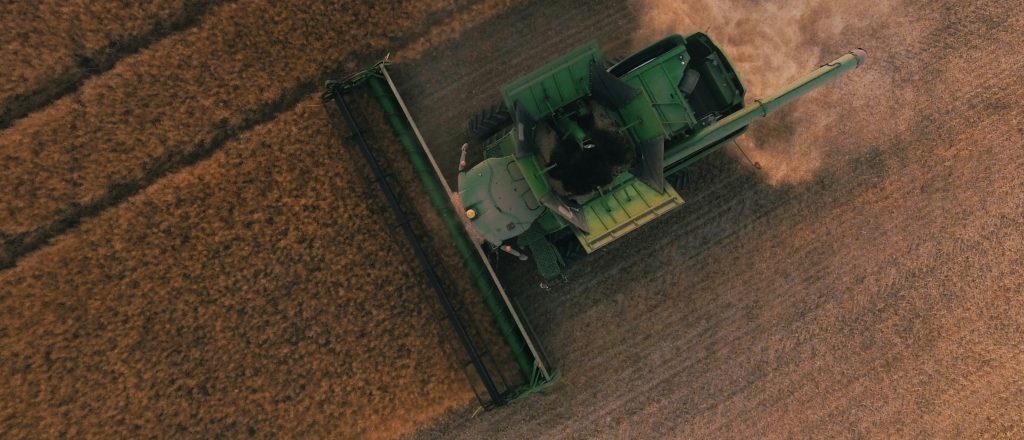
Agriculture is one of the biggest drivers of local economies in the Midwest, accounting for billions of dollars' worth of exports and thousands of jobs. The area consists of some of the richest farming land in the world. The region's fertile soil combined with the steel plow has made it possible for farmers to produce abundant harvests of grain and cereal crops, including corn, wheat, soybeans, oats, and barley, to become known today as the nation's "breadbasket". Henry A. Wallace, a pioneer of hybrid seeds, declared in 1956 that the Corn Belt developed the "most productive agricultural civilization the world has ever seen". Today, the U.S. produces 40 percent of the world crop.
The very dense soil of the Midwest plagued the first settlers who were using wooden plows, which were more suitable for loose forest soil. On the prairie, the plows bounced around and the soil stuck to them. This problem was solved in 1837 by an Illinois blacksmith named John Deere who developed a steel moldboard plow that was stronger and cut the roots, making the fertile soils of the prairie ready for farming. Farms spread from the colonies westward along with the settlers. In cooler regions, wheat was often the crop of choice when lands were newly settled, leading to a "wheat frontier" that moved westward over the course of years. Also very common in the antebellum Midwest was farming corn while raising hogs, complementing each other especially since it was difficult to get grain to market before the canals and railroads. After the "wheat frontier" had passed through an area, more diversified farms including dairy and beef cattle generally took its place. The introduction and broad adoption of scientific agriculture since the mid-19th century contributed to economic growth in the United States.
This development was facilitated by the Morrill Act and the Hatch Act of 1887 which established in each state a land-grant university (with a mission to teach and study agriculture) and a federally funded system of agricultural experiment stations and cooperative extension networks which place extension agents in each state. Iowa State University became the nation's first designated land-grant institution when the Iowa Legislature accepted the provisions of the 1862 Morrill Act on September 11, 1862, making Iowa the first state in the nation to do so. Soybeans were not widely cultivated in the United States until the early 1930s, and by 1942, the U.S. became the world's largest soybean producer, partially because of World War II and the "need for domestic sources of fats, oils, and meal". Between 1930 and 1942, the United States' share of world soybean production skyrocketed from 3 percent to 46.5 percent, largely as a result of increase in the Midwest, and by 1969, it had risen to 76 percent.
Finance
Chicago is the largest economic and financial center of the Midwest, and has the third largest gross metropolitan product in North America—approximately $689 billion, after the regions of New York City and Los Angeles. Chicago was named the fourth most important business center in the world in the MasterCard Worldwide Centers of Commerce Index. The 2021 Global Financial Centres Index ranked Chicago as the fourth most competitive city in the country and eleventh in the world, directly behind Paris and Tokyo. The Chicago Board of Trade (established 1848) listed the first ever standardized "exchange traded" forward contracts, which were called futures contracts. As a world financial center, Chicago is home to major financial and futures exchanges including CME Group, which owns the Chicago Mercantile Exchange ("the Merc"), Chicago Board of Trade (CBOT), the New York Mercantile Exchange (NYMEX), 27% of S&P Dow Jones Indices, and the Commodities Exchange Inc. (COMEX). Other major exchanges include Cboe Global Markets, operator of the largest options exchange in the Western Hemisphere; and the Chicago Stock Exchange. Chicago is also home to the headquarters of the Federal Reserve Bank of Chicago, the Seventh District of the Federal Reserve.
Outside of Chicago, many other Midwest cities are host to financial centers as well. Federal Reserve Bank districts are also headquartered in Cleveland, Kansas City, Minneapolis, and St. Louis. Major United States bank headquarters are located throughout Ohio including Huntington Bancshares in Columbus, Fifth Third Bank in Cincinnati, and KeyCorp in Cleveland. Insurance Companies such as Elevance Health in Indianapolis, Nationwide Insurance in Columbus, American Family Insurance in Madison, Wisconsin, Berkshire Hathaway in Omaha, State Farm Insurance in Bloomington, Illinois, Reinsurance Group of America in Chesterfield, Missouri, Cincinnati Financial Corporation and American Modern Insurance Group of Cincinnati, and Progressive Insurance and Medical Mutual of Ohio in Cleveland also spread throughout the Midwest.
Manufacturing
Navigable terrain, waterways, and ports spurred an unprecedented construction of transportation infrastructure throughout the region. The region is a global leader in advanced manufacturing and research and development, with significant innovations in both production processes and business organization. John D. Rockefeller's Standard Oil set precedents for centralized pricing, uniform distribution, and controlled product standards through Standard Oil, which started as a consolidated refinery in Cleveland. Cyrus McCormick's Reaper and other manufacturers of agricultural machinery consolidated into International Harvester in Chicago. Andrew Carnegie's steel production integrated large-scale open-hearth and Bessemer processes into the world's most efficient and profitable mills. The largest, most comprehensive monopoly in the world, United States Steel, consolidated steel production throughout the region. Many of the world's largest employers began in the Great Lakes region.
Advantages of accessible waterways, highly developed transportation infrastructure, finance, and a prosperous market base makes the region the global leader in automobile production and a global business location. Henry Ford's movable assembly line and integrated production set the model and standard for major car manufactures. The Detroit area emerged as the world's automotive center, with facilities throughout the region. Akron, Ohio became the global leader in rubber production, driven by the demand for tires. Over 200 million tons of cargo are shipped annually through the Great Lakes.
Culture
Following the sociological Middletown studies of 1929, which were based on Muncie, Indiana, commentators took Midwestern cities and the Midwest generally to be "typical" of the United States. Earlier, the rhetorical question Will it play in Peoria? had become a stock phrase, using Peoria, Illinois to signal whether something would appeal to mainstream America. As of 2010 the Midwest has a higher employment-to-population ratio than the Northeastern United States, the Southern United States, or the Western United States.
Euchre, a trick-taking card game, remains popular in the Midwest and parts of the Upper South, particularly in Michigan, Illinois, Indiana, Ohio, Kentucky, and Pennsylvania.
Education
Many Midwestern universities are members of the Association of American Universities (AAU), a bi-national organization founded in Chicago of leading research universities. Of the 69 members from the U.S. and Canada, 17 are located in the Midwest. These include private schools Case Western Reserve University, the University of Chicago, Northwestern University, University of Notre Dame, and Washington University in St. Louis and public institutions, the University of Illinois Urbana–Champaign, Indiana University Bloomington, the University of Iowa, the University of Kansas, the University of Michigan, Michigan State University, the University of Minnesota, the University of Missouri, the Ohio State University, Purdue University, and the University of Wisconsin–Madison.
Other notable major research-intensive public universities include the University of Cincinnati, the University of Illinois at Chicago, Indiana University Indianapolis, Iowa State University, Kansas State University, the University of Nebraska–Lincoln, Ohio University, Southern Illinois University, and Wayne State University.
Numerous state university systems have established regional campuses statewide. The numerous state teachers colleges were upgraded into state universities after 1945.
Other notable private institutions include Beloit College, John Carroll University, Saint Louis University, Butler University, Loyola University Chicago, DePaul University, Creighton University, Drake University, Marquette University, University of Dayton, and Xavier University. Local boosters, usually with a church affiliation, created numerous colleges in the mid-19th century. In terms of national rankings, the most prominent liberal arts colleges today include Augustana College, Carleton College, Denison University, DePauw University, Earlham College, Grinnell College, Hamline University, Kalamazoo College, Kenyon College, Knox College, Macalester College, Lawrence University, Oberlin College, St. Olaf College, College of Saint Benedict and Saint John's University, Mount Union University, Wabash College, Wheaton College, and The College of Wooster.
Health
The rate of potentially preventable hospitalizations in the Midwestern United States fell from 2005 to 2011 for overall conditions, acute conditions, and chronic conditions.
Linguistics
The accents of the region are generally distinct from those of the American South and of the urban areas of the American Northeast. To a lesser degree, they are also distinct from the accent of the American West.
The accent characteristic of most of the Midwest is popularly considered to be that of "standard" American English or General American. This accent is typically preferred by many national radio and television producers. Linguist Thomas Bonfiglio argues that, "American English pronunciation standardized as 'network standard' or, informally, 'Midwestern' in the 20th century." He identifies radio as the chief factor.
Currently, many cities in the Great Lakes region are undergoing the Northern Cities Vowel Shift away from the standard pronunciation of vowels.
The dialect of Minnesota, western Wisconsin, much of North Dakota and Michigan's Upper Peninsula is referred to as the Upper Midwestern Dialect (or "Minnesotan"), and has Scandinavian and Canadian influences.
Missouri has elements of three dialects, specifically: Northern Midland, in the extreme northern part of the state, with a distinctive variation in St. Louis and the surrounding area; Southern Midland, in the majority of the state; and Southern, in the southwestern and southeastern parts of the state, with a bulge extending north in the central part, to include approximately the southern one-third.
Music
The heavy German immigration played a major role in establishing musical traditions, especially choral and orchestral music. Czech and German traditions combined to sponsor the polka.
The Southern Diaspora of the 20th century saw more than twenty million Southerners move throughout the country, many of whom moved into major Midwestern industrial cities such as Chicago, Detroit, Cleveland, and St. Louis. Along with them, they brought jazz to the Midwest, as well as blues, bluegrass, and rock and roll, with major contributions to jazz, funk, and R&B, and even new subgenres such as the Motown Sound and techno from Detroit or house music from Chicago. In the 1920s, South Side Chicago was the base for Jelly Roll Morton (1890–1941). Kansas City developed its own jazz style.
The electrified Chicago blues sound exemplifies the genre, as popularized by record labels Chess and Alligator and portrayed in film The Blues Brothers.
Rock and roll music was first identified as a new genre in 1951 by Cleveland disc jockey Alan Freed who began playing this music style while popularizing the term "rock and roll" to describe it. By the mid-1950s, rock and roll emerged as a defined musical style in the United States, deriving most directly from the rhythm and blues music of the 1940s, which itself developed from earlier blues, boogie woogie, jazz, and swing music, and was also influenced by gospel, country and western, and traditional folk music. Freed's contribution in identifying rock as a new genre helped establish the Rock and Roll Hall of Fame, located in Cleveland. Chuck Berry, a Midwesterner from St. Louis, influenced many other rock musicians.
Since the founding of rock 'n' roll music, an uncountable number of rock, soul, R&B, hip-hop, dance, blues, and jazz acts have emerged from Chicago onto the global and national music scene. Detroit has greatly contributed to the international music scene as a result of being the original home of the legendary Motown Records. Notable soul and R&B musicians associated with Motown that had their origins in the area include Aretha Franklin, the Supremes, Mary Wells, Four Tops, the Jackson 5, Smokey Robinson & the Miracles, Stevie Wonder, the Marvelettes, the Temptations, and Martha and the Vandellas. These artists achieved their greatest success in the 1960s and 1970s.
Sports
Professional sports leagues such as the National Football League (NFL), Major League Baseball (MLB), National Basketball Association (NBA), Women's National Basketball Association (WNBA), National Hockey League (NHL), Major League Soccer (MLS), and National Women's Soccer League (NWSL), have team franchises in following Midwestern cities:
Chicago: Bears (NFL), Cubs, White Sox (MLB), Bulls (NBA), Sky (WNBA), Blackhawks (NHL), Fire (MLS), Stars (NWSL)
Cincinnati: Bengals (NFL), Reds (MLB), FC Cincinnati (MLS)
Cleveland: Browns (NFL), Guardians (MLB), Cavaliers (NBA)
Columbus: Blue Jackets (NHL), Crew (MLS)
Detroit: Lions (NFL), Tigers (MLB), Pistons (NBA), Red Wings (NHL)
Green Bay: Packers (NFL)
Indianapolis: Colts (NFL), Pacers (NBA), Fever (WNBA)
Kansas City: Chiefs (NFL), Royals (MLB), Sporting or the Wizards (MLS), Current (NWSL)
Milwaukee: Brewers (MLB), Bucks (NBA)
Minneapolis–Saint Paul: Vikings (NFL), Twins (MLB), Timberwolves (NBA), Lynx (WNBA), Wild (NHL), United or the Loons (MLS)
St. Louis: Cardinals (MLB), Blues (NHL), City SC (MLS)
Popular teams include the St. Louis Cardinals (11 World Series titles), Cincinnati Reds (5 World Series titles), Chicago Bulls (6 NBA titles), the Detroit Pistons (3 NBA titles), Milwaukee Bucks (2 NBA titles), the Minnesota Lynx (4 WNBA titles), the Green Bay Packers (4 Super Bowl titles, 13 total NFL championships), the Chicago Bears (1 Super Bowl title, 9 total NFL championships), the Cleveland Browns (4 AAFC championships, 4 NFL championships), the Kansas City Chiefs (3 Super Bowl titles, 4 total NFL championships), Kansas City Royals (2 World Series titles), the Detroit Red Wings (11 Stanley Cup titles), the Detroit Tigers (4 World Series titles), the Chicago Blackhawks (6 Stanley Cup titles), and the Columbus Crew (3 MLS Cups).
Cultural overlap
Differences in the definition of the Midwest mainly split between the Great Plains region on one side, and the Great Lakes region on the other. Some point to the small towns and agricultural communities in Minnesota, Iowa, Missouri, and Illinois of the interior lowlands as representative of traditional Midwestern lifestyles and values, while the industrial cities and manufacturing identity of the Great Lakes and overlapping Rust Belt histories of 19th-century and early 20th-century immigration are less representative of the Midwestern region and viewed separately from the core Midwest. Similarly, the Great Plains states, especially their central and western parts share cultural and geographic elements with the Frontier West and ranching lifestyle and drier short grass prairie as the Great Plains are less associated with the true agricultural Midwest interior to the east.
One extreme outlier for instance is South Dakota. West River (the region west of the Missouri River) is home to the Black Hills, which is part of the greater Rocky Mountain Front and poseses cultural elements of the Mountain West of the United States, while East River has more in common with the rest of the Great Plains.
Two other regions, Appalachia and the Ozark Mountains, overlap geographically with the Midwest—Appalachia in Southern Ohio and the Ozarks in Southern Missouri. The Ohio River has long been a boundary between North and South and between the Midwest and the Upper South. All of the lower Midwestern states, especially Missouri, have major Southern components and influences, as they neighbor the Southern region. Historically, Missouri was a slave state before the American Civil War (1861–1865) due to the Missouri Compromise.
Western Pennsylvania, which contains the cities of Erie and Pittsburgh, shares history with the Midwest and overlaps with Appalachia and the Northeast as well.
Kentucky is not considered part of the Midwest; it is a northern region of the South, although certain northern parts of the state could have possibly been grouped with the Midwest in a geographical context, even though it is geographically in the Southeast overall. Kentucky is categorized as Southern by the U.S. Census Bureau due to its industries and especially from a historical and cultural standpoint with the majority of the state having a thoroughly majority Southern accent, demographic, history, and culture in line with her sister states of Virginia and Tennessee and even the areas that have certain Midwestern influences tend to be mixed with the native Southern culture of the area.
Politics
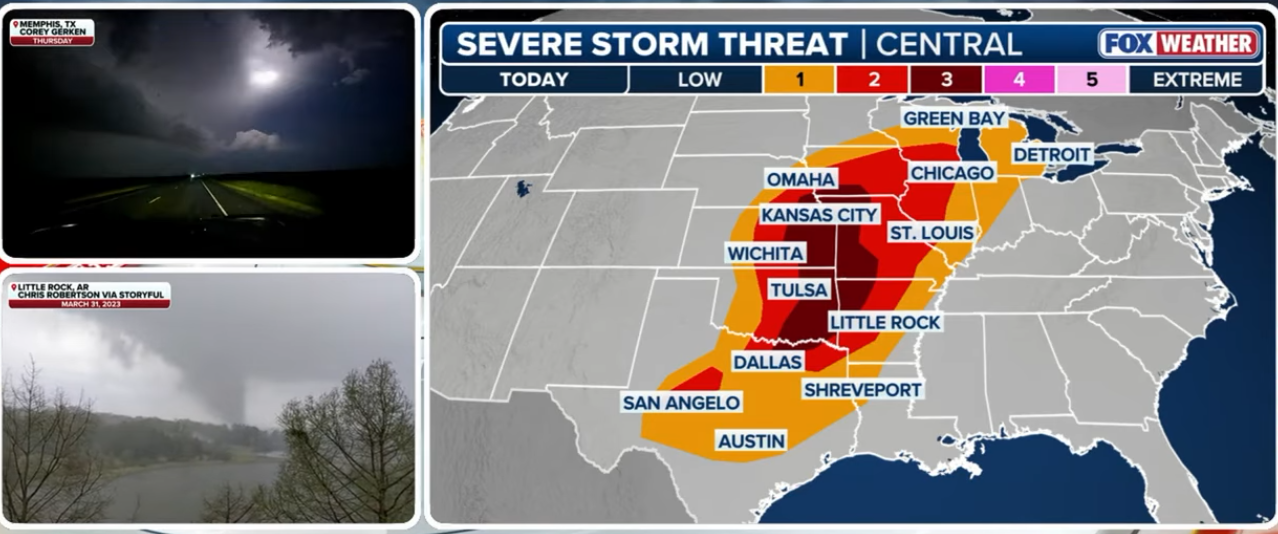
The Midwestern United States is a politically divided region, with the Democratic Party being stronger in the Great Lakes Region and the Republican Party being stronger in the Great Plains regions. The Upper Midwestern states of Illinois, Michigan, and Wisconsin reliably voted Democratic in every presidential election from 1992 to 2012. Meanwhile, Minnesota has the longest Democratic voting streak in the nation, having last voted for a Republican presidential candidate in 1972. Recently, Republicans have made serious inroads in Iowa and Ohio, two states that were previously considered swing states.
Missouri has been won by Republicans in every presidential election since 2000, despite its former bellwether status. Indiana has been won by Republicans in every presidential election since 1940, except for Lyndon Johnson in 1964 and Barack Obama in 2008. The Great Plains states of North Dakota, South Dakota, Nebraska, and Kansas have voted for the Republican candidate in every presidential election since 1940, except for Democrat Lyndon B. Johnson in 1964. The unicameral Nebraska Legislature is officially nonpartisan.
All Midwestern states use primary elections to select delegates for both the Democratic and Republican national conventions, except for Iowa. The Iowa caucuses in early January of leap years are the first votes in the presidential nominating process for both major parties, and attract enormous media attention.
East North Central
As of 2025, the state government of Illinois currently has a Democratic Governor J.B. Pritzker and Democratic supermajorities in both houses of the Illinois General Assembly. Illinois also has 2 Democratic U.S. senators and a 14–3 Democratic majority U.S. House delegation.
As of 2025, Wisconsin has a Democratic Governor Tony Evers and a Republican-controlled Wisconsin Legislature. Wisconsin also has 1 Democratic and 1 Republican senator and a 6-2 Republican majority U.S. House delegation. Wisconsin is considered a purple state, as the state was decided by less than 1 percentage point in 2016, 2020, and 2024, with the nationwide winner also taking Wisconsin each time.
From 1992 to 2012, Michigan consistently voted for the Democratic presidential candidate, though in four of those six elections, the margin of victory was in the single digits. Beginning in 2016, it has evolved into a true swing state, with Donald Trump winning Michigan in his two successful presidential bids in 2016 and 2024. The Michigan Legislature is also closely divided; the Democrats currently hold the minimum 20-18 majority in the Senate and the Republicans hold a narrow 58-52 majority in the House. As of 2025, Michigan has 2 Democratic U.S. senators (it last elected a Republican senator in 1994) and a 7-6 bare Republican majority in their U.S. House of Representatives delegation.
Indiana is considered a Republican stronghold, having voting for that party's presidential candidate in every election since 1940, except for Johnson in 1964 and Barack Obama in 2008. As of 2025, the Republican party controls both U.S. Senate seats, has a 7–2 majority U.S. House congressional delegation, and has a state-level trifecta (the governorship and both houses of the Indiana General Assembly).
As of 2025, Ohio currently has a Republican Governor Mike DeWine and Republican majorities in the Ohio General Assembly. Ohio also has 2 Republican U.S. senators and a 10-5 Republican majority U.S. House delegation. Ohio has been a battleground state in presidential elections, and no Republican has won the office without winning Ohio. Donald Trump won Ohio by about 8 percentage points in both the 2016 and 2020 presidential elections, signaling a shift towards the right for the state's federal electorate. The 2022 midterms resulted in strong Republican support at the state level, and moderate Republican support at the federal level, with Republican governor Mike DeWine winning reelection in a landslide and Republican author JD Vance winning election to the U.S. Senate by about 6 percentage points. Ohio's rightward shift continued in 2024, with Trump (and Vance as his running mate) once again winning the Buckeye State, this time increasing his margin of victory to more than 11 percentage points, becoming the first presidential candidate to win the state by double digits since George H. W. Bush in 1988 and having the largest margin of victory for any candidate since the 1984 landslide reelection of Ronald Reagan. Additionally, Republican challenger Bernie Moreno defeated three-term incumbent Democrat Sherrod Brown in the state's Senate election. With Moreno's election, this meant that with the exception of Jennifer Brunner on the state Supreme Court, all statewide elected officials in Ohio are now Republicans.
West North Central
The Great Plains states of North Dakota, South Dakota, Nebraska, and Kansas have been strongholds for the Republicans for many decades. These four states have gone for the Republican candidate in every presidential election since 1940, except for Lyndon B. Johnson's landslide over Barry Goldwater in 1964. Although North Dakota and South Dakota have often elected Democrats to Congress, after the 2012 election both states' congressional delegations are majority Republican. Nebraska has elected Democrats to the Senate and as governor in recent years, but both of its senators have been Republican since the retirement of Ben Nelson in 2012. Kansas has elected a majority of Democrats as governor since 1956, but has not elected a Democratic senator since 1932. From 1997 to 2010 and again since 2019, Kansas has had at least one Democratic House member (two in 2007 and '08).
Iowa had a Democratic governor from 1999 until Terry Branstad was re-elected in the mid-term elections in 2010, and has had both one Democratic and one Republican senator since the early 1980s until the 2014 election when Republican Joni Ernst defeated Democrat Bruce Braley in a tightly contested race. Between 1988 and 2012, Iowa also voted for the Democratic presidential candidate in all elections except 2004 (backing George W. Bush by less than 1%), but in 2016 and 2020 Donald Trump won the state by about 9 and 8 percentage points, respectively. Since the 2016 elections, Republicans have held a majority in both houses of the Iowa General Assembly. Following the 2022 elections, Iowa is considered a red state as Republicans hold all but one statewide office, both U.S. Senate seats, all four U.S. House seats, and Republican governor Kim Reynolds was reelected by a margin of nearly 20 points. Trump won Iowa for a third time in 2024, this time by more than 13 percentage points, the largest margin of victory for a Republican in the state since Richard Nixon in 1972.
Minnesota voters have not voted for a Republican candidate for president since 1972, longer than any other state. Minnesota was the only state (along with Washington, D.C.) to vote for its native son Walter Mondale over Ronald Reagan in 1984. However, recent Democratic victories have often been fairly narrow, such as the 2016 presidential election. The Democratic Party controls all statewide offices as of 2025 and hold the minimum 34-33 majority in the State Senate, but they do not have a governing trifecta since the State House is evenly split 67-67. The Minnesota congressional delegation has 2 Democratic senators but a 4-4 evenly split U.S. House delegation.