



Joliet Refinery Stays Offline After Outage, Midwest Diesel Impact Unclear

Around 3:30 p.m. Central Time on Sunday, September 13, power failed at Exxon Mobil’s Joliet refinery. The outage triggered a safety flare and forced a plant-wide shutdown. Patrick De Haan registered what the stop meant for the region. “This refinery I believe has a capacity of nearly 8% of the total refining capacity in the region. So it’s a fairly large contributor that has a capacity to produce and refine over 10 million gallons of fuel every day,” he said.
Over ten million gallons every day. That volume stopped leaving the plant the afternoon the power failed. Electricity returned around 7 p.m. the same Sunday. The refining did not resume. After an unplanned shutdown, processing units must be checked, stabilized, and restarted in stages. Power restoration does not mean fuel production has returned. Sunday night left the refinery with live electrical service and no product moving.

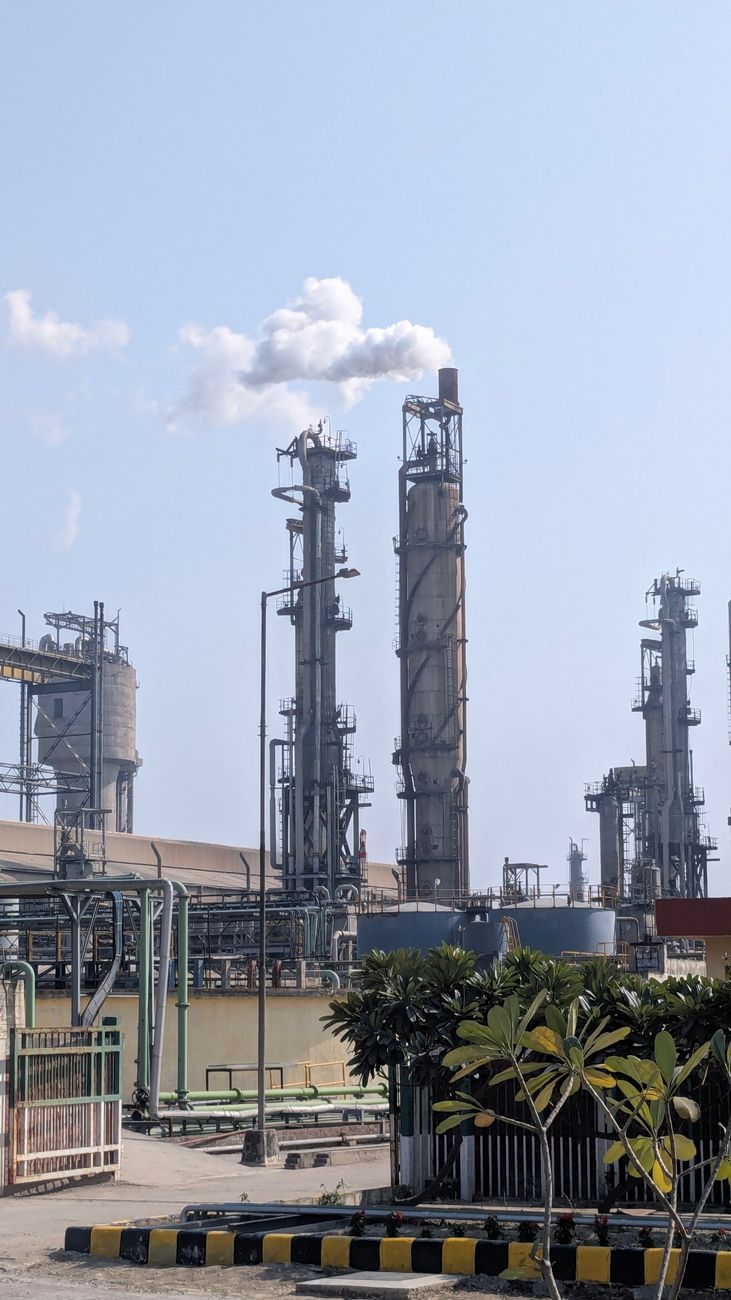
The facility stands about 40 miles southwest of Chicago in Will County, Illinois. It covers about 1,400 acres, began operating in 1972, and employs roughly 580 workers plus contractors. Its capacity is 275,000 barrels of crude per day. The site is designed to process Canadian crude delivered by pipeline and also produces LPG, asphalt, sulfur, and petroleum coke. Diesel is a petroleum distillate made for engines that ignite fuel by compression rather than a spark, and it is one of the high-volume products oil refineries are built to make. At Joliet, gasoline and diesel together come to about 11 million gallons every day, enough for about 550,000 car and semi-truck fill-ups. That daily production represents roughly 6 percent of Midwest refining capacity and 1.5 percent of refining capacity nationally. The fuel is produced primarily for Midwest consumers.
Thursday’s filing from Exxon added a second problem. Floodwater had overwhelmed a pump at the site. Cleanup crews deployed a containment boom. The company did not confirm any link between the flooding and the Sunday outage; the two stood as separate facts. The power failure itself was traced to ComEd’s primary and secondary electrical lines that supply the refinery. By Thursday, September 17, Exxon confirmed that electrical service was fully restored. Recovery work continued. No firm restart date was given.

Another flare was observed on Wednesday during the stabilization and restart process. Flaring is the controlled burning of excess process gas so pressure does not build inside the units. It can appear while crews check equipment, stabilize systems, or bring them back online after an unplanned stop. The Wednesday flame marked that work still under way, with power restored and fuel production not yet returned.
Eleven million gallons is the ordinary daily contribution. “So while this restart process takes time, this refinery has not been able to meaningfully contribute refined product to the market,” Patrick De Haan said. The Great Lakes rack is where the absence starts to show. A long stop tightens availability across Illinois, Indiana, Ohio, Wisconsin, and Michigan and raises the chance of further climbs at the pump. De Haan laid out the risk for the Great Lakes. "There's an additional likelihood of further price increases in the Great Lakes. Gas: OH is at *high* risk of largest jump, WI, IN are at *med* risk of moderate jump, MI, IL at low/med risk but could go past $5/gal. diesel: will likely jump in most these areas mod/large jump," he said.
Spot diesel prices in the Great Lakes are now the highest in the country. They have reached $240 a barrel. National diesel at the pump has jumped to a record $6.45 a gallon. Fuel costs were already elevated before the Sunday power loss; the regional cut sits against that national mark while recovery work continues.
Chatter from market sources soon widened beyond Joliet alone. Reports circulated that the BP plant in Whiting, Indiana, another major regional refinery, was under maintenance and might be cutting supply at the same time Joliet sat idle. Patrick De Haan checked the claim against what he could verify. “There was some chatter from market sources about potential maintenance. But I was able to learn that that maintenance was in late August on a portion of a unit that does not have a significant impact on production,” he said. The work had finished weeks earlier. It had never taken a meaningful slice of output offline. Later reports of slowdowns at Whiting he tied to ordinary maintenance, not a plant-wide outage on the scale of Joliet’s. The scare of two large Midwest refineries dark at once did not hold. Only one remained out of the market.
That left the forward pressure resting on duration and on whatever else might tighten crude flows. “Whether prices go up or down is really just going to be a function in the weeks ahead on whether there’s escalation which would drive prices up by changing the risk calculus and making it more difficult for oil to flow,” De Haan said. IIR Energy had expected a full restart by the end of the week. Wood Mackenzie showed the plant still offline on Thursday. Exxon had confirmed electrical service fully restored by September 17. Recovery work continued. No firm restart date was attached.