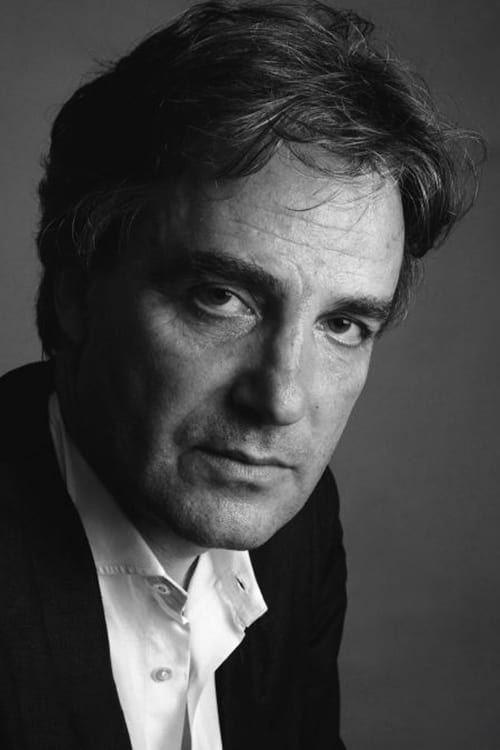
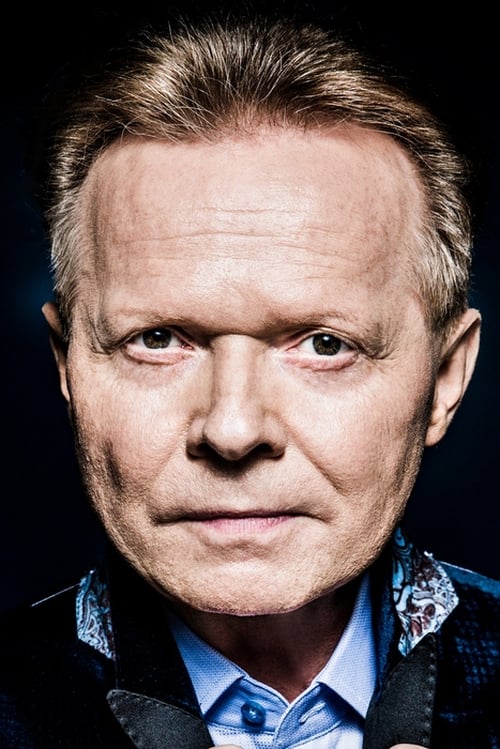
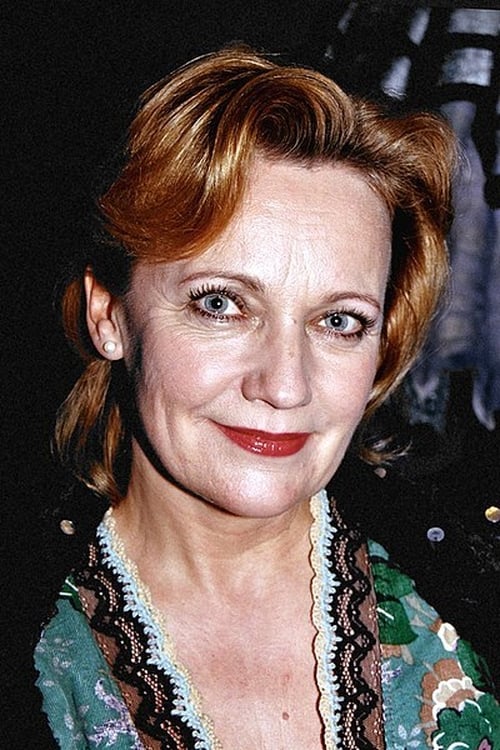
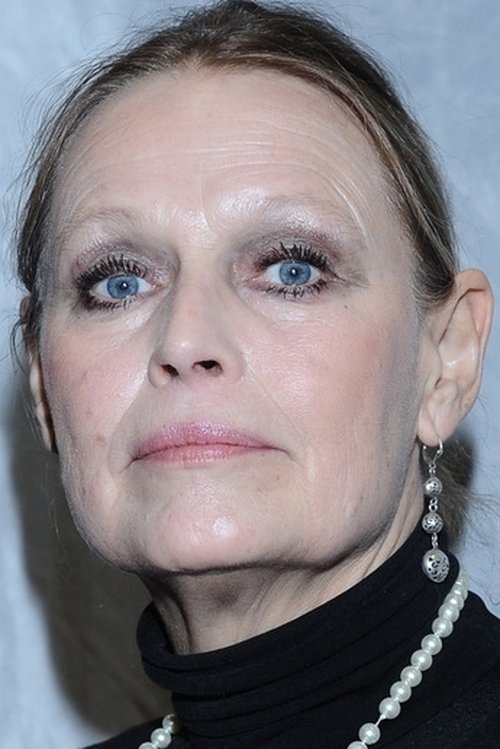
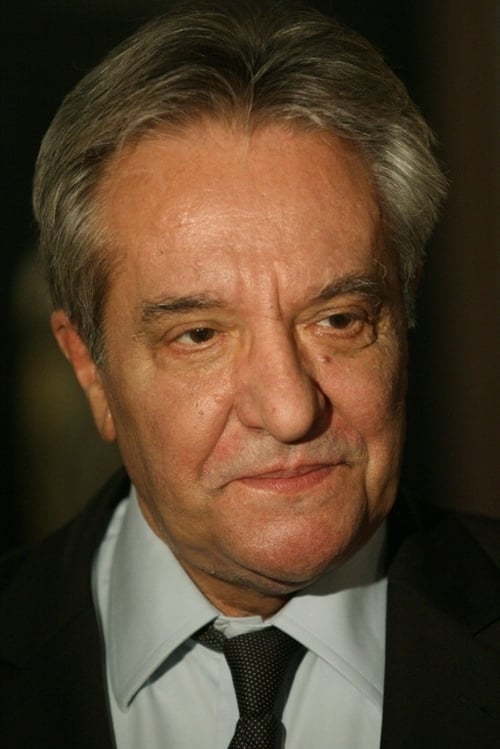
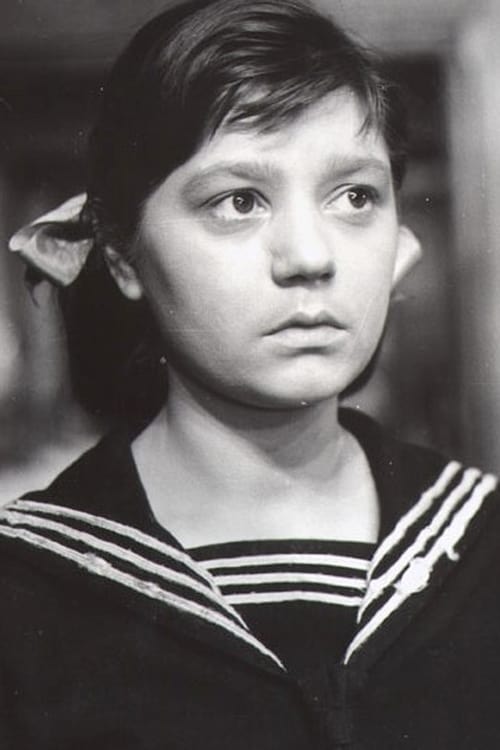
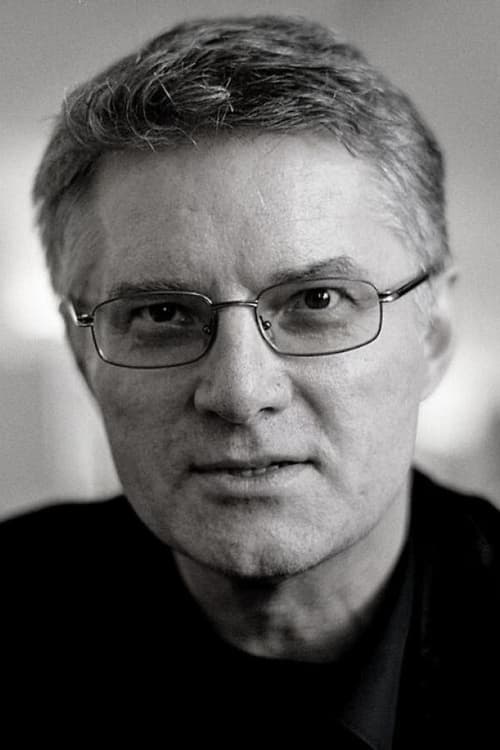
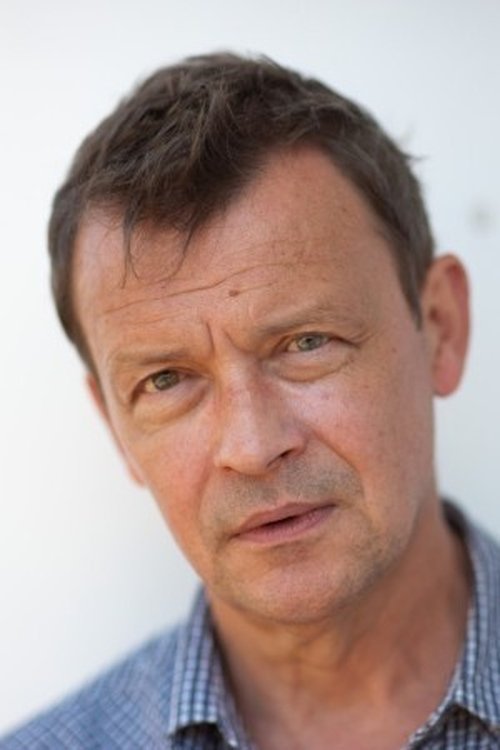
On the Silver Globe (Polish: Na srebrnym globie) is a 1988 Polish epic science fiction film written, directed, and narrated by Andrzej Żuławski. It is an adaptation of the pioneering science-fiction novel series The Lunar Trilogy (1901–1911) by his grand-uncle, Jerzy Żuławski. The story follows a team of astronauts who crash-land on an Earth-like planet and found a society; generations later, a visitor from Earth arrives and is hailed as a messiah, after which chaos ensues. The film stars Andrzej Seweryn, Jerzy Trela, Grażyna Dyląg, Waldemar Kownacki, Krystyna Janda, and Iwona Bielska. Because the actors were unavailable during post-production, Michał Bajor dubbed Seweryn and Maria Pakulnis dubbed Dyląg.
After the success of That Most Important Thing: Love (1975), Żuławski returned from exile in France at the invitation of Polish authorities and received conditional approval to adapt The Lunar Trilogy. Principal photography began on 15 June 1976, and continued until 1 June 1977, when Ministry of Culture and Art Deputy Minister Janusz Wilhelmi ordered the production's immediate termination. However, the studio and crew preserved the negatives, props, and wardrobe. The budget had already reached at least 58 million zł and was projected to climb to 110 million zł if completed as planned; by late 1977 it totaled at 89.7 million zł, making it one of the most expensive films produced in Poland at the time. Its production company, Pryzmat, was dissolved in February 1978; KADR took over in the mid-1980s and allowed Żuławski to assemble a release version. Instead of reshooting missing scenes, he narrated over footage of contemporary streets in Warsaw and Kraków.
The reconstruction of On the Silver Globe premiered at the 41st Cannes Film Festival on 12 May 1988, and was released in Poland on 10 February 1989. The film has gradually acquired a minor cult following and is regarded as an example of film maudit (lit. cursed film)—a work suppressed and overlooked at the time, later rediscovered and reevaluated by critics and cinephiles. Long circulated mainly in specialized screenings, it gained a wider audience after a 2010s digital restoration that recovered the intended color palette. Critics have consistently praised its visual invention and philosophical density; it is frequently cited as Żuławski's most ambitious work and as one of the major unfinished or suppressed projects of European art cinema, often described as the greatest science-fiction film never fully made.
Contents
Plot
In the distant future, a rider delivers an object that has fallen from the sky to two men living in a technologically advanced society alongside a primitive population. They identify it as a decades-old transmission module and recover from it the video diary of an earlier space expedition.
The recording follows five dissident astronauts—O'Tamor, Tomasz, Marta, Piotr and Jerzy—who fled their society hoping to establish a new civilization. Their spacecraft crashes in the mountains of an Earth-like planet, killing O'Tamor, while another craft carrying the Remogner brothers also crashes nearby. Unable to breathe at the high altitude because of hypoxia, the survivors descend toward the coast, passing enormous ruins suggesting an earlier civilization. The badly injured Tomasz dies during a flood while Marta, pregnant with his child, remains with him.
Marta gives birth to Tomasz II, whose rapid development reveals that children born on the planet undergo greatly accelerated development and mature much faster than the original astronauts. Marta, Piotr and Jerzy establish a settlement and produce further generations, while Jerzy increasingly becomes its chronicler, collecting the others' cameras and recording its development.
Piotr later disappears and is found dead. Marta subsequently has a final child with Jerzy, their daughter Ada, and dies in childbirth. As successive generations rapidly mature and reproduce while Jerzy ages normally, their origins become mythology: Marta becomes a creator and mother figure, Piotr a civilizing hero, and Jerzy the semidivine "Old Man". Ada helps establish a cult around Jerzy while he is still alive, and his silences and memories of Earth are treated as revelation.
A later descendant, Tomasz III, leads an expedition across the sea and returns alone, reporting the existence of the Sherns, winged, one-eyed indigenous humanoids with a more advanced civilization. The Sherns subsequently dominate the humans and reproduce with human women, producing powerful hybrid offspring called Morques who serve among their forces. Human society develops numerous religious sects and a prophecy that a messianic “Victor" will descend from the mountains and liberate humanity.
Unable to prevent his descendants from worshipping him, the elderly Jerzy returns to the original crash site. He places his accumulated recordings in a transmission module, records himself one final time and launches it into space before dying. This is the module recovered at the beginning of the film.
Production
Development and pre-production
Filmmaker Andrzej Żuławski had long wanted to adapt the The Lunar Trilogy novels written by his grand-uncle Jerzy Żuławski, which were published between 1903 and 1911, particularly the first volume On the Silver Globe (Na srebrnym globie), into a film. After leaving Poland for France in 1972 to escape censorship following his earlier works, especially The Devil (1972), Żuławski achieved critical success with the 1975 French film That Most Important Thing: Love. Polish authorities then invited him to return and pursue a project of his choosing, and he obtained conditional approval to realize a film adaptation of The Lunar Trilogy. Between 1975 and 1977, he wrote the screenplay as a free adaptation of the novels, initially conceived as two parts covering the first two volumes of the trilogy—On the Silver Globe (Na srebrnym globie) and The Conqueror (Zwycięzca)—with selected elements from the third. The project was developed under Zespół Filmowy Pryzmat.
The film was announced in March 1976, proclaimed as the only major Polish epic film in production that year. Żuławski had planned it as a relatively low-cost production that would rely on minimal built sets and extensive use of existing locations rather than elaborate studio construction. At the turn of 1975–1976 Zespół Filmowy Pryzmat submitted the project to the Film Production Enterprise with a proposed budget of approximately 60 million złoty; in early March 1976 the head of cinematography, Mieczysław Wojtczak, approved it for production, and on 8 March 1976 a production contract was signed for 57.4 million 1976 złoty—a substantial figure for Polish cinema of the period but not exceptional when compared with contemporary superproductions such as The Deluge (1974). The contract stipulated that principal photography should be completed by the end of 1976.
Cinematographer Andrzej J. Jaroszewicz was hired, along with production designers Tadeusz Kosarewicz and Jerzy Śnieżawski and costume designers Magdalena Tesławska and Krzysztof Tyszkiewicz; the team prepared for chronic shortages of materials that were typical of the state-run economy.
In May 1976, the film's cast was announced, some of whom were different from those in the final film. Andrzej Lubicz-Piotrowski was initially set to play O'Tamor (he instead appears uncredited as Awij); Grażyna Krukówna was set to play Ada; Ewa Górzańska was set to make her screen debut as Ihezal, with Antoni Pszoniak as her father, the priest Malahuda; and Michał Grudziński and Jerzy Gruza as priests Elem and Sewim, respectively.
Filming
Principal photography began at dawn on 15 June 1976 on the sand dunes near Łeba, and it was initially planned as a two-part film with a scheduled wrap in December 1976. On the night of 20–21 June 1976, filming took place near Jastrzębia Góra on the Polish Baltic coast. Until 29 September, scenes for the film were filmed on the Baltic coast and in the Gobi Desert in Mongolia (facilitated because Mongolia owed Poland a debt for imported Polish films). On 29 September 1976, shooting was temporarily suspended on charges of "exceptionally low work efficiency and cost overruns"; Żuławski undertook to accelerate the schedule.
A panel of experts appointed by the Central Board of Cinematography subsequently gave a positive assessment of the material already shot, granting an extension until May 1977 together with additional funds, raising the financial limit to 71 million złoty. Filming then continued in Police, in Lower Silesia, in the Wieliczka salt mine, in the Jewish quarter of Kazimierz, Krakow, again on the coast and in the mountains of the Caucasus. In April 1977, the most complex set pieces—models of spacecraft—were transported from the Wrocław film studio to locations in the Caucasus Mountains of Georgia.
Jaroszewicz shot the film primarily with a 48 mm lens and a wide-angle 9.8 mm lens; only the later portions of the shoot employed a broader range of technical resources such as crane shots, dollies and zooms. The crew faced persistent logistical shortages of costumes and set materials, while the demanding pace and the director's intense working methods placed heavy strain on the unit.
On 1 June 1977, while the crew was on location at Karwia on the Baltic, the Polish Ministry of Culture and Art's Deputy Minister Janusz Wilhelmi ordered an immediate suspension of production after viewing the rushes, without consulting the director. The order reached the set as a telephonegram from the acting director of the Film Production Enterprise, followed the next day by an official letter requiring the cessation of all work, liquidation of obligations, archiving of assets and submission of a full organisational-economic report by 30 September 1977. Production manager Jan Włodarczyk informed the company; Żuławski, aggravated and distraught, left at once for Warsaw and shortly afterwards departed Poland for France.
An official press statement cited drastic financial and schedule overruns: costs had already reached at least 58 million złoty, and continuation was projected to bring the total to 110 million złoty. Finished sets and vehicles remained waiting in Georgia and Wrocław. Contrary to later legends that sets and costumes were ordered burned, the principal first-unit costumes were packed and stored at the Wrocław film studio; after restoration, they were exhibited on several occasions, including the Gdynia Film Festival of 2016. Straw-and-bark huts were dismantled because they could not be maintained; a deeply embedded beach "Stonehenge" replica (nicknamed "Igloo") was eventually excavated by local villagers; the two adapted fishing cutters used as ships were parked in Władysławowo; and the unused spacecraft models returned from Georgia a month later. Mass-costume tunics worn by unemployed port workers were buried as refuse; some stored items later suffered insect damage and further losses during the 1997 Wrocław flood. Full production documentation was deposited in the Film Production Enterprise archive.
Post-production
Immediately after its termination, a French producer attempted to purchase the rights to the film, believing that Żuławski's popularity in France and the coming era of space cinema would ensure its success. After concluding that no European resources were sufficient, that producer contacted the American studio Orion Pictures, but the Polish Ministry of Culture and Art delayed and ultimately refused the sale for fear of embarrassment should the film be completed.
Roughly a year and a half after Wilhelmi's death, Żuławski was permitted to travel to Wrocław and assemble the surviving material; approximately 40,000 metres of film had been kept under lock and key. Working hastily with an editor for a week, he produced a provisional three-hour assembly that indicated the missing sequences and was accompanied by reverse-played music from another score by Andrzej Korzyński. This rough cut was occasionally screened informally in film discussion clubs.
Earlier opportunities to resume work had appeared. After "Pryzmat" was dissolved, the project briefly passed to Andrzej Wajda's Zespół Filmowy "X" unit. A Ministry letter of 12 March 1980 authorised continuation with a budget of 9.5 million złoty—far less than the 52 million earlier estimated as necessary to finish the original plan—indicating that only a stop-gap solution was contemplated. A 1983 article reported a decision in autumn 1980 with a budget of 10–15 million złoty and noted that Żuławski had already proposed substituting a commentary and "reprojection" for the unfilmable missing scenes. Żuławski did not take up these offers at the time, citing among other reasons the unresolved fate of his earlier banned film The Devil and the still-fresh wounds of the interrupted production.
At the end of 1985, Żuławski accepted an offer from Film Unit "Kadr" (to which the project had been transferred) to finish the film. In 1986, he shot additional sequences on the streets of contemporary Warsaw and Kraków to bridge the missing scenes and supplied his own voice-over narration explaining the gaps. The cast recorded post-synchronisation; the actors who were now living abroad were dubbed by others. Tadeusz Lampka oversaw completion for Kadr (Jerzy Kawalerowicz was also involved, possibly as uncredited executive producer). No producer was credited on the film itself; Lampka was listed as production manager (1986–87), while Jan Włodarczyk and Richard Barski held the role in 1976–78. Lampka later received sole producer credit in screening lists for several overseas film festivals.
Release and reception
On the Silver Globe passed its official acceptance screening (kolaudacja) on 10 July 1987. Film Polski Ltd. handled the film's initial distribution in Poland and abroad. The film had its world premiere on 12 May 1988 at the 41st Cannes Film Festival, where it opened the Un Certain Regard section and received a standing ovation. The finished film runs 157 minutes according to many Polish sources. International listings and home-video releases give a runtime of 165 or 166 minutes.
The film was shown at the Polish Film Festival in Gdynia in October 1988 and received a limited theatrical release in Poland on 10 February 1989. Early festival and television screenings also included Fantasporto in Portugal (February 1989) and a television broadcast in Mexico on the same day as the Polish theatrical opening. KADR later acquired the rights and are listed for distribution on subsequent releases and festival showings.
Critical response
On the Silver Globe received a mixed response upon its initial release and has since attracted substantial critical acclaim, particularly following restorations and wider rediscovery. On review aggregator website Rotten Tomatoes, the film has an approval rating of 100% based on six reviews, and an average rating of 8.2/10. Metacritic assigned the film a weighted average score of 72 out of 100, based on four critics, indicating "generally favourable reviews".
Contemporary Polish reception was often cooler or more divided. Aleksander Halka-Ledóchowski, writing for the weekly Film magazine, praised the acting and Żuławski's ambitious vision, describing the reconstruction as a scarred hybrid that defies normal evaluation. He highlighted its raw imagination, poetic dialogue, expressive performances and camerawork, and artistic sets, concluding that the incomplete film was both captivating and frustrating—leaving viewers uncertain whether it was a masterpiece or a failure—and viewed its story as an important part of Polish film history. By contrast, in the magazine's "Dziewięciu gniewnych ludzi" ("Nine Angry Men") rating column, Tadeusz Sobolewski assigned it the lowest possible score (one out of six stars). Years later, however, Sobolewski reassessed it as among Żuławski's "boldest and most original" achievements. He described it, and Żuławski's The Third Part of the Night and The Devil as works that "revealed entirely new possibilities for cinematic storytelling, unlike anything else in our cinema—hallucinatory, violent, subjective, and created in a trance-like state, much like the later films of David Lynch."
Home media
The film was released on Blu-ray on 26 February 2024 in the Eureka Entertainment Masters of Cinema series. Two discs contain the 1988 film plus several extras and documentaries.